
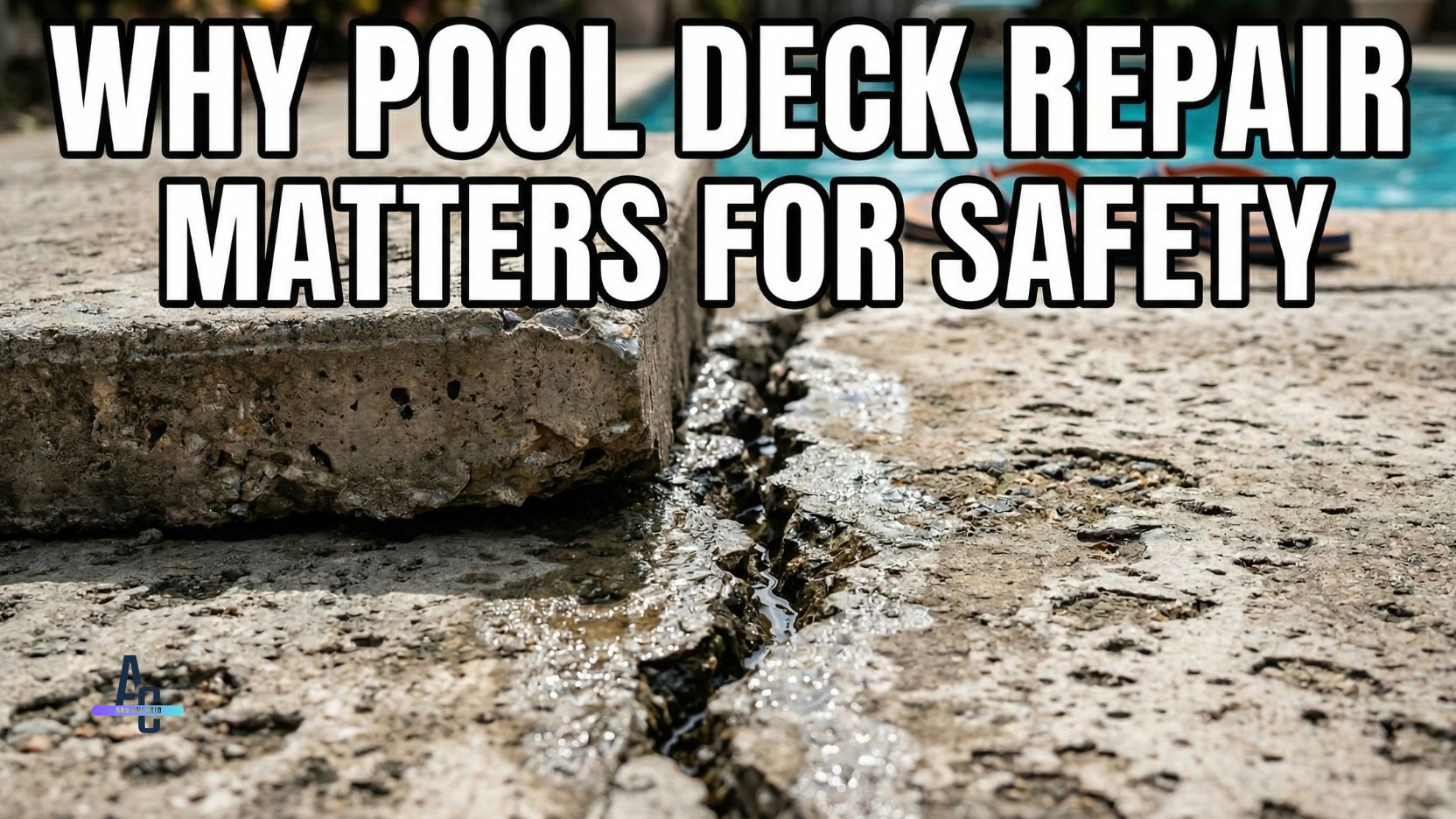
Pool deck repair matters for safety because cracks, uneven concrete, poor drainage, and worn finishes can increase the risk of slips, trips, and falls around a wet surface. In San Antonio and Houston, heat, rain, sun exposure, and ground movement can all wear down pool deck concrete over time.
At Affordable Concrete San Antonio, pool decks are a core part of residential concrete work, including repair, resurfacing, joint work, coatings, and decorative finishes. That hands-on experience matters because a pool deck is not just about appearance. It is a high-traffic surface that must remain safe in wet conditions and amid changing Texas weather.
Why Is Pool Deck Repair Important For Safety?
Pool deck repair is important because damaged concrete can become hazardous quickly. Even small surface problems can lead to bigger safety issues when the deck is wet.
Common hazards include:
- Cracks that catch bare feet or create trip points
- Uneven slabs that increase fall risk
- Worn or slick sealers that reduce traction
- Standing water caused by poor drainage
- Spalling or flaking concrete that creates rough, unstable spots
Key takeaway: A damaged pool deck can turn a normal backyard walkway into a slip-and-trip hazard.
What Pool Deck Problems Create The Biggest Safety Risks?
The biggest safety risks usually come from uneven surfaces, slippery finishes, and drainage issues. These problems often develop slowly, which is why many homeowners do not notice the full risk right away.
Cracks And Uneven Concrete
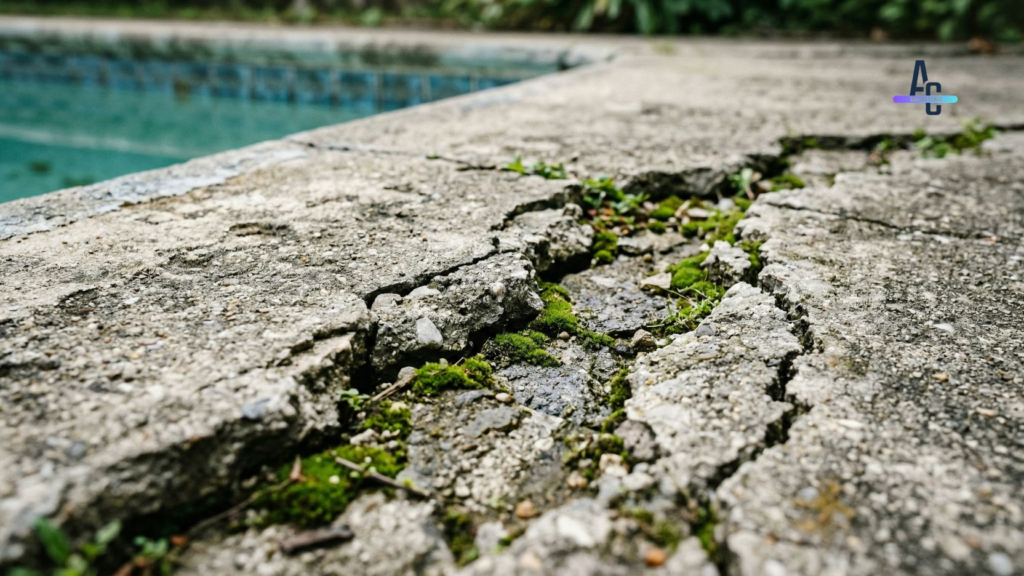
Cracks can spread with heat, moisture, and soil movement. If one section lifts or settles, it can create a clear trip hazard.
Slippery Surfaces
Some decorative coatings or old sealers become slick when wet. Around a pool, traction matters more than shine.
Standing Water
Poor slope or blocked drainage can leave puddles on the deck. This increases slip risk and can accelerate surface wear.
Surface Breakdown
Spalling, scaling, and worn coatings make the deck rough, weak, and harder to clean.
How Does Pool Deck Repair Help Prevent Slips And Falls?
Repair helps prevent slips and falls by restoring traction, smoothing walking surfaces, and improving water runoff. A repaired deck is easier and safer to use for kids, adults, and guests.
Pool deck repair may include:
- Filling or repairing cracks
- Levelling uneven sections
- Resurfacing worn concrete
- Replacing failed joints
- Adding slip-resistant texture
- Resealing the surface
- Correcting drainage slope where possible
For pool areas, the goal is simple: create a surface that stays stable, drains well, and provides better grip under wet conditions.
Does Damaged Concrete Get Worse If You Wait?
Yes, damaged pool deck concrete often gets worse over time. What starts as a hairline crack or faded coating can grow into a larger repair issue.
This happens because pool decks face:
- Constant sun exposure
- Water and chemical contact
- Foot traffic
- Temperature swings
- Soil expansion and movement
In areas like San Antonio and Houston, the weather can put additional stress on outdoor concrete. Delaying repairs can allow water to enter cracks, weaken the surface, and increase the chance of more widespread damage.
Key takeaway: Early repair is often simpler and safer than waiting for major failure.
What Are The Signs A Pool Deck May Need Repair?
A pool deck may need repair if the surface no longer feels even, stable, or slip-resistant. Homeowners should watch for visible damage and changes in the surface’s performance.
Look for these warning signs:
- Cracks growing longer or wider
- Uneven or sunken spots
- Puddles that stay after rain or splashing
- Chipped or flaking concrete
- Faded, worn, or peeling coatings
- Rough edges near joints
- Slippery areas when wet
If the deck feels unsafe barefoot or looks worn in several places, it may be time for a closer inspection.
Is Pool Deck Repair Better Than Replacement?
Pool deck repair is often the better option when the concrete is structurally sound and the damage is mostly on the surface. If the slab has severe settling, widespread cracking, or major drainage failure, replacement may be the better long-term solution.
Here is a simple comparison:
| Option | Best For | Main Benefit |
| Repair | Minor to moderate cracks, worn finish, joint issues | Lower cost and faster turnaround |
| Resurfacing | Surface wear, cosmetic damage, texture updates | Fresh look without full removal |
| Replacement | Severe structural damage or major slab failure | Full reset of the deck system |
A local concrete contractor can help determine whether the issue is surface-level or structural.
Why Does Pool Deck Repair Matter In San Antonio And Houston?
Pool deck repair matters in San Antonio and Houston because Texas weather can be tough on outdoor concrete. Heat can stress the surface, rain can expose drainage issues, and shifting soil can affect slab movement.
For local homeowners, practical repair priorities often include:
- Slip resistance
- Heat-reducing finishes
- Drainage performance
- Crack control
- Long-term durability
A pool deck that works well in this climate should be both safe and easy to maintain.
What Should Homeowners Do If Their Pool Deck Feels Unsafe?
If your pool deck feels slick, uneven, cracked, or rough, the next step is to have it evaluated before the damage spreads. Safety issues around pools should not be ignored, as wet conditions make even small defects more hazardous.
Focus on:
- Identifying trip hazards
- Checking drainage after water use
- Looking for worn or slick coatings
- Reviewing expansion joints and cracking
- Considering resurfacing if the deck is structurally sound
Key takeaway: Safe pool decks depend on surface condition, traction, drainage, and timely repair.
FAQs
Can Cracked Concrete On A Pool Deck Be Repaired?
Yes. Many pool deck cracks can be repaired, especially if the slab is still structurally sound and the damage is not severe.
Is Resurfacing A Pool Deck Enough To Improve Safety?
In many cases, yes. Resurfacing can improve traction and cover worn surfaces, but deeper structural problems may still require repair first.
How Do I Know If My Pool Deck Is Slippery?
If the surface feels slick when wet, has a glossy worn sealer, or lacks texture, it may have reduced traction and should be evaluated.