
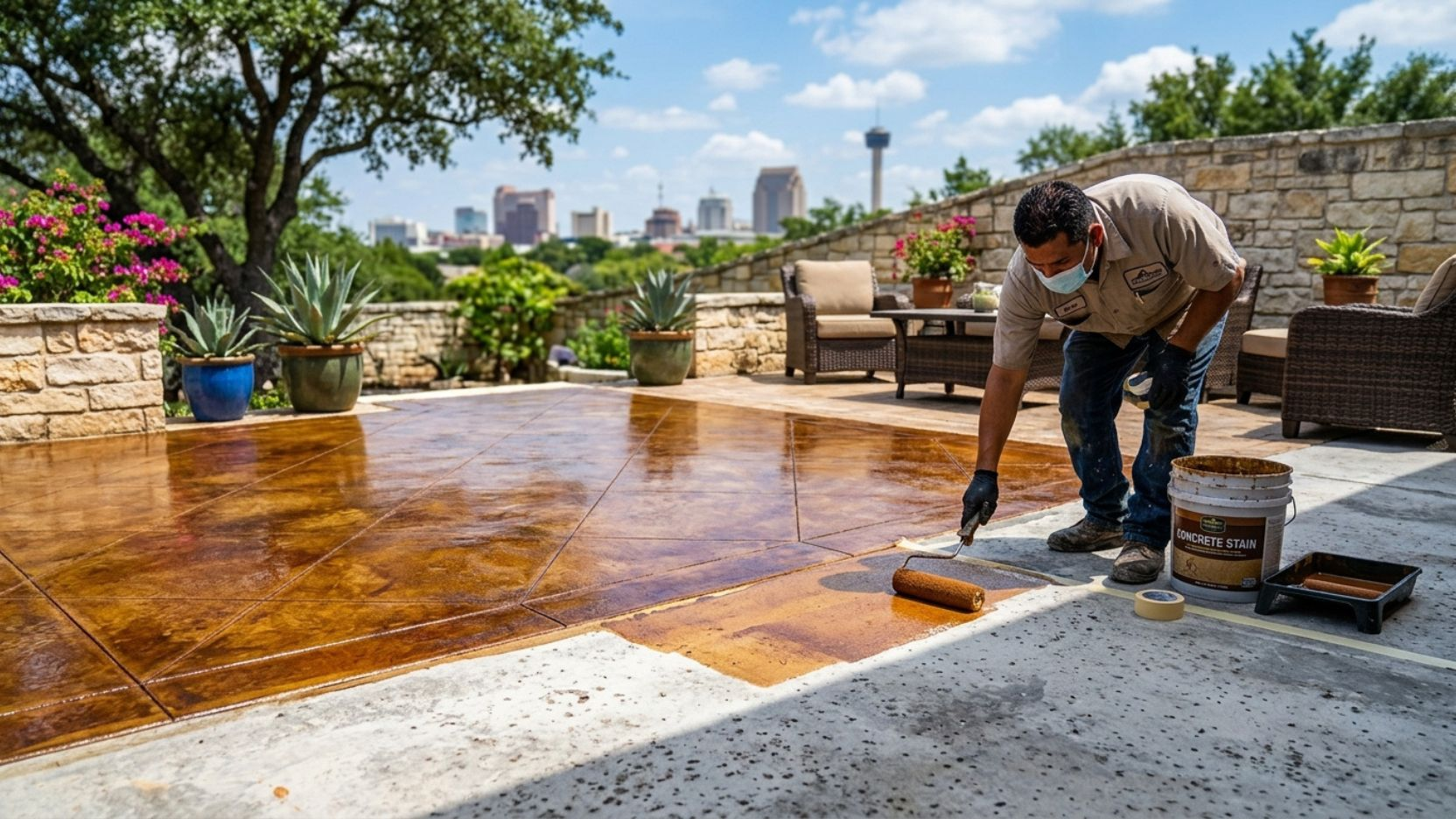
Concrete staining in San Antonio ranges from $2 to $15 per square foot depending on stain type, surface condition, and project size. This guide breaks down every cost factor so you know exactly what to expect before you call a single contractor.
Concrete staining is one of the most cost-effective ways to transform a dull gray slab into a surface that looks like natural stone, aged brick, or richly colored tile. In San Antonio, where outdoor living spaces are used nearly year-round, a stained patio or pool deck can add real visual value to a home without the cost of a tear-out and replacement. But the price range is wide, and the factors that drive cost up or down are not always obvious from a contractor quote alone.
This guide covers the full pricing picture for concrete staining in San Antonio in 2026: cost by stain type, project size, surface prep requirements, sealing, and how to evaluate quotes so you are comparing apples to apples when you get multiple bids.
Most homeowners assume the stain product itself drives the price difference between a $3/sqft and a $10/sqft job. In reality, surface preparation accounts for the largest variable. A slab with old paint, sealers, oil stains, or significant damage can cost more to prep than to stain. A clean, porous, well-cured slab is the cheapest possible starting point. Before you budget for staining, budget for an honest assessment of what your existing concrete actually looks like.
Stain Type
Not all concrete stains are priced the same, and they do not produce the same results. The three main categories used in San Antonio are acid stains, water-based acrylic stains, and concrete dyes. Each has a different cost profile, a different look, and different suitability for San Antonio’s climate and typical slab conditions.
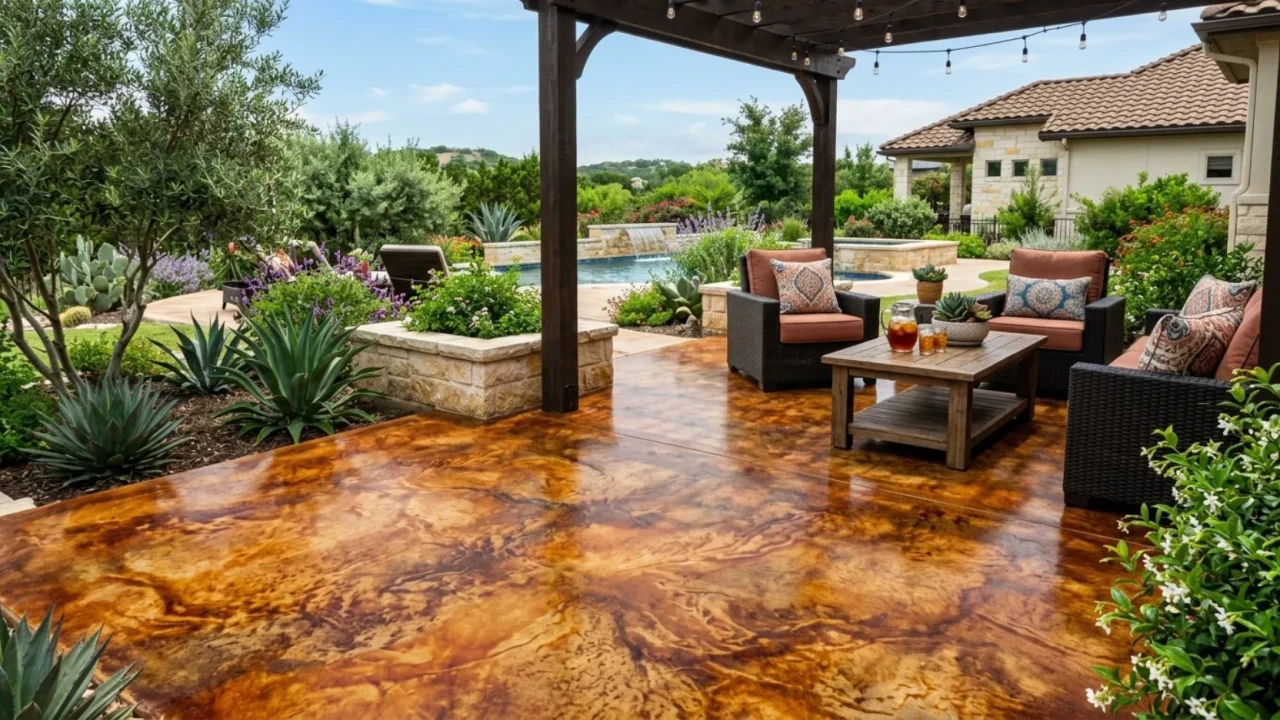
Acid stain reacts chemically with the minerals in the concrete to produce permanent, mottled earth tones. Colors are limited to the amber, brown, green, and terracotta range. No two slabs look identical, which is the appeal. Because the reaction is permanent, mistakes are very difficult to correct. Acid stain costs more in labor because the application and neutralization process requires more steps and more skill.
Water-based acrylic stain delivers a broader color palette and more consistent results. It penetrates the concrete surface without a chemical reaction, making the color more predictable. Better choice for homeowners who want a specific color match. Easier to apply and less hazardous than acid stain, which keeps contractor labor costs slightly lower.
- Application confirmed as interior or exterior concrete dyes require a UV-stable topcoat for outdoor use in San Antonio
- Color expectations discussed: acid stain produces earth tones only; water-based stain offers a full palette
- Contractor has done a test patch on your specific slab before final product selection
- Permanence understood: acid stain cannot be fully removed or color-corrected once applied
- Sealing product compatible with stain type confirmed in writing before project begins
Surface Prep
Surface preparation is where low-ball quotes fall apart. Stain only penetrates bare, clean, porous concrete. Any existing sealer, paint coating, oil penetration, or efflorescence on the surface blocks the stain from absorbing properly, producing blotchy or uneven color. Removing those barriers takes labor and equipment, and it adds directly to the cost. A quote that does not mention prep is a quote that assumes your slab is already in ideal condition.

In San Antonio, the most common prep challenges are: existing acrylic sealer from a previous contractor, oil stains from vehicle parking on driveways and garage floors, efflorescence (white mineral deposits) from water migration, and mold or algae on outdoor slabs left in partial shade. Each requires a different treatment and adds a different cost.
The water drop test tells you whether your slab will accept stain: Pour a small amount of water on the surface. If it beads up and sits on top, there is an existing sealer blocking absorption and the surface needs mechanical prep before staining. If it soaks in within 30 seconds, the concrete is open and ready. Do this test before you call contractors so you already know whether surface prep will be a line item in every quote you receive.
- Water drop test performed confirmed whether slab is sealed or open and porous
- Contractor has inspected for existing paint, sealers, or oil contamination during the site visit
- Prep method specified in the quote: acid etch, shot blasting, or chemical strip
- Crack and damage repair scope identified and priced separately in the quote
- Prep cost is a line item in the written quote, not bundled into a single total
Size and Detail
Project size affects price per square foot in concrete staining the same way it does in most contractor work: setup and mobilization costs are fixed, so the larger the project, the more those fixed costs are spread across square footage. A 200 sqft patio job may run $6–8/sqft while the same quality work on a 1,000 sqft area might come in at $4–5/sqft. The product cost drops at volume, and labor efficiency improves on a larger, uninterrupted area.

Complexity adds cost in two main ways: decorative saw cuts and scoring patterns, and multi-color application. Saw cuts scored into the concrete before staining create visual texture and can simulate tile, flagstone, or brick layouts. Each cut adds labor time. Multi-color stain work, where different areas are masked and stained in different tones, multiplies the number of application passes and drying cycles required.
Decorative scoring and saw cuts are quoted separately from the staining price. Expect to pay $1.50–3.00 per linear foot for standard saw-cut control joints repurposed as a design element, and $2.00–5.00 per linear foot for decorative scored patterns that create a tile or flagstone grid effect. Border and medallion designs require masking and multiple stain colors, adding $200–800 to a typical patio job depending on the pattern complexity.
The highest value upgrade for a stained concrete patio in San Antonio is a simple scored border at $1.50–2.00 per linear foot. Running a single border cut 6–12 inches from the slab edge, then staining the border a slightly different tone from the field, produces a finished look that photographs like a tile installation. On a 400 sqft patio with roughly 80 linear feet of perimeter, that border adds approximately $120–160 to the job and transforms the visual quality of the result.
- Total square footage measured accurately before quoting use length x width and subtract any fixed structures
- Decorative scoring or saw-cut patterns priced separately as a line item, not bundled into stain cost
- Multi-color design plan approved in writing with a reference image before any masking or application begins
- Minimum project fee disclosed small jobs under 150 sqft may trigger a flat minimum regardless of square footage
- Volume discount confirmed for projects over 500 sqft price per sqft should decrease at this scale
Sealing
Sealing is not optional on a stained concrete surface in San Antonio. The combination of intense UV radiation, summer heat exceeding 100 degrees, and regular wet-dry cycles will degrade an unsealed stained surface within one season. A sealer protects the color, makes the surface easier to clean, and reduces moisture penetration that can lift or fade the stain from below. The type of sealer you choose determines the finish appearance, the maintenance interval, and the cost.
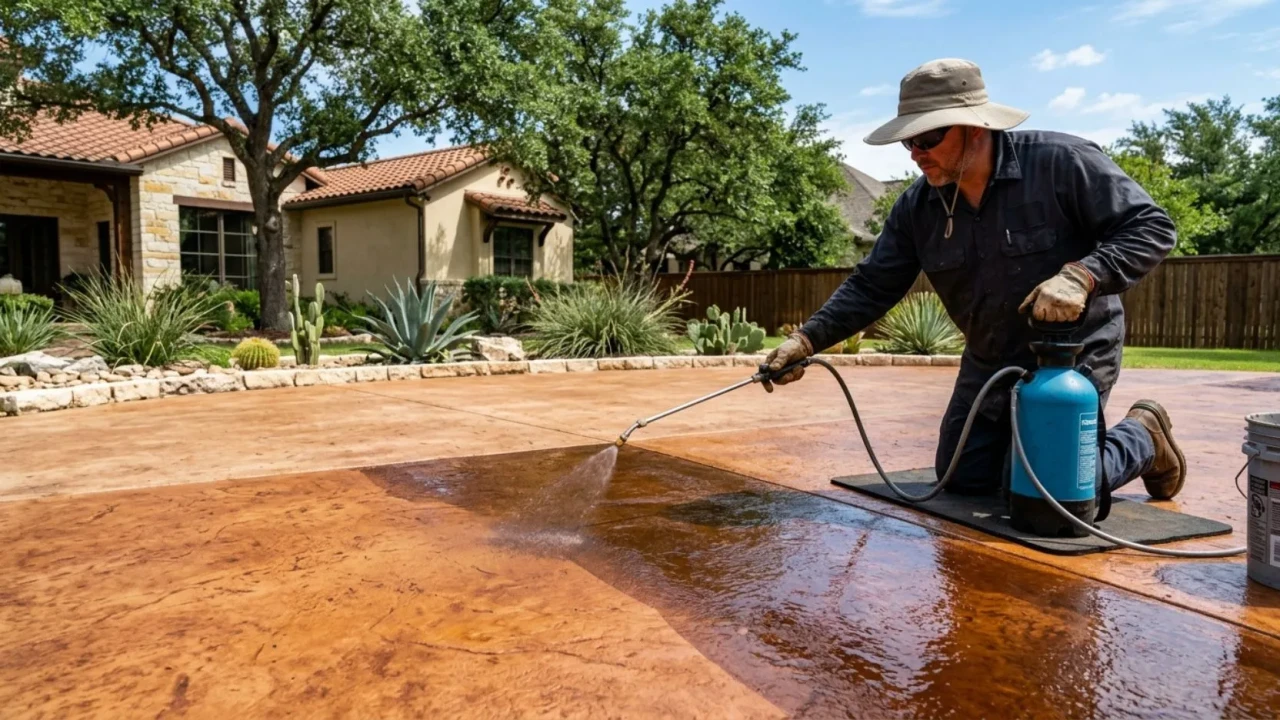
Solvent-based acrylic sealers produce a high-gloss, wet-look finish that enhances color depth. They are the most popular choice for San Antonio patios because they perform well in heat and UV. Water-based acrylics offer a satin or low-gloss finish with lower VOC content but require more frequent reapplication in hot climates. Polyurethane and epoxy topcoats provide the longest lifespan but cost significantly more and require professional application.
Most San Antonio contractors include one coat of sealer in their staining quote. Confirm this when reviewing bids: some lower quotes deliberately exclude sealing to appear more competitive, then add it back as an extra once the staining work is complete. A complete staining job without sealing is not a complete job.
- Sealer type specified in the quote: solvent-based acrylic, water-based acrylic, or polyurethane topcoat
- Number of sealer coats confirmed: outdoor San Antonio applications should have a minimum of two coats
- Sealing is included as a line item in the staining quote, not listed as a separate optional service
- Reapplication interval discussed: every 2 years for solvent acrylic in San Antonio outdoor conditions
- Surface must be fully dry and cured before sealing contractor to confirm drying time after stain application
Project Costs
The numbers below represent what San Antonio homeowners actually pay for complete concrete staining projects in 2026, including prep, stain, and sealing. These are installed costs from licensed local contractors, not materials-only estimates from big box stores. National average data consistently understates what work costs in San Antonio due to higher labor rates and the specific prep demands of Bexar County’s clay soil environment.
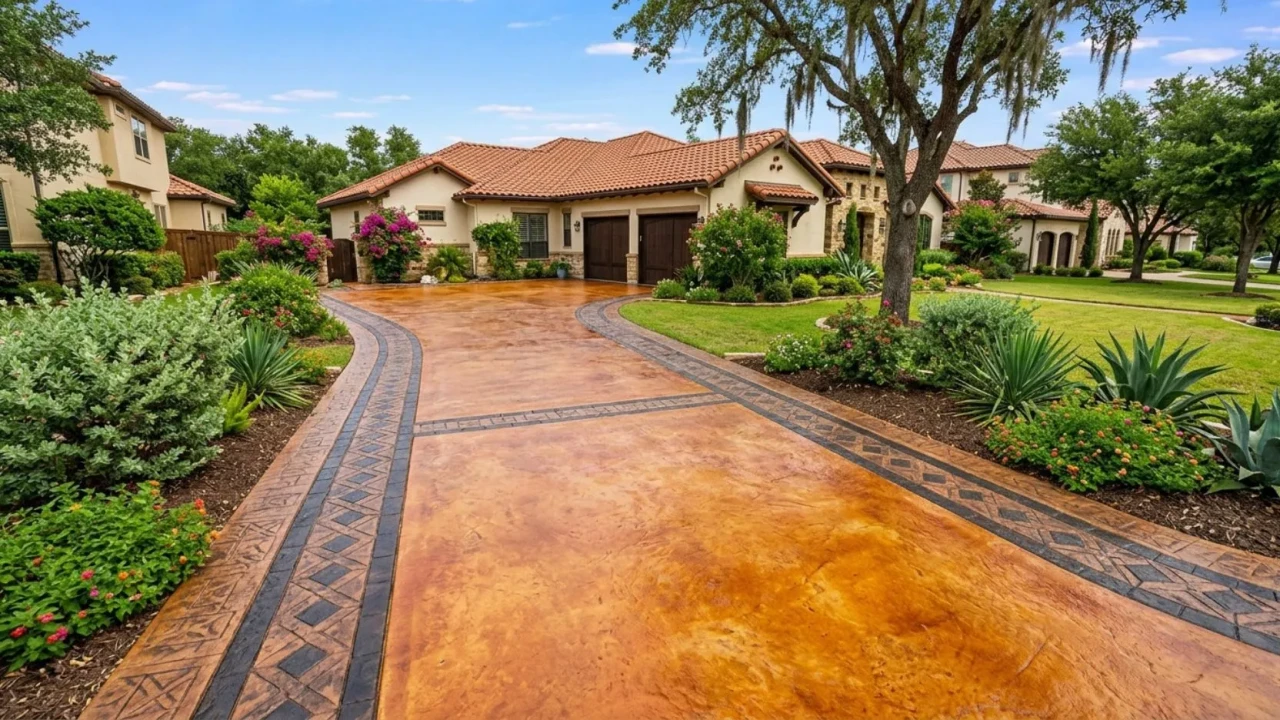
The most common staining projects in San Antonio are patio refreshes (existing concrete, no new pour), garage floor staining, and driveway accent staining. Interior floor staining has grown significantly in recent years as homeowners renovating older San Antonio homes choose stained concrete over tile replacement. Pricing differs across these applications primarily because of surface conditions and square footage norms for each project type.
| Project type | Typical size | Price range (installed) | Most common stain type |
|---|---|---|---|
| Backyard patio | 300–600 sqft | $1,200–4,800 | Acid stain or water-based |
| Garage floor | 400–600 sqft | $1,500–4,000 | Water-based or dye + epoxy coat |
| Driveway (standard) | 500–800 sqft | $1,800–5,600 | Water-based (more durable on heavy traffic) |
| Pool deck | 400–800 sqft | $2,000–7,200 | Acid stain with non-slip additive in sealer |
| Interior floor (residential) | 500–1,500 sqft | $2,000–10,500 | Acid stain or dye for vibrant color |
| Front porch or entryway | 100–250 sqft | $700–2,500 | Acid stain or water-based with border scoring |
| Commercial floor | 1,000+ sqft | $2,000–12,000+ | Water-based with polyurethane topcoat |
The best time to stain concrete in San Antonio is October through March. Contractor demand drops after the summer patio season, and most established local companies reduce pricing or offer better scheduling flexibility in the fall and winter months. Staining is also more predictable in cooler temperatures the stain penetrates more evenly and the sealer cures without the risk of bubbling from summer heat. If your project is not urgent, scheduling in fall typically saves 10 to 20 percent off peak-season rates.
- All quotes are for the same scope: prep, stain, and sealing included in every bid you compare
- Square footage is measured and confirmed do not accept quotes based on the contractor’s visual estimate alone
- Stain brand and product specified: not just “acid stain” but a named product from a named manufacturer
- Number of stain coats included: most applications require two coats for uniform coverage
- Cleanup and disposal included: stain application produces waste product that requires proper disposal
- Warranty offered: reputable San Antonio staining contractors provide at least a one-year workmanship warranty
The most common question San Antonio homeowners ask before starting a staining project is whether to use acid stain or water-based stain. The table below covers every practical difference including cost, color range, longevity, and ideal application so you can make the right call for your specific surface.
| Factor | Acid Stain | Water-Based Stain |
|---|---|---|
| Installed cost (San Antonio) | $3–7/sqft | $2–5/sqft |
| Color range | Earth tones only: amber, brown, terracotta, green, blue-gray | Full spectrum including whites, grays, reds, and custom colors |
| Color consistency | Variable unique mottled pattern, no two slabs identical | Consistent predictable and repeatable results |
| Permanence | Permanent chemical bond cannot be fully removed | Penetrating but removable with grinding if needed |
| Suitable for outdoor San Antonio use | Yes UV-stable when sealed with solvent-based acrylic | Yes performs well with proper UV-stable sealer |
| Works on older slabs | Yes often produces more dramatic results on aged concrete | Yes more consistent on slabs with variable mineral content |
| Application complexity | High acid neutralization required, fumes, multi-step process | Low to moderate water cleanup, simpler application |
| Best for | Patios, pool decks, interior floors where unique appearance is the goal | Driveways, garage floors, commercial spaces where specific color is required |
- Performed the water drop test to confirm whether your slab has an existing sealer
- Noted the age of the slab and any previous coatings, paint, or chemical treatments
- Identified any cracks, oil stains, or damage that will need to be addressed before staining
- Decided on stain type preference: acid stain for natural variation, water-based for color control
- All quotes include surface prep, stain product, stain application, and sealing in the scope
- Square footage has been measured, not estimated visually, by both you and the contractor
- Prep method is specified: acid etch for clean slabs, shot blasting or chemical strip for sealed slabs
- Stain brand and specific product name are listed not just “acid stain” or “water-based stain”
- Number of stain coats specified: one coat is the minimum, two coats is standard for outdoor applications
- Sealer type and number of coats specified: outdoor San Antonio applications need two coats minimum
- Decorative scoring or multi-color work is priced as a separate line item
- Contractor has provided a certificate of insurance with at least $1M general liability
- References from completed San Antonio staining projects are available and have been checked
- Payment terms confirmed: no more than 30–50% deposit before work begins
- Written contract specifies the stain product, color reference, and sealer product before any work starts
- No foot traffic for 24 hours after sealer application; no vehicle traffic for 72 hours
- First resealing scheduled for 2 years after installation for outdoor solvent-based acrylic sealer
- Cleaning instructions received from contractor: pH-neutral cleaner only on stained and sealed concrete
- Do not use bleach, ammonia, or citrus-based cleaners they degrade acrylic sealers
How much does it cost to stain a concrete patio in San Antonio?
Is concrete staining cheaper than replacing the slab?
Can I stain my concrete myself to save money?
How long does stained concrete last in San Antonio’s climate?
What is the cheapest way to improve the look of an old concrete slab in San Antonio?
Get a free concrete staining quote in San Antonio
Tell us about your project — patio, garage floor, driveway, or interior slab. We’ll assess your surface, recommend the right stain type, and give you a detailed written quote at no cost.