
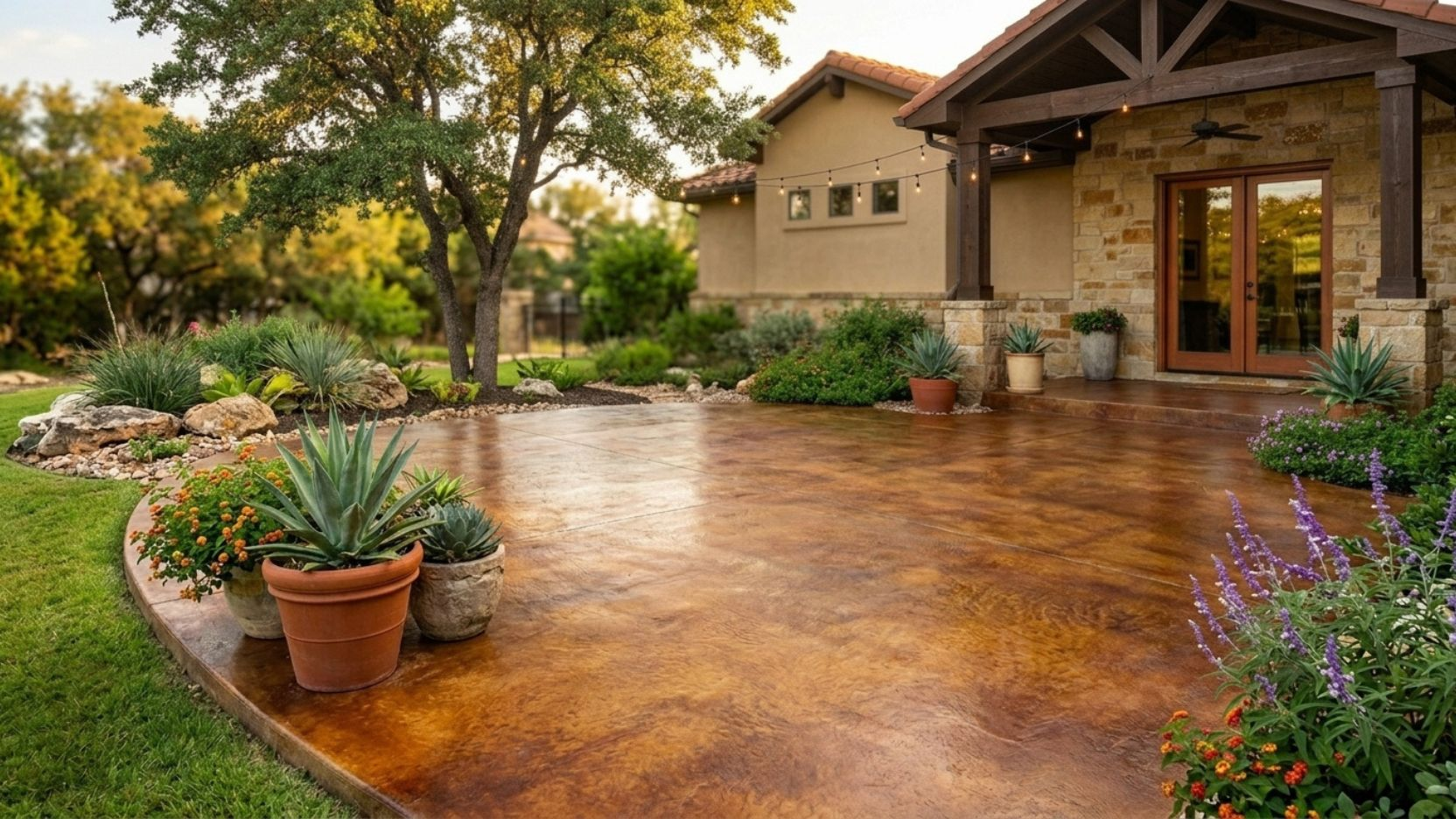
Stained concrete has become the most requested patio upgrade in San Antonio. Here is exactly why thousands of local homeowners have made the switch and what you need to know before starting your own project.
Drive through almost any established San Antonio neighborhood and you will start noticing it: patios that look like polished stone, covered porches with rich earth-tone floors, pool decks that seem too elegant to be plain concrete. Most of those surfaces are not imported tile or natural stone. They are stained concrete an upgrade that has become one of the fastest-growing home improvement projects in Bexar County.
The reasons are practical as much as aesthetic. San Antonio homeowners are working with existing concrete slabs that are structurally sound but visually tired. Staining transforms them without the cost and disruption of full replacement. It also holds up exceptionally well in this specific climate: the pigments are locked into the concrete itself, not sitting on top of it, which means the intense Texas UV has less to attack. Add in the fact that a stained patio dramatically expands usable outdoor living space, and the appeal becomes obvious.
This guide covers the five reasons San Antonio homeowners consistently choose stained concrete along with the real costs, the maintenance realities, and what to watch out for before signing a contract.
Most decorative flooring options treat the concrete slab as a substrate to be covered. Staining treats it as the finished surface. The stain reacts chemically with the existing concrete, producing color that does not peel, chip, or fade the way paint or coatings do. In a climate with 220+ sunny days per year and summer temperatures regularly above 100 degrees Fahrenheit, that distinction matters enormously for long-term performance and appearance.
Aesthetics
Stained concrete produces something unusual in the world of home improvement: an outcome that actually gets better the longer you look at it. Acid staining in particular creates color through a chemical reaction with the minerals in the concrete. The result is a mottled, layered effect with natural variation terracotta, amber, walnut, and copper tones that shift in different lighting conditions. No two stained slabs ever look identical, which means your patio will not look like the one two streets over.
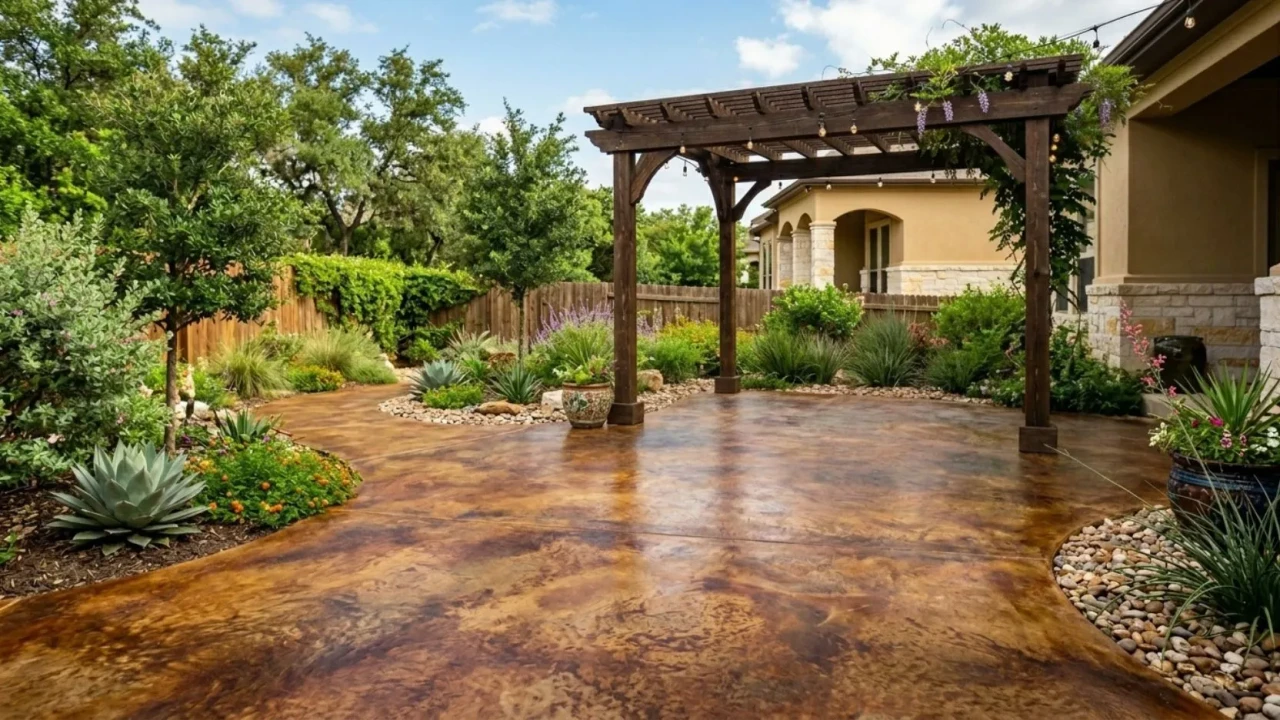
Water-based stains expand the palette considerably blues, greens, grays, and deep charcoals are all achievable. These are especially popular for covered patios and outdoor entertainment areas where homeowners want a specific color scheme that ties the interior floors to the exterior space.
The visual effect that consistently surprises first-time clients is the depth. Stained concrete does not look like painted concrete. It looks like stone that has been aged and polished, because the color is literally inside the surface rather than on top of it.
- Stain type chosen: acid stain for natural mottled variation, water-based for consistent color control
- Color palette confirmed in writing and tested on a small section before full application
- Border or accent design agreed upon these are applied while the base coat is wet
- Sealer sheen level selected: matte, satin, or high-gloss (high-gloss intensifies color depth)
- Sample or reference photos of completed local jobs provided by the contractor before work begins
Cost Savings
The single most common reaction we hear from homeowners who receive their first staining quote is: “That is much less than I expected.” Staining an existing concrete slab is one of the most cost-effective decorative upgrades available for outdoor surfaces. The concrete foundation is already there you are paying for the transformation, not the material.
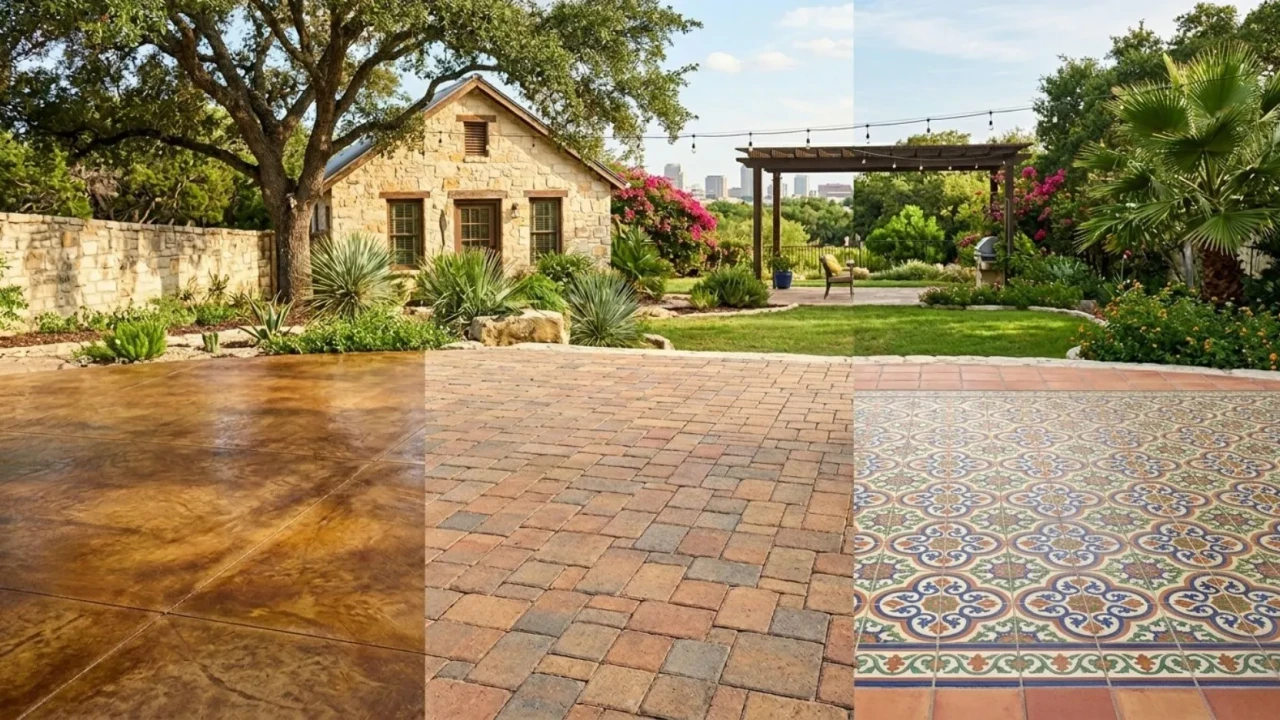
Compare the total project cost across the most common patio surface options in San Antonio and the gap becomes clear. A 400 square foot patio is a common residential size large enough for an outdoor dining area and seating section.
The most cost-effective scenario for staining in San Antonio: An existing concrete slab that is structurally sound but cosmetically tired minor surface staining, oil spots that can be degreased, or simply a dull gray color. These slabs require the least prep work and deliver the most value from staining. If your slab has significant cracking (wider than 1/4 inch), heaving, or major spalling, a decorative overlay adds cost but often still comes in well below full replacement.
- Surface preparation method specified: acid washing, mechanical grinding, or both this affects cost and final appearance
- Number of stain applications included: one coat versus two-color layering are different price points
- Sealer type specified: penetrating versus topical, and UV-resistance rating for outdoor use in Texas
- Oil or grease stain removal included if needed degreasing before staining is a separate prep step
- Crack repair or overlay costs broken out if the slab has damage no surprises on pour day
Durability
San Antonio is a demanding environment for outdoor surfaces. Summer temperatures regularly exceed 100 degrees Fahrenheit for weeks at a stretch. UV index values during peak summer are among the highest in the continental United States. The clay-heavy soils in Bexar County expand when wet and contract in drought, producing ground movement that cracks and separates rigid surface materials. Any outdoor surface you choose has to survive all three of these conditions simultaneously.
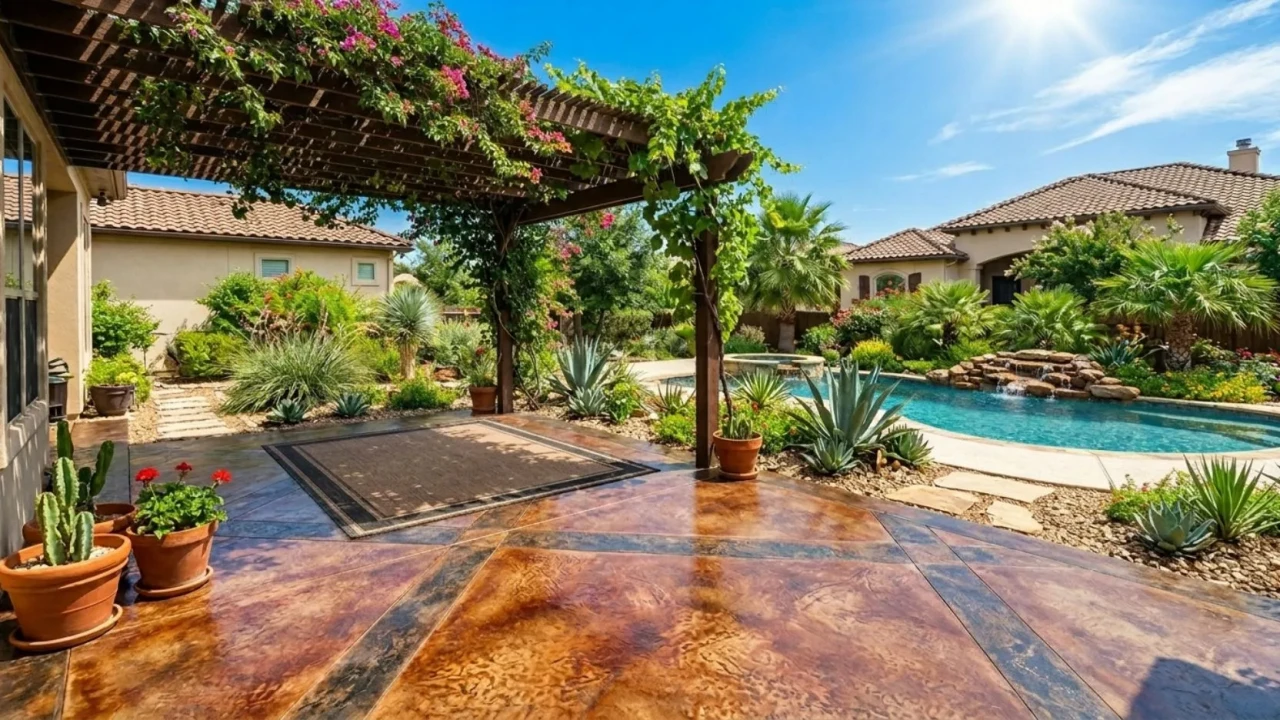
Stained concrete passes this test better than most people expect. The color is chemically bonded to the concrete itself, which means it cannot delaminate the way surface coatings can. It does not have grout lines to crack and fill with debris the way tile does. It does not have individual pieces that can shift, settle, or heave the way pavers do. The surface is monolithic it moves as a unit with the underlying slab.
| Surface type | UV resistance | Soil movement | Heat performance | Maintenance burden |
|---|---|---|---|---|
| Stained concrete | High (with UV sealer) | Good (monolithic slab) | Excellent no delamination | Low reseal every 2-3 yrs |
| Travertine tile | Excellent (stone) | Poor grout cracks under clay movement | Good | Moderate grout repair and sealing |
| Concrete pavers | Good | Moderate individual pieces can shift | Good | Moderate weeds in joints, resetting |
| Epoxy coating | Low yellows and peels under TX UV | Poor bond breaks with substrate movement | Poor bubbles in extreme heat | High recoating every 3-5 yrs |
| Stamped concrete | High (with sealer) | Good (monolithic) | Excellent | Low to moderate reseal every 2-3 yrs |
- Sealer confirmed as exterior-rated with UV resistance not an interior or general-purpose product
- Existing expansion joints preserved during staining these allow the slab to move without cracking
- Stain type compatible with outdoor exposure acid stains and exterior water-based products are both fine outdoors
- Resealing schedule agreed: every 2 to 3 years given San Antonio UV intensity
- Drainage slope confirmed: water pooling on a stained surface accelerates sealer breakdown
Outdoor Living
San Antonio enjoys mild weather from October through May which is roughly nine months of the year when outdoor living is comfortable or outright ideal. A plain gray concrete slab does not invite use. A stained concrete patio with comfortable furniture, a shaded pergola, and an outdoor kitchen does. The psychological effect of a finished, attractive outdoor space is real: homeowners use patios more when those patios feel like extensions of the home rather than utility slabs.
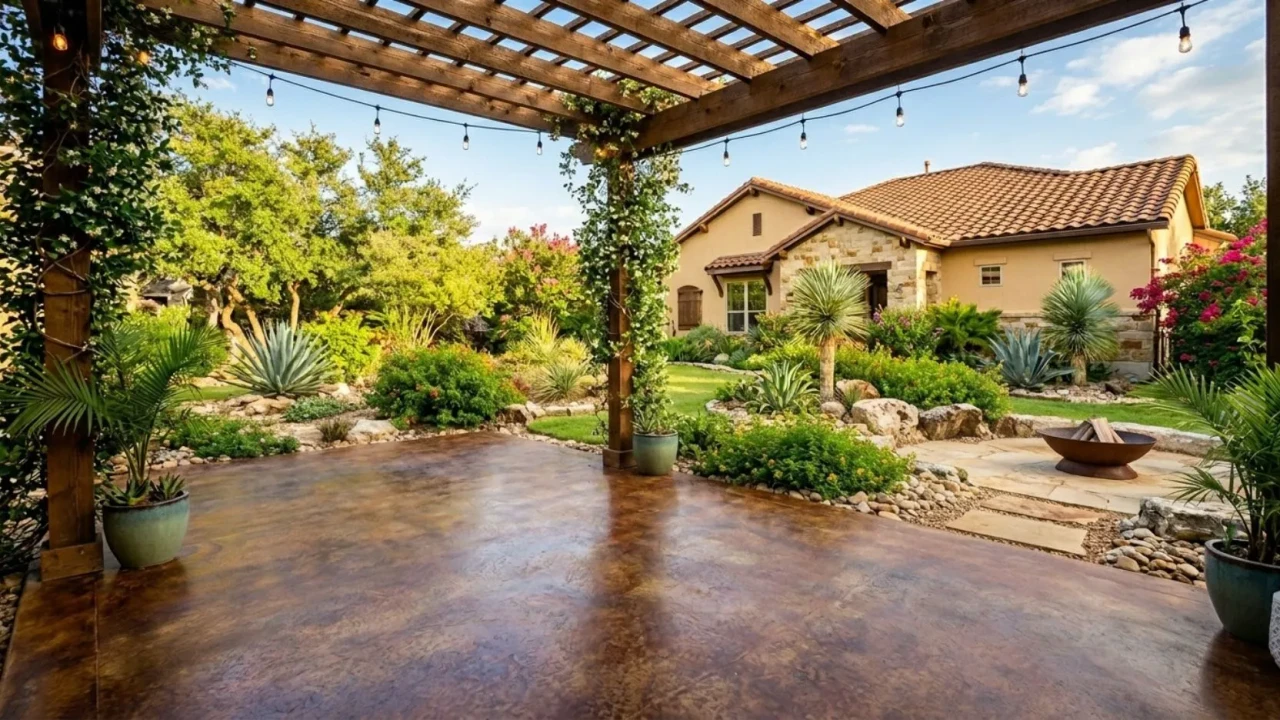
The practical benefits compound. A stained concrete patio integrates seamlessly with indoor flooring when the same stain color is used inside a home a popular design move in San Antonio homes with open floor plans that connect to covered outdoor areas. The visual continuity makes interior rooms feel larger and outdoor spaces feel more intentional.
Stained concrete is also one of the few outdoor surfaces that works well under covered patios where foot traffic wears patterns into softer materials. The hardness of concrete means high-traffic areas near doors and outdoor kitchens do not show wear the way composite decking or wood does.
Connecting indoor and outdoor floors in San Antonio homes: The most popular design request we receive is matching the interior stained concrete floor color to the exterior patio. When the same stain tone runs from inside the living room through the patio door and out to the covered patio, the visual boundary between interior and exterior disappears. Use a slightly lighter version of the indoor color outdoors UV and natural light will deepen the apparent saturation of the outdoor surface compared to the interior under artificial lighting.
- Non-slip finish confirmed for any areas that will get wet matte sealers provide more traction than high-gloss
- Color selected to work well in both direct sunlight and shade some tones shift significantly between the two
- Stain color coordinated with exterior paint, furniture, and any adjacent landscaping
- Interior-to-exterior color continuity discussed if the patio connects to an indoor stained floor
- Shaded areas marked on the plan covered sections dry more slowly and may absorb stain differently than exposed sections
Home Value
San Antonio’s real estate market has consistently rewarded outdoor living space upgrades. Buyers moving to South Texas from other regions place a high premium on usable outdoor areas because they understand what a mild, long season means for daily quality of life. A stained concrete patio in good condition reads as a finished, maintained feature not a project for the buyer to tackle after closing.
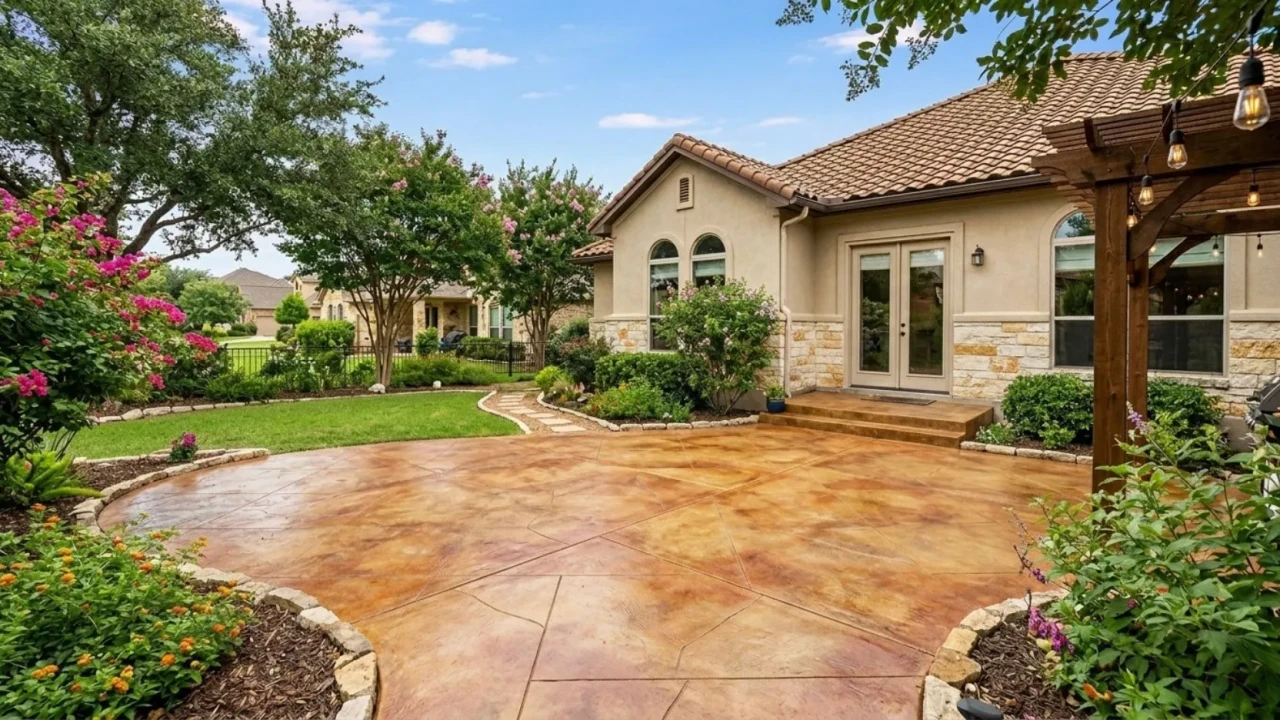
The calculus is straightforward for most homeowners: a staining project on an existing 400 square foot patio typically costs $1,200 to $2,800 total. The increase in perceived home value from a finished outdoor living space especially in a market where buyers are comparing similar homes regularly exceeds the project cost. The investment also pays off immediately in quality of life, regardless of when or whether the home is sold.
The longevity factor matters for resale value calculation. A stained and properly maintained patio will look good 10 to 15 years from now well within the window most homeowners hold a property. Tile grout deteriorates. Paver joints weed and shift. Painted concrete peels. A properly stained and sealed concrete surface ages gracefully, requiring only periodic resealing rather than periodic replacement.
- Stain and sealer quality documented keep product names and application dates for disclosure to future buyers
- Resealing schedule followed a well-maintained stained patio looks newer than its actual age
- Color selection neutral enough to appeal broadly warm earth tones outperform unusual color choices for resale
- Contractor’s work documented with before-and-after photos useful for appraisals and listings
- Any cracks repaired before staining a finished-looking surface starts with a sound substrate
- Slab is structurally sound with no cracks wider than 1/4 inch cracks must be repaired before staining
- No active water infiltration from below moisture migrating up through the slab will prevent stain adhesion
- Oil, grease, or chemical stains identified these require specialized degreasing before staining
- Previously applied coatings or sealers tested for compatibility with the stain product
- Overlay option discussed if the surface is too damaged for direct staining
- Stain type selected: acid stain for mottled natural variation, water-based for consistent color control
- Color confirmed with a small test section before full application concrete color varies between slabs
- Border or scoring pattern design agreed upon in writing
- Sealer sheen level chosen: matte for non-slip outdoor use, satin or gloss for interior and covered patios
- Reference photos of completed local San Antonio projects reviewed and approved
- Certificate of insurance received $1M minimum general liability for any concrete work
- Local references from completed San Antonio staining projects available
- Sealer product name confirmed as exterior-rated with UV resistance not an interior product
- Surface preparation method included in the quote acid washing or grinding, not just stain application
- Payment terms confirmed: deposit upfront, balance on completion only
- Resealing interval confirmed: every 2 to 3 years given San Antonio UV exposure
- Sealer product documented for future reapplication using the same product ensures compatibility
- Cleaning instructions provided: pH-neutral cleaner only, no bleach or acidic products on acid-stained surfaces
- First resealing reminder set for 28 to 30 days after initial application to allow full cure
Can you stain an old concrete patio that has some surface staining and discoloration?
How long does stained concrete last in San Antonio’s climate?
Is stained concrete slippery when wet?
What is the difference between acid staining and water-based staining for a patio?
How do you maintain a stained concrete patio in San Antonio?
Get a free staining quote for your San Antonio patio
Tell us about your slab size, condition, and what you want it to look like. We will visit your property, assess the surface, and give you a detailed written quote at no cost.