
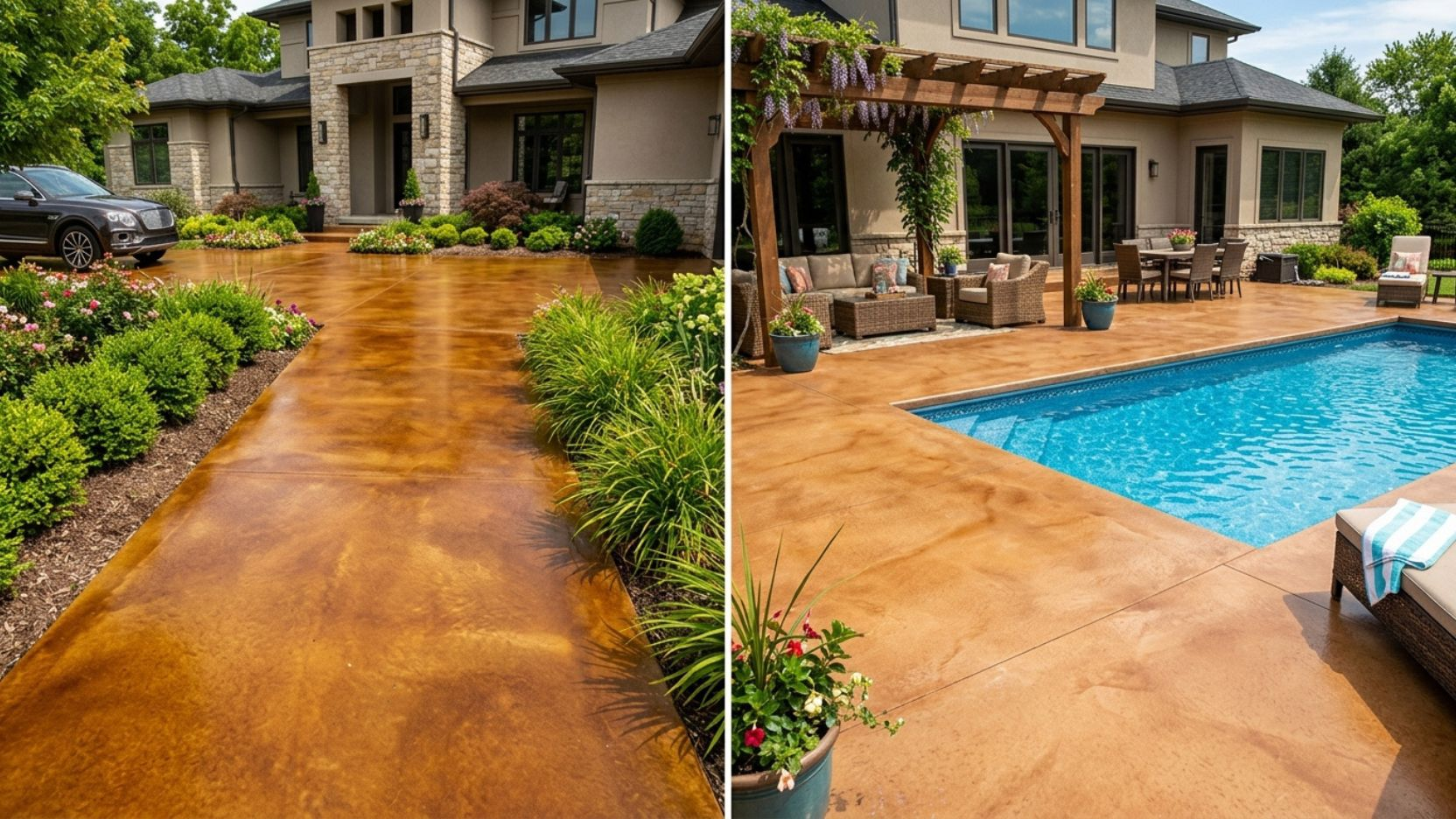
Not every concrete surface is an equally good candidate for staining. This complete pillar guide covers every surface type in and around your San Antonio home, what makes each one stainable, how much it costs, and what mistakes to avoid before the first drop of stain touches the slab.
Concrete staining is one of the highest-value upgrades available to San Antonio homeowners. A plain gray slab that has been there for years can be transformed into a rich, earth-toned surface with texture and depth that rival natural stone at a fraction of the replacement cost. The key is knowing which surfaces are genuine candidates and which ones will produce disappointing results.
This guide covers every major concrete surface found around a San Antonio home: patios, driveways, garage floors, pool decks, interior floors, sidewalks, and porches. For each one, we break down stainability, the right stain type, realistic cost expectations for Bexar County, and the prep requirements that most homeowners miss.
Concrete stain is not paint. It works by penetrating the surface and chemically reacting with the calcium in the concrete or bonding with its pores. Any barrier between the stain and the concrete (sealer, paint, adhesive residue, oil staining, or even a factory-applied curing compound) will block or significantly alter the final result. Before deciding whether a surface is a staining candidate, you need to know what is on it and what is in it. This guide will walk you through exactly how to evaluate each surface type in your home.
Top Candidate
A concrete patio is the ideal staining surface. It is typically a standard residential slab poured without a factory finish coating, it sits in a location where aesthetics genuinely matter, and the transformation from plain gray to warm earth tones is dramatic and immediately visible. San Antonio patios that have been sitting for five or more years are especially good candidates because the surface has fully cured and any efflorescence has had time to appear and be treated.

Acid staining is the most popular choice for patios in San Antonio. The chemical reaction between the muriatic-acid-based stain and the concrete’s calcium hydroxide produces mottled, translucent earth tones in amber, terra cotta, walnut brown, and sage green that look natural and age gracefully in direct Texas sun.
Water-based stains and dyes are also strong options for patios where more predictable color is desired. They produce more uniform results and come in a wider range of colors including blues, grays, and charcoals that acid stains cannot achieve.
- Surface is bare concrete with no sealer, paint, or coating blocking penetration
- Slab is at least 28 days old if recently poured
- Oil stains, grease, and rust spots treated and neutralized before staining
- Hairline cracks filled and cured before stain application
- Stain color and finish (matte, satin, or gloss) confirmed in writing before work begins
- Topical sealer applied within 24–48 hours of stain application
Strong Candidate
Garage floors are excellent staining candidates when the slab is bare and uncoated. Many San Antonio homeowners already have a plain gray garage slab that has never been treated. A stained garage floor changes the character of the space entirely and is one of the most cost-effective upgrades available per square foot of visual impact.
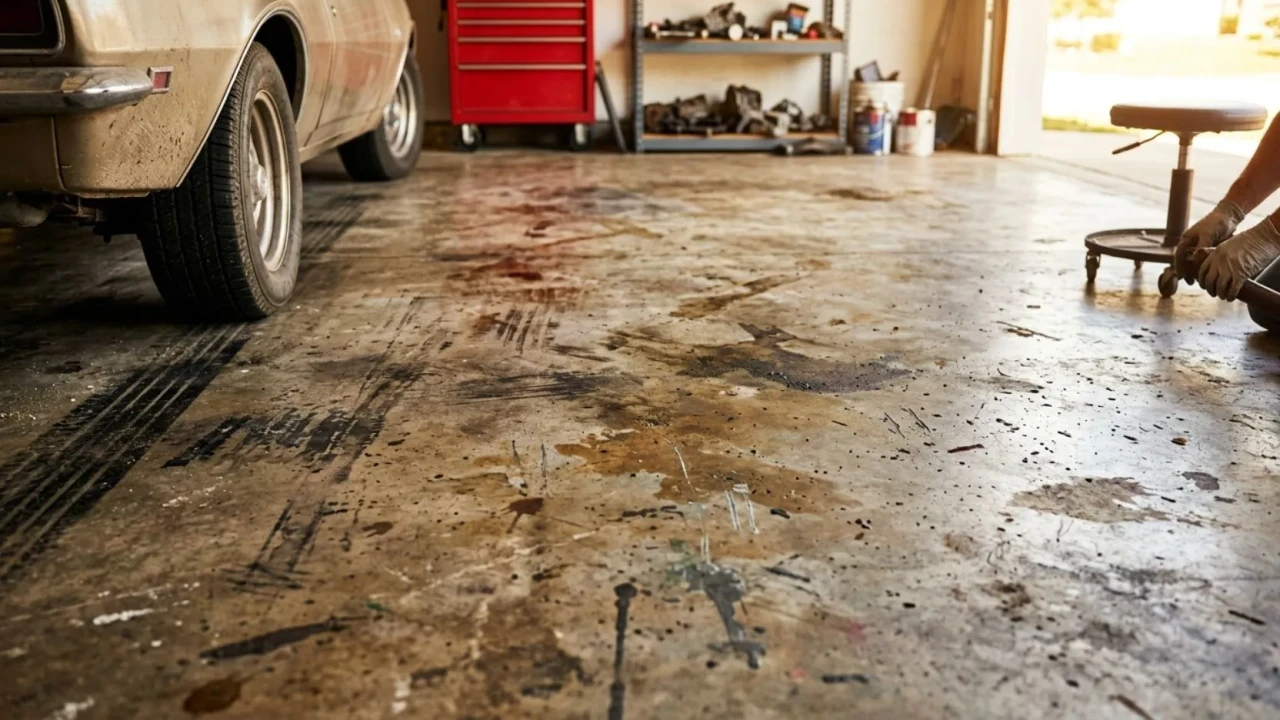
The primary challenge with garage floors is contamination. Virtually every garage slab in San Antonio has oil drips, grease, or tire marks embedded in the concrete from years of vehicle use. These must be degreased, treated, and sometimes mechanically ground before a stain will penetrate evenly.
Acid stain produces the most durable result on garage floors. The color becomes part of the concrete itself and cannot chip or peel the way epoxy coatings do. For homeowners who want a more finished look with a higher gloss, a water-based stain followed by a commercial-grade polyurethane sealer is the most popular combination we apply in San Antonio garages.
Garage floors vs. epoxy coating: Homeowners frequently ask whether to stain or coat a garage floor with epoxy. Staining is the more durable long-term choice. Epoxy eventually peels, especially in San Antonio’s heat cycles, and delamination from oil contamination is the most common reason garage floor coatings fail within three to five years. A properly stained and sealed garage floor will not peel, chip, or delaminate. It requires resealing every three to five years, but the base color is permanent.
- Water absorption test passed: water soaks in within 30 seconds, no beading
- Oil and grease stains degreased and mechanically prepped if needed
- Tire marks and rubber burns treated before stain application
- Expansion joints and cracks evaluated and filled
- Commercial-grade sealer specified: polyurethane or epoxy-top system for vehicle traffic
- Anti-slip additive discussed if a high-gloss finish is chosen
Good Candidate
A stained driveway is one of the most visible exterior upgrades a San Antonio homeowner can make. The driveway is typically the largest concrete surface visible from the street, and even a single-color acid stain in a warm earth tone dramatically improves the appearance of a plain gray slab.

Driveways are a good staining candidate with some important caveats. They see direct vehicle traffic, UV exposure from the Texas sun, and in San Antonio, occasional tire marks and oil drips from parked vehicles. These factors make sealer selection critical. A topical sealer designed for vehicle traffic is not optional on a stained driveway.
Concrete driveways that have been sealed previously will need the old sealer stripped or the surface mechanically prepped before new stain will penetrate. Driveways that have been oil-stained in parking areas may require diamond grinding to fully remove contamination before staining can produce even results.
Best sealer for a stained driveway in San Antonio: Use a penetrating silane-siloxane sealer as the base coat for UV and moisture protection, then apply a traffic-rated acrylic or polyurethane topcoat for color enhancement and sheen. The two-coat system outperforms a single topical sealer in San Antonio’s combination of intense UV and summer heat expansion cycles. Recoat the topcoat every two to three years. The penetrating base coat typically lasts five to seven years before needing reapplication.
- Previous sealer stripped or surface mechanically prepped if water beads on contact
- Oil drip areas degreased and tested for penetration before stain is applied
- Expansion joints evaluated: old sealant removed and replaced after staining is complete
- Traffic-rated sealer specified for vehicle use
- Resealing schedule confirmed: every 2–3 years for topcoat maintenance
- Edge detailing and any adjoining walkways considered for color continuity
Specialized Prep
Pool decks are stainable, but they require the most careful sealer selection of any surface type covered in this guide. The concrete around a pool gets wet repeatedly throughout the day during San Antonio’s long summer season. An improperly sealed stained pool deck becomes slippery when wet, creating a genuine safety hazard. The staining itself is straightforward. The sealer system is where pool deck projects require specialist knowledge.

Acid stain in lighter tones works very well on pool decks in San Antonio because lighter colors reflect heat rather than absorbing it, keeping the surface more comfortable underfoot during July and August. Terra cotta, light amber, and sandy buff tones are the most popular pool deck stain colors we apply in Bexar County.
The pool deck sealer must include a non-slip additive. Aluminum oxide or polymer grit added to the topcoat creates a texture that maintains traction even when the surface is wet. This is non-negotiable for safety. Specify this requirement explicitly when getting quotes from contractors.
- Non-slip additive specified in writing in the sealer system
- Light stain tone chosen for heat reflection in San Antonio summer
- Existing pool deck coating or sealer tested and stripped if blocking penetration
- Chlorine and water splash zones evaluated for chemical compatibility with stain and sealer
- Coping and deck junction sealed with flexible sealant after staining is complete
- Resealing every 1–2 years for pool decks due to water and chemical exposure
Excellent Candidate
Interior concrete floors are among the best candidates for staining precisely because they are protected from UV exposure and temperature extremes. The stain colors remain more vibrant longer indoors, and the sealer does not face the same UV degradation that outdoor sealers do. Many San Antonio homes built in the last 20 years have polished or stained concrete as the primary flooring in living spaces, and it is a growing trend in renovations as homeowners move away from carpet and tile.

The main challenge with interior floors is that they may have adhesive residue from previous flooring installations. Tile mastic, vinyl adhesive, carpet tack strips, and paint overspray are all common on interior slabs that previously had flooring installed over them. All of these must be mechanically removed before staining can produce even results.
Water-based dyes are often preferred for interior floors because they offer more precise color control than acid stains and are available in a wider range of colors. Acid stain still produces beautiful results indoors and is the choice for homeowners who want the natural, mottled character that the chemical reaction creates.
What to do if your floor had tile or vinyl on it: Adhesive residue is the number one reason interior concrete staining projects produce uneven or patchy results. If the floor previously had tile, vinyl, or hardwood glued down, plan for a diamond grinding step before staining. This mechanically removes the adhesive and opens the concrete pores for even stain penetration. The grinding step adds cost (typically $1–2 per square foot in San Antonio) but skipping it will result in blotchy stain that cannot be corrected without grinding anyway. Budget for it from the start.
- Previous flooring adhesive, paint, or residue fully removed before staining
- Water absorption test passed after prep: water penetrates in under 30 seconds
- Concrete age confirmed: at least 28 days since original pour
- Interior-rated sealer specified: polyurethane or acrylic for foot traffic
- Finish sheen confirmed: matte for low-glare, satin for balance, high-gloss for modern aesthetic
- Ventilation plan confirmed for acid stain application: fumes require open windows and fans
High Impact
Covered porches and front entryways have a staining advantage that open patios and driveways do not: shade. Because a covered porch is protected from direct UV exposure, stain colors last longer and sealers degrade more slowly. The front entryway is also the highest-visibility concrete surface on the exterior of any home. A stained and polished entryway slab is one of the first things visitors and potential buyers notice.
Porches and entryways are frequently candidates for decorative staining with saw-cut borders, multiple colors, or stenciled patterns because the scale is manageable and the surface is protected enough to maintain more delicate decorative effects over time. In San Antonio neighborhoods, a stained front porch in a coordinating color to the home’s exterior is a standout curb appeal move that adds measurable resale value.
Coordinating porch stain color with your home’s exterior in San Antonio: The most popular combination we see in Bexar County is a warm amber or terra cotta acid stain on the front porch paired with brick or stone facade homes. For stucco exteriors, a cooler-toned concrete dye in gray-blue or charcoal coordinates well with white or tan stucco. Pull one color from your front door or trim and use it as a reference for the stain tone. The goal is coordination, not a perfect match, as acid stain has a natural variation that reads well alongside any natural exterior material.
- Surface free of paint, sealers, or coatings that would block stain penetration
- Saw-cut decorative border pattern agreed upon before work begins
- Stain color coordinated with home’s exterior color scheme
- Transition between porch and interior flooring evaluated to prevent stain bleedover
- Step edges and nosings treated carefully to prevent chipping at high-wear points
- Sealer with slip-resistant finish applied if steps are part of the area
Use this table to quickly identify which surfaces in your home are the best candidates for staining, what type of stain works best for each, and what to expect in cost and ongoing maintenance.
| Surface | Stainability | Best stain type | Cost range (SA) | Primary prep concern |
|---|---|---|---|---|
| Concrete patio | Excellent | Acid stain or water-based | $2–6/sqft | Oil stains, hairline cracks |
| Garage floor | Good | Acid stain | $3–7/sqft | Oil/grease contamination, curing compound |
| Driveway | Good | Acid stain | $3–6/sqft | Previous sealer, tire marks |
| Pool deck | Good | Acid stain (light tones) | $4–8/sqft | Non-slip sealer, heat absorption |
| Interior floor | Excellent | Acid stain or dye | $3–8/sqft | Adhesive residue, previous flooring |
| Covered porch / entryway | Excellent | Acid stain or water-based | $4–9/sqft | Paint or sealers blocking penetration |
- Water absorption test performed: water soaks in within 30 seconds confirms an unstained, unpainted surface
- Surface type identified: patio, garage, driveway, pool deck, interior, or porch
- Existing coatings, sealers, or adhesive residue identified and removal plan confirmed
- Cracks and damage inventoried: hairline cracks filled before staining, structural cracks evaluated by contractor
- Concrete age confirmed: new slabs must cure for at least 28 days before staining
- Stain type selected for the surface: acid stain for outdoor and vehicle-traffic areas, water-based dye for precise color indoors
- Color confirmed in writing: acid stain color references are approximate, not exact. Get a sample test on your slab
- Test patch requested before full application on large surfaces
- Light tone specified for pool decks to reduce heat absorption in San Antonio summer
- Decorative details (saw-cut borders, multi-color patterns, stencils) confirmed in scope
- Sealer type matches the surface: interior polyurethane, exterior acrylic or silane-siloxane, non-slip additive for pool decks
- Gloss level confirmed: matte, satin, or high-gloss
- Non-slip additive specified in writing for any pool deck or step application
- Resealing schedule confirmed: 1–2 years for pool decks, 2–3 years for outdoor patios, 3–5 years for interiors
- Contractor has completed staining projects on the same surface type (patio, garage, pool deck) in San Antonio
- Certificate of insurance received and verified
- Quote itemizes: surface prep, crack repair, stain application, neutralization, sealer coats, and cleanup
- References from completed local San Antonio staining projects available on request
- Payment terms confirmed: deposit plus balance on completion, not full payment before work begins
Can you stain any concrete surface, or are some unsuitable?
How long does concrete staining last in San Antonio’s heat and sun?
What is the difference between acid staining and water-based concrete staining?
How much does it cost to stain a concrete patio in San Antonio?
Can I stain my concrete driveway if it already has a sealer on it?
Get a free concrete staining quote in San Antonio
Tell us which surface you want to stain: patio, driveway, garage floor, pool deck, or interior. We will visit your property, evaluate the surface, and give you a detailed written quote at no charge.