
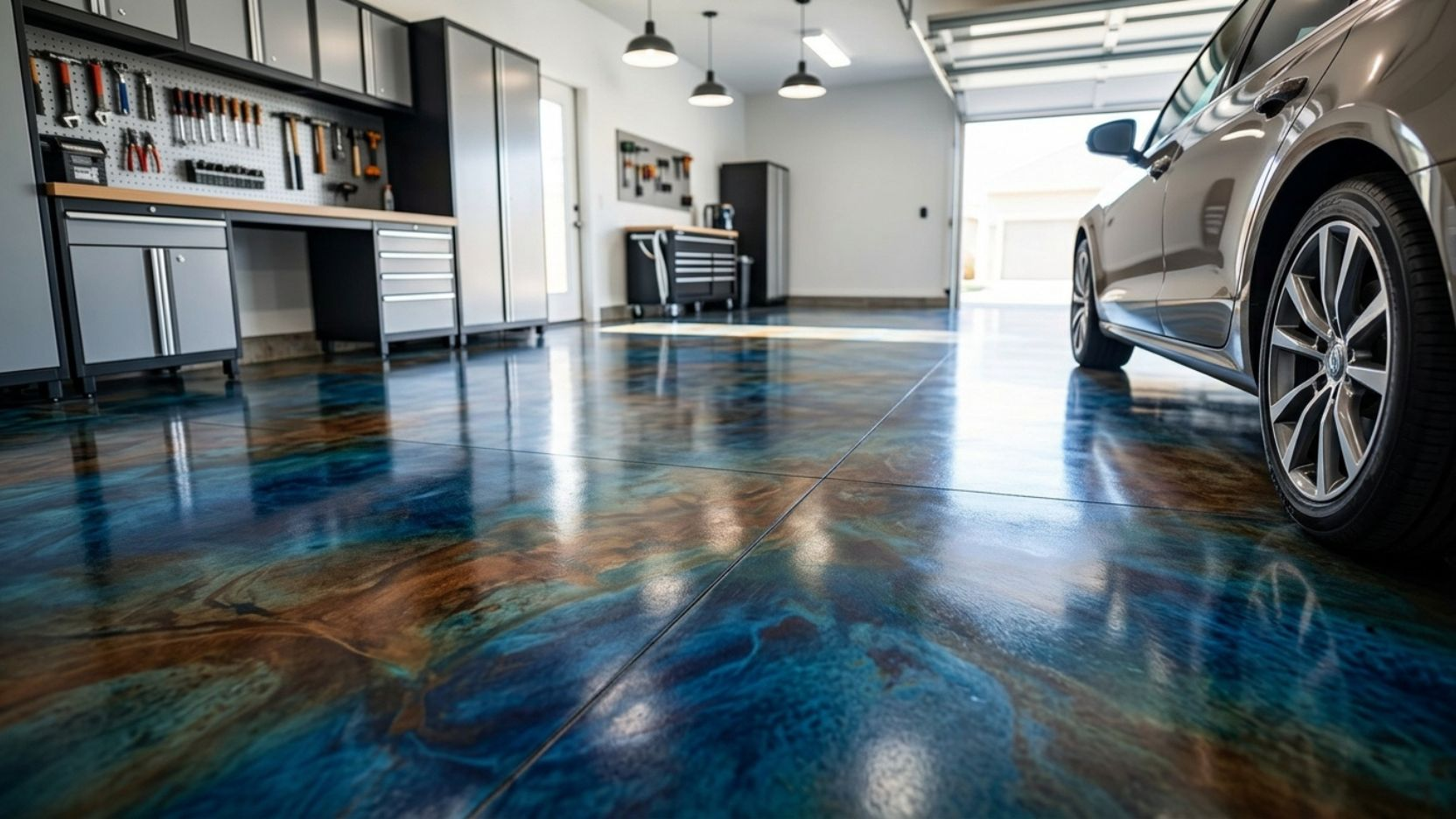
A stained garage floor is one of the highest-impact, lowest-effort upgrades a San Antonio homeowner can make. This guide covers why staining works so well on garage slabs, what it costs, the design options available in 2026, and how to prep an existing floor for the best results.
Most San Antonio homeowners walk past their garage floor every single day without giving it a second thought, until they see what a stained slab looks like next door. A bare gray garage floor is functional but forgettable. A stained one looks intentional, finished, and considerably more valuable, all for a fraction of what a full flooring replacement would cost.
This guide walks through exactly why stained garage floors have become one of the most requested upgrades we install, what realistic pricing looks like in San Antonio for 2026, the design styles homeowners are choosing right now, and what existing floor prep actually involves before staining begins.
Unlike a new patio or driveway, a garage slab is existing concrete that’s already cured, settled, and protected from direct sun and rain. That makes it one of the easiest and most cost effective surfaces to stain in the entire house. There’s no pour, no formwork, and no waiting on a 28 day cure. In most cases, the existing slab just needs cleaning, etching, and a stain and sealer application, which is why garage floor staining is consistently one of the best dollar for dollar upgrades we quote.
Benefits
A stained garage floor delivers more practical benefit per dollar than almost any other concrete upgrade. Beyond the obvious visual improvement, staining and sealing protects the slab itself, makes the space easier to maintain, and gives a garage that finished, livable feel that’s increasingly popular as homeowners convert garages into workshops, gyms, and extra living space.
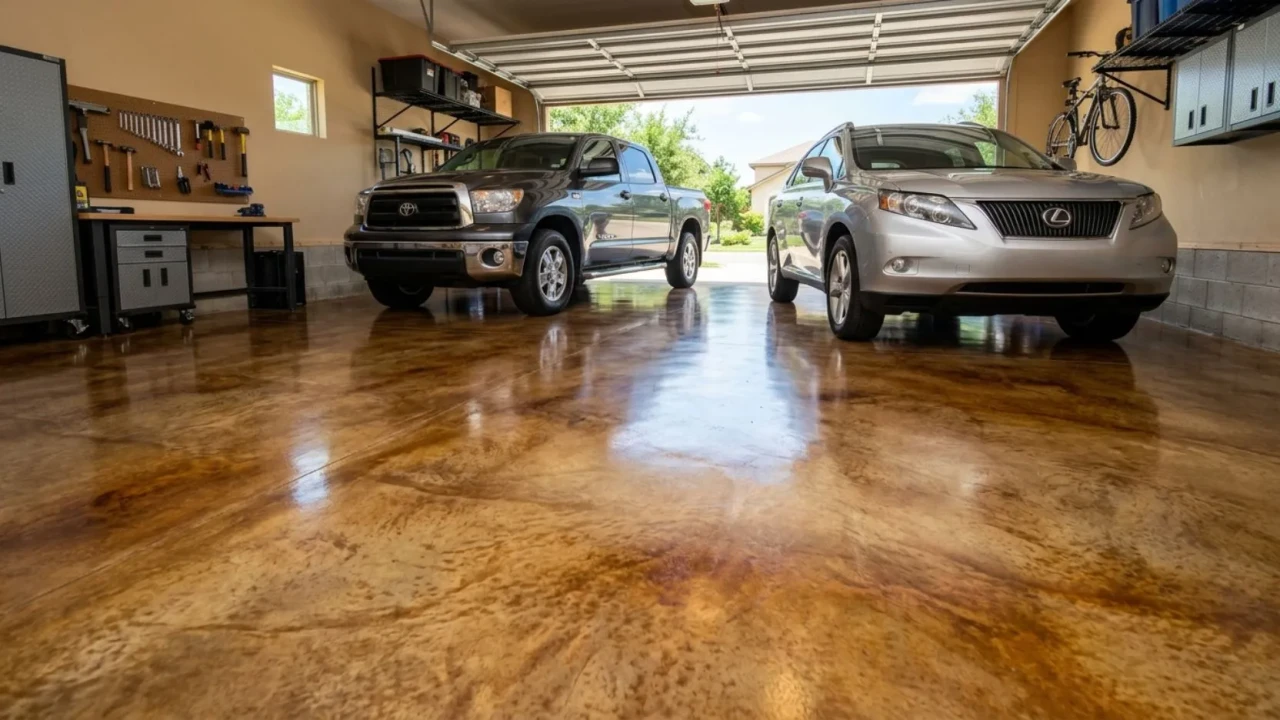
Protection: A sealed, stained floor resists oil stains, tire marks, and chemical spills far better than bare concrete, which is porous and absorbs everything that touches it.
Dust control: Bare concrete sheds fine dust as it wears, a problem most garage owners don’t notice until it’s tracked into the house. Sealing locks the surface down completely.
- Slab protection confirmed: sealing included as part of the staining package, not sold separately
- Maintenance expectations set: occasional sweeping and damp mopping, no harsh chemical cleaners
- Resale value discussed if selling within the next few years
- Use case confirmed: parking only, workshop, gym, or converted living space changes the recommended sealer
Cost
Pricing for a stained garage floor depends mostly on the staining method, the condition of the existing slab, and whether any repair work is needed before staining begins. A standard two car garage in San Antonio runs roughly 400 to 500 square feet, which puts most projects in a fairly predictable range.
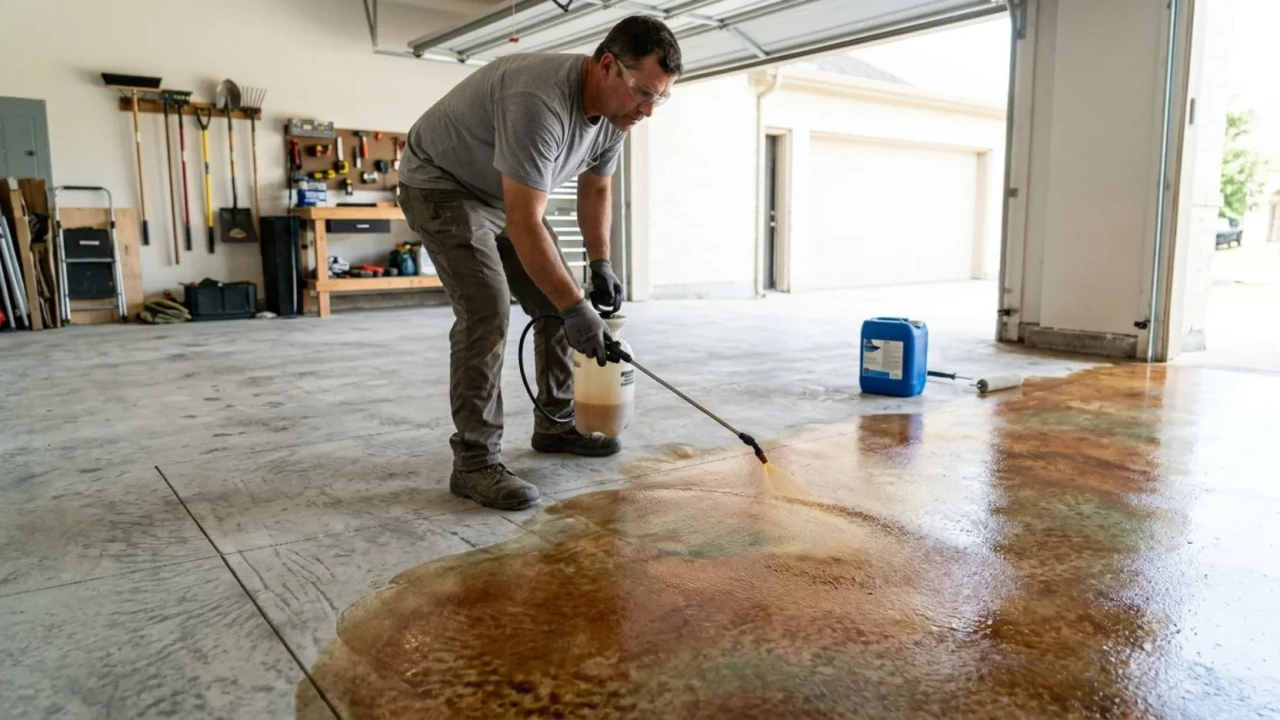
Acid (chemical) staining: Produces rich, variegated earth tones by reacting directly with the minerals in the concrete. Each floor turns out slightly different, which is part of the appeal for homeowners who want a one of a kind look.
Water based staining: Offers a wider, more consistent color palette including grays, blues, and greens. A good fit for homeowners who want a specific, repeatable color rather than a natural mottled effect.
Get an itemized quote that separates prep from staining: Some contractors bundle crack repair and grinding into a flat per-square-foot rate, which can hide the real cost of a heavily damaged slab. Ask for prep work and staining to be itemized separately so you know exactly what you’re paying for and can compare quotes accurately.
- Staining method confirmed: acid stain or water based, with a sample shown before work begins
- Quote itemizes cleaning, etching, repair, staining, and sealing separately
- Square footage measured and confirmed against the quote, not estimated
- Number of sealer coats specified: two coats is standard for garage floor durability
Design Ideas
Garage floor staining has moved well past the basic single gray tone. San Antonio homeowners now choose from a range of styles depending on whether the garage is purely functional or doubles as a workshop, gym, or showcase space for a project car.
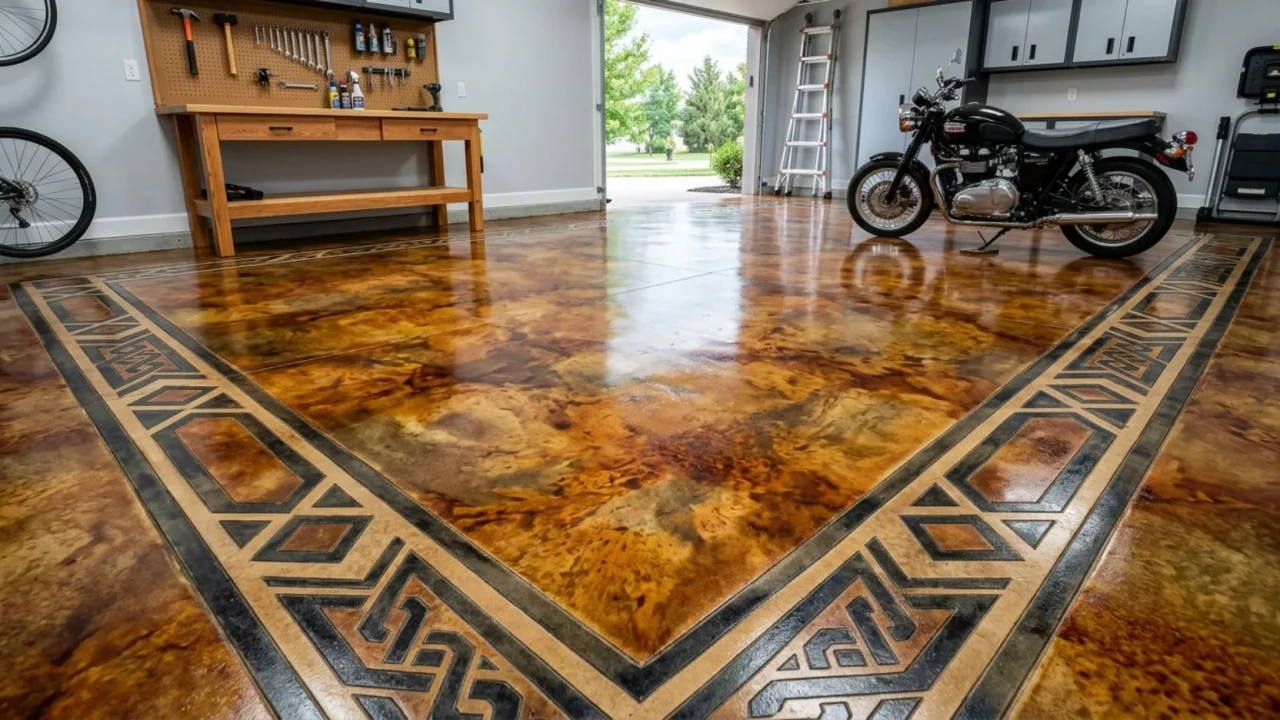
Beyond solid color choices, design elements like scored borders, faux tile patterns, and color blending are increasingly common in garages that double as livable or showcase spaces, not just parking.

A converted workshop or gym floor benefits the most from these decorative touches since it’s seen up close every day, while a strictly parking focused garage usually gets the best return from a clean single tone finish.
The 2026 trend in San Antonio garages: warm single tone earth stains paired with a satin sealer remain the most requested combination, especially in garages used for parking and storage. Multi-tone and scored designs are gaining ground fastest in converted workshop and gym spaces where the floor is meant to be seen and used daily, not just driven over.
- Color sample tested on a small section of the actual slab before committing, never from a swatch alone
- Sheen level chosen: matte, satin, or gloss, based on how the garage is used
- Any scoring or pattern work confirmed in writing with a layout sketch before cutting begins
- Existing oil stains or discoloration flagged, since they can show through lighter stain colors
Prep Process
Staining an existing garage floor is not simply applying a product to a clean slab. Most garage floors carry years of oil drips, sealer residue, paint overspray, and surface contamination that will block stain from penetrating evenly if it isn’t removed first. Skipping or rushing prep is the number one reason a stain job looks blotchy or fails to hold.
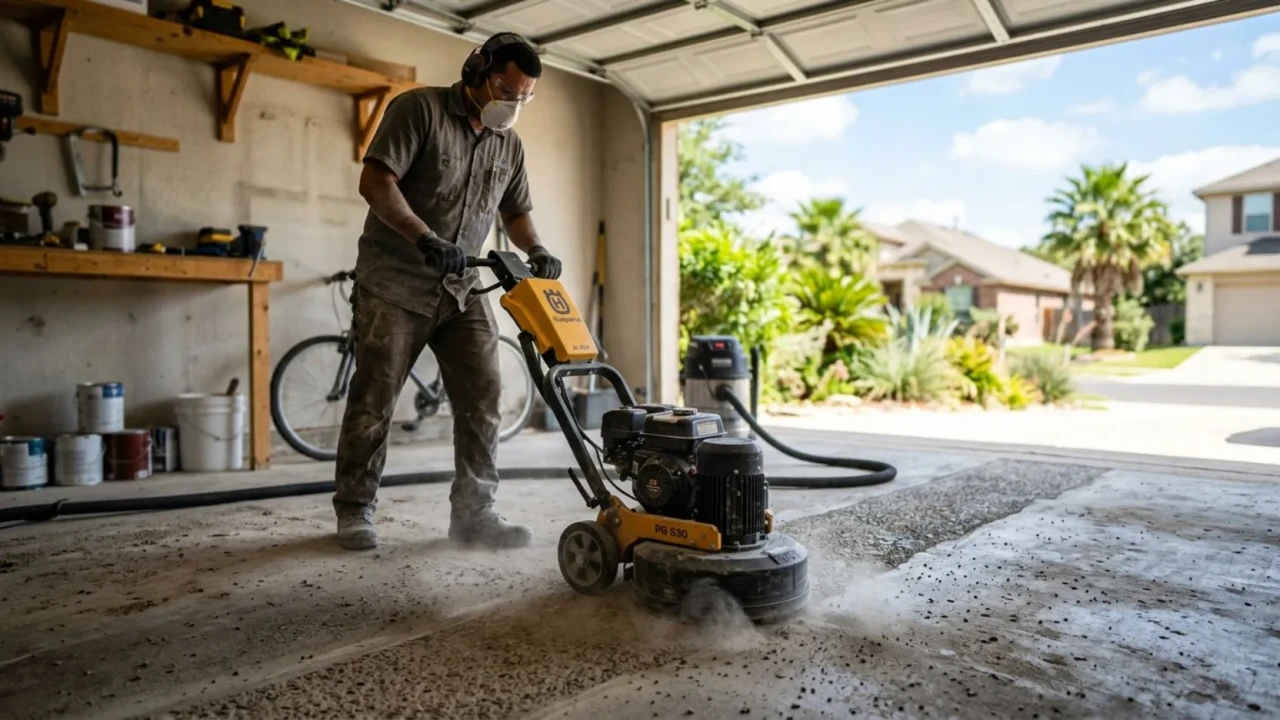
Degreasing: Oil and automotive fluid stains are treated with a degreasing solution and pressure washed before anything else happens. Deep set stains may need repeated treatment.
Mechanical grinding or chemical etching: The slab surface is opened up either with a diamond grinder or an acid etch solution so the stain has a clean, porous surface to bond with.
Once the surface is clean and properly opened, any cracks are filled and patched, and the slab is allowed to dry fully before stain is applied. Rushing this drying period is another common shortcut that leads to uneven color and adhesion problems down the line.
Ask what’s already on your floor: If a previous owner sealed, painted, or epoxy coated the garage floor, that coating must be fully removed before staining will work. This adds time and cost to the project but is non-negotiable. A contractor who skips this step and stains over an existing coating will produce a finish that peels within months.
- Existing coatings identified: paint, epoxy, or old sealer must be fully removed, not stained over
- Degreasing confirmed for any visible oil or fluid staining before etching or grinding
- Crack repair completed and fully cured before stain application begins
- Adequate dry time built into the schedule, typically 24 to 48 hours after prep in San Antonio’s climate
Use this table to compare the two main staining methods side by side before you talk to a contractor.
| Factor | Acid stain | Water based stain |
|---|---|---|
| Color range | Earth tones only: terracotta, amber, brown, green | Wide range including grays, blues, greens, and earth tones |
| Look | Mottled, variegated, no two floors identical | Consistent, uniform, predictable color |
| Cost | $5–8/sqft installed | $3–5/sqft installed |
| Application process | Chemical reaction, requires neutralizing rinse | Surface penetrating, no neutralizing step needed |
| Best for | Natural stone look, one of a kind finish | Specific color match, modern uniform look |
| Touch up potential | Difficult to perfectly match later | Easier to touch up small areas |
- Existing coatings, paint, or epoxy identified and a removal plan confirmed
- Oil stains and discoloration flagged and addressed with degreasing before staining
- Cracks repaired and fully cured before stain application
- Square footage measured and confirmed against the written quote
- Staining method selected: acid stain or water based, with a sample tested on the actual slab
- Color and any decorative scoring or pattern confirmed in writing before work begins
- Sheen level chosen: matte, satin, or gloss, matched to how the garage is used
- Sealer type and number of coats specified, two coats minimum recommended
- Certificate of insurance received and verified, $1M plus general liability
- Quote itemizes cleaning, etching, repair, staining, and sealing separately
- Local references from completed San Antonio garage floor projects available
- Payment terms confirmed: deposit upfront, balance on completion
- Cure and dry time confirmed before parking vehicles back in the garage
- Cleaning guidance received: sweep and damp mop only, no harsh chemical cleaners
- Resealing reminder set for every 2 to 3 years to maintain color and protection
- Touch up plan discussed for any future scratches or wear in high traffic areas
How much does it cost to stain a garage floor in San Antonio?
Can you stain a garage floor that already has oil stains?
How long does a stained garage floor last before it needs resealing?
Is acid stain or water based stain better for a garage floor?
Do I need to remove my car from the garage during the staining process?
Get a free garage floor staining quote
Tell us about your garage floor project. We’ll visit your property, assess the existing slab, and give you a detailed written quote at no cost.