
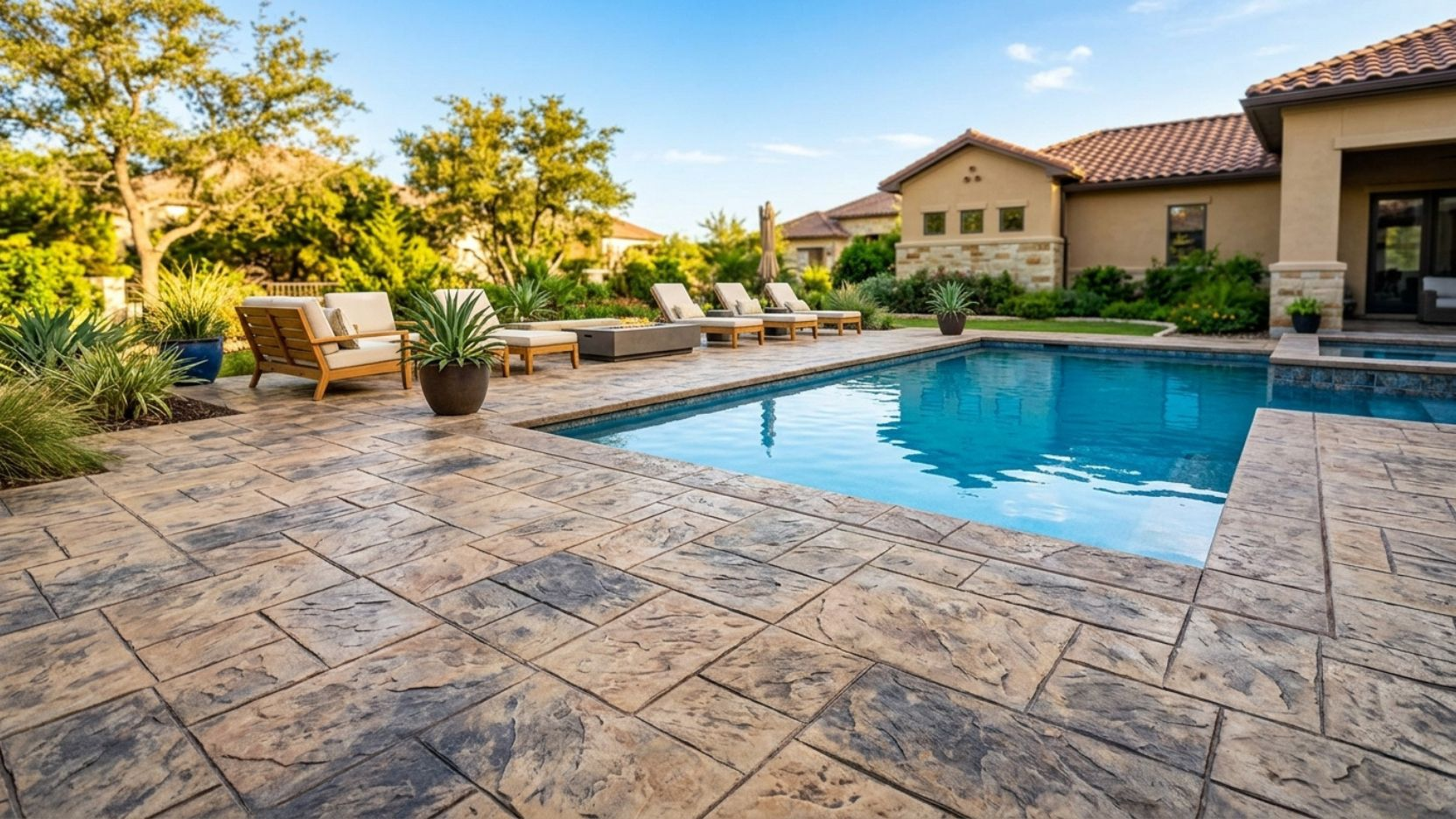
Stamped concrete has moved well beyond the basic brick pattern driveway. This guide covers the patterns, colors, and design approaches San Antonio homeowners are choosing right now, along with realistic cost expectations and what to look for when hiring a contractor.
Stamped concrete used to mean one thing in San Antonio: a gray slab pressed with a basic brick or cobblestone pattern, maybe with a single tint of color. That standard look is largely a thing of the past. Homeowners are now asking for layered color techniques, large format patterns that mimic natural stone, and finishes that blend seamlessly into modern outdoor living spaces.
This guide breaks down the patterns, colors, and design approaches defining stamped concrete in San Antonio right now, what each option costs, and the questions to ask any contractor before signing a contract.
The strongest trend driving every other design choice this year is realism. Homeowners want stamped concrete that reads as natural stone, weathered wood, or hand laid pavers, not as concrete with a pattern pressed into it. That shift shows up in how patterns are chosen, how color is layered, and how joint lines are cut, all in service of a finish that doesn’t look stamped at first glance.
Pattern Trend
The single most requested stamp pattern in San Antonio this year is a large format, irregular flagstone or slate texture. Unlike the uniform brick or basketweave patterns common a decade ago, these patterns use random, organic joint lines that read as genuinely quarried stone rather than a repeated mold.
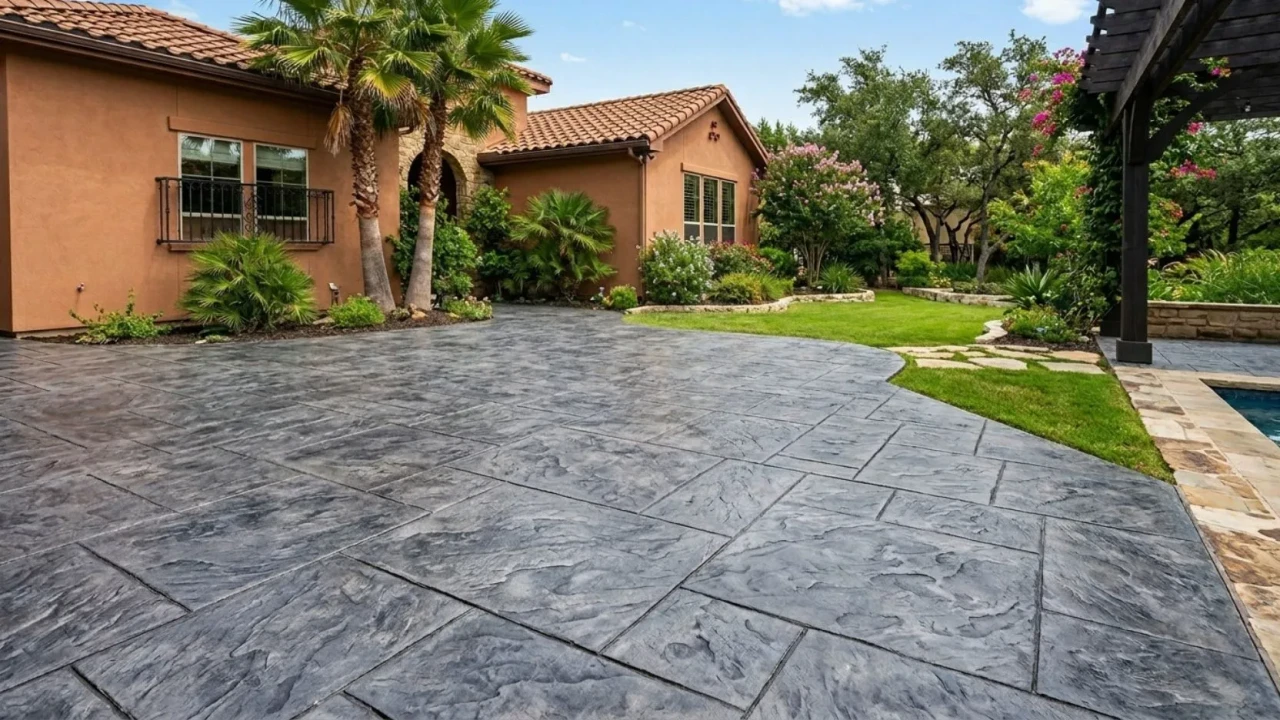
Why it’s trending: Large format stone patterns require fewer visible repeats across a patio or driveway, which is the detail that makes a finished slab look authentic instead of stamped from a small mold over and over.
Best applications: Patios, pool decks, and entryways where homeowners spend the most time looking at the surface up close.
- Stamp mat sample viewed in person, not just from a catalog photo
- Joint line layout confirmed as random or repeating before the pour
- Texture depth discussed: deeper textures show more wear over time on high traffic areas
- Pattern matched to the home’s existing exterior stone or brick where possible
Color Trend
A flat, single colored stamped slab is increasingly rare in new San Antonio projects. The current standard is a layered approach: integral color mixed into the concrete itself for the base tone, then a release agent applied during stamping for a contrasting highlight color in the texture and joint lines.
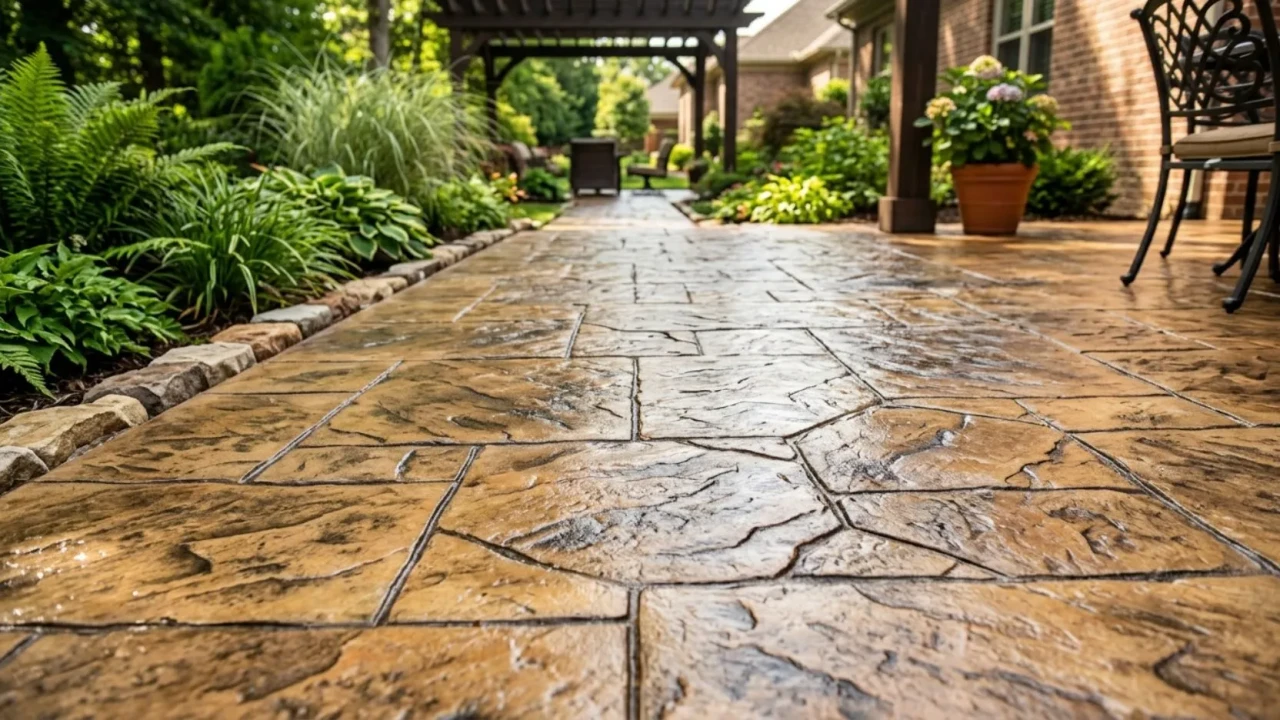
Integral color: Pigment mixed directly into the wet concrete, so the color runs through the entire slab. If the surface ever chips, the color underneath matches.
Release agent color: A powder or liquid applied right before stamping that settles into the texture and joint lines, creating depth and contrast that a single color can’t achieve alone.
- Integral color confirmed as mixed into the concrete, not just surface applied
- Release agent color and intended contrast level discussed and sampled before the pour
- Heat absorption considered for dark colors on pool decks and bare foot areas
- Color sample poured and stamped on site whenever the budget allows, rather than judged from a swatch alone
Design Trend
Alongside natural stone patterns, a parallel trend has emerged among homeowners with more modern or minimalist homes: large, smooth format patterns with fewer joint lines and a cleaner, less textured surface. This approach borrows from large format tile and slab paver design rather than traditional stamped patterns.
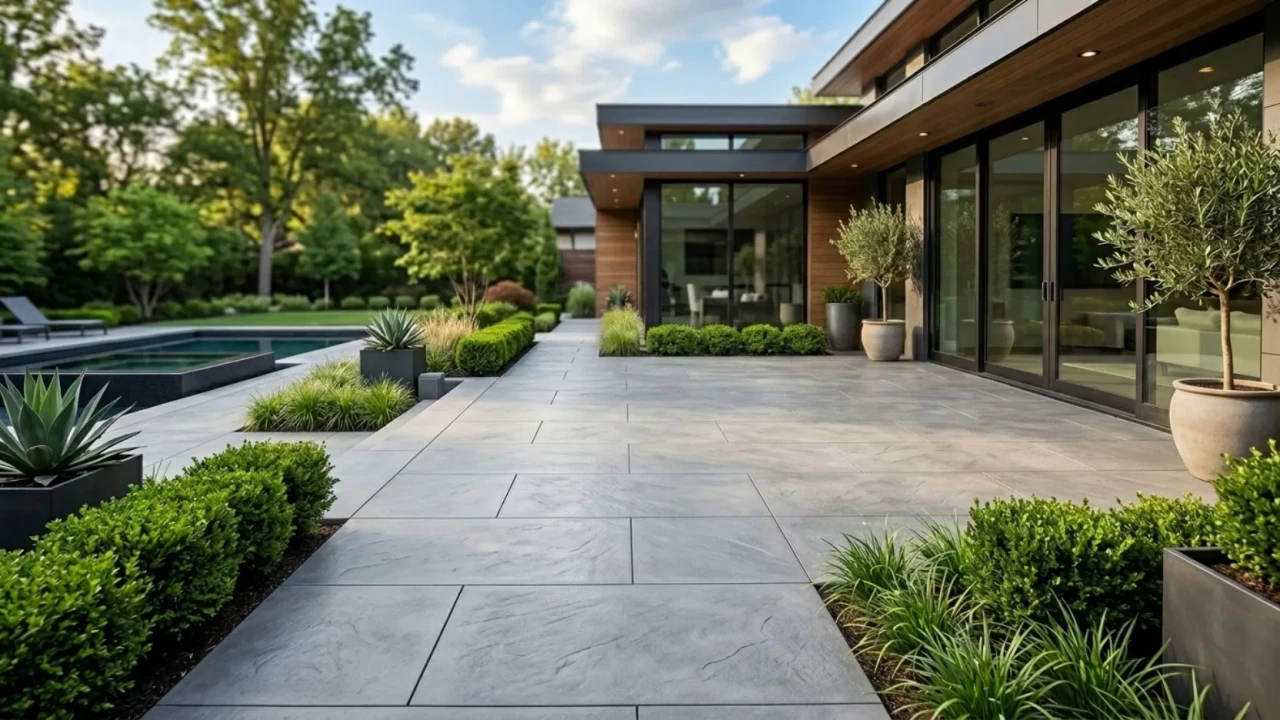
Wide saw cut joints in a grid pattern, combined with a light texture or a smooth trowel finish and subtle color, produce a look closer to poured terrazzo or large format porcelain pavers than a traditional stamped slab.
This style works particularly well for modern builds, courtyard spaces, and homeowners who want the durability of stamped concrete without a busy, heavily textured pattern competing with other design elements in the yard.
Mixing patterns within one project is increasingly common: A growing number of San Antonio homeowners are pairing a large format minimal joint field with a stone textured border or accent band. This gives the visual interest of a stamped pattern without covering the entire surface in heavy texture, and it tends to read as a more custom, designed space.
- Joint spacing and width specified in writing before the pour, since this defines the entire visual pattern
- Texture depth selected: smooth, light texture, or full stamped texture
- Border or accent band design confirmed if mixing pattern styles within one project
- Slope and drainage confirmed across large format areas, since fewer joints means fewer natural drainage breaks
Pool Deck Trend
With San Antonio summers pushing surface temperatures higher every year, pool deck specific design has become its own category within stamped concrete. The priorities shift from pure aesthetics to a combination of bare foot comfort, slip resistance, and heat management around the water.
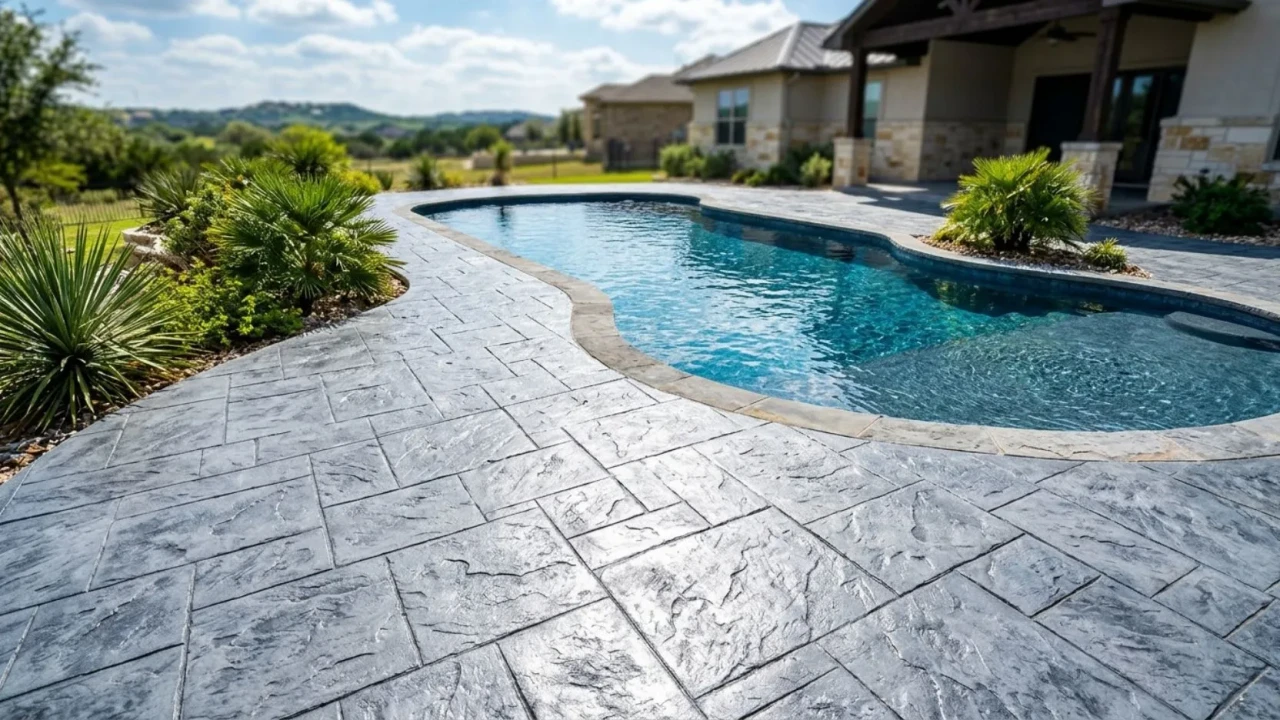
Cooler color palettes: Light grays, tans, and soft blues are favored over dark charcoal or deep brown on pool decks, since lighter colors stay noticeably cooler underfoot in direct Texas sun.
Slip resistant sealers: A textured, non-slip sealer additive is now standard practice on pool deck stamped concrete, an upgrade many older installations never included.
Stamped concrete poured to meet the coping at the pool edge, rather than a separate poured or paver border, has also become a popular way to create a seamless, continuous look from the water’s edge across the entire deck.
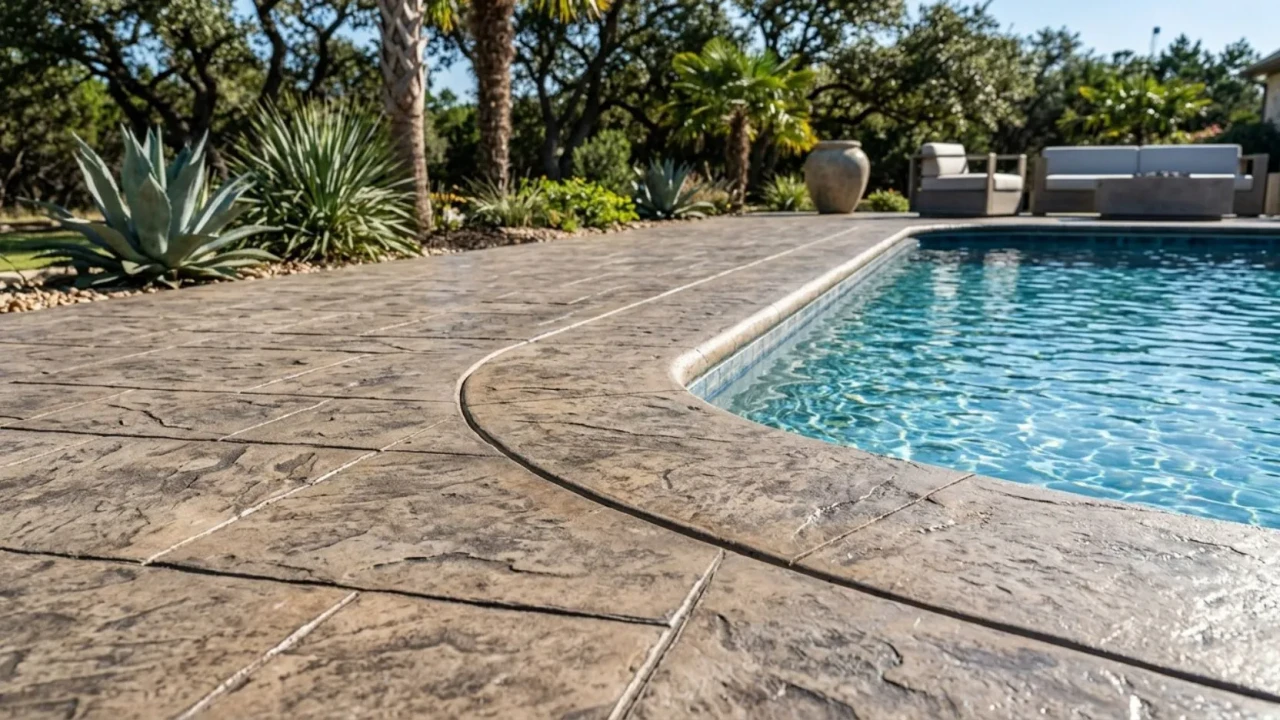
This seamless coping approach eliminates the visible seam where a separate paver or poured border traditionally met the deck, giving the entire pool surround a single, unified appearance from any angle.
- Color palette selected with heat retention in mind, lighter tones recommended for bare foot comfort
- Slip resistant sealer additive specified in writing as part of the sealing package
- Slope confirmed away from the pool for proper drainage
- Coping transition style decided: seamless pour to coping or a separate border treatment
Cost & Vetting
The design trends covered here are not simply cosmetic choices, they require a higher level of installer skill than a basic single color, single pattern slab. Layered color work, large format minimal joint layouts, and pool deck specific finishes all demand more experience to execute well, which shows up in the price.
Because these techniques are more demanding than basic stamping, ask any contractor to show photos of their own completed work in these specific styles, not stock photography or manufacturer marketing images. A contractor confident in this kind of work will have a real, local portfolio to show.
- Local portfolio photos reviewed showing the contractor’s own completed layered color or large format work
- Quote itemizes base color, release color, sealing, and any pattern or border work separately
- Certificate of insurance received and verified, $1M plus general liability
- References available from recent San Antonio projects in a similar style
Use this table to compare the leading stamped concrete styles by look, best application, and typical cost.
| Style | Best application | Color approach | Cost range |
|---|---|---|---|
| Natural stone / slate | Patios, entryways, walkways | Earth tone integral with subtle release | $12–18/sqft |
| Layered color, brick or stone | Driveways, patios | Integral base plus contrasting release | $14–18/sqft |
| Large format, minimal joints | Modern patios, courtyards | Single muted tone, light texture | $13–17/sqft |
| Pool deck specific | Pool decks, water features | Light, cool toned integral color | $14–20/sqft |
| Mixed pattern with border | Front entries, statement patios | Two pattern and color combination | $16–22/sqft |
- Stamp mat pattern viewed in person and approved before the pour
- Joint layout confirmed as random or repeating, with spacing specified
- Texture depth selected based on the application and expected foot or vehicle traffic
- Border, accent band, or mixed pattern design sketched and approved in writing
- Integral base color confirmed and sampled before the pour
- Release agent color and contrast level discussed and approved
- Heat retention considered for pool deck and bare foot areas
- On site sample pour completed for large or high visibility projects when possible
- Slab thickness confirmed in writing: 4 inch minimum for patios, 5 inch for driveways
- Base type and depth specified: compacted crushed limestone, minimum 4 inches in San Antonio
- Reinforcement type included: wire mesh for patios, rebar grid for driveways
- Sealing included in the project, including slip resistant additive for pool decks
- Local portfolio reviewed showing the contractor’s own completed projects in the chosen style
- Certificate of insurance received and verified, $1M plus general liability
- Quote itemizes base prep, color work, stamping, and sealing separately
- Payment terms confirmed: deposit upfront, balance on completion
What is the most popular stamped concrete pattern in San Antonio right now?
How much does stamped concrete cost in San Antonio?
Is stamped concrete a good choice for a pool deck in San Antonio heat?
How long does stamped concrete last before it needs resealing?
Can I mix two different stamped patterns in one project?
Get a free stamped concrete quote in San Antonio
Tell us about your project, patio, driveway, or pool deck. We’ll visit your property, walk through pattern and color options, and give you a detailed written quote at no cost.