
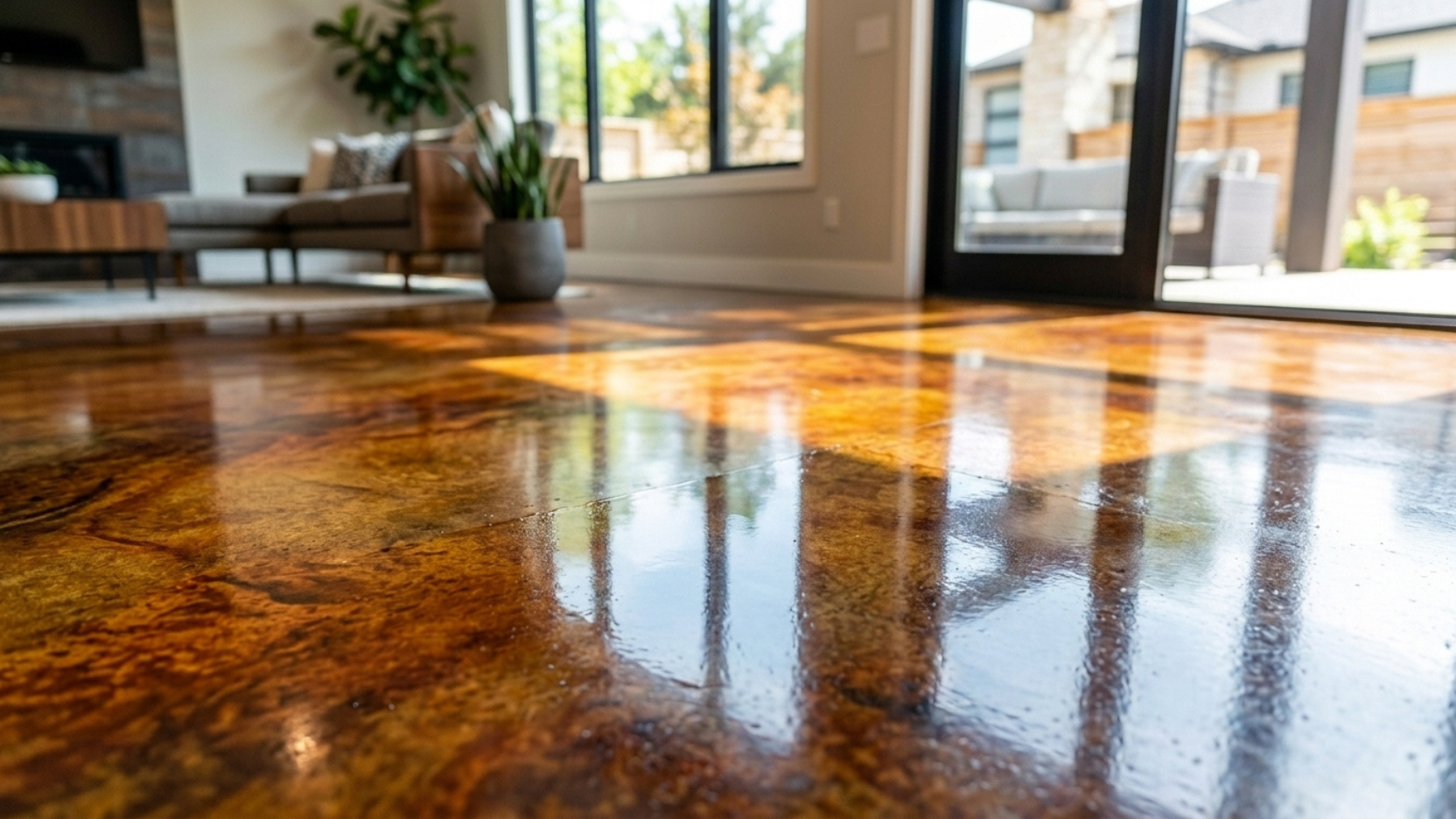
Stained concrete is one of the most durable and attractive flooring choices available but it only stays that way with the right care routine. This guide covers everything San Antonio homeowners need to know: sealing schedules, cleaning methods, damage repair, and how to protect your stained surface against Texas heat and humidity.
Stained concrete can look just as rich and vibrant at year fifteen as it did on installation day but only if you treat the sealer as a required maintenance item, not an optional upgrade. The stain itself is permanent: acid stains and water-based dyes bond chemically with the concrete and will not fade or peel. What degrades is the sealer sitting on top. When that protective layer breaks down, the floor becomes vulnerable to staining, moisture penetration, and UV damage from San Antonio’s intense sun.
This guide lays out the complete maintenance system for stained concrete: how to clean it without stripping the sealer, when and how to reseal, how to handle common damage in Texas conditions, and what warning signs to watch for before problems become expensive repairs.
Acid stains and reactive dyes penetrate the concrete matrix and become part of the slab they cannot be removed by cleaning products, foot traffic, or UV exposure. What fails over time is the topcoat sealer, which acts as a sacrificial layer between the stain and the world. Every maintenance task in this guide is ultimately about keeping that sealer intact. Strip it down through neglect or harsh cleaning products and you expose the stain to damage it was never designed to handle on its own.
Cleaning
Most sealer failures in San Antonio homes trace back to cleaning products, not age or wear. Ammonia-based cleaners, bleach, acidic floor cleaners, and even some “natural” citrus degreasers will break down a solvent-based or water-based epoxy sealer over time. The result looks like cloudiness, white haziness, or peeling and it is almost always preventable.
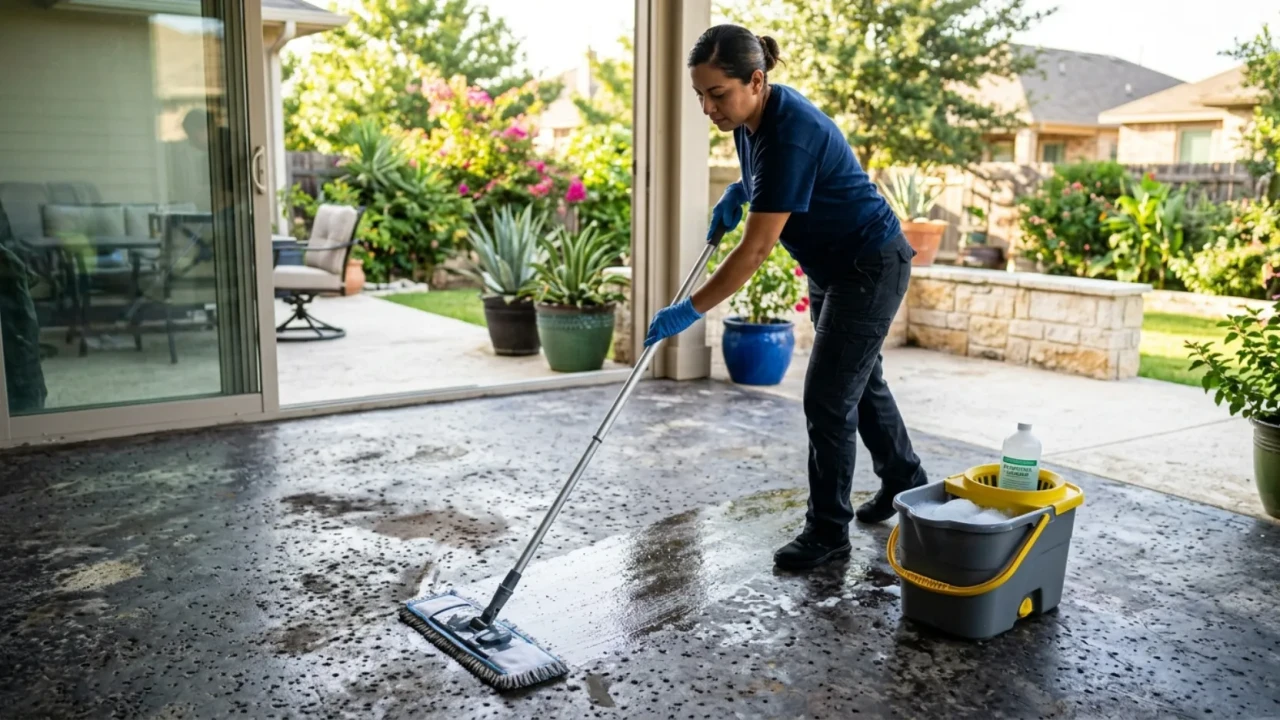
The correct routine for sealed stained concrete is straightforward: dry dust mop or microfiber sweep daily to remove grit (grit acts like sandpaper on a sealed surface), and damp mop weekly with a pH-neutral cleaner diluted in water. That is all the regular maintenance most floors need.
For outdoor stained concrete patios and driveways: A garden hose rinse and a soft-bristle push broom handle routine dirt effectively. For deeper cleaning, a low-pressure wash (1,200 PSI or below) with a wide-angle nozzle is safe. Avoid high-pressure washing directly on stained concrete anything above 1,500 PSI can lift the sealer at the edges of the slab or at any micro-crack in the surface.
- Dry dust mop or microfiber sweep daily on interior stained floors grit scratches the sealer surface
- Damp mop weekly with a pH-neutral cleaner diluted in warm water never use full-strength cleaners
- Dry floor promptly after mopping to prevent hard water mineral deposits from San Antonio’s water supply
- No bleach, ammonia, vinegar, citrus degreasers, or steam mops on sealed stained concrete
- Low-pressure rinse only for exterior stained concrete keep pressure washer below 1,200 PSI with a wide-angle nozzle
Sealing
The sealing schedule for stained concrete in San Antonio is driven by two factors most guides ignore: intense UV radiation and temperature cycling between hot summers and occasional winter freeze events. A sealer that would last four years in a mild Pacific Northwest climate may need refreshing every two years on a south-facing patio in San Antonio. The good news is that catching the sealer early before it fully breaks down means a simple thin recoat rather than a full strip and reapplication.
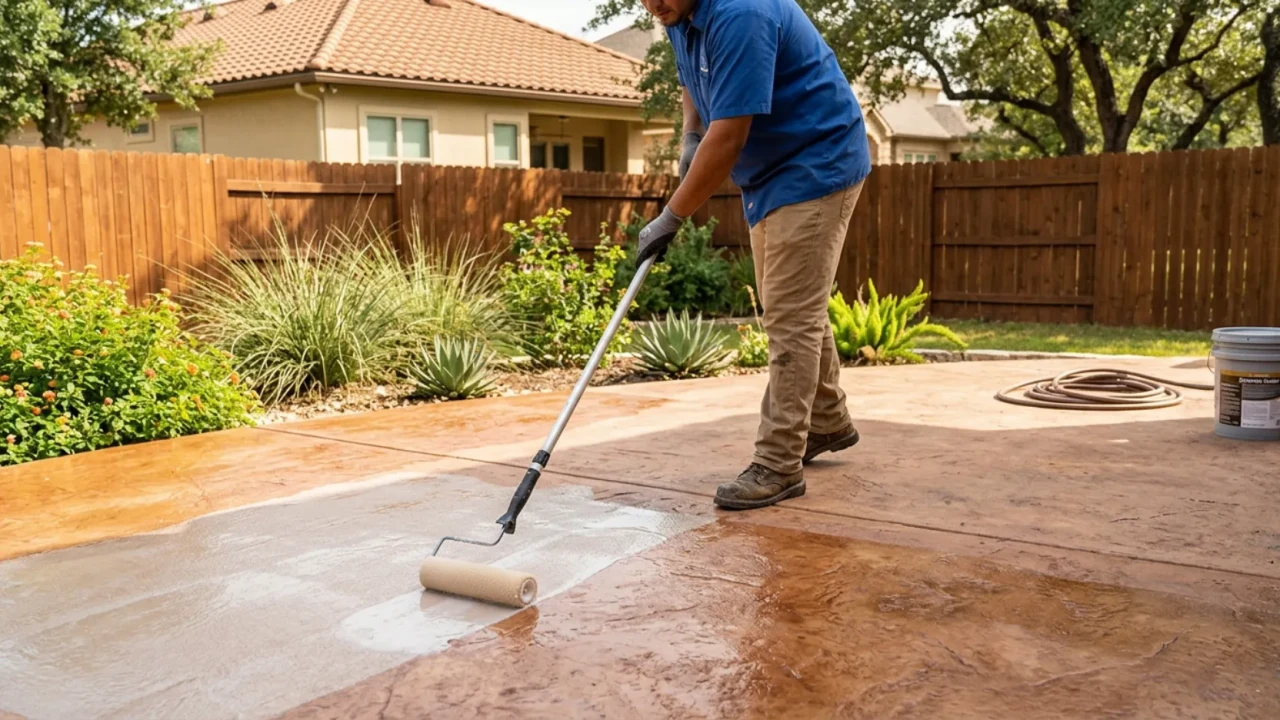
Choosing the right sealer type: Match the resealer to the original product. Solvent-based acrylic sealers deliver a wet-look gloss and are the most common choice for decorative stained concrete. Water-based acrylics are lower VOC and work well in enclosed interior spaces. Penetrating sealers (silane-siloxane) provide protection without changing appearance a good choice for exterior stained concrete where a natural look is preferred.
Never apply a water-based sealer over a solvent-based original coat without stripping first adhesion failure will cause peeling within weeks.
- First seal at 28 days after pour two thin coats with a low-nap roller, full dry time between coats
- Water bead test annually: water should bead on the surface for at least 30 seconds absorption means resealing is due
- Interior floors: reseal every 2 to 3 years under normal residential use
- Exterior patios and driveways: reseal every 1 to 2 years given San Antonio’s UV and heat exposure
- Match new sealer type to the original product do not layer water-based over solvent-based without stripping first
- Apply sealer in mild temperatures (60 to 85 degrees F) avoid application during peak summer heat or below 50 degrees
Stain Removal
A properly sealed stained concrete surface is highly stain-resistant because liquids bead on the sealer rather than penetrating the slab. The window for easy cleanup is short, though most oils, tannins, and food stains will begin to etch through a thin or aging sealer if left overnight. Acting quickly is always the most effective stain removal strategy.
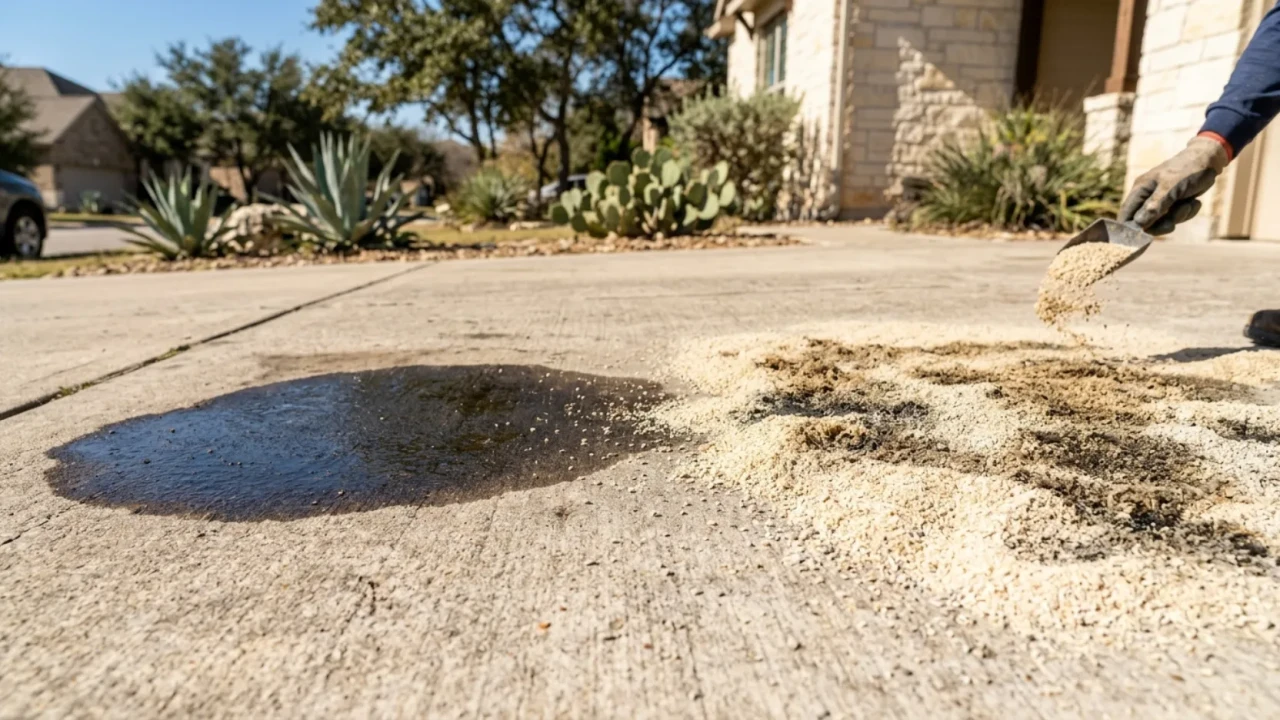
Blot the spill with a clean cloth or paper towel immediately do not rub, which spreads the stain. For oily spills, apply an absorbent material such as cat litter or baking soda, let it sit for 15 minutes to draw out the oil, then sweep and clean the residue with a pH-neutral degreaser. For organic stains like leaves, berries, or standing water, a diluted hydrogen peroxide solution (3% concentration) applied briefly and rinsed off is effective on most exterior surfaces.
| Stain type | Recommended treatment | What to avoid |
|---|---|---|
| Motor oil / grease | Absorb immediately with cat litter or baking soda; follow with pH-neutral degreaser and warm water rinse | Citrus degreasers and acetone both strip the sealer |
| Rust stains | Commercial rust remover formulated for concrete (oxalic acid based); apply, let dwell 10 minutes, rinse thoroughly | Wire brushes or abrasive scrubbing damages the sealer surface |
| Tire marks (garage floors) | Mild scrub with a nylon brush and pH-neutral cleaner; stubborn marks may need a diluted concrete cleaner | Solvent-based tire mark removers that dissolve the sealer along with the rubber |
| Leaf and organic staining | Diluted 3% hydrogen peroxide, brief dwell time, rinse; reapply if needed | Bleach breaks down acrylic sealers and can lighten the stain color beneath |
| Hard water deposits | Diluted white vinegar on the deposit only (not the full floor), brief contact, immediate rinse do not let it dwell on the sealer | Full-floor acid washing this strips the sealer entirely |
| Paint or adhesive | Plastic scraper to lift bulk, then mineral spirits on a cloth for residue; test in a hidden area first | Razor blades or metal scrapers scratch the sealer permanently |
- Blot spills immediately never rub, which spreads and works the liquid deeper into the sealer
- Use the correct treatment for each stain type a single wrong product can damage the sealer across a wide area
- Rinse treatment area thoroughly with clean water after any stain removal product
- Inspect the cleaned area once dry if the sealer looks dull or hazy in the spot, a localized recoat is needed
- Never use bleach on stained concrete it can permanently lighten acid-stained colors beneath the sealer
Repair
Stained concrete repair is almost always about the sealer, not the stain. The stain itself is chemically locked into the concrete matrix and will outlast every other component of the floor. Surface problems cloudiness, whitening, peeling, or scuffing are sealer failures. The repair process depends entirely on how far the damage has progressed.
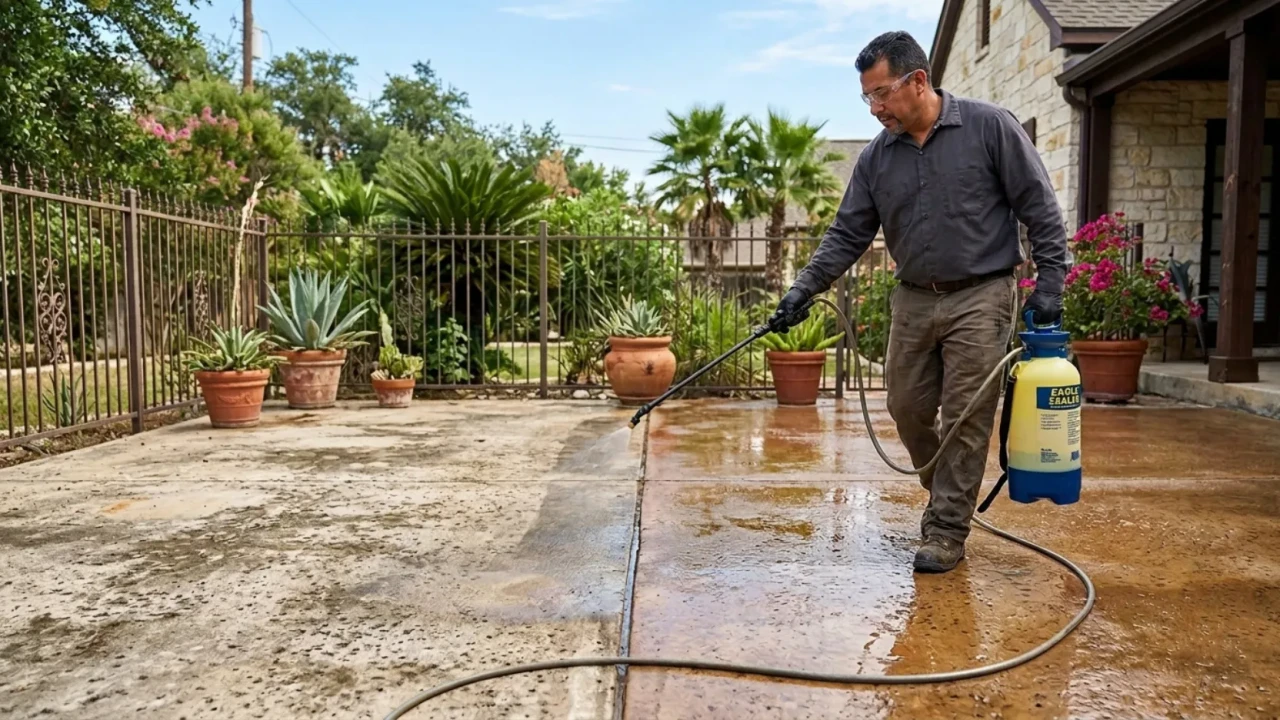
Light wear and minor cloudiness: The sealer is thinning but still bonded to the surface. Clean the area thoroughly with a pH-neutral cleaner, allow to dry completely (at least 24 hours), and apply a fresh thin maintenance coat of the same sealer type. This is a straightforward DIY task and the most common repair performed on stained concrete in San Antonio.
Peeling or flaking sealer: The bond between the sealer and concrete has failed usually from moisture being trapped beneath during application, or from applying an incompatible sealer type on top of the original. The only correct repair is stripping the old sealer entirely with a chemical stripper formulated for concrete, cleaning the surface, and reapplying two fresh coats.
Never apply sealer to stained concrete when temperatures are above 90 degrees F or when rain is forecast within 24 hours. San Antonio summers present both risks frequently. Sealer applied in peak afternoon heat can dry too fast, trapping air bubbles and creating a whitish haze that requires stripping to fix. Early morning application (before 9 AM) is the safest approach from May through September. Always check a five-day forecast before scheduling a sealer recoat on any outdoor stained concrete surface.
- Identify damage type before choosing a repair method haziness and peeling require completely different approaches
- For light wear: clean thoroughly, dry for 24 hours minimum, apply thin maintenance coat of the same sealer
- For peeling or flaking: strip the full area with a concrete-safe chemical stripper before reapplying sealer
- Apply sealer only when surface temperature is between 60 and 85 degrees F early morning in San Antonio summers
- Allow full dry time between coats rushing layers traps moisture and causes clouding
- For deep scratches or surface gouges in the concrete, use color-matched patching compound before sealing
Climate Care
San Antonio’s climate presents a different set of challenges than most concrete maintenance guides are written for. The combination of intense UV radiation, summer temperatures regularly above 100 degrees, Bexar County’s hard water, and occasional winter ice events means that generic maintenance advice often misses the specific risks that shorten stained concrete life in this region.
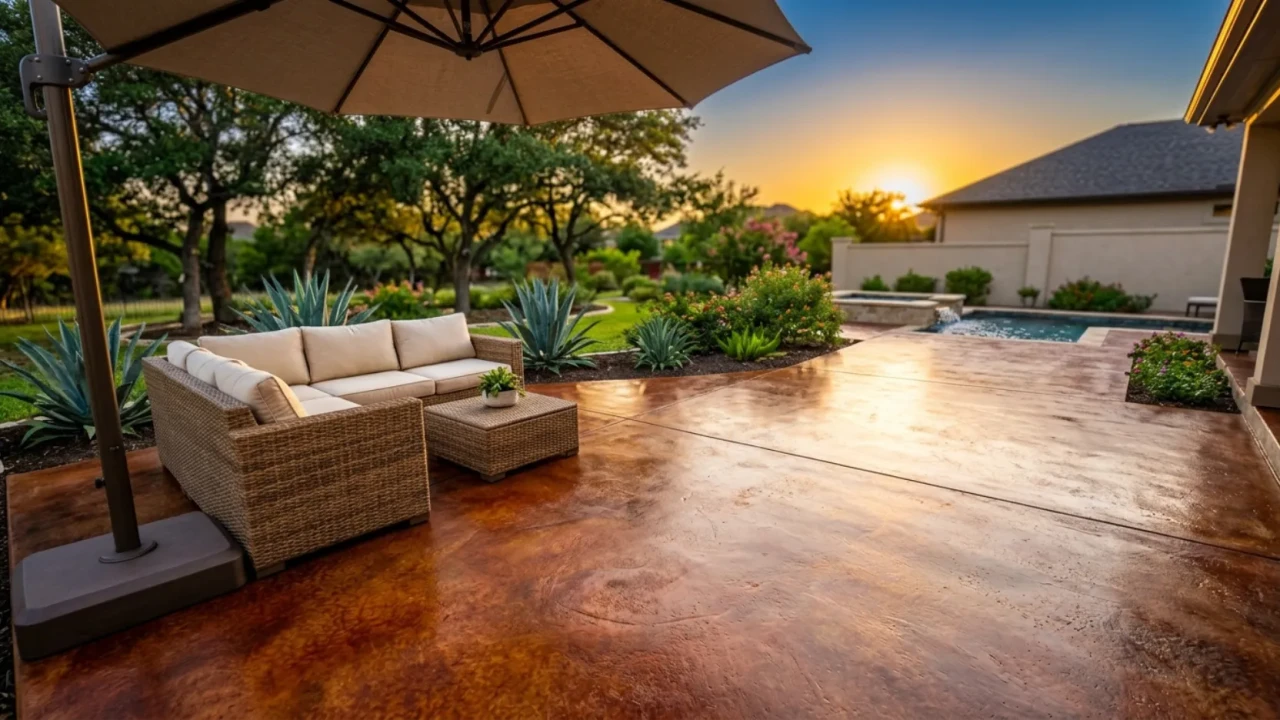
UV protection: Exterior stained concrete in San Antonio receives significantly higher UV exposure than the national average. Use a UV-resistant sealer look for products labeled with UV inhibitors or UV-stable resins. Reapply on the shorter end of the recommended schedule (annually rather than every two years for south- and west-facing surfaces). Patio furniture and shade structures help reduce UV exposure on high-traffic outdoor floors.
Summer heat: Concrete surfaces on San Antonio patios and driveways can reach surface temperatures of 150 degrees F or higher in July and August. This does not damage the concrete itself, but it accelerates thermal cycling stress at expansion joints and can soften some sealer formulations temporarily. Avoid dragging heavy furniture across the surface during peak afternoon heat.
| Seasonal risk | What it does to stained concrete | Preventive action |
|---|---|---|
| Summer UV (May to September) | Breaks down acrylic sealer resins; can yellow water-based sealers over time; fades poorly bonded water-based dye colors | Use UV-resistant sealer; reseal annually on exterior; add shade coverage where possible |
| Summer heat above 100 degrees F | Accelerates sealer wear; thermal cycling stresses expansion joints; softens certain sealer types at peak temperatures | Avoid heavy dragging on surface in peak afternoon heat; inspect expansion joints each fall |
| Winter freeze events (rare in San Antonio) | Water that has penetrated a worn sealer expands in cracks and micro-pores, widening hairline damage | Reseal before winter; fill expansion joints with flexible sealant; do not apply deicing salts to stained concrete |
| Hard water mineral deposits | Calcium and magnesium from San Antonio tap water build up as white film on sealed surfaces; can etch into a worn sealer | Dry floor promptly after mopping; use water wrung mop; treat deposits with brief diluted white vinegar contact |
| Heavy rain and pooling water | Standing water on a worn sealer penetrates over time; algae growth on exterior stained surfaces in shaded areas | Ensure proper drainage slope; clear debris that holds moisture against the surface; treat algae with diluted oxygen bleach (not chlorine bleach) |
- Use a UV-resistant sealer on all exterior stained concrete especially south- and west-facing surfaces in San Antonio
- Reseal exterior surfaces annually rather than every two years given the region’s UV and heat intensity
- Never apply deicing salts to stained concrete during rare San Antonio freeze events use sand for traction instead
- Inspect and refill expansion joints each fall before winter flexible joint sealant prevents water intrusion
- Treat algae growth on shaded exterior surfaces promptly with diluted oxygen bleach and a stiff nylon brush
Restoration
Stained concrete that has been maintained properly rarely needs anything beyond routine resealing and cleaning. When restoration becomes necessary, it is almost always the result of years of deferred maintenance a sealer that was never refreshed, cleaning products that slowly degraded the topcoat, or a physical impact that damaged the slab surface. Understanding what is actually wrong determines whether the fix is a DIY resealing or a professional resurfacing job.
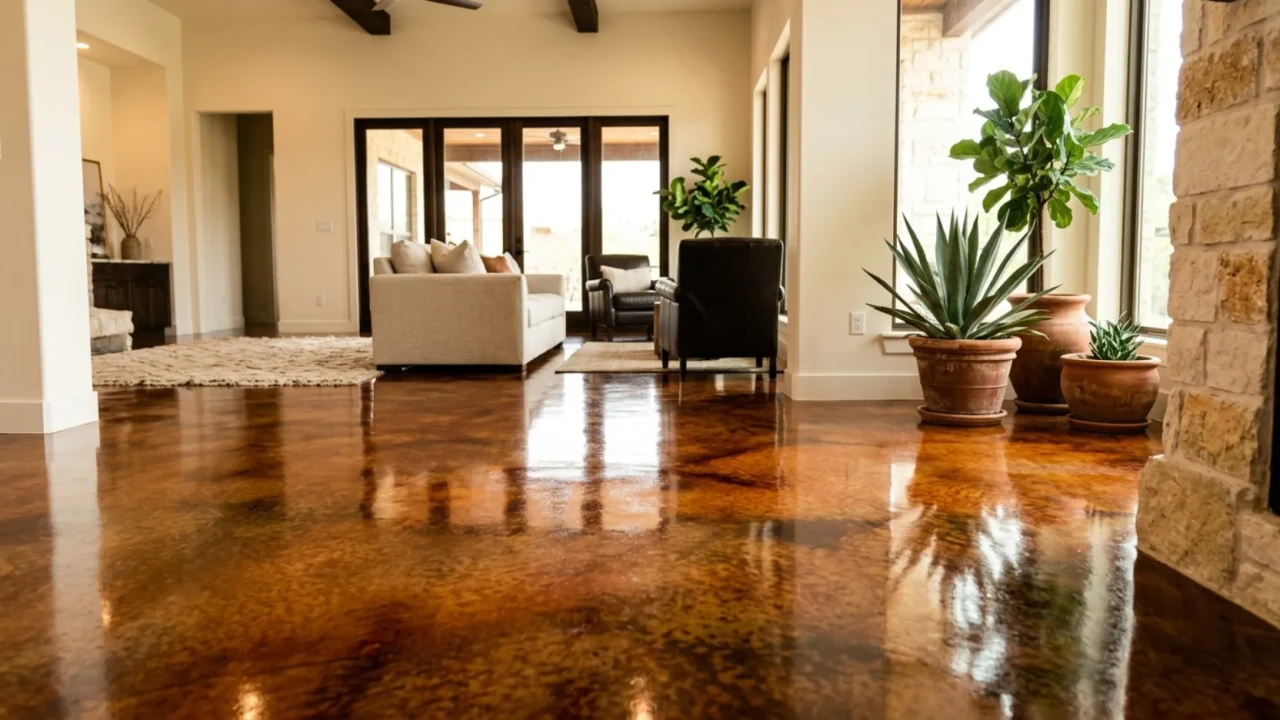
Color has faded or looks uneven: If the stain color looks significantly lighter than it did originally, the sealer has likely failed in places and UV exposure has reached the stain itself especially with water-based dyes, which are more UV-sensitive than acid stains. A professional assessment will determine whether a color refresh coat (a new application of compatible stain followed by resealing) is sufficient or whether a full surface preparation is needed.
Surface pitting, scaling, or widespread cracking: These indicate a structural or mix issue with the original concrete, not a stain or sealer failure. A concrete professional should assess whether a thin overlay, micro-topping, or full removal is the right path. In San Antonio, widespread scaling on exterior slabs often traces to low-quality concrete mix combined with repeated freeze-thaw events.
- Perform a water bead test and visual inspection annually act on early signs of sealer wear before they become restoration-level problems
- Faded color on acid-stained surfaces: professional assessment first color refresh may restore full appearance without full resurfacing
- Peeling or failed sealer over a large area: professional strip and reseal required do not simply recoat over a failed bond
- Widespread surface pitting or scaling: structural assessment needed a thin overlay may be appropriate before any stain or sealer work
- Ask any contractor quoting restoration work to identify the original sealer type and confirm product compatibility before any product is applied
Use this table as your annual reference. Each row summarizes the maintenance frequency, key risks, and cost expectations for each stained concrete application in San Antonio’s climate.
| Surface type | Cleaning frequency | Reseal interval | Primary San Antonio risk |
|---|---|---|---|
| Interior living areas | Sweep daily; damp mop weekly | Every 2 to 3 years | Hard water mineral buildup from mopping with tap water |
| Kitchen floors | Sweep daily; damp mop after cooking | Every 18 months to 2 years | Cooking oils and acidic food spills through worn sealer |
| Covered patio | Sweep weekly; hose rinse monthly | Every 2 years | Leaf staining and moisture from humidity; algae in shaded corners |
| Uncovered patio | Rinse weekly; low-pressure wash monthly | Every 1 to 2 years | UV degradation and thermal cycling from San Antonio summer heat |
| Garage floor | Sweep weekly; degrease oil spots immediately | Every 2 to 3 years | Motor oil penetration through worn sealer; tire mark buildup |
| Stained driveway | Rinse weekly; power wash quarterly (low pressure) | Every 1 to 2 years | UV exposure, vehicle weight stress, and oil drips from parked cars |
- Dry dust mop or microfiber sweep interior stained floors daily to prevent grit abrasion on the sealer
- Damp mop weekly with a pH-neutral cleaner never full-strength cleaning products, ammonia, bleach, or vinegar
- Blot spills immediately and treat with appropriate product do not let liquid dwell on the surface
- Dry the floor promptly after any wet cleaning to prevent hard water deposits
- Exterior surfaces: rinse with garden hose or low-pressure wash below 1,200 PSI
- Perform water bead test in three locations absorption within 30 seconds means resealing is due
- Inspect the surface visually for cloudiness, whitening, scratches, or dull patches
- Check expansion joints for cracking or missing sealant refill with flexible joint compound
- Inspect exterior surfaces for algae growth in shaded or low-drainage areas
- Note any areas of increased foot traffic wear or furniture drag marks for spot attention
- Clean the full surface thoroughly and allow to dry for at least 24 hours before resealing
- Apply sealer only when temperature is between 60 and 85 degrees F early morning in San Antonio summers
- Use the same sealer type as the original application to ensure proper adhesion
- Apply two thin coats with full dry time between coats do not apply a single thick coat
- Keep the surface free of foot traffic for at least 24 hours after the final coat; vehicle traffic for 72 hours
- Reseal exterior surfaces in fall before any potential winter freeze events
- Never use deicing salts on stained concrete during San Antonio freeze events use sand instead
- Schedule spring inspection of all outdoor stained concrete before peak summer heat arrives
- Use UV-resistant sealer on all south- and west-facing exterior surfaces
- Treat algae growth immediately with diluted oxygen bleach and a stiff nylon brush then reseal the treated area
How often should I reseal stained concrete floors in San Antonio?
Can I use a steam mop on my stained concrete floors?
My stained concrete patio has turned cloudy or hazy. What caused this and how do I fix it?
Will my stained concrete color fade over time?
What is the best sealer for stained concrete in San Antonio’s climate?
Need help with your stained concrete in San Antonio?
Whether you need a maintenance reseal, stain color refresh, or a new stained concrete floor installed, our San Antonio team handles every step. Get a free on-site assessment with a detailed written quote.