
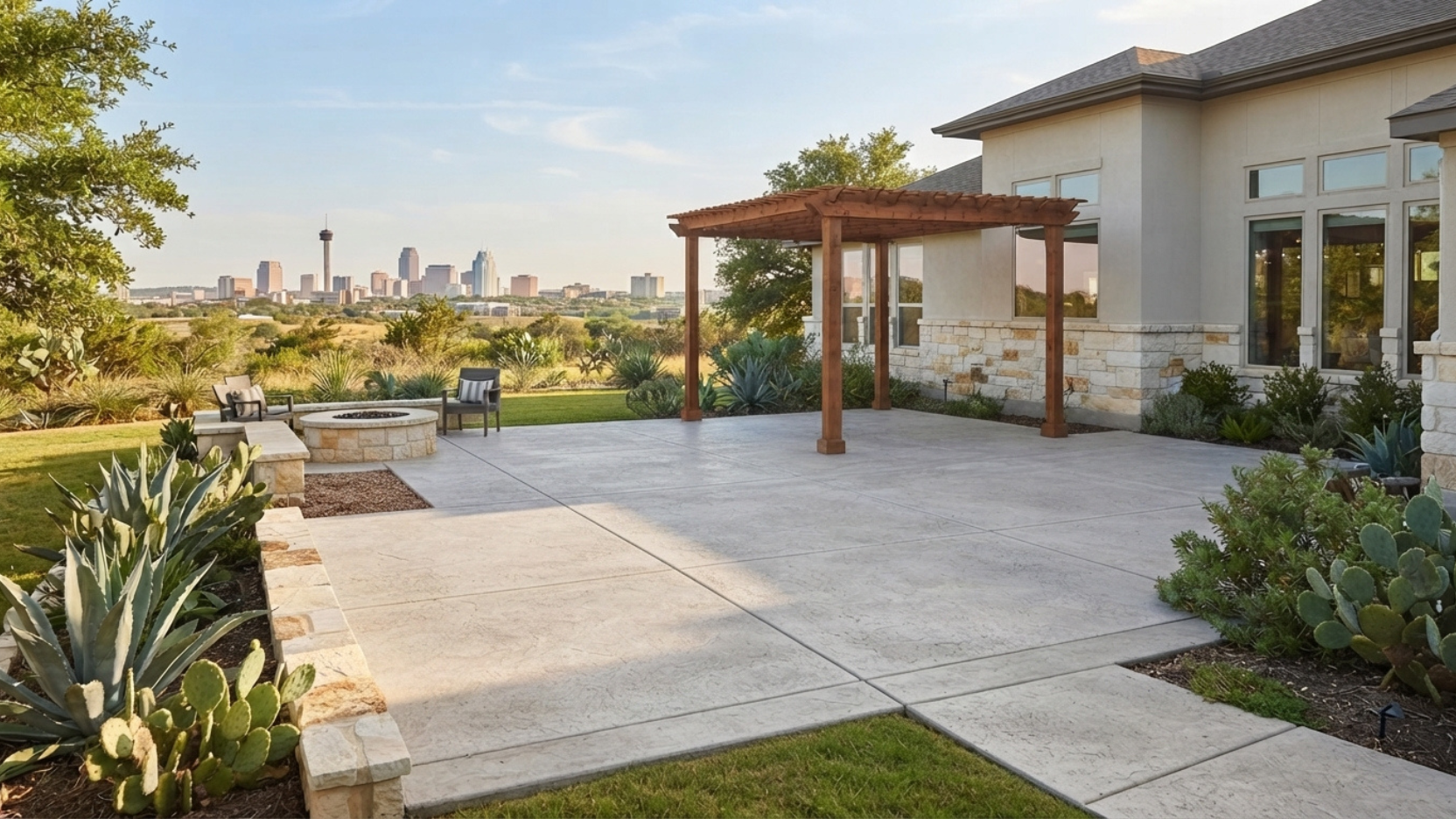
A concrete patio is one of the highest-return outdoor investments a San Antonio homeowner can make. This complete 2026 guide breaks down every benefit from long-term durability in Bexar County’s clay soil conditions to home value, design flexibility, and real local cost data so you can decide with confidence.
San Antonio is not a generic U.S. market for outdoor concrete. The combination of Blackland Prairie Vertisol clay soil that shifts seasonally, Edwards Aquifer hard water, UV intensity that regularly reaches extreme levels from May through September, and summer surface temperatures that can exceed 150 degrees Fahrenheit creates a specific set of demands that concrete handles better than any competing patio material.
Wood decks rot in the humidity cycle and split in the heat. Pavers shift on San Antonio’s moving clay and require individual re-leveling over time. Gravel patios migrate and require constant topping. Concrete, properly installed with a compacted crushed limestone base and adequate slab thickness, stays put and stays level for decades. This guide covers the seven most important reasons why concrete is the right patio choice for most San Antonio homeowners along with what to watch out for, realistic 2026 cost data, and exactly what to confirm in writing before any contractor starts work on your property.
Durability
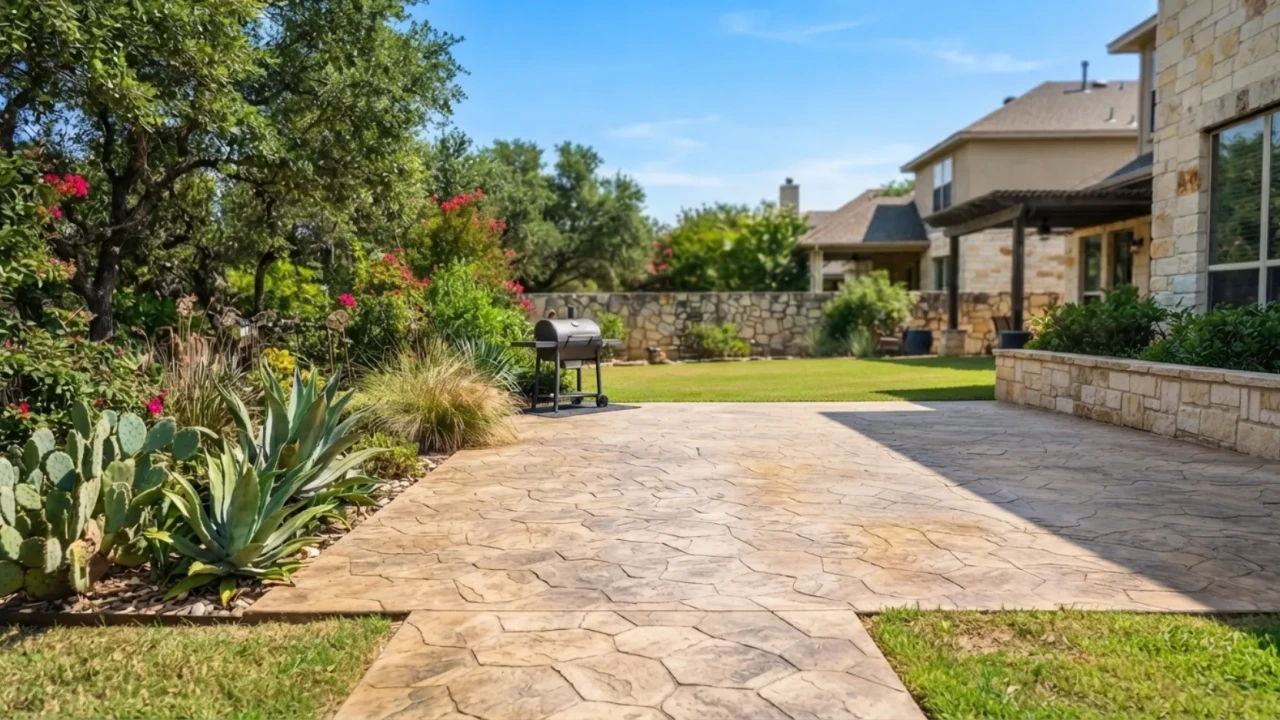
A concrete patio installed with proper base preparation in San Antonio should last 30 to 50 years with routine sealing and minimal maintenance. No wood surface, composite decking, or paver system comes close to that lifespan under Bexar County conditions. Concrete’s durability advantage over alternatives is not theoretical it comes from the material’s fundamental properties: it does not rot, it does not attract insects, and its structural strength actually increases over time as the cement continues to hydrate.
The single biggest durability factor for any San Antonio patio is what happens below the surface, not on top of it. Bexar County’s Vertisol clay soil expands when wet and contracts when dry. Without a properly compacted crushed limestone base of at least four inches, a patio slab will ride that seasonal movement and eventually crack in ways that cannot be patched. A good contractor specifies base depth in writing. If your quote simply says “concrete patio” without base detail, you are looking at a slab that will underperform its potential lifespan significantly.
Control joints are the most underspecified item on San Antonio patio quotes. Concrete shrinks slightly as it cures and expands with temperature. Without control joints cut or placed every 8 to 10 feet, that movement creates random cracking wherever the slab is weakest. Control joints give the concrete a designated place to move. Ask your contractor to specify joint spacing in writing before the pour starts.
- Minimum 4-inch slab thickness confirmed in writing (3.5 inches is below standard for San Antonio conditions)
- Base preparation specified: at least 4 inches of compacted crushed limestone over native clay
- Reinforcement type included: wire mesh minimum, rebar grid for larger slabs or heavy furniture loads
- Control joint spacing confirmed: every 8 to 10 feet in both directions
- First sealing scheduled at 28 to 30 days after pour for full cure
Low Maintenance
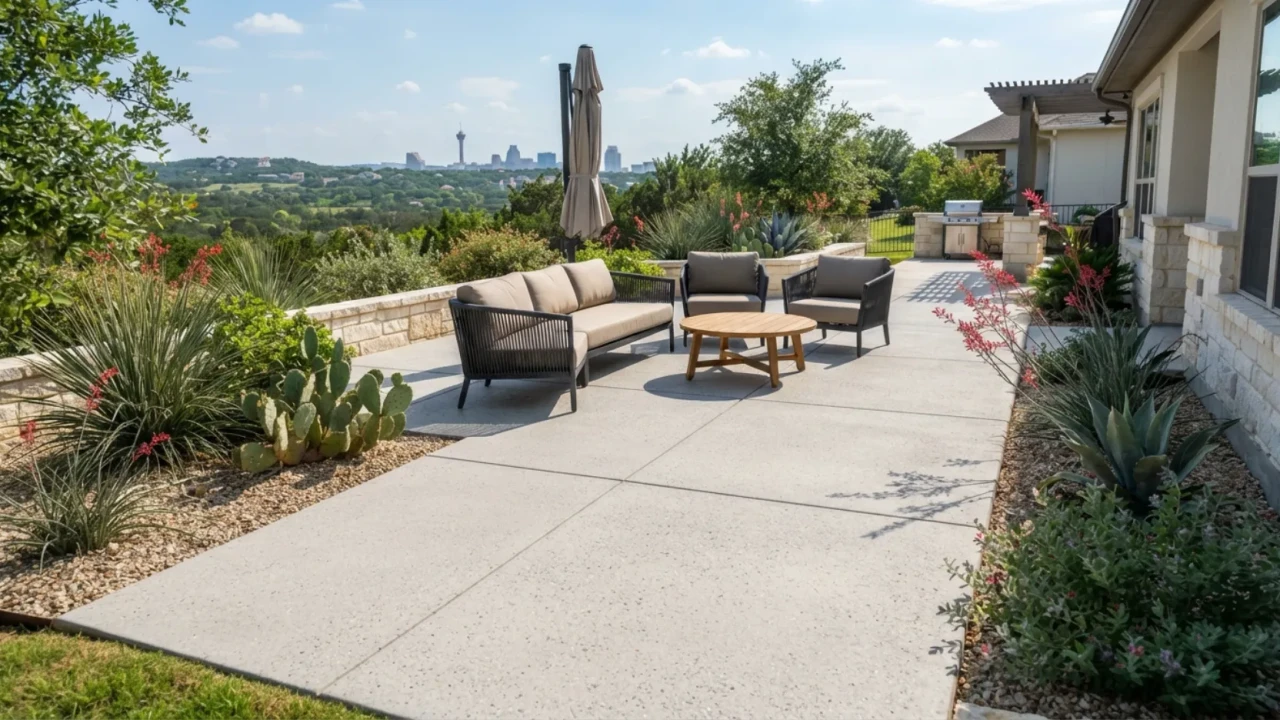
Concrete is correctly described as low-maintenance not zero-maintenance. The distinction matters for budgeting. A standard broom-finish concrete patio in San Antonio requires an annual pressure wash to clear algae, dirt, and organic staining, resealing every three to five years under local UV conditions, and immediate treatment of oil or grease stains before they penetrate the surface. That is the entire maintenance list for a well-installed slab. Compare that to the refinishing cycles of wood, the individual re-leveling demands of pavers on clay soil, or the constant replenishment that gravel requires.
Stamped and stained concrete patios require a slightly more frequent resealing cycle every two to three years rather than three to five because the decorative sealer coat that protects the color and pattern is thinner than the structural slab and degrades faster under San Antonio’s UV. The trade-off is worth it for most homeowners who choose stamped finishes: two hours of DIY resealing every two to three years versus the ongoing cost of refinishing a wood deck, re-grouting pavers, or replacing individual paver units that have shifted beyond leveling.
- Annual pressure washing at 1,500 to 2,500 PSI to clear algae, dirt, and organic staining
- Oil and grease stains treated within 24 hours they penetrate unsealed concrete rapidly
- Expansion joint inspection every spring: refill cracked or missing sealant with backer rod and concrete caulk
- Resealing schedule set in calendar: every 3-5 years for plain finishes, every 2-3 years for stamped and stained
- Hairline cracks (under 1/4 inch wide) filled promptly in the first season they widen quickly under San Antonio heat cycles
Design Options
Concrete is the most versatile patio surface material available to San Antonio homeowners in 2026. Unlike pavers (which come in fixed shapes and a limited palette) or wood (which can be stained but not patterned structurally), concrete can be finished, colored, and shaped to match almost any design intent. A poured concrete patio can be made to look like natural flagstone, slate, brick, cobblestone, or a custom abstract pattern. It can be a single earth tone or a two-tone contrast finish. It can curve around a pool, step up to a raised outdoor kitchen, or incorporate a fire pit area as a seamless part of the design.
The most requested patio finish combination this year is stamped concrete with an integral color base plus a contrasting release agent in a lighter earth tone, paired with an acid-stained border or accent strip. The integral color ensures the pigment goes all the way through the slab so chips and wear do not expose gray concrete underneath. Combined with a decorative border, it creates a two-material look on a single monolithic slab with no grout lines or individual units to shift or settle.
- Finish type selected and confirmed in writing before any work begins
- For stamped finishes: pattern and color confirmed with a reference photo attached to the contract
- Integral color specified (pigment in the mix) rather than surface color hardener critical for long-term color stability
- For stained finishes: test patch on the actual slab surface approved before full application
- Shape and edge detail of the patio confirmed on a site plan drawing before pour day
Home Value
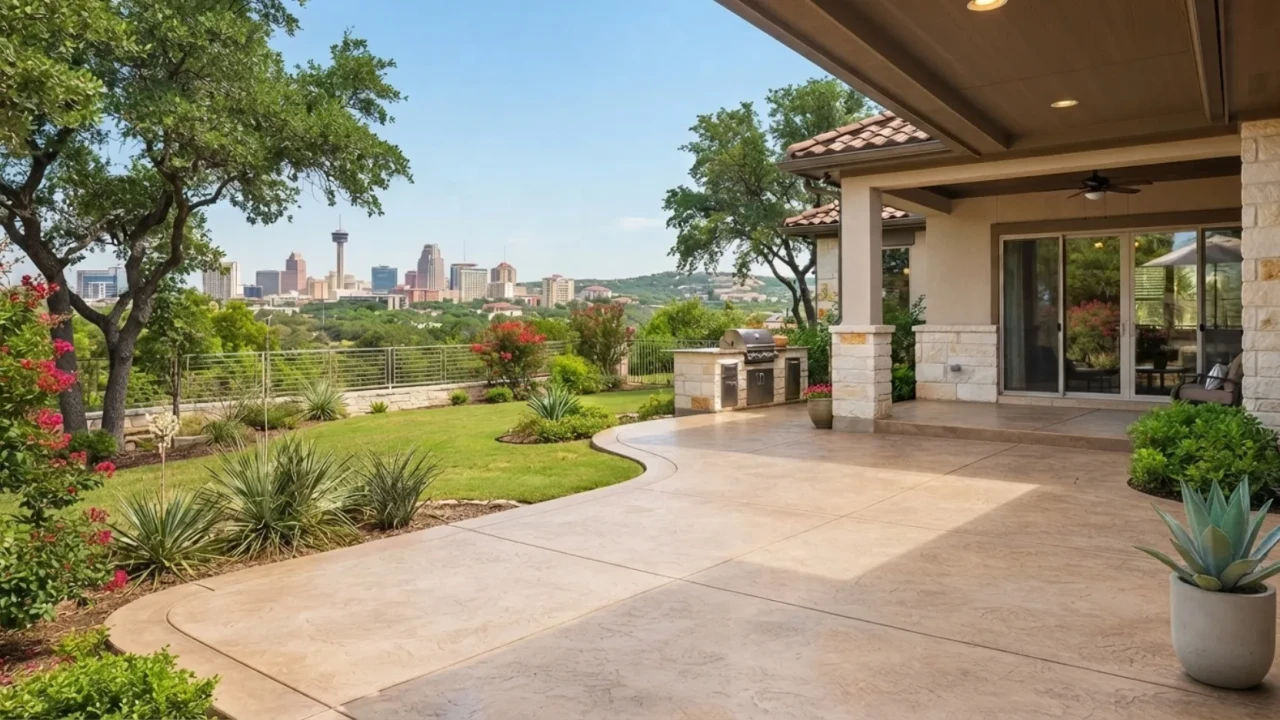
Outdoor living space is among the highest-value home improvements in San Antonio’s real estate market. The city’s mild winters and long outdoor season make a well-finished backyard an active selling point that buyers factor into offers. A concrete patio particularly a stamped or decorative finish patio with an outdoor kitchen connection or fire pit integration is the kind of feature that shows in listing photos, motivates in-person visits, and supports a higher asking price than comparable homes without developed outdoor space.
Unlike interior renovations where buyer taste varies widely, a clean, well-finished concrete patio with proper drainage and defined edges is universally appealing. It signals maintenance, investment, and usable square footage. In San Antonio’s competitive mid-tier housing market (the $275,000 to $450,000 range where most single-family transactions occur), a $4,000 to $8,000 patio investment that presents well in photos can meaningfully shorten time on market and support a listing price that returns the investment and more.
If you are installing a patio with resale in mind, stamped concrete in a neutral stone pattern outperforms bold color choices for most buyers. Ashlar slate, random flagstone, and large-format stone patterns in earth tones (buff, tan, sandstone) appeal to the widest range of buyers and photograph better than deep browns or grays in San Antonio’s bright outdoor light. Save the bold color work for covered patio areas that feel more interior-like and less subject to buyer color preference scrutiny.
- Patio size matches the home: a 150 sqft patio on a 2,500 sqft home reads as underdeveloped to buyers
- Finish grade appropriate to the neighborhood: stamped concrete in premium neighborhoods, clean broom in starter-home price points
- Drainage planned from the design stage: water pooling against the house foundation destroys home value faster than no patio at all
- Lighting roughed in during pour if possible: conduit under the slab for outdoor lighting adds minimal cost at pour time but significant cost afterward
- Covered patio connection considered: a pergola or covered structure dramatically increases perceived value of the outdoor space
Cost Efficiency
The upfront cost of a concrete patio is competitive with pavers and significantly below a quality hardwood or composite deck of the same size. More importantly, the total 30-year cost of ownership including installation, maintenance, and replacement favors concrete over every competing material in San Antonio’s conditions. Wood decks require periodic refinishing or staining (every two to three years), eventual board replacement, and either full replacement or significant structural repair at the 15 to 20 year mark. Paver patios on clay soil require releveling, edge restraint maintenance, and individual unit replacement as the base shifts seasonally.
| Material (400 sqft patio) | Installation cost | Maintenance / 10 yrs | 30-year total estimate |
|---|---|---|---|
| Broom finish concrete | $2,400 – $4,000 | $400 – $600 (sealing) | $3,600 – $5,800 |
| Stamped concrete | $7,200 – $8,800 | $600 – $900 (sealing) | $9,000 – $11,500 |
| Concrete pavers | $8,000 – $14,000 | $1,200 – $2,400 (releveling, replacement) | $11,600 – $21,200 |
| Pressure-treated wood deck | $5,600 – $9,600 | $2,400 – $3,600 (refinishing, board replacement) | $10,400 – $20,400 |
| Composite decking | $10,400 – $16,000 | $800 – $1,200 (cleaning, hardware) | $12,800 – $19,600 |
The numbers above use mid-market San Antonio pricing in 2026. The concrete advantage compounds over time: as a concrete slab ages into its second and third decade while competitors need replacement or major repair, the total cost gap widens significantly. A homeowner who installs a broom-finish concrete patio today for $3,200 and reseals it six times over 30 years at $80 each has spent approximately $3,680 total for a surface that still has usable life remaining. No competing material at that price point can match that performance curve in San Antonio’s conditions.
- Get three written quotes that each itemize: base prep, reinforcement, pour, finishing, and first sealing separately
- Compare apples to apples: make sure all quotes specify the same slab thickness and base depth
- Low bids that don’t specify base prep are not savings they are deferred repair costs within five years
- Factor the 30-year ownership cost, not just installation price, when comparing concrete to pavers or wood
- Ask about conduit placement under the slab at pour time for future electrical or gas adding it afterward requires core drilling at significant cost
Heat Performance
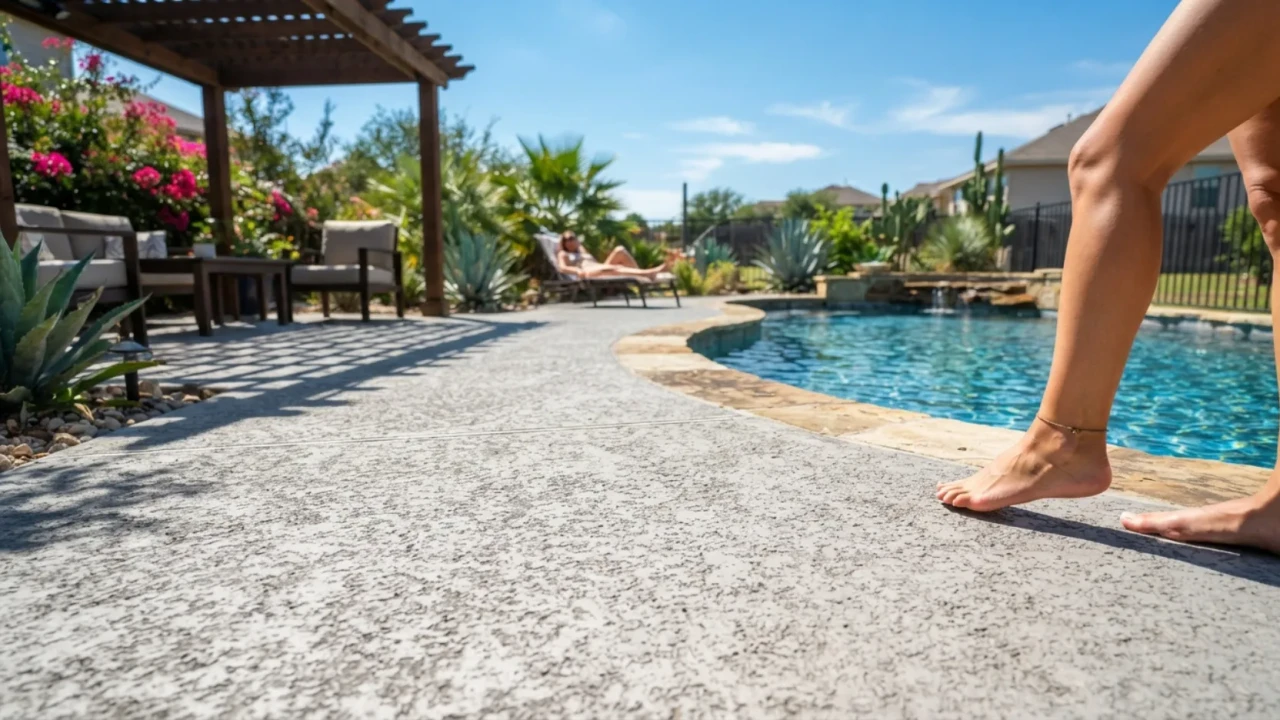
San Antonio averages 220 sunny days per year, and summer UV index readings regularly hit 11 (extreme) from May through September. Outdoor surfaces take a beating that most national product specifications underestimate. Concrete handles this environment structurally better than any organic material. Wood warps, splits, and loses surface integrity under repeated heat cycles. Composite decking can delaminate and sag in sustained high temperatures. Concrete expands and contracts slightly with temperature, which is managed by properly placed control joints the same joints that handle San Antonio’s clay soil movement.
Surface temperature is a real consideration for bare feet on a San Antonio patio in July. Plain gray concrete in direct sun can reach surface temperatures of 130 to 150 degrees Fahrenheit. Lighter-colored concrete finishes natural gray, light buff, or a salt finish with a lighter aggregate reflect more solar radiation and run 10 to 25 degrees cooler than dark stamped or stained surfaces under the same conditions. For patios where barefoot use is expected, specify a lighter integral color or a finish type with natural surface texture (exposed aggregate and salt finish both run cooler than smooth polished surfaces at the same color).
The best time of year to install a concrete patio in San Antonio is October through April. Summer pours are performed daily by experienced crews, but the heat compresses the window for decorative work (stamping, staining) and requires early morning starts, curing compounds, and more careful monitoring. If your project timeline is flexible, a fall or winter pour reduces heat-related curing risk and often gets you better contractor scheduling and pricing.
- For barefoot use areas: specify lighter integral color or natural aggregate finish to reduce surface temperature
- Summer pour: confirm early morning start time in writing for any stamped or stained work
- Curing plan confirmed: wet curing or liquid curing compound applied for minimum 3 to 5 days after pour
- Sealer type for UV resistance: penetrating silane-siloxane for colored finishes is more UV-stable than acrylic topcoats
- Shade structure considered: a pergola or shade sail over the patio reduces surface temperature by 20 to 40 degrees and extends sealer life measurably
Versatility
A concrete slab is the structural foundation for every major outdoor living upgrade San Antonio homeowners invest in. Outdoor kitchens require a stable, level surface that will not shift under the weight of stone counters, built-in grills, and refrigerators. Fire pits need a non-combustible surface underneath and around them. Pool deck surrounds must be slip-resistant, continuously draining, and able to handle chemical splash from pool water. Covered patio structures pergolas, aluminum shade structures, and full roof extensions require footings that are typically poured as part of a concrete patio project. Concrete handles all of these without modification. A wood deck requires significant structural upgrades for most of the same applications. Pavers are suitable for some but shift under heavy point loads over time on clay soil.
The practical planning advantage of concrete is that you can design the full intended use of your outdoor space into the slab from the beginning. Conduit runs for outdoor lighting and gas line raceways can be placed under the slab before the pour. Post footings for shade structures can be poured as integral parts of the slab perimeter rather than added later. Drainage slope can be engineered into the slab grade from the start. All of these integrations cost far less when planned at pour time versus added through core drilling, excavation, and patching after the fact.
- Outdoor kitchen footprint planned and weight accounted for in slab thickness spec (increase to 5 to 6 inches under heavy structure areas)
- Conduit placed under slab before pour for any planned outdoor electrical or gas runs
- Post footing locations confirmed before pour day for any pergola or shade structure
- Drainage slope confirmed: minimum 1/8 inch per foot away from the house foundation
- Pool surround drainage slope: 1/8 to 1/4 inch per foot away from pool edge, toward deck drains
- Non-slip finish specified for any pool surround area: exposed aggregate, broom, or salt finish not polished or smooth trowel
The estimates below reflect fully installed 2026 pricing for common residential patio sizes in San Antonio, including base preparation with a minimum 4-inch compacted crushed limestone base, 4-inch slab thickness, wire mesh or rebar reinforcement, pour, finishing, and first sealer at 28 days. Prices reflect mid-market licensed, insured contractors not lowest-bid operators who skip base prep.
The table below compares the three most common patio choices for San Antonio homeowners on the factors that matter in Bexar County conditions specifically.
| Factor | Concrete patio | Paver patio | Wood or composite deck |
|---|---|---|---|
| Performance on clay soil | Excellent with proper base and control joints | Fair individual units shift and require releveling on expansive clay | Not soil-dependent (elevated structure) |
| Lifespan in San Antonio | 30-50+ years | 20-30 years before major releveling needed | 10-20 years for wood; 25-30 for composite |
| Upfront cost (400 sqft) | $2,400 – $8,800 depending on finish | $8,000 – $14,000 | $5,600 – $16,000 |
| Maintenance frequency | Low seal every 2-5 years, annual pressure wash | Moderate annual joint sand, periodic releveling | High refinish every 2-3 years for wood; moderate for composite |
| Heat performance | Good lighter colors significantly cooler | Good similar to concrete at same color | Poor composite softens and warps under sustained Texas heat |
| Design flexibility | Excellent unlimited shape, color, pattern, and finish options | Good limited to available unit shapes and colors | Moderate board direction and stain color are primary variables |
| Pool surround suitability | Excellent non-slip finishes, seamless drainage slope | Good grout lines create natural drainage but can shift | Poor chemical splash damage, slip hazard when wet |
- Patio size and shape determined minimum 12 x 12 feet for a functional dining area, 16 x 20 feet for a full entertaining space
- Finish type selected and confirmed in writing with reference photo or sample attached to the contract
- Drainage slope planned from the design stage: minimum 1/8 inch per foot away from the house
- Conduit runs placed before pour for any planned outdoor electrical, gas, or audio/visual lines
- Pergola or shade structure post locations confirmed before pour day so footings can be integrated
- Slab thickness confirmed: 4 inches minimum for standard patio, 5 to 6 inches under outdoor kitchen or heavy structure areas
- Base preparation specified in writing: minimum 4 inches compacted crushed limestone over San Antonio’s native Vertisol clay
- Reinforcement confirmed: wire mesh minimum for standard patios, rebar grid for larger slabs or heavy use areas
- Control joint spacing confirmed: every 8 to 10 feet in both directions
- Texas 811 utility locate call confirmed before any excavation begins
- Certificate of insurance received and verified: $1M minimum general liability coverage
- Written quote itemizes base prep, reinforcement, pour, finishing, sealing, and cleanup separately
- Payment terms confirmed: 30-50 percent deposit, remainder on completion not full payment before work starts
- References from completed San Antonio patio projects available and verified
- City of San Antonio permit requirements confirmed covered patios and structures may require permits
- Curing confirmed: wet curing or liquid curing compound applied for minimum 3 to 5 days after pour
- No foot traffic for 48 hours; no furniture or heavy use for 7 days
- First sealing scheduled at 28 to 30 days after pour not before full cure
- Resealing calendar set: every 2-3 years for stamped and stained, every 3-5 years for broom and aggregate
- Annual maintenance reminder set: pressure wash, joint inspection, and oil stain treatment protocol understood
How long does a concrete patio last in San Antonio?
Is a concrete patio worth it compared to pavers?
Do I need a permit for a concrete patio in San Antonio?
What is the best concrete patio finish for San Antonio’s heat?
How much does a concrete patio add to home value in San Antonio?
Can concrete be poured in San Antonio summer heat?
Get a free concrete patio quote in San Antonio
Tell us your patio size, preferred finish, and intended use. We will visit your property, assess your site conditions, and give you a detailed written quote at no cost.