
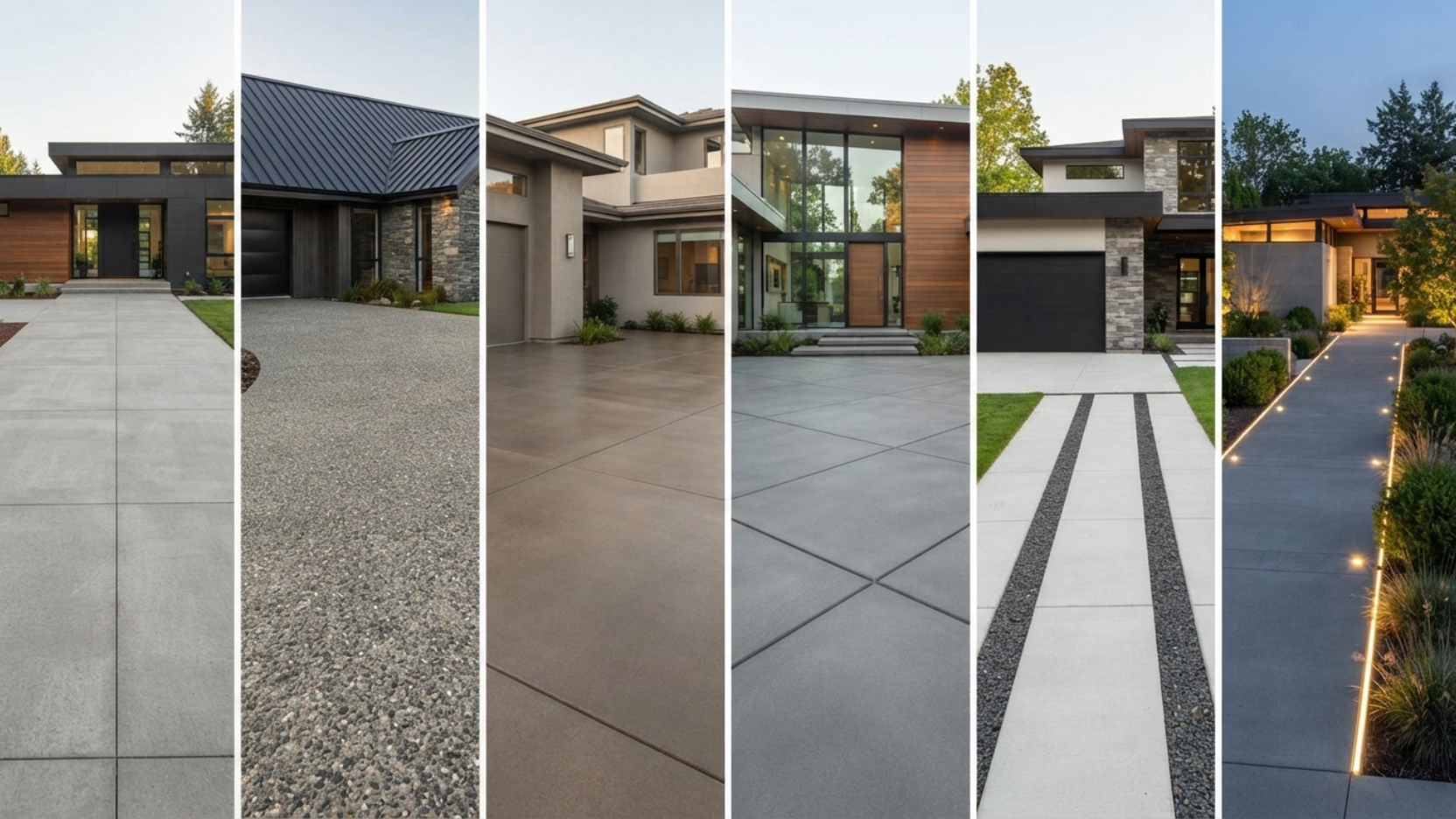
A modern home deserves a driveway that looks intentional, not like an afterthought. This guide walks through the finishes, patterns, and layout choices that turn a plain concrete slab into a design feature, along with the cost and durability trade offs behind each option.
Most homeowners still picture a concrete driveway as a plain gray rectangle. That is not where the material sits anymore. Modern concrete work now includes integral color, saw cut geometric patterns, exposed aggregate texture, and clean linear borders, all of which pair naturally with the flat rooflines, large windows, and minimalist landscaping that define contemporary home design.
This guide covers the design options that actually work on modern homes in San Antonio, what each one costs, how it holds up in Texas heat, and how to brief your contractor so the finished driveway matches the look you have in mind instead of a generic decorative pattern.
Modern architecture is defined by clean lines, limited color palettes, and a few well chosen materials rather than heavy ornamentation. The driveway finishes that read as modern almost always use one or two colors, a simple repeating pattern, and a texture chosen for function first. Busy multi color stamped patterns that mimic cobblestone or flagstone tend to clash with a contemporary facade. The goal is a surface that feels considered, not decorated.
Broom Finish
A broom finish is the default choice for a reason: it is slip resistant, durable, and inexpensive relative to decorative options. On a modern home, the design comes from scale and precision rather than texture. Pouring the driveway in large, evenly spaced sections with crisp, straight control joints reads as intentional and clean, especially against a monochrome or single accent color house.
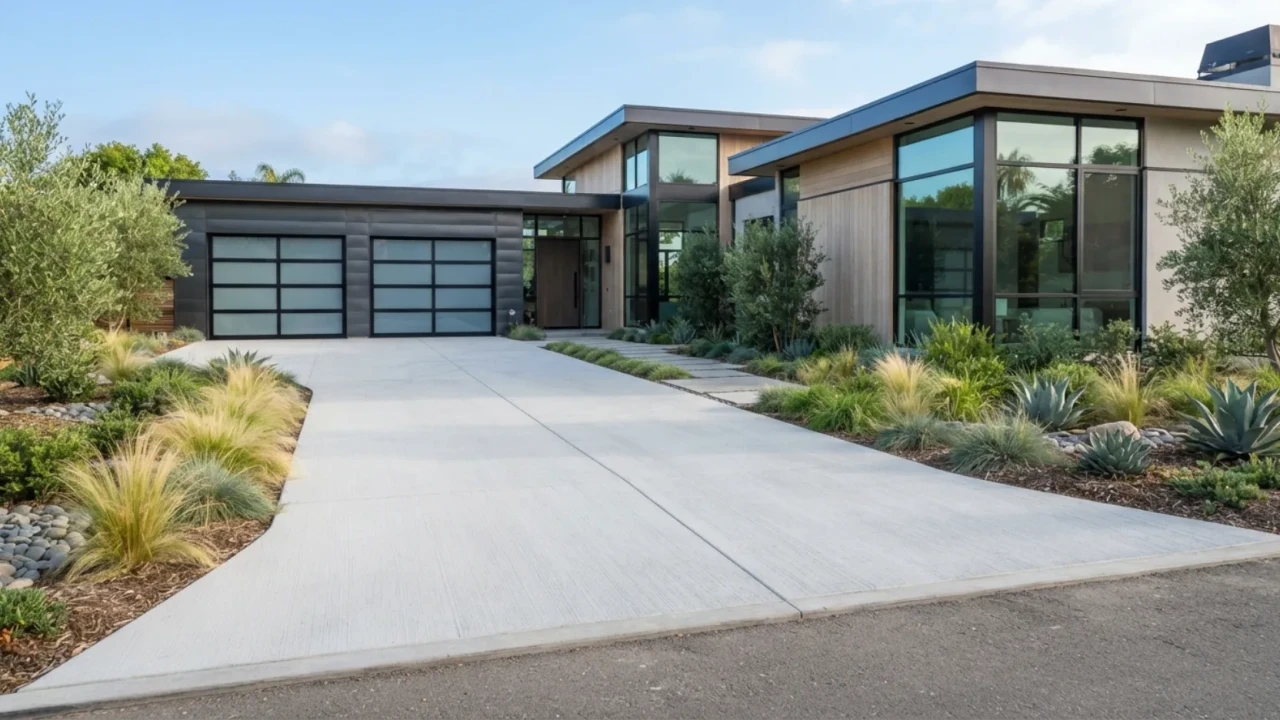
Keep joint spacing consistent and aligned with the garage bay width or entry walkway for a grid that looks planned rather than functional. A lightly broomed, low sheen surface in a natural gray or a charcoal integral color tends to complement contemporary siding, stucco, and metal roofing better than a bright white or heavily textured finish.
Exposed Aggregate
Exposed aggregate finishes remove the top layer of cement paste to reveal the natural stone mixed into the concrete, creating a speckled, textured surface. For modern homes, a fine to medium aggregate in gray or charcoal tones gives the driveway a subtle, natural texture that reads as material honesty rather than decoration, which is a common thread in contemporary design.
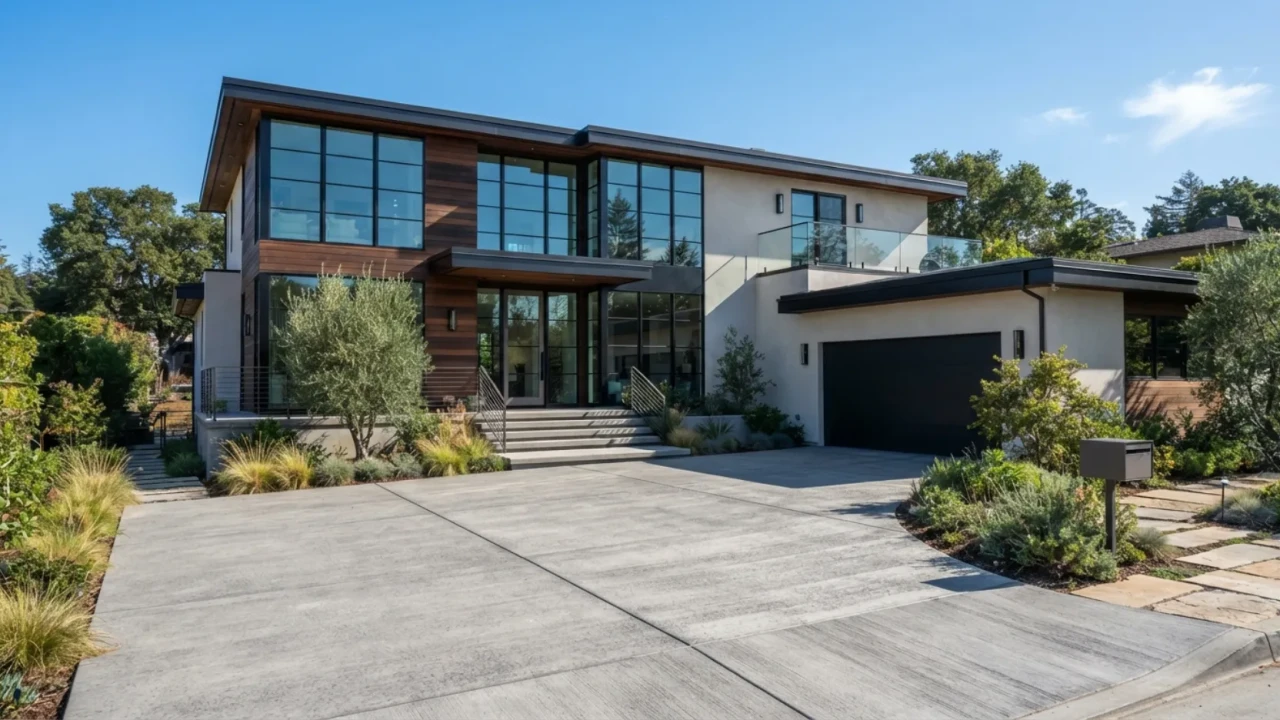
Choose an aggregate that matches or complements your exterior stone or landscaping gravel to tie the driveway into the rest of the property. A seeded aggregate finish, where matching stone is broadcast onto the surface before the top layer is exposed, gives more control over color and consistency than relying on whatever aggregate happens to be in the concrete mix.
Color & Stain
Color is where modern driveways diverge most from traditional ones. Instead of warm terracotta or tan tones, contemporary homes tend to use charcoal, graphite, soft taupe, or a deep warm gray that pairs with black window frames and dark siding. Integral color is mixed into the concrete before the pour, so the tone runs through the full depth of the slab and will not wear off the way a topically applied stain can over time.
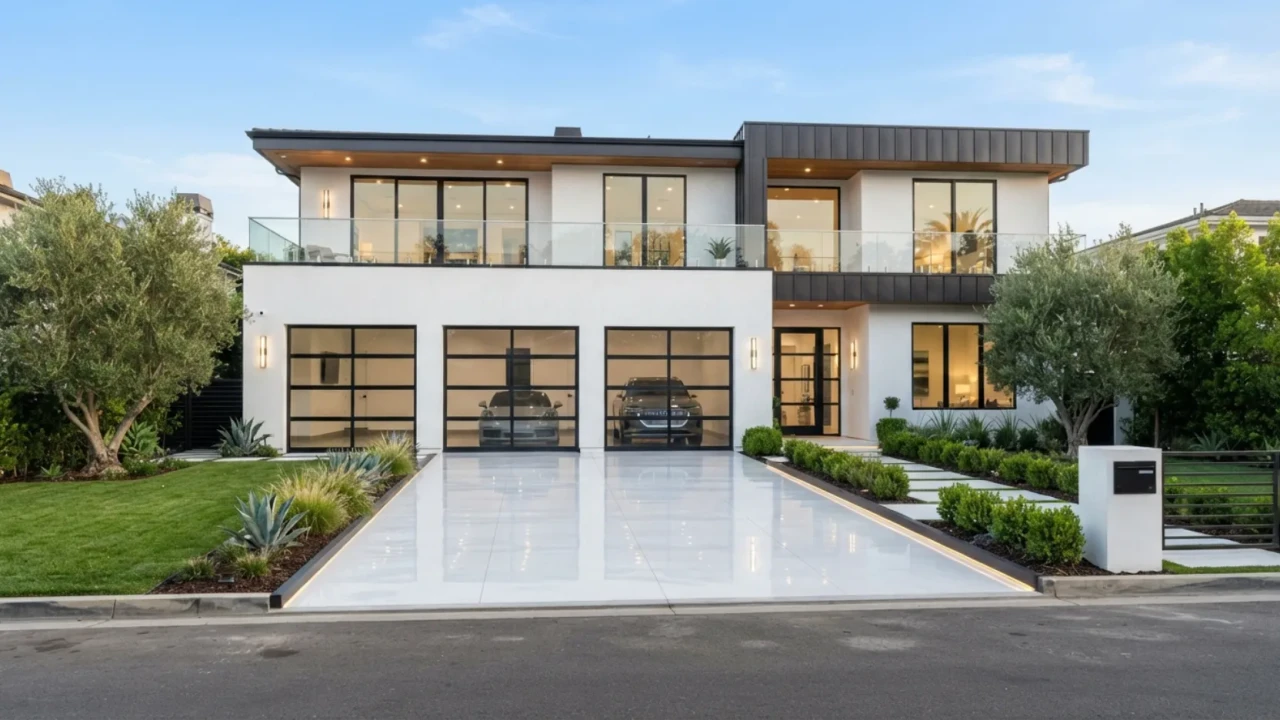
Acid staining is a lower cost alternative that produces a mottled, variegated look, which reads as more organic and less flat than integral color. For a strictly modern aesthetic, integral color in a single tone typically looks more deliberate than a stained, variegated surface, since the goal is a uniform plane rather than a patterned one.
Saw Cut Pattern
Every concrete driveway needs control joints to manage cracking, so a designer who plans those cuts as a pattern rather than a purely functional grid gets a design feature for free. Wide rectangular panels, offset brick style joint layouts, or a single accent band running the length of the driveway are common approaches on modern homes.
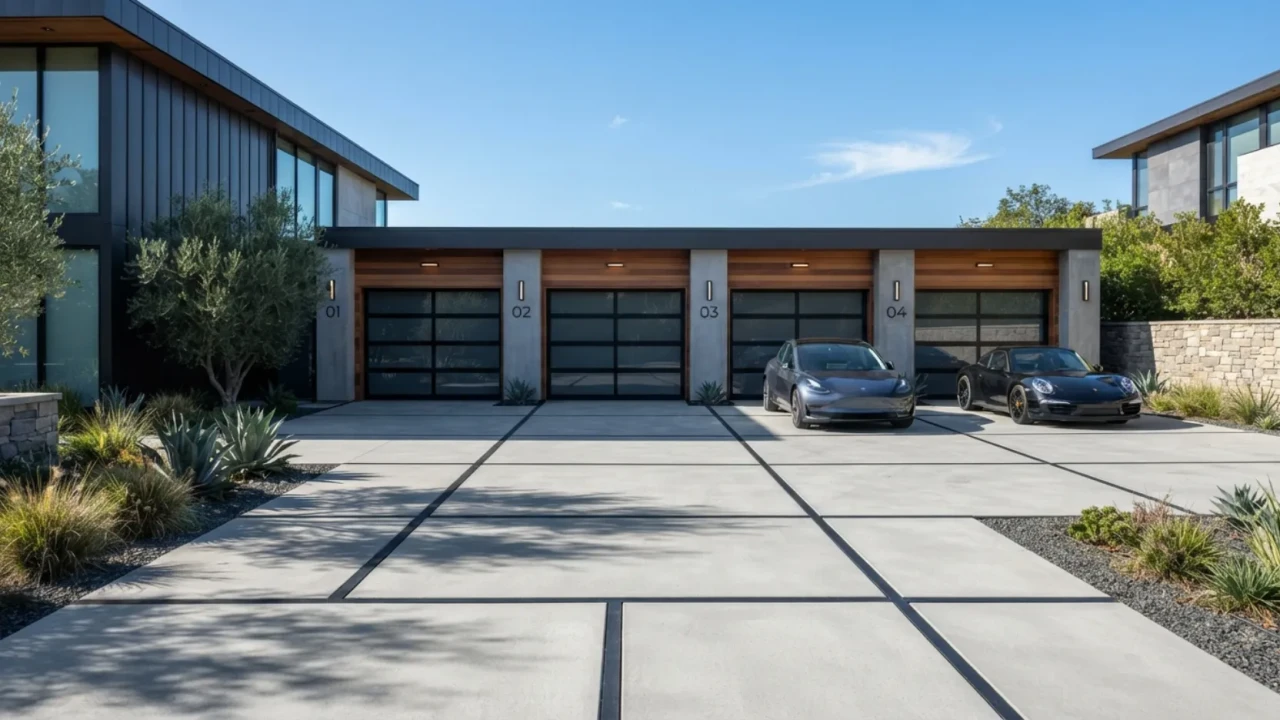
Deeper decorative saw cuts, sometimes filled with a contrasting color or a strip of gravel or turf, create a more pronounced grid effect. This works especially well on wider driveways where a single unbroken slab would otherwise look flat and undifferentiated. Discuss joint spacing and layout with your contractor at the design stage, since cuts made purely for structural reasons are harder to reposition after the pour.
Border & Layout
A large, unbroken concrete driveway can visually overwhelm a modern home’s facade, especially on wider lots. A two tone border, where a darker or lighter concrete band frames the main driveway surface, breaks up that mass without adding ornamentation. Ribbon driveways, made of two narrow concrete strips with a planted or gravel center strip, achieve a similar effect while reducing total paved square footage.
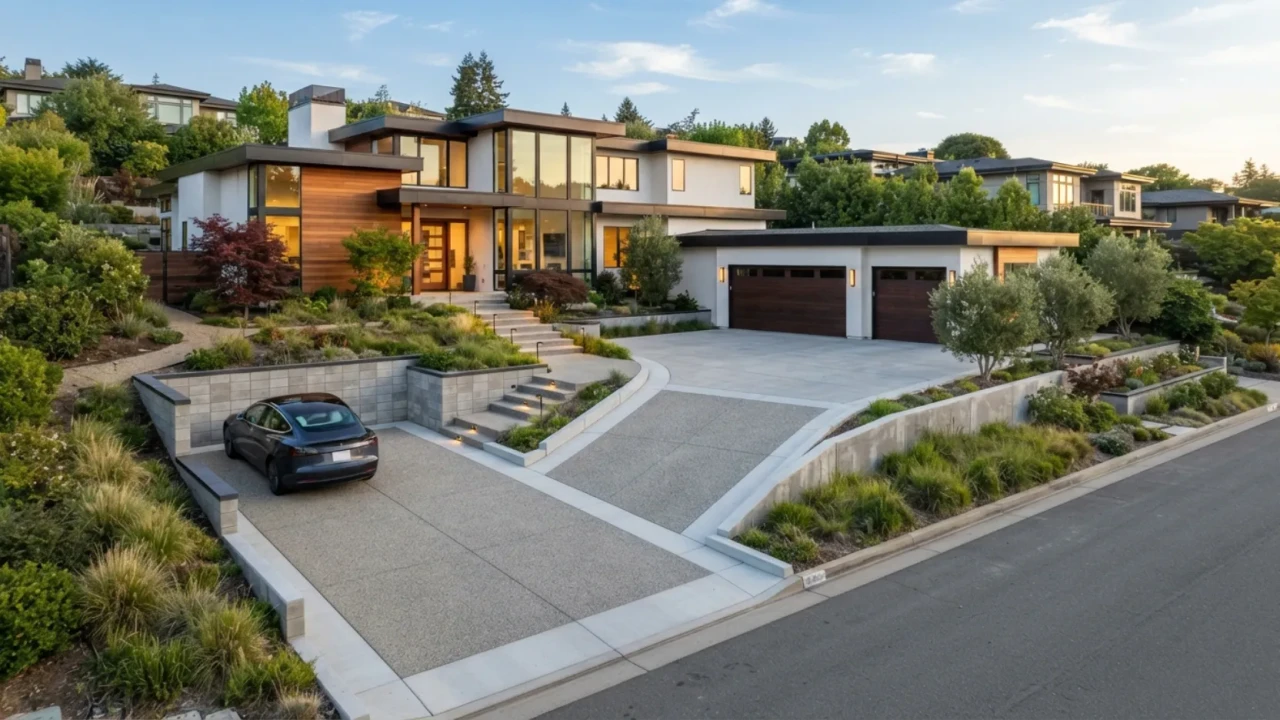
Ribbon driveways also reduce stormwater runoff since the center strip stays permeable, which matters in San Antonio during heavy summer storms. They work best on longer, straight driveways rather than curved approaches, and they need a wider vehicle track width confirmed before the layout is finalized.
Landscaping
A well chosen finish on its own will not read as modern if the surrounding landscaping and lighting do not support it. Low, linear plantings such as ornamental grasses or clipped hedges, gravel borders in place of turf, and recessed or bollard style path lighting along the driveway edge all reinforce the clean, low maintenance look that defines contemporary exteriors.
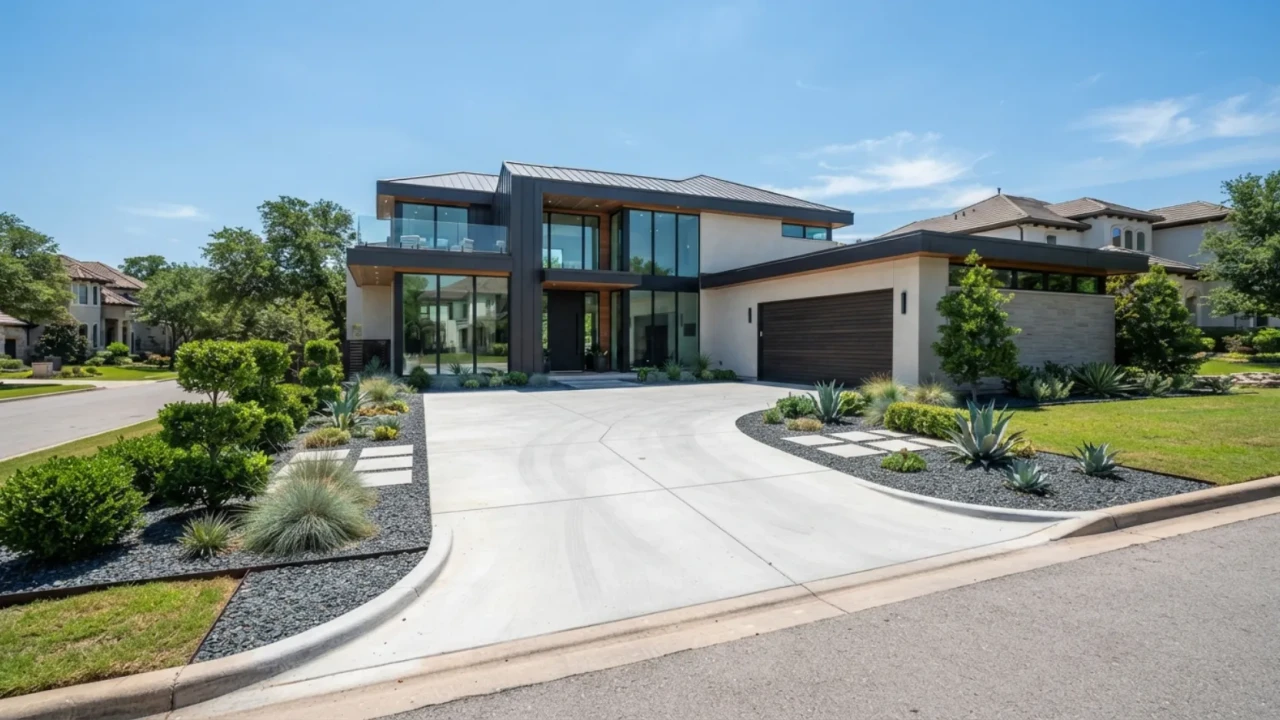
Plan conduit for driveway edge lighting before the pour, since running electrical afterward means cutting into a finished slab. Coordinating this with your concrete contractor at the design stage is far cheaper than retrofitting lighting into an existing driveway later.
- Finish and color chosen before the base is prepared, not after the pour is scheduled
- Joint layout reviewed and approved as a design pattern, not left to default spacing
- Lighting and irrigation conduit run before the pour if edge lighting or planting is planned
- Sample panel or photo of the chosen finish and color approved before the full pour
- Sealing schedule confirmed at 28 to 30 days after the pour to lock in color and texture
| Finish | Typical cost | Best for | Maintenance |
|---|---|---|---|
| Broom finish, large panels | $6–10/sqft | Minimalist, budget conscious builds | Low, reseal every 3–5 years |
| Exposed aggregate | $9–14/sqft | Homes with stone or gravel accents | Low to moderate, reseal every 2–3 years |
| Integral color | $7–13/sqft | Tone matched, monochrome facades | Moderate, reseal every 2–3 years |
| Saw cut geometric pattern | $6–11/sqft | Wide driveways, courtyard entries | Low, standard sealing schedule |
| Two tone border or ribbon layout | $8–15/sqft | Larger lots, drainage sensitive sites | Moderate, border and center strip differ |
Bring photos of driveways you like to the first site visit, but ask your contractor to translate the look into your specific lot size, slope, and existing landscaping rather than copying the reference photo directly. A pattern that works on a flat, wide lot often needs to be simplified on a narrow or sloped driveway to avoid an awkward, cut off design.
What is the most popular modern driveway design in San Antonio right now?
Does a decorative finish weaken the concrete or affect its lifespan?
Can I add a design to an existing plain concrete driveway?
How much extra does a modern design driveway cost over a plain slab?
What design pairs best with a modern or minimalist home exterior?
Get a free driveway design quote in San Antonio
Tell us about your home and the look you want. We will visit your property, walk through finish and layout options, and give you a detailed written quote at no cost.