
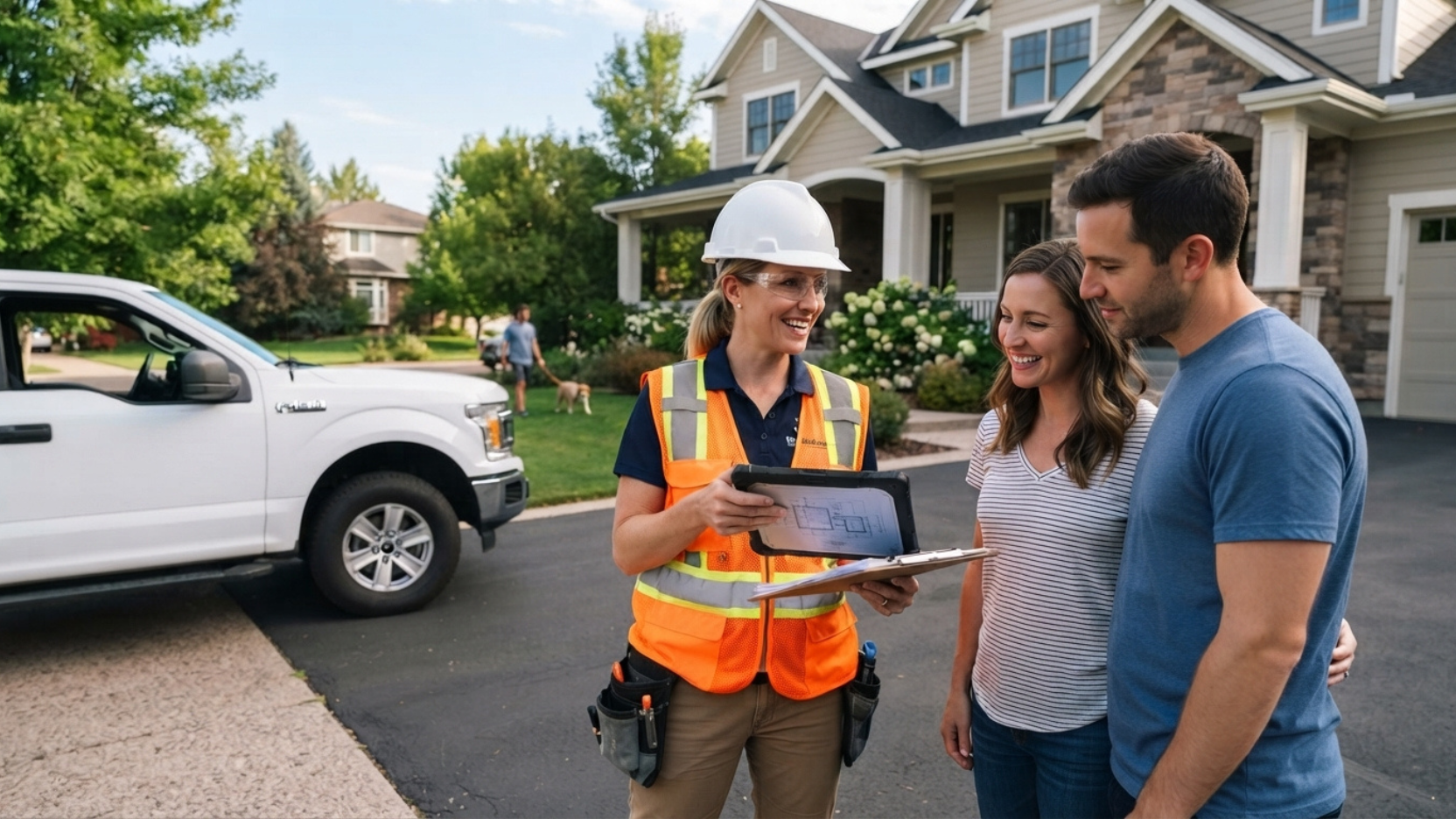
Most driveway failures in San Antonio trace back to the contractor, not the concrete. This guide gives you the exact questions to ask, the documents to request, the red flags to walk away from, and the contract terms that protect you before a single bag of cement is mixed.
Hiring a concrete driveway contractor in San Antonio is not the same as hiring a general handyman. Concrete is permanent. Once the truck empties and the slab sets, there is no do-over without a full demolition and re-pour. That makes the vetting process before you sign a contract the single most important step in any driveway project.
The good news is that a bad contractor is easy to identify if you know what to look for. This guide gives you six specific checkpoints, the documents you need to request, the questions that separate experienced local crews from out-of-town storm chasers, and the contract language that protects you if something goes wrong. Follow this process and you will not end up with a cracked slab at year three.
The most common mistake San Antonio homeowners make is comparing quotes by total price without checking whether the specs are equivalent. A $4,800 quote that skips the compacted crushed limestone base and uses wire mesh instead of rebar is not cheaper than a $6,200 quote that includes both. It is more expensive when you add the $3,000 repair cost at year four. Before you compare prices, confirm that every quote specifies the same slab thickness, base preparation depth, reinforcement type, and number of expansion joints. Only then does the price comparison mean anything.
Verify First
Before discussing price, finish, or timeline, ask for two documents: a certificate of general liability insurance and proof of a verifiable local business address. Any contractor who hesitates on either of these is not the right contractor for a permanent installation like a concrete driveway.
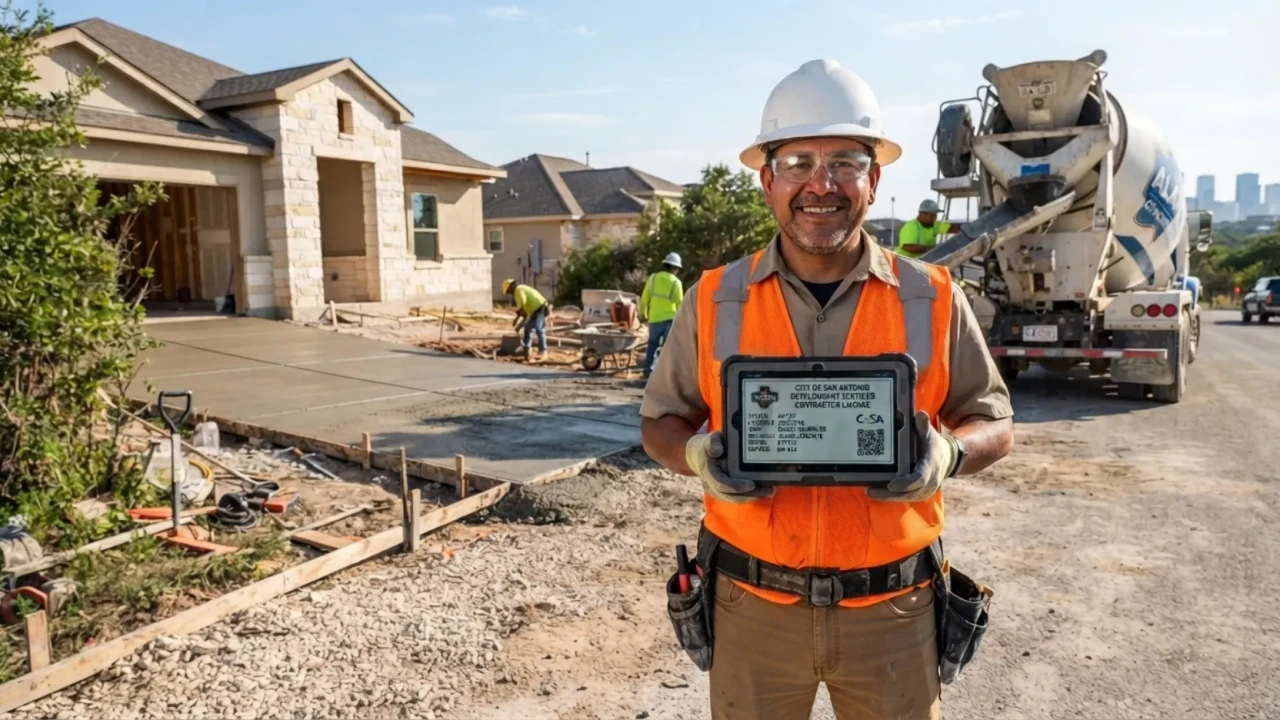
Texas does not require a statewide contractor’s license for concrete work, but the City of San Antonio requires registration for contractors working on permitted projects. More importantly, every contractor doing work on your property should carry general liability insurance with a minimum $1 million per occurrence limit. This protects you if the crew damages your home, a neighboring property, or a utility line during excavation.
Check their Google Business profile and the Better Business Bureau before the first call. A contractor working in San Antonio for more than two years will have a Google Business listing with reviews. Scan for patterns, not just the star rating. One or two bad reviews in a sea of good ones is normal. Multiple reviews mentioning “crack within a year,” “never showed back up,” or “refused to honor warranty” are a disqualifying pattern. The BBB’s San Antonio office also tracks formal complaints, which are more significant than anonymous online reviews.
- Certificate of general liability insurance received and verified minimum $1M per occurrence
- Insurance confirmed as active by calling the insurer directly using the number on the certificate
- Workers’ compensation coverage confirmed if the crew has employees (protects you from injury claims)
- Local business address verified not a P.O. box or out-of-state address
- Google Business profile reviewed for review patterns, not just star rating
- BBB complaint history checked for the company name and any doing-business-as variations
Quote Detail
A quote that says “concrete driveway, 600 sq ft, $5,400” tells you nothing about what you are buying. A legitimate quote itemizes every component of the job. The reason this matters: two quotes for $5,400 can represent drastically different scopes. One includes proper base preparation and rebar; the other pours directly over the existing subgrade with wire mesh. They will not produce the same driveway in San Antonio’s expansive clay soil.
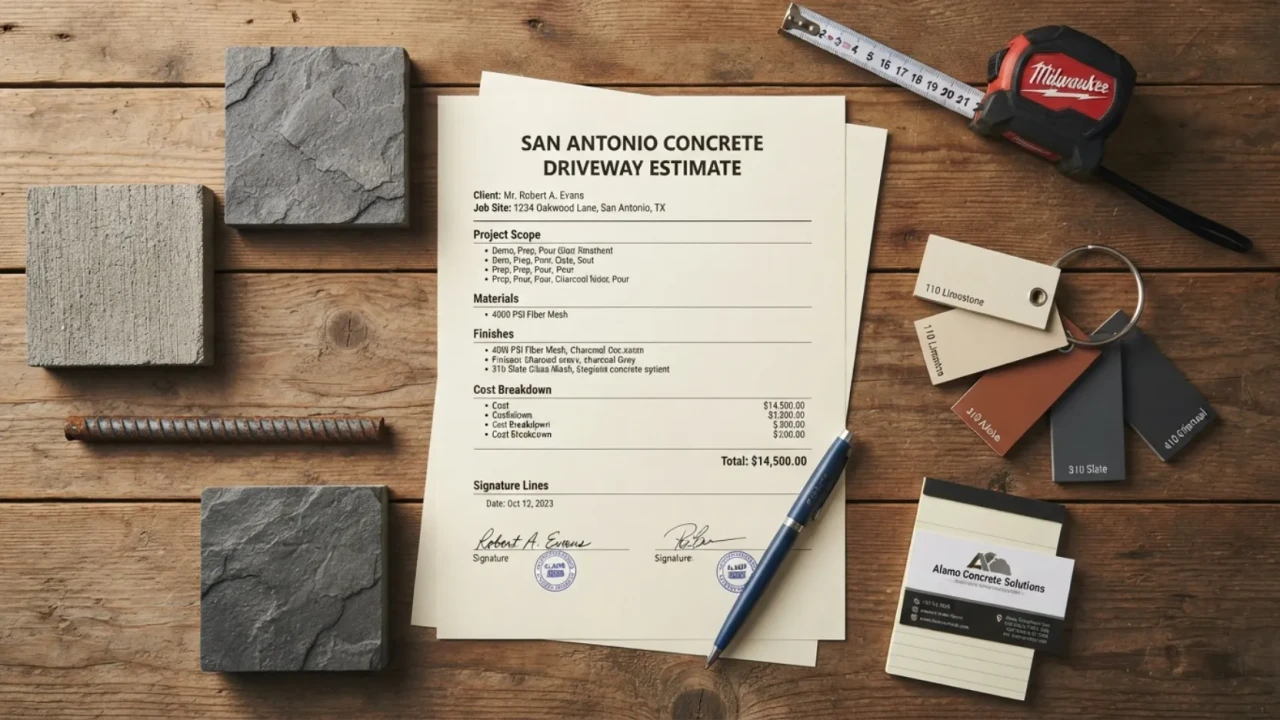
Ask every contractor for a written quote that specifies the following items individually. If any of these are missing, ask the contractor to add them in writing before you move forward. Verbal assurances during the sales conversation are worthless once the crew has been paid and the job is done.
- Slab thickness specified in writing minimum 4″ for residential driveways, 5″ for heavy vehicles
- Base preparation included compacted crushed limestone, minimum 4″ depth in Bexar County clay soil
- Reinforcement type confirmed #3 or #4 rebar at 18″ centers preferred over wire mesh for driveways
- Concrete PSI specified 3,000 PSI minimum; 3,500 PSI recommended for heavy use
- Expansion joint spacing noted every 8–10 feet for a standard driveway
- Finish type confirmed in writing no verbal agreements on color or pattern
- Cleanup and debris hauling included or excluded confirmed before signing
Interview
An experienced San Antonio concrete contractor will answer these six questions without hesitation. Their answers will reference the specific soil conditions in Bexar County, the local climate stressors, and the regional construction practices that differ from other Texas markets. Generic answers that could apply anywhere are a sign the contractor is new to the area or inexperienced with local conditions.
Use these six questions as your vetting interview. Pay attention not just to the answer but to whether the contractor references local conditions without being prompted.
| Question | Strong answer (experienced local contractor) | Weak answer (red flag) |
|---|---|---|
| “How does San Antonio’s soil affect your base preparation?” | Mentions Blackland Prairie Vertisol clay, describes how it swells when wet and shrinks when dry, explains why 4–6″ of compacted crushed limestone is required before the pour | “We always do good base prep” without mentioning clay or local soil type |
| “What concrete PSI do you use for residential driveways and why?” | Specifies 3,000 or 3,500 PSI, references Texas summer heat and its effect on cure times, mentions water-cement ratio management | “Standard concrete” or can’t specify PSI without looking it up |
| “How do you handle curing in San Antonio’s summer heat?” | Describes early morning pours, wet curing for 3–5 days or liquid curing compound application, mentions avoiding midday pours in June through August | “The concrete takes care of itself” or no specific curing protocol mentioned |
| “Where do you place expansion joints on a driveway this size?” | Gives a specific spacing answer tied to the driveway dimensions, mentions 8–10 foot intervals, explains that joints allow movement without random cracking | “We put them where they need to go” without specifics |
| “Who will actually be on-site doing the work?” | Names the lead finisher, describes crew size, confirms the same crew that poured is there for finishing not a subcontracted finishing team | Evasive about who is doing the work, mentions subcontractors without specifics |
| “Can you provide references from San Antonio driveways you poured in the last 12 months?” | Offers references immediately, provides addresses or names the neighborhood, encourages you to drive by and look at the finished work | Cannot provide recent local references, offers only online reviews or photos |
Ask specifically about their Edwards Aquifer hard water experience. San Antonio’s tap water is among the hardest in Texas due to the limestone geology of the Edwards Aquifer. High mineral content in mix water can affect the water-cement ratio and final slab strength if the contractor does not account for it. An experienced San Antonio concrete finisher will know this and will either use water that has been tested or adjust the mix design accordingly. If the contractor looks confused by the question, they have not been working in this market long.
- Contractor mentions Bexar County clay soils without being prompted when discussing base preparation
- Concrete PSI confirmed 3,000 minimum, 3,500 preferred for driveways with heavy vehicle use
- Curing protocol described with specifics wet curing, curing compound, or early morning start schedule
- Expansion joint spacing given as a specific measurement tied to the driveway dimensions
- On-site crew identified by name or crew size not a vague reference to “my guys”
- Recent San Antonio references available ask for addresses, not just phone numbers
Red Flags
San Antonio homeowners lose thousands of dollars every year to concrete contractors who disappear after the deposit, pour substandard slabs, or skip structural steps that only become visible as cracks years later. Most of these situations share one or more of the seven warning signs below. If you encounter any of these during the contractor selection process, stop and move on to the next quote.
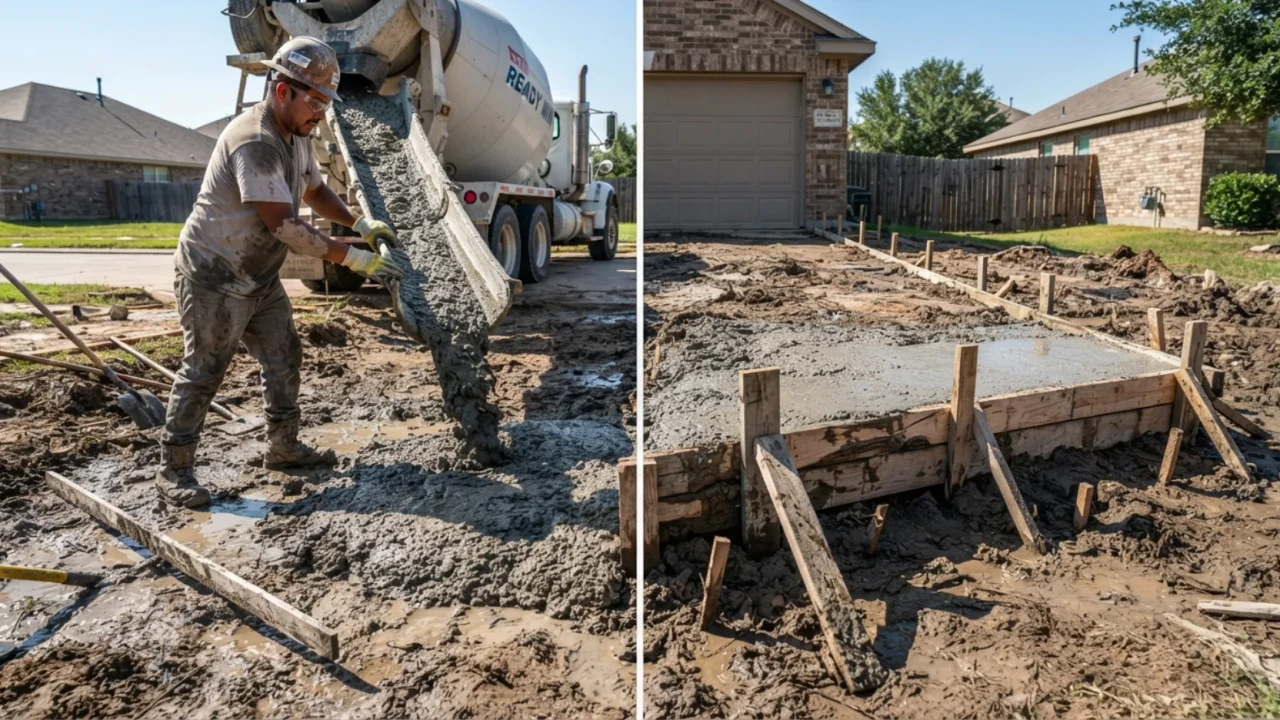
These are not minor concerns. Each of these warning signs has a direct link to either financial loss or a structurally compromised driveway. Do not rationalize any of them.
A legitimate contractor never pressures you to decide on the same day. A reputable San Antonio concrete company has a full schedule and is not desperate for your job right now. If you feel pressured to sign immediately to “lock in a price” or “secure the crew before they’re booked up,” that pressure is itself the disqualifying information. Take at least 48 hours, collect your quotes, review the specs side by side, and make the decision when you are confident.
- Contractor was not solicited door-to-door all quotes were from companies you researched or were referred to
- No request for full payment upfront deposit confirmed at 30–50% with balance due on completion
- All quotes are within a reasonable range any outlier low bid has been explained and reviewed for scope gaps
- Written contract in hand before any payment changes hands
- Local physical address verified and reachable by more than a cell phone number
- No same-day pressure to sign you have had at least 48 hours to compare quotes
Contract
A concrete driveway contract does not need to be a legal document drafted by an attorney. But it does need to include the structural specifications, payment schedule, timeline, and workmanship warranty in writing. Without these four elements, you have no recourse if the contractor delivers a slab that does not match what was discussed.
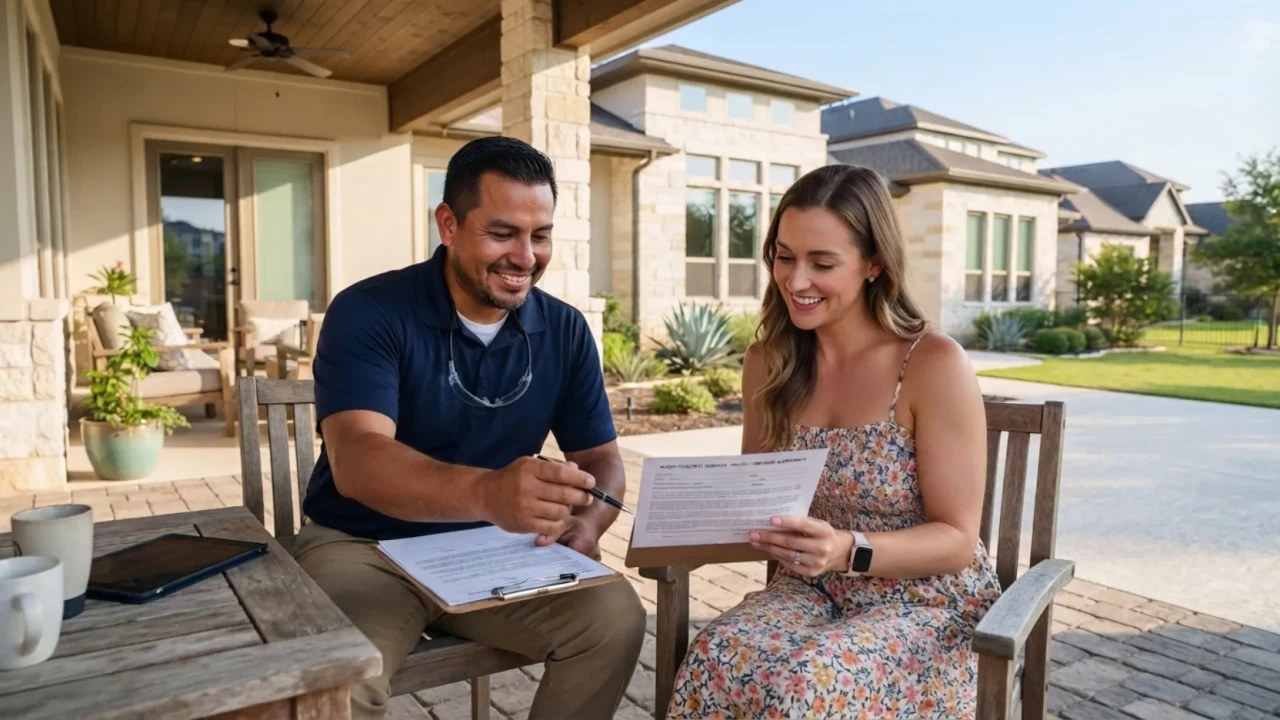
A legitimate contract is a protection for both parties. Any contractor who resists a written agreement is protecting themselves from accountability, not you. Here is what every concrete driveway contract should include.
| Contract element | What to look for | What to add if missing |
|---|---|---|
| Structural specs | Slab thickness, base depth, PSI, rebar size and spacing, joint count | Write in the full spec from the quote ask the contractor to initial each spec line |
| Payment schedule | 30–50% upfront, remainder on completion not on pour day | Add language tying the final payment to a walkthrough inspection and your written approval |
| Timeline | Specific start date and estimated completion window | Add a clause specifying notification requirements if the schedule changes by more than 5 business days |
| Workmanship warranty | 1-year minimum on labor defects separate from material warranty | If absent, ask the contractor to add it in writing most legitimate companies do this without hesitation |
| Lien waiver | Confirmation that subcontractors and material suppliers have been paid | Request a signed lien waiver upon final payment to confirm you cannot be liened by unpaid subcontractors |
- All specs from the quote are written into the contract no verbal addendums
- Payment schedule confirmed: deposit upfront, final payment triggered by your written walkthrough approval
- Start date and completion window specified not just “as soon as possible”
- Workmanship warranty of at least 1 year included in writing
- Change order process defined any scope change documented and signed before work changes
- Signed lien waiver requested to accompany final payment
Local Factors
Concrete in San Antonio faces stressors that contractors from outside the region often underestimate. Bexar County’s Blackland Prairie Vertisol clay soil is one of the most challenging substrates in Texas for concrete work. The Edwards Aquifer supplies hard water with high mineral content. Summer temperatures regularly exceed 100 degrees Fahrenheit. Flash Flood Alley rainfall events can saturate subgrade before a pour cures. A contractor who has worked here for years has adapted their process to all of these factors. One who has not will pour a generic slab and expect it to perform like it would in a milder market.
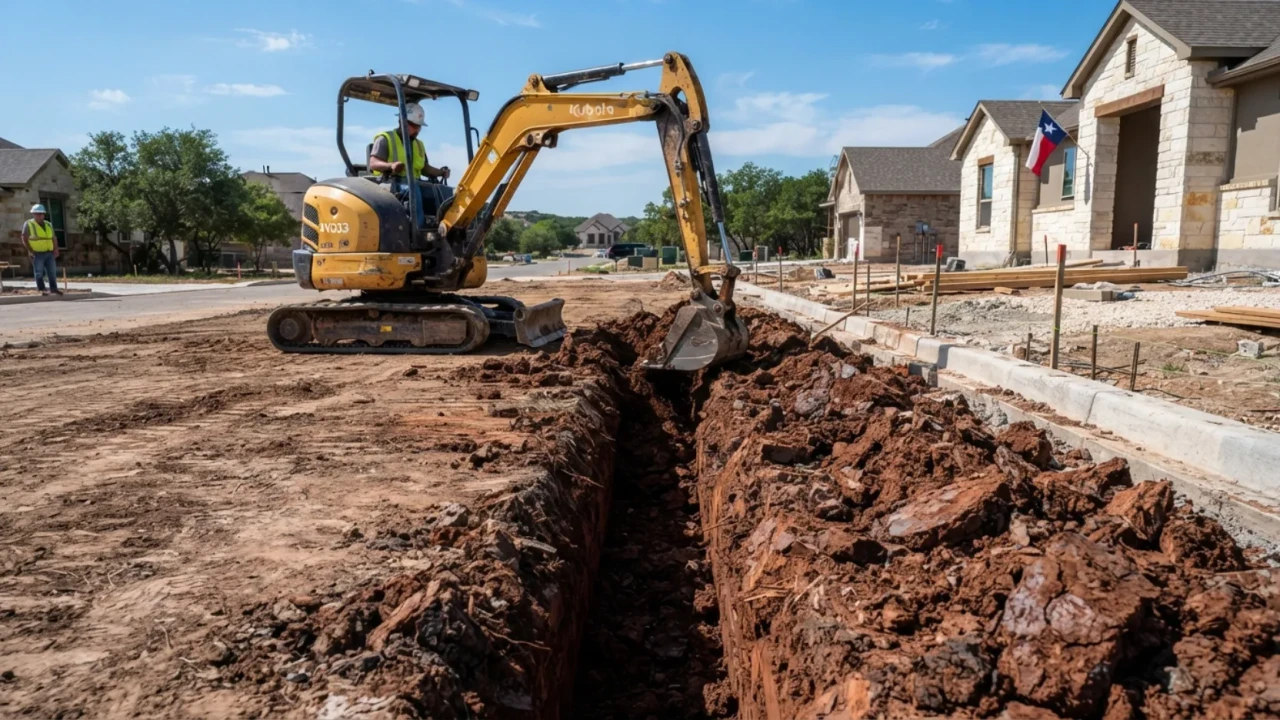
Here are the four San Antonio-specific factors that should inform every concrete driveway conversation with a potential contractor. An experienced local crew will mention these without prompting. If you have to explain them to the contractor, you are educating them at your own expense.
The Winter Storm Uri event in February 2021 also demonstrated that San Antonio concrete can face freeze-thaw cycles that are rare but severe when they occur. While sealing is not as critical here as in northern markets, a properly sealed driveway survived that event in far better condition than unsealed slabs. Ask your contractor whether a first sealing is included in the scope or whether it should be scheduled at 28–30 days after the pour.
October through March is the best window for driveway pours in San Antonio. Cooler temperatures slow the initial set slightly, giving the finishing crew more time to work the surface before it hardens. Curing happens more uniformly without the risk of the surface drying faster than the interior in extreme heat. If your project is flexible, book a fall or winter pour. You will likely get a slightly better price, a more available crew, and a more controlled cure. If you need a summer pour, ask specifically what time the crew starts a legitimate San Antonio contractor starts before 7:00 a.m. in June through August, not at midday.
- Contractor discusses Bexar County clay soil management without being asked not a generic answer about “good base prep”
- Summer pour protocol confirmed if scheduling June through August early start time specified
- Drainage slope discussed and confirmed before the pour minimum 1/8″ per foot away from the home
- First sealing scheduled at 28–30 days post-pour, included in scope or confirmed as a separate appointment
- Flash Flood Alley drainage confirmed driveway slope tested with a level before the pour begins
- Crew has completed comparable projects in your zip code ask for a specific local reference
Use this table when you are comparing multiple quotes and need a structured way to evaluate what each contractor has provided versus what should be standard. Any column where the contractor matches the “problematic” pattern is a reason to ask a clarifying question or move on.
| Evaluation factor | Legitimate contractor | Problematic contractor |
|---|---|---|
| Insurance documentation | Certificate of insurance provided without hesitation; policy can be verified by calling the insurer | Verbal assurance only; policy cannot be verified or has lapsed |
| Quote detail | Itemized by slab thickness, base depth, reinforcement, PSI, joint count, and finish type | Lump sum only “concrete driveway, 600 sq ft” with a price and nothing else |
| Soil knowledge | References Bexar County clay soil and describes specific base prep to address shrink-swell cycles | Generic answer about “good base prep” with no reference to local soil conditions |
| References | Provides recent San Antonio project addresses; encourages you to drive by and inspect the work | Cannot provide recent local references; offers only stock photos or out-of-market examples |
| Payment structure | 30–50% deposit upfront, final payment on completion and your walkthrough approval | Requests full payment before work begins or immediately after the pour |
| Urgency pressure | Provides the quote and gives you time to review no same-day pressure | Pressures you to sign today to “lock in” pricing or crew availability |
| Warranty | Offers at least a 1-year workmanship warranty in writing | No warranty offered or only “we stand behind our work” verbally |
| Curing protocol | Describes wet curing schedule or liquid compound application specific to San Antonio summer conditions | Pours and leaves; no curing process discussed or implemented |
- Certificate of general liability insurance received minimum $1M per occurrence
- Insurance verified as active by calling the insurer directly using the policy number on the certificate
- Local business address confirmed searchable on Google Maps with a verifiable history
- BBB complaint history checked and Google Business reviews scanned for patterns
- Recent San Antonio project references provided and at least one followed up by phone or site visit
- Slab thickness specified minimum 4″ residential, 5″ for heavy vehicles
- Base preparation included compacted crushed limestone at minimum 4″ depth
- Reinforcement type and spacing confirmed rebar (#3 or #4 at 18″ centers) preferred over wire mesh
- Concrete PSI specified 3,000 minimum, 3,500 preferred for vehicle use
- Expansion joint count and spacing included in the scope
- Finish type and any color or pattern confirmed in writing
- Written contract in hand before any payment is made
- Payment schedule confirmed: 30–50% deposit, balance on completion and written walkthrough approval
- Project start date and estimated completion window specified
- Workmanship warranty of at least 1 year included in writing
- Change order process defined any scope change documented before work changes
- Lien waiver requested to accompany final payment
- Contractor discussed Bexar County clay soil and described specific base prep to manage shrink-swell cycles
- Summer curing protocol confirmed if scheduling a pour in June through August
- Drainage slope discussed and confirmed before the pour minimum 1/8″ per foot away from the home
- First sealing scheduled at 28–30 days after the pour
How many quotes should I get before hiring a concrete driveway contractor in San Antonio?
Does a concrete driveway contractor in San Antonio need a license?
What is a reasonable deposit for a concrete driveway project in San Antonio?
How do I check if a San Antonio concrete contractor has complaints against them?
What warranty should I expect from a concrete driveway contractor?
Can I get a concrete driveway permit in San Antonio myself instead of the contractor?
Get a free driveway quote from a vetted San Antonio contractor
We bring everything in this guide to every job written specs, insurance on file, local crew, and a workmanship warranty. Contact us for a no-cost site visit and itemized quote.