
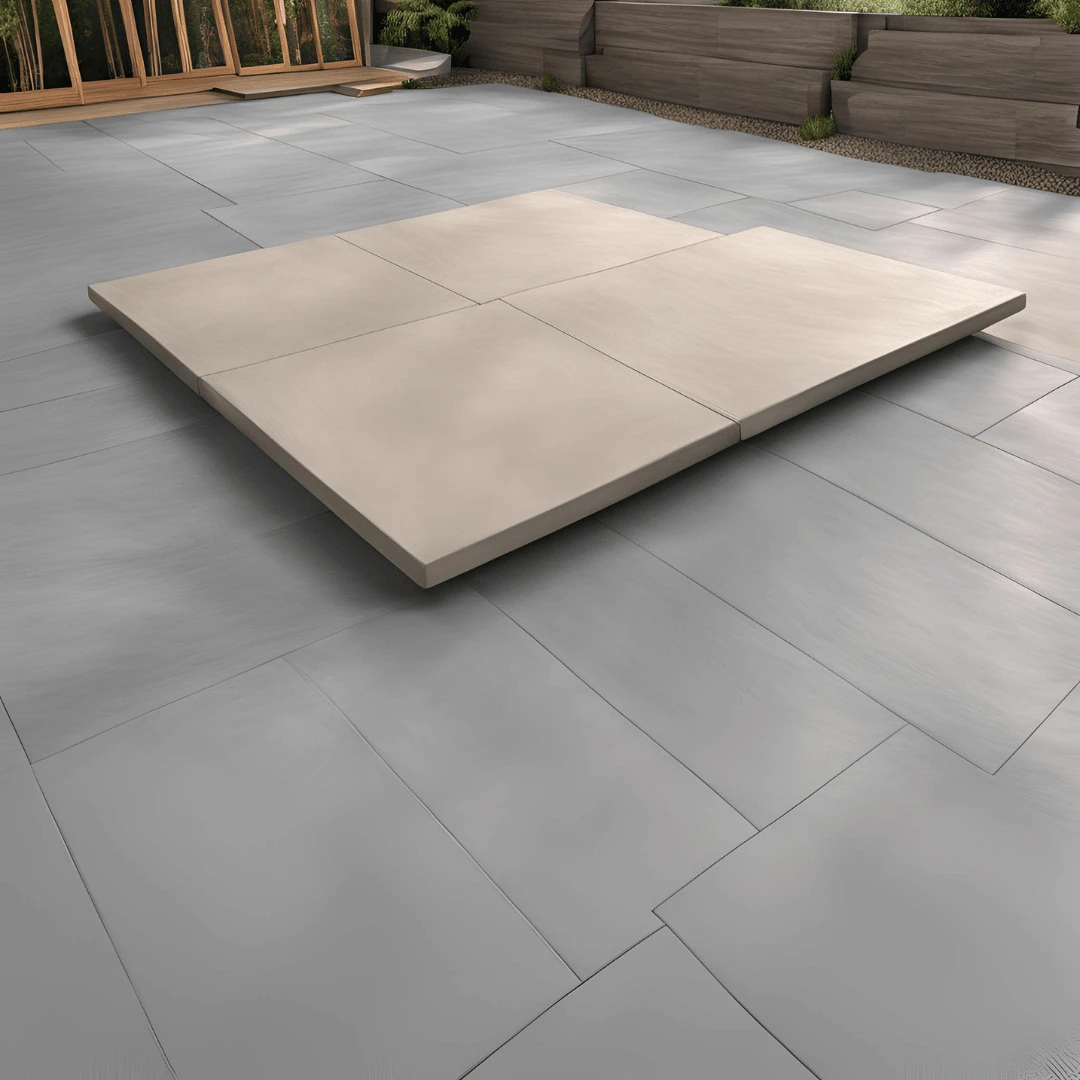
Good concrete slab contractors spend more time on the ground under the slab than on the pour itself. This guide shows San Antonio homeowners what to look for in a slab contractor, what a patio slab, shed slab, or parking pad typically costs, how thick it should be, what happens on the job, how long it takes, when the City gets involved, and which bids to walk away from.
- What do concrete slab contractors build?
- What should I look for in concrete slab contractors?
- How much does a concrete slab cost in San Antonio?
- How thick should a residential concrete slab be?
- What should a concrete slab quote include?
- What happens during a concrete slab job?
- How long does a concrete slab take?
- Do I need a permit for a concrete slab in San Antonio?
- What are the red flags when hiring a slab contractor?
- Where do we work?
- What else are homeowners asking?
Good concrete slab contractors visit the site, plan a 4-inch slab on 4 to 6 inches of compacted base, and itemize steel and joints in a written bid. A broom-finish slab typically runs $6 to $12 per square foot here. San Antonio clay swells and shrinks, so call a pro before pouring under a shed, car, or hot tub.
What do concrete slab contractors build?
Residential concrete slab contractors pour flat, reinforced slabs that other things sit on: patios, shed floors, parking pads, and equipment pads. A slab under a house, garage, or room addition is a structural foundation and should be designed by an engineer.
- Patio slabs: Plain or decorative slabs for outdoor living. See our patio slabs service.
- Shed slabs: A level, reinforced floor for a storage shed or workshop. See our concrete slab for shed guide.
- Parking pads: Extra space for a car, truck, trailer, or RV, built to driveway spec. See our parking pad contractor guide.
- Equipment pads: Small slabs for AC units, generators, and trash enclosures.
What should I look for in concrete slab contractors?
Look for a contractor who visits the site before pricing, explains the base and steel plan for our clay soil, and puts every part of the job in a written, itemized bid. A slab is only as good as what is under it.
- A site visit: They should check grade, drainage, soil, access, and anything in the way before giving a number.
- A base plan: Soft soil and roots out, then 4 to 6 inches of compacted crushed stone.
- A steel plan: Rebar or wire mesh chosen for the load, with rebar set on chairs, not lying in the dirt. Our rebar or wire mesh guide compares the two.
- Joints and slope: Control joints about every 8 to 10 feet and a slope that sends water away from the house.
- Insurance you can verify: Ask for a certificate of liability insurance before work starts.
- A written warranty: Get the workmanship warranty in writing, not as a handshake.
Our general checklist on what to look for in a concrete contractor goes deeper on references and contracts.
How much does a concrete slab cost in San Antonio?
A broom-finish residential slab typically costs about $6 to $12 per square foot installed, so a 300-square-foot patio slab runs about $1,800 to $3,600. Tear-out, extra base, thicker concrete, and decorative finishes add to that.
| Slab or add-on | Typical cost | Notes |
|---|---|---|
| Broom-finish slab | About $6 to $12 per sq. ft. | Most patio and utility slabs |
| Stamped or colored slab | About $12 to $25 per sq. ft. | Pattern and color set the price |
| 300 sq. ft. patio slab | About $1,800 to $3,600 | Broom finish |
| 10 by 20 ft parking pad | About $1,500 to $3,000 | Single car, broom finish |
| 20 by 20 ft parking pad | About $2,800 to $5,600 | Two cars |
| Old slab tear-out | About $1.50 to $3.00 per sq. ft. | When an old slab has to come out |
| Turf or gravel removal and base | About $1 to $3 per sq. ft. | Common on clay lots |
Typical estimates as of November 2026 from our concrete patio cost guide and parking pad guide. They are not a quote. Your price is set in writing after a free site visit. Not sure of your size? Try the concrete slab calculator.
Base, thickness, and steel decide how long a slab lasts
How thick should a residential concrete slab be?
Most patio and storage shed slabs are 4 inches thick on 4 to 6 inches of compacted base. Slabs that carry hot tubs, workshops, pickups, trailers, or RVs are usually 5 to 6 inches with rebar and thickened edges.
| Slab use | Typical thickness | Steel |
|---|---|---|
| Patio or walkway | 4 inches | Wire mesh or rebar |
| Storage shed | About 4 inches | Rebar grid holds better on moving clay |
| Workshop or hot tub | 5 to 6 inches | Rebar, thickened edges |
| Car parking pad | At least 4 inches | Rebar on chairs |
| Pickup, trailer, or RV pad | 5 to 6 inches | Rebar, thickened edges where tires roll on |
More detail in our patio thickness guide and driveway thickness guide.
What should a concrete slab quote include?
A good slab quote lists size, thickness, base depth, steel, joints, finish, tear-out, and cleanup on separate lines. If a bid just says “concrete slab” and a total, ask what is inside it.
- Square footage and thickness, including any thickened edges
- Base material and depth after compaction
- Rebar or wire mesh, and how it will be supported
- Control joint spacing and slope direction
- Finish: broom, stamped, colored, or other
- Tear-out and haul-away of any old slab or turf
- Payment schedule and the workmanship warranty
What happens during a concrete slab job?
A slab job runs from site visit and written estimate to excavation and base, then forms and steel, the pour and finish, and curing. Most of the work that protects the slab happens before the truck arrives.
- Site visit and written estimate: Measure, check grade, soil, and drainage, and agree on scope.
- Locate and layout: Call 811 so buried lines are marked, and confirm setbacks and HOA rules.
- Excavation and base: Remove turf, roots, and soft soil, then compact crushed stone in lifts.
- Forms and steel: Set forms to grade and slope, place rebar or mesh, and add any anchors.
- Pour and finish: Place and finish the concrete, often in cooler morning hours in summer, then cut control joints.
- Cure and walkthrough: Keep loads off while it gains strength, then walk the job together.
- The slab will carry a vehicle, hot tub, workshop, or heavy equipment
- The ground is soft, low, or holds water after rain
- An old slab is cracked or sunken and has to come out first
Call (713) 504-2341 or request a free quote.
How long does a concrete slab take?
Most residential slabs take about 1 to 3 working days to prep, form, and pour once the site is ready. You can usually walk on new concrete after 1 to 2 days, drive a car on it after about 7 days, and put heavy loads on it after about 28 days.
Small shed slabs and single-car pads are often done in 1 to 2 days on site. Rain, tear-out, or a permit for work at the street can add days before the pour.
Do I need a permit for a concrete slab in San Antonio?
Many small residential slabs do not need a City permit. The City of San Antonio No Permit Required List includes sidewalks and driveways inside your property line and one-story storage sheds up to 300 square feet that meet setback rules.
- Plain patio slabs: The list does not name patios, so confirm with Development Services before you pour.
- Shed over 300 sq. ft. or with power and plumbing: Expect a permit.
- Patio covers: A cover over 300 sq. ft., or one attached to the house, needs a permit. See our patio permit guide.
- Work at the street: Curb cuts, drive approaches, and sidewalks in the right-of-way need a Sidewalk-Curb Permit.
- Foundations: A slab under a house, garage, or room addition is not on the list. Check with Development Services first.
- Historic, Neighborhood Conservation, or Corridor Districts: Design and material limits can apply even when no permit is needed.
Questions? Call Development Services at 210-207-1111 before you pour.
What are the red flags when hiring a slab contractor?
Walk away from a contractor who prices without seeing the site, will not put the scope in writing, or wants the full price up front. A bid far below the $6 per square foot low end of our patio cost guide usually means a thin slab, no steel, or no base work.
- No site visit, just a phone price per square foot
- No written, itemized bid
- Full payment or cash only before work starts
- “No need for base or steel” on San Antonio clay
- No certificate of insurance when you ask
- Pressure to sign the same day
Ready for a real number? Start with our patio slabs service, request a free quote, or call (713) 504-2341.
Need a concrete slab priced in writing?
Free site visit, a base and thickness plan for San Antonio clay, and a written, itemized price before any work starts. Father-son owned in San Antonio.
Where do we work?
Affordable Concrete San Antonio works across San Antonio and nearby areas from our shop at 1247 W Thompson Pl, San Antonio, TX 78226.
We pour patio slabs, shed slabs, and pads in San Antonio and these nearby areas: Helotes, Leon Valley, Shavano Park, Terrell Hills, Alamo Heights, Converse, Universal City, Schertz, Boerne, Cibolo, Fair Oaks Ranch, Bulverde, Spring Branch, New Braunfels, Pleasanton, Floresville, Castroville, Lytle, and Von Ormy. Not sure about your address? Call (713) 504-2341.
What else are homeowners asking?
These are the short answers people want before they book a quote.
How much does a concrete slab cost in San Antonio?
A broom-finish residential slab typically costs about $6 to $12 per square foot installed, so a 300 square foot slab runs about $1,800 to $3,600 before tear-out or extra base.
How thick should a concrete slab be for a patio or shed?
About 4 inches on 4 to 6 inches of compacted crushed stone. Workshops, hot tubs, and vehicle pads are usually 5 to 6 inches with rebar.
How much does a 10 by 20 concrete pad cost?
A single-car 10 by 20 foot parking pad typically runs about $1,500 to $3,000 in San Antonio with a broom finish.
Do I need a permit to pour a concrete slab in San Antonio?
Sidewalks and driveways inside your property line and storage sheds up to 300 square feet are on the City No Permit Required List. Foundations and larger structures need more checking.
How long does it take to pour a concrete slab?
Most residential slabs take about 1 to 3 working days. You can walk on it after 1 to 2 days and drive a car on it after about 7 days.
What should I ask a concrete slab contractor?
Ask about base depth, thickness, rebar or mesh, joint spacing, tear-out, the payment schedule, and the warranty, and get every answer in a written bid.
Sources used in this article:
- Affordable Concrete San Antonio, patio slabs service page, checked November 9, 2026, affordableconcretesanantonio.com
- Affordable Concrete San Antonio, concrete patio cost guide, checked November 9, 2026, affordableconcretesanantonio.com
- Affordable Concrete San Antonio, concrete parking pad contractors guide, checked November 9, 2026, affordableconcretesanantonio.com
- Affordable Concrete San Antonio, concrete slab for shed guide, checked November 9, 2026, affordableconcretesanantonio.com
- Affordable Concrete San Antonio, concrete patio permit guide, checked November 9, 2026, affordableconcretesanantonio.com
- City of San Antonio, No Permit Required List, checked November 9, 2026, sa.gov
This article is general information for San Antonio homeowners. Prices are typical estimates as of November 2026 and are not a quote. Confirm City rules with Development Services before you build.
What should I read next?
Start with our patio slabs page, or keep reading before you get quotes.