
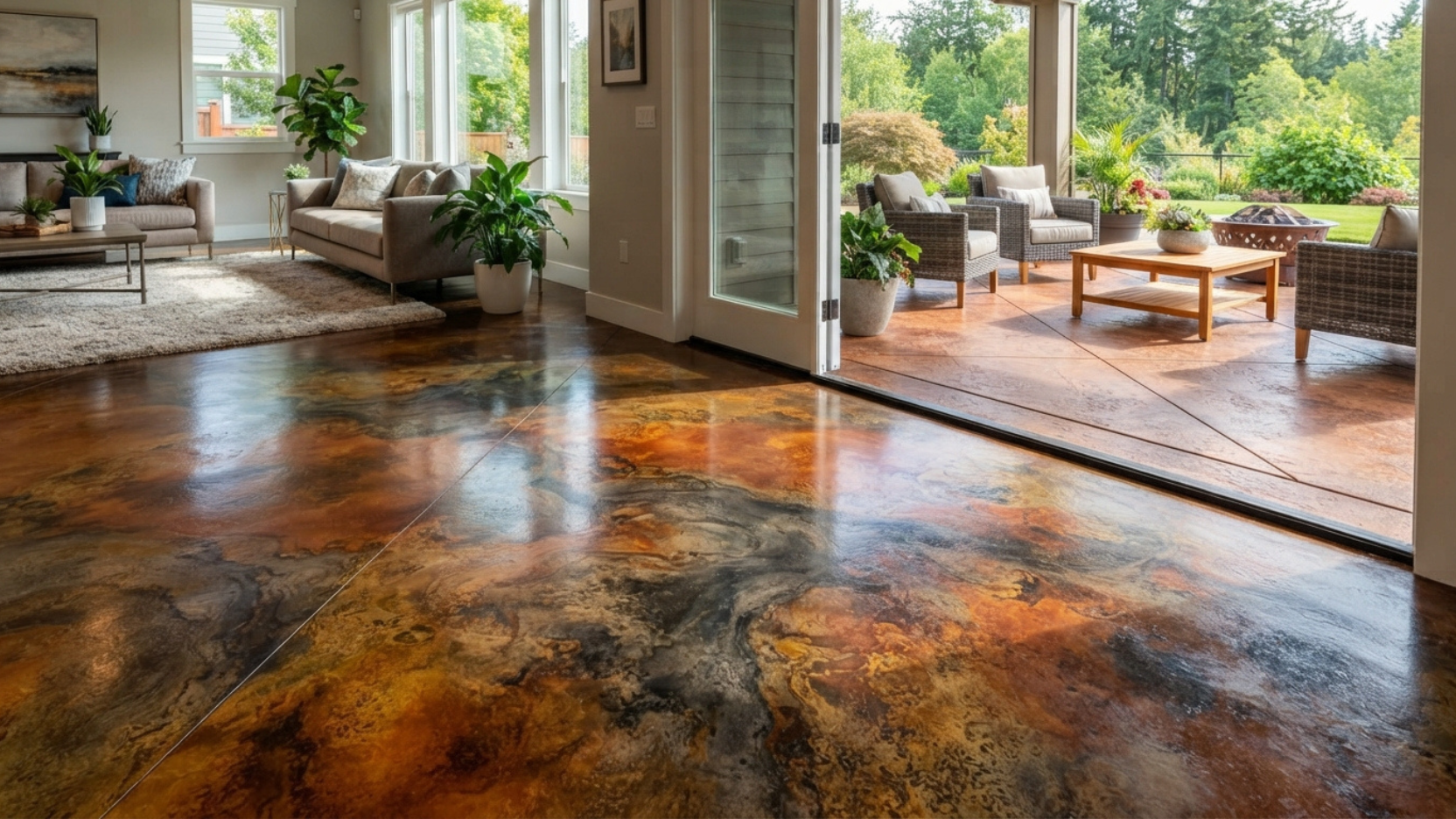
Concrete staining transforms ordinary slabs into standout surfaces indoors and out. This guide covers 20 proven staining ideas for San Antonio homes, from acid-etched patios to water-based garage floors, with real cost ranges and contractor tips for each.
Concrete staining is one of the most cost-effective upgrades available to San Antonio homeowners. Whether you have a plain gray driveway, a bare garage floor, or a back patio that needs a refresh, staining can turn it into a rich, durable, one-of-a-kind surface without the cost of tearing out and replacing the slab. And because stained concrete works on existing concrete, the return on investment is hard to beat.
The 20 ideas below cover every application: interior living spaces, covered patios, driveways, pool decks, entryways, and commercial-grade floors. Each entry includes what makes the look work, what it costs in the San Antonio market, and the conditions your slab needs to meet before the stain goes down.
San Antonio’s climate is hard on decorative surfaces: intense UV exposure from May through September, Edwards Aquifer hard water that leaves mineral deposits, and Blackland Prairie clay soils that shift seasonally. Concrete staining holds up to all of it the color is locked into the slab itself, not sitting on top as a coating that can peel or chip. When properly sealed with a UV-stable sealer suited for Texas summers, a stained concrete surface outperforms paint, tile adhesive, and most overlay systems in our climate.
Interior applications benefit from concrete staining most dramatically. Floors that once looked plain and industrial become warm, layered, and unique. The seven ideas below work for living rooms, kitchens, hallways, basements, and sunrooms.
Interior
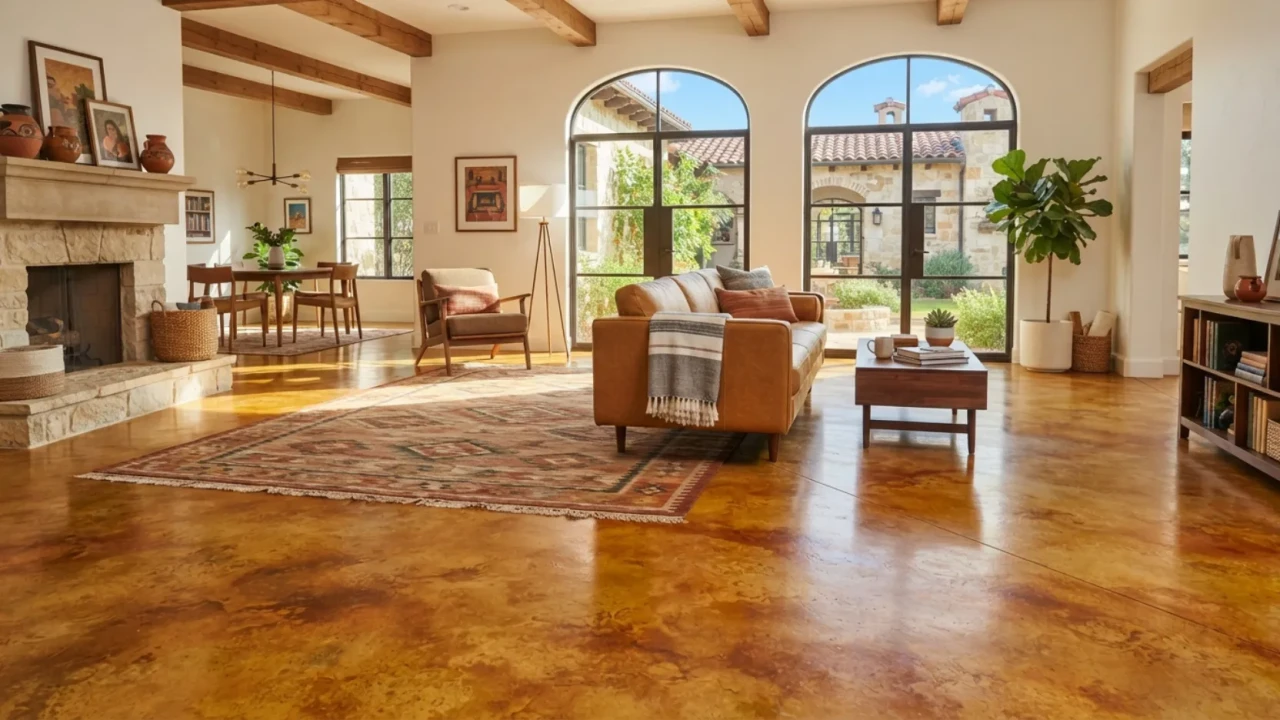
Acid staining in amber and honey tones is the most-requested interior stain color for San Antonio homes. The chemical reaction with the concrete’s lime content creates a mottled, organic look no two floors are identical. Paired with a semi-gloss polyurethane sealer, it reads like polished travertine at a fraction of the cost.
This look works beautifully in open-concept living areas, hallways, and dining spaces where the floor is the dominant visual element. The warm undertones complement the terracotta and neutral palettes common in Hill Country and Mission-style San Antonio interiors.
- Slab is clean and free of carpet adhesive, paint, or sealers these block acid penetration
- No active moisture vapor transmission test with plastic sheet taped down for 24 hours
- Contractor performs a test patch in a closet or inconspicuous area before full application
Interior
Water-based concrete stains offer something acid stains cannot: consistent, predictable color. Where acid stains create organic variation, water-based stains produce a more even tone ideal for modern and minimalist interiors where the goal is a clean, uniform floor rather than a natural stone look.
Charcoal and slate gray are the top choices for contemporary San Antonio homes built in the last decade. The darker tone makes spaces feel grounded and anchored without the coldness of a plain gray slab. A matte sealer keeps the look understated; a satin finish adds just enough sheen to reflect natural light.
Water-based stains are easier to apply over previously sealed concrete. If your slab has an existing sealer that cannot be fully removed, a water-based stain over a light mechanical grind (grinding the surface to open the pores) is a more reliable choice than acid stain, which needs direct contact with the concrete’s lime content to react properly.
Interior
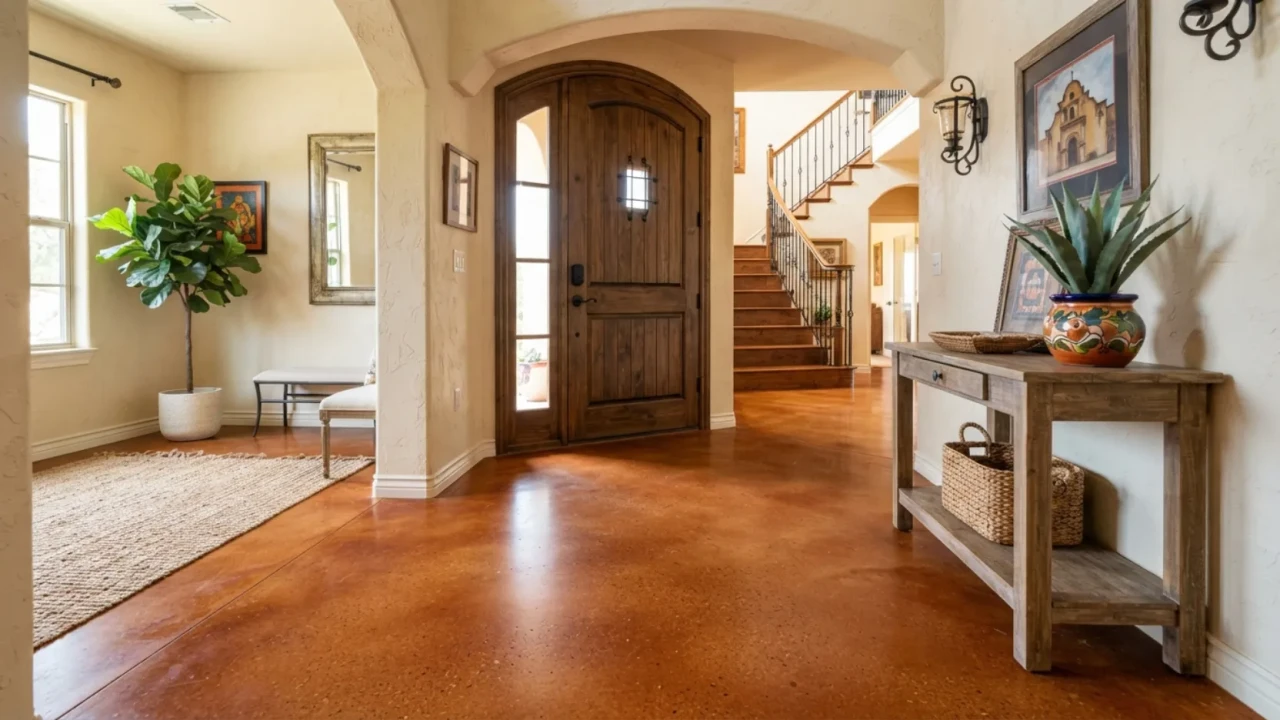
Terracotta and warm brick-red tones are deeply rooted in San Antonio’s architectural tradition from the Mission-style homes of Olmos Park to the Spanish Colonial revival properties throughout Alamo Heights. An acid stain in these earth tones gives a foyer or entryway the warmth and character of traditional Saltillo tile without the grout lines that collect dirt and require constant maintenance.
The irregular, mottled quality of acid stain actually enhances the look in a foyer it mimics the natural variation of handmade tile while offering the durability of sealed concrete. Add a scored border or medallion pattern for a formal entryway that reads as custom.
Interior
A single-color stain reads well in living areas, but kitchen and dining floors benefit from a two-tone layered approach. The technique involves applying a base acid stain in an amber or tan tone, letting it cure, then applying a second wash in a contrasting green, teal, or dark brown. The result is a floor with genuine depth colors that shift slightly as light changes throughout the day.
This is a technique that requires an experienced applicator. In San Antonio’s open-plan homes, a blended kitchen and dining floor can become a genuine design focal point. Request a sample board before committing to the color combination the interaction between acid stain colors is not always predictable on every concrete mix.
Interior
Not every concrete slab is in good enough condition to stain directly. Slabs that have heavy adhesive residue from carpet glue, significant surface pitting, or previous coatings that cannot be removed are better candidates for a thin concrete overlay a skim coat of cementitious material applied over the existing slab followed by staining.
For bedrooms, the overlay-and-stain approach creates a smooth, almost porcelain-like finish. Combined with an in-floor radiant heat system, a stained polished overlay bedroom floor is a legitimate luxury upgrade. In San Antonio’s mild winters, radiant heating is an occasional comfort rather than a necessity but homeowners who install it consistently rate it as one of their best investments.
Interior
One of the most popular interior concrete techniques in San Antonio is scoring cutting shallow decorative lines into the surface with a diamond blade before staining. The scored lines can mimic 12×12 tile, 18×18 stone blocks, random flagstone shapes, or geometric borders. Once stained, the score lines create the visual impression of a tile floor with none of the grout maintenance.
This approach is particularly effective when combined with a terracotta or slate stain, where the scored lines reinforce the natural material reference. Cost-wise, adding scored lines to a staining project typically adds $1–2 per square foot to the total, making it an accessible upgrade with significant visual impact.
Interior
For garage floors, a concrete stain used as a base coat beneath a metallic epoxy topcoat creates a finish that is both decorative and extremely durable. The stain adds depth and color variation to the base; the metallic epoxy topcoat (which contains metallic pigment particles suspended in clear epoxy) creates a flowing, three-dimensional appearance that cannot be achieved with stain alone.
This is a two-product system that protects against oil stains, resists tire marks, and holds up to the foot and vehicle traffic of a working garage. Popular metallic colorways in San Antonio garages include pewter silver, bronze, and ocean blue all of which benefit from an amber or gray acid stain base beneath them.
Exterior staining in San Antonio presents unique challenges: UV exposure from May through September, thermal expansion from temperature swings, and the hard mineral deposits left by Edwards Aquifer water. The ideas below address all of these every exterior staining technique here uses UV-stable products appropriate for the Texas climate.
Exterior
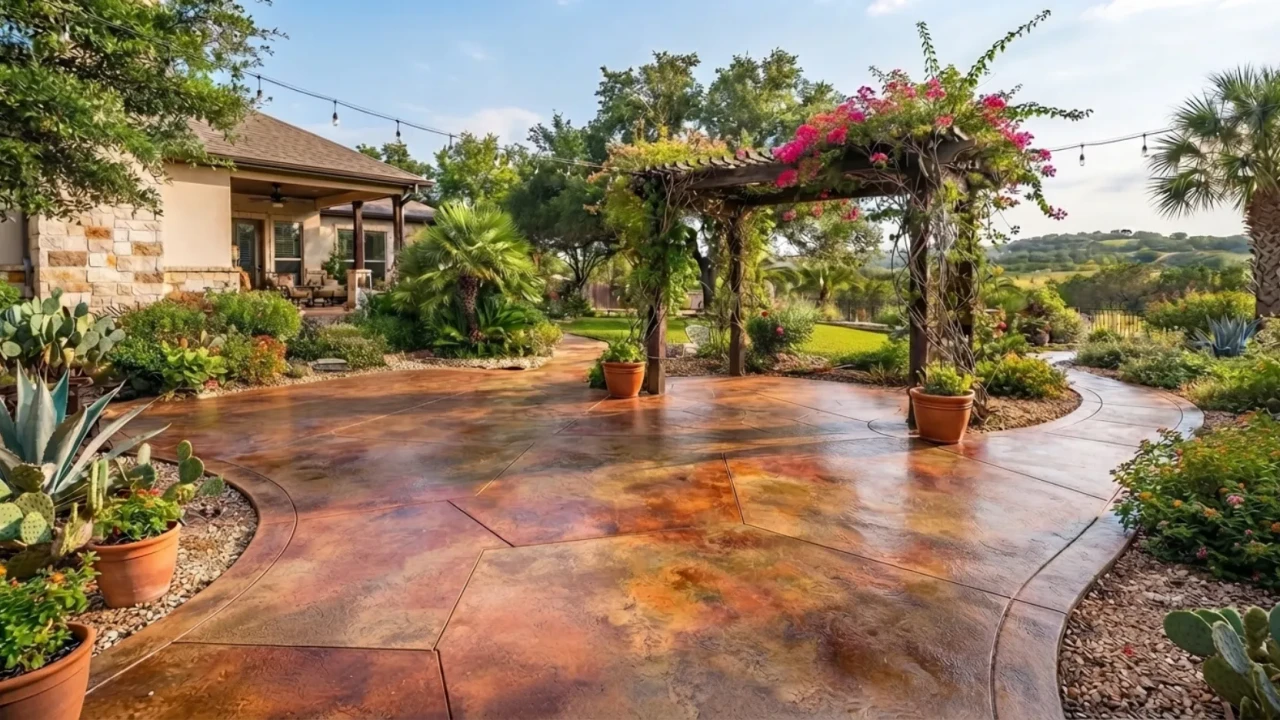
An acid-stained patio using a combination of brown, tan, and green earth tones with an antiquing agent a dark brown residue worked into the surface after the stain reacts is the most popular decorative concrete look on San Antonio patios in 2026. The antiquing agent settles into the low points of the concrete texture, creating shadow and depth that makes the surface read like aged natural stone.
For a covered patio or lanai, this treatment pairs naturally with outdoor furniture in wrought iron, teak, or woven wicker all common in San Antonio’s year-round outdoor living spaces. For uncovered patios, a UV-stable solvent-based acrylic sealer is essential; without UV protection, acid stain colors fade significantly in San Antonio’s sun within 2-3 seasons.
- Slab must slope at least 1/8″ per foot for drainage stain does not change drainage, water must have an exit path
- UV-stable sealer is non-negotiable outdoors in San Antonio standard interior sealers fade and chalk within one season
- Schedule outdoor staining during mild weather: October through April is ideal avoid summer staining jobs if possible
Exterior
Driveways that are structurally sound but cosmetically worn surface cracking, staining from oil or rust, or just the plain gray look are ideal candidates for a stamped overlay with stain. A thin decorative overlay (about 3/8″ of cementitious topping) is applied over the existing concrete, stamped with a pattern while wet, then stained once cured.
The result is a driveway that looks like it was freshly poured in stamped concrete for significantly less than a full demolition and replacement. The overlay adds no meaningful structural strength, so the existing slab must be in solid condition with no active heaving or base failure. A professional inspection of the existing slab is always the first step.
Exterior

Pool decks are a special case for concrete staining because two requirements pull in opposite directions: you want visual appeal, but you need guaranteed slip resistance when the surface is wet. The solution used by San Antonio’s most experienced pool deck contractors is a water-based stain which penetrates the concrete and does not create a slippery film on the surface finished with a non-slip broadcast aggregate worked into the sealer coat.
The broadcast aggregate (fine sand or silica particles broadcast over the wet sealer) adds grip without changing the appearance significantly. The stain color reads through the aggregate-textured sealer, giving you both the decorative look and the safety performance. Cool-tone blues and grays are popular for pool decks; warm sandstone tones work well with natural stone coping.
Exterior
Concrete walkways through a landscaped backyard or garden area look best when the hardscape does not compete with the planting. Acid stains in sage green, moss, and forest tones are a natural fit the organic, mottled quality of the acid reaction mimics the color variation of moss or lichen on stone. When the color settles into the concrete, it reads as a path that belongs in the landscape rather than being imposed on it.
For narrow garden paths in Bexar County’s clay-heavy soil, proper base preparation is particularly important. Clay soil moves seasonally, and a narrow path slab without expansion joints or adequate base depth will heave and crack within a few years regardless of how good the staining looks. A 4″ compacted crushed limestone base and joints every 4-6 feet along the path are the structural minimum.
Exterior
For homes with modern architecture flat rooflines, steel pergolas, large glass windows a warm earth-toned stain can feel out of place. Slate blue and cool gray water-based stains are a better fit. Water-based stains in the blue-gray range produce a more even, controlled tone than acid stains, which is appropriate when the design goal is precision and consistency rather than organic variation.
In San Antonio’s newer master-planned communities areas like Alamo Ranch, Stone Oak, and Cibolo contemporary architecture is increasingly common. A slate-stained concrete patio is a natural extension of these modern aesthetic sensibilities and a significant upgrade over plain broom-finish concrete at a modest cost.
Exterior
Concrete entry steps and front landings are among the most visible elements of a home’s exterior and they are almost universally ignored in favor of plain gray concrete. Staining the front steps, landing, and approach walkway in a coordinated color transforms the curb appeal of a San Antonio home for a fraction of the cost of replacing or capping the steps in tile or natural stone.
A popular technique for steps is to stain the flat surfaces (treads) in a primary earth tone and score or paint the vertical faces (risers) in a contrasting lighter or darker shade. The visual contrast emphasizes the step geometry, making the entry feel more deliberate and designed.
Exterior
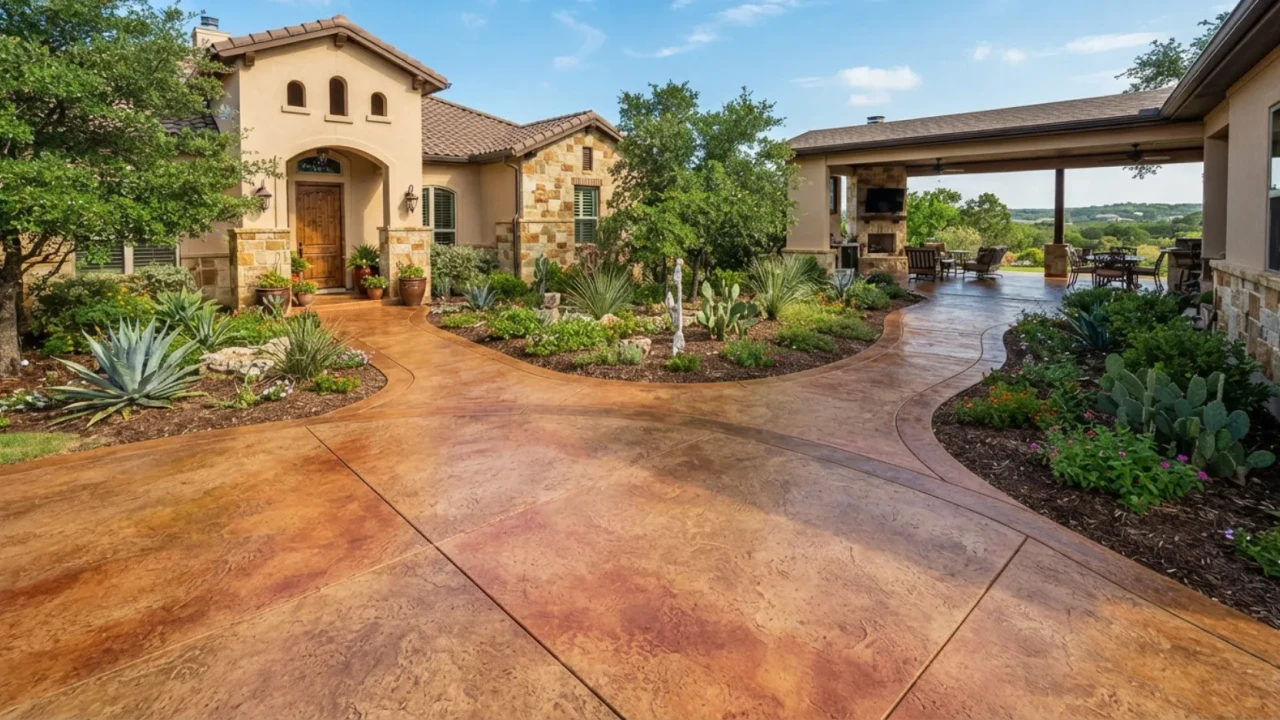
When a home has multiple concrete surfaces a driveway, a front walkway, a back patio, and a pool deck staining them in a coordinated color palette creates a cohesion that significantly improves overall curb appeal and backyard aesthetics. This is not about making every surface identical; it is about choosing a color family that ties the spaces together without looking monotonous.
A common approach in San Antonio is to stain the driveway and front walkway in a lighter, warmer tone (buff or sandstone) and the back patio in a slightly deeper earth tone in the same color family, with the pool deck in a cooler, lighter version for heat reflection. The result feels planned and intentional the property equivalent of a coherent interior color palette.
The final six ideas move beyond standard single-color applications into techniques that require experienced applicators and produce genuinely distinctive results. These are the approaches that turn a concrete surface into something people ask about.
Specialty
A troweled micro-topping overlay applied in thin, overlapping passes with a steel trowel creates subtle surface variation that catches light differently across the floor. When stained in warm neutrals (cognac, camel, cafe au lait) and sealed with a low-sheen matte finish, the result has a distinctly soft quality that people instinctively describe as “suede-like.”
This is a popular choice in San Antonio’s upscale custom homes and showroom spaces. It is not a DIY application the trowel technique that creates the texture requires a skilled hand, and color consistency across a large floor depends on timing and experience. Expect to pay at the top of the decorative concrete range for this look.
Specialty
Concrete dyes acetone-based colorants that penetrate the surface without a chemical reaction offer a saturated color intensity that neither acid stains nor water-based stains can match. Dyes are available in a full spectrum including vivid blues, deep reds, and true blacks. They are not acid reactive, which means they produce more consistent, controllable results than acid stains on variable concrete mixes.
The tradeoff is durability: concrete dyes are not UV stable and must always be used in interior applications or under covered areas with UV-blocking sealers outdoors. For interior showrooms, restaurant floors, retail spaces, and residential great rooms, a dye application in bold color is a powerful design statement.
Combining dyes with acid stains creates some of the most interesting decorative concrete floors available. Apply the acid stain first for organic color and movement, then use a diluted dye as an accent working it into specific areas or along borders for color intensity and contrast that reads as genuinely custom. This is a technique where seeing the contractor’s portfolio is essential before committing.
Specialty
A stained field (the main floor area) bordered by a strip of exposed aggregate creates a floor with genuine textural complexity. The aggregate border typically 6-12 inches wide is created by masking the border area with form boards during the pour, treating that strip with a surface retarder, and washing off the cement paste to expose the stone within the mix. The center field is then stained once cured.
The visual contrast between the smooth, rich-colored stained field and the natural, pebbly texture of the exposed aggregate border works in both interior and exterior applications. For covered patios in San Antonio, this technique bridges the design gap between an interior living room floor and the landscape outside.
Specialty
Sandblasting specific zones of a concrete surface before staining using masked patterns or stencils creates areas where the stain penetrates more deeply and produces a darker, richer color. The result is a floor with visible patterning in both color and texture that has genuine three-dimensional quality, not just painted-on appearance.
Common sandblasted pattern applications include border bands, central medallions, geometric grid patterns, and logo or seal designs for commercial spaces. In residential applications, a sandblasted border with a smooth stained center field is the most common version. The sandblasted areas always accept stain color more intensely than the surrounding smooth concrete, creating a natural two-tone effect.
Commercial
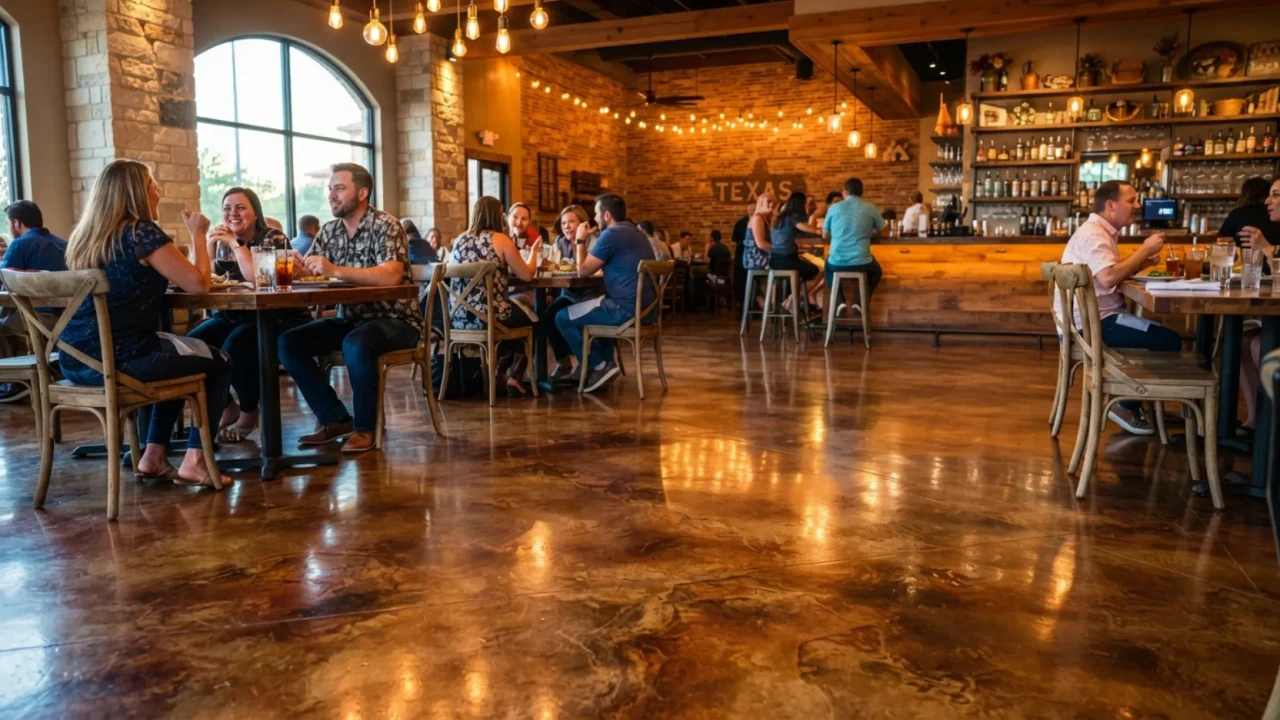
For commercial spaces in San Antonio restaurants, retail shops, medical offices, and creative studios concrete staining offers an unmatched combination of durability, appearance, and low maintenance cost. A properly stained and commercial-grade-sealed concrete floor handles foot traffic from thousands of visitors per month without wearing through, fading significantly, or requiring the kind of refinishing that wood or vinyl flooring demands.
The commercial applications of concrete staining in San Antonio’s River Walk area, Pearl District, and Southtown neighborhoods are visible proof: high-traffic spaces that look intentional and well-maintained for years after installation. The key difference from residential applications is the sealer specification commercial floors require a harder, thicker polyurethane or polyurea topcoat and more frequent maintenance resealing on a quarterly or semi-annual schedule.
Premium
Integral coloring adding pigment to the concrete mix before pouring rather than staining the surface afterward is the most durable and most expensive form of decorative colored concrete. Because the color runs all the way through the slab, a chip or scratch simply reveals more of the same color rather than bare gray concrete underneath. Paired with mechanical diamond polishing (grinding the surface progressively finer until it reflects like stone), the result is a floor that genuinely competes with marble or polished granite on appearance and outlasts both on durability.
In San Antonio, integral color polished concrete is most common in high-end custom homes (master bathrooms, kitchen islands, and main living areas), upscale commercial lobbies, and showrooms where appearance and durability are both non-negotiable. It is a new-pour application only existing slabs cannot be retroactively made integral color. If you are building new construction or adding a major room addition, discussing integral color with your concrete contractor at the design stage is worth the conversation.
- Pigment specified and approved with the concrete supplier before any mix is ordered changes after the pour are impossible
- Polishing contractor is different from the concrete crew in most cases confirm both are on the project plan
- Minimum 28-day cure before mechanical polishing begins do not allow early polishing regardless of schedule pressure
- Densifier applied after initial grinding passes to harden the surface before finishing polishing stages
Use this table to compare the 20 ideas covered above by cost, application type, and maintenance requirements for San Antonio conditions.
| Staining idea | Cost range (SA) | Best location | Resealing schedule |
|---|---|---|---|
| 01 – Warm amber acid stain | $2–4/sqft | Interior living rooms, hallways | Every 3–5 years |
| 02 – Charcoal water-based stain | $2–5/sqft | Interior modern homes | Every 3–5 years |
| 03 – Terracotta acid stain | $2–4/sqft | Entryways, foyers | Every 3–5 years |
| 04 – Two-color blended stain | $3–6/sqft | Kitchens, dining areas | Every 3–5 years |
| 05 – Polished overlay stain | $8–14/sqft | Bedrooms, living areas | Every 5–7 years |
| 06 – Scored tile-pattern stain | $3–6/sqft | Any interior application | Every 3–5 years |
| 07 – Metallic epoxy over stain | $8–14/sqft | Garages | Every 5–7 years |
| 08 – Patio earth tone with antiquing | $3–5/sqft | Covered and open patios | Every 2 years (UV) |
| 09 – Stamped overlay driveway | $8–14/sqft | Existing driveways | Every 2–3 years |
| 10 – Pool deck non-slip stain | $4–7/sqft | Pool decks | Every 2 years |
| 11 – Green tones for garden paths | $2–4/sqft | Garden walkways | Every 2–3 years |
| 12 – Slate blue modern patios | $2–5/sqft | Contemporary exterior patios | Every 2 years |
| 13 – Steps and landings staining | $200–400/set | Front entry steps | Every 2 years |
| 14 – Full-property color coordination | $3–6/sqft avg | All exterior surfaces | Every 2 years |
| 15 – Faux leather/suede overlay | $12–18/sqft | Interior luxury living areas | Every 5–7 years |
| 16 – Reactive dye staining | $4–8/sqft | Interior retail, restaurants, residential | Every 3–5 years |
| 17 – Stain with aggregate border | $4–7/sqft | Interior and covered exterior | Every 3–5 years |
| 18 – Sandblasted texture zones | $8–16/sqft | Commercial and residential specialty | Every 3–5 years |
| 19 – Commercial stain and seal | $5–18/sqft | Retail, restaurant, office | Semi-annual maintenance |
| 20 – Integral color polished concrete | $15–25/sqft | New construction, luxury interiors | Every 10–15 years |
- Confirm slab is free of existing sealers, paint, or adhesive residue that would block stain penetration
- Moisture vapor test performed: plastic sheet taped for 24 hours reveals active vapor transmission that prevents proper staining
- Surface cracks filled and repaired before staining stain does not hide cracks, it highlights them
- Surface profile assessed: heavily troweled slabs may require light grinding to open pores for stain penetration
- Stain type selected for the application: acid stain for organic variation, water-based for consistent color
- Color approved from a test patch on the actual slab not just a color chip or sample board
- For two-color or blended applications: color combination approved on the contractor’s sample board before proceeding
- Outdoor applications: UV-stable sealer specified in writing standard interior sealers are not acceptable outdoors in San Antonio
- Contractor’s portfolio of stained concrete projects reviewed ideally projects of the same type (interior, exterior, pool deck) as yours
- Certificate of insurance on file: $1M+ general liability minimum
- Stain brand and sealer brand specified in the written quote not just described generically as “stain and seal”
- Warranty terms on the staining work confirmed in writing
- First resealing schedule confirmed: outdoor surfaces in San Antonio should be resealed within 2 years
- Cleaning instructions received: pH-neutral cleaner only acidic cleaners damage acid-stained surfaces
- Wet mopping restrictions understood: standing water left on stained concrete can leave mineral deposits from San Antonio’s hard water
- Resealing contractor identified before the project closes the same crew that stained is the best option for first resealing
Can you stain old concrete, or does it need to be new?
How long does concrete staining last in San Antonio’s climate?
What is the difference between acid stain and water-based stain, and which should I choose?
How much does it cost to stain a concrete patio in San Antonio?
Can I stain my concrete driveway, or is it too exposed?
Ready to stain your concrete in San Antonio?
Tell us about your project — interior floor, outdoor patio, driveway, or pool deck. We will visit your property, assess the slab condition, and give you a detailed written quote at no cost.