
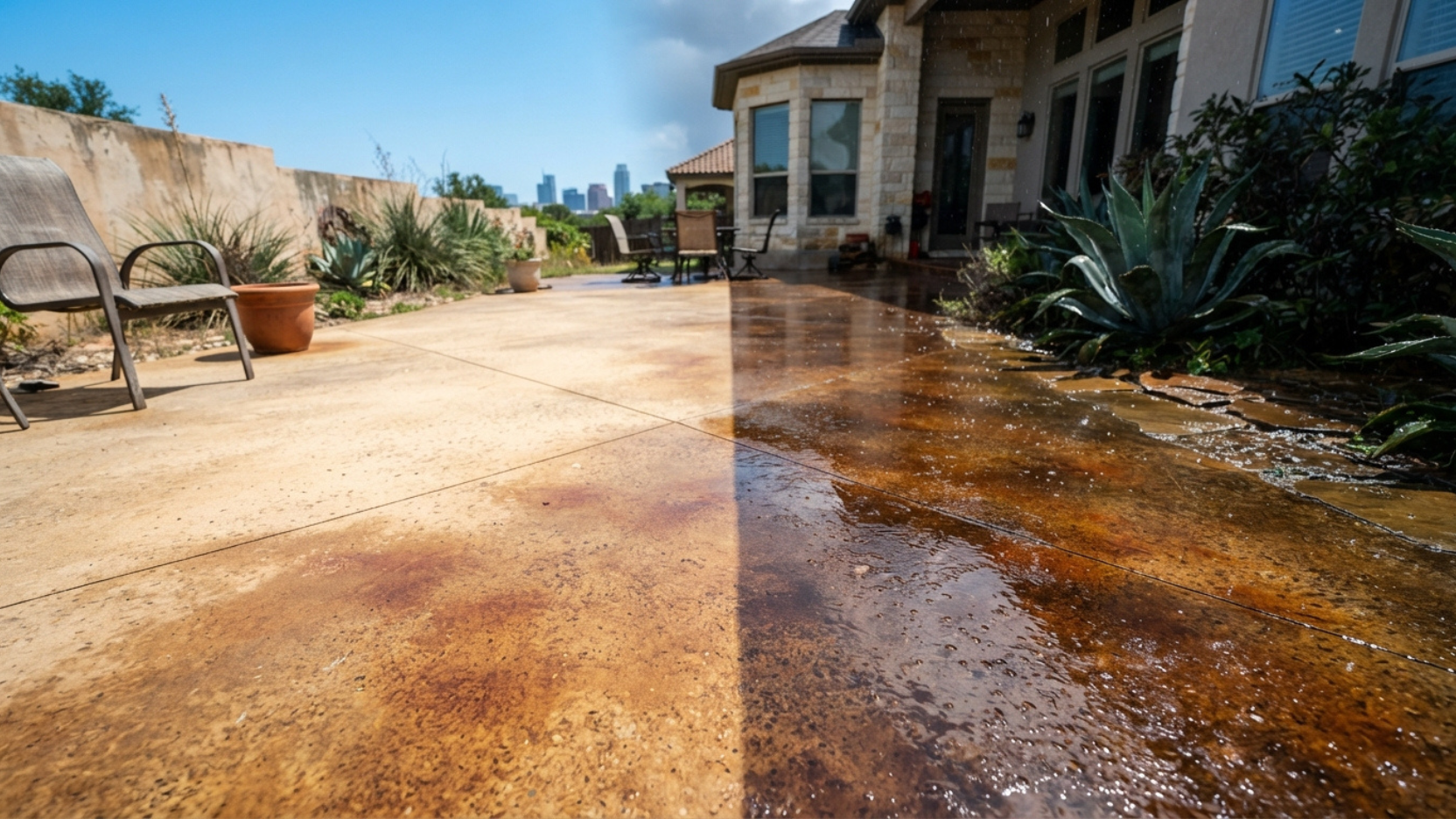
San Antonio’s climate is one of the harshest environments a stained concrete surface can face: extreme UV exposure, triple-digit summer heat, hard Edwards Aquifer water, and Blackland Prairie clay soils that never stop moving. Here is exactly what each weather factor does to your stain finish and how to protect it year after year.
Stained concrete is one of the most visually rewarding finishes available for San Antonio patios, pool decks, and interior floors. But it is also one of the finishes most affected by the local environment. Homeowners who move here from the Pacific Northwest or the Midwest are often surprised to find their stained concrete fading, chalking, or developing white mineral deposits within two or three seasons. That is not a product failure. It is a climate reality that a properly prepared and maintained surface can handle for decades.
This guide covers every major weather factor in San Antonio that acts on stained concrete: intense UV radiation, summer heat extremes, hard Edwards Aquifer water, Blackland Prairie clay soil movement, the brief but real freeze events that hit Bexar County in winter, and the intense rain events that arrive during storm season. For each factor, you will find exactly what it does to your stain finish, the warning signs to watch for, and the maintenance steps that keep the damage from compounding.
The stain itself whether acid-based or water-based does not fade in the way that paint fades. The pigment reacts chemically with the concrete and becomes part of the slab. What fades, chalks, and deteriorates is the sealer on top. The sealer is your first line of defense against every weather factor listed in this guide. San Antonio’s climate degrades sealers faster than almost any other U.S. region. A resealing schedule of every two to three years is not optional maintenance here it is what keeps the stain looking the way it did on installation day.
High Impact
Ultraviolet radiation from direct sunlight is the leading cause of sealer breakdown on stained concrete in San Antonio. The sealer whether a solvent-based acrylic, a water-based acrylic, or a polyurethane absorbs UV energy and converts it to heat. Over time, that process breaks down the polymer chains in the sealer, causing it to chalk, yellow, peel, or go milky. Once the sealer fails, the stain layer underneath loses its protection and the surface becomes vulnerable to everything else on this list.
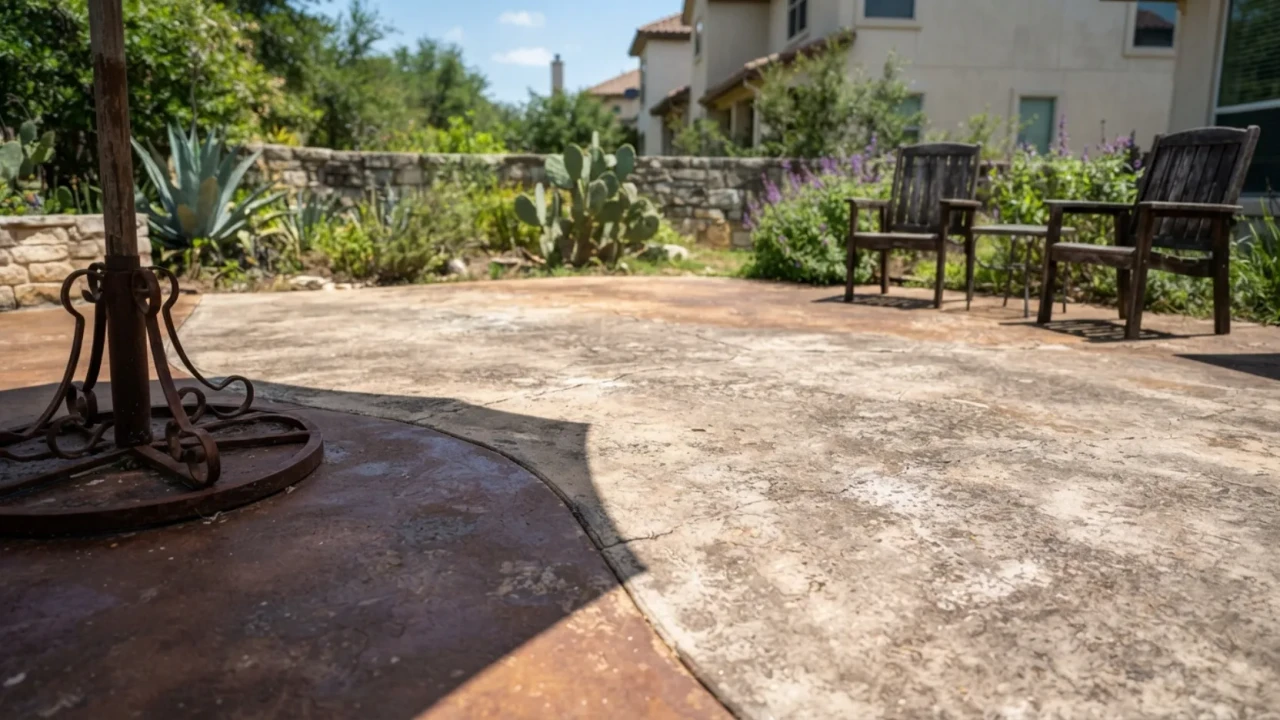
On an exposed south-facing patio in San Antonio, concrete surface temperatures routinely hit 130 to 150 degrees Fahrenheit during July and August afternoons. At those temperatures, a standard acrylic sealer begins to soften and can trap moisture underneath when the surface cools at night the primary cause of the milky or cloudy haze that homeowners notice after a few summers. UV exposure also breaks down the color in water-based stains more aggressively than acid stains, since water-based products sit on top of the concrete rather than chemically bonding within it.
The best defense against UV damage on an outdoor stained patio in San Antonio is shade, not just sealer. A pergola, shade sail, or covered patio structure reduces UV load on the concrete surface by 50 to 80 percent depending on orientation. That alone can extend your sealer life from two years to four or five. If a covered structure is not in the budget, choose a UV-stabilized polyurethane sealer rather than a standard acrylic, and commit to resealing every 18 to 24 months on the exposed portions.
- Sealer type confirmed as UV-stabilized: polyurethane for maximum protection, solvent-based acrylic as a minimum
- Resealing scheduled every 18 to 24 months for exposed outdoor surfaces in San Antonio
- Shade structure considered for south-facing patios to reduce UV load and extend sealer life
- Sealer applications timed for early morning during cooler months to prevent milking in high heat
- Water-based stains on exposed south-facing surfaces confirmed as needing more frequent resealing than acid stains
Water Quality
San Antonio’s water supply draws from the Edwards Aquifer, one of the largest artesian aquifer systems in the United States. The water is clean and reliable, but it carries dissolved calcium, magnesium, and bicarbonate at concentrations that register as extremely hard by national standards typically 250 to 350 parts per million in Bexar County. When that water evaporates on a stained concrete surface, it leaves the minerals behind as a white or gray haze. That deposit is called efflorescence, and it is one of the most common complaints about stained concrete maintenance in San Antonio.
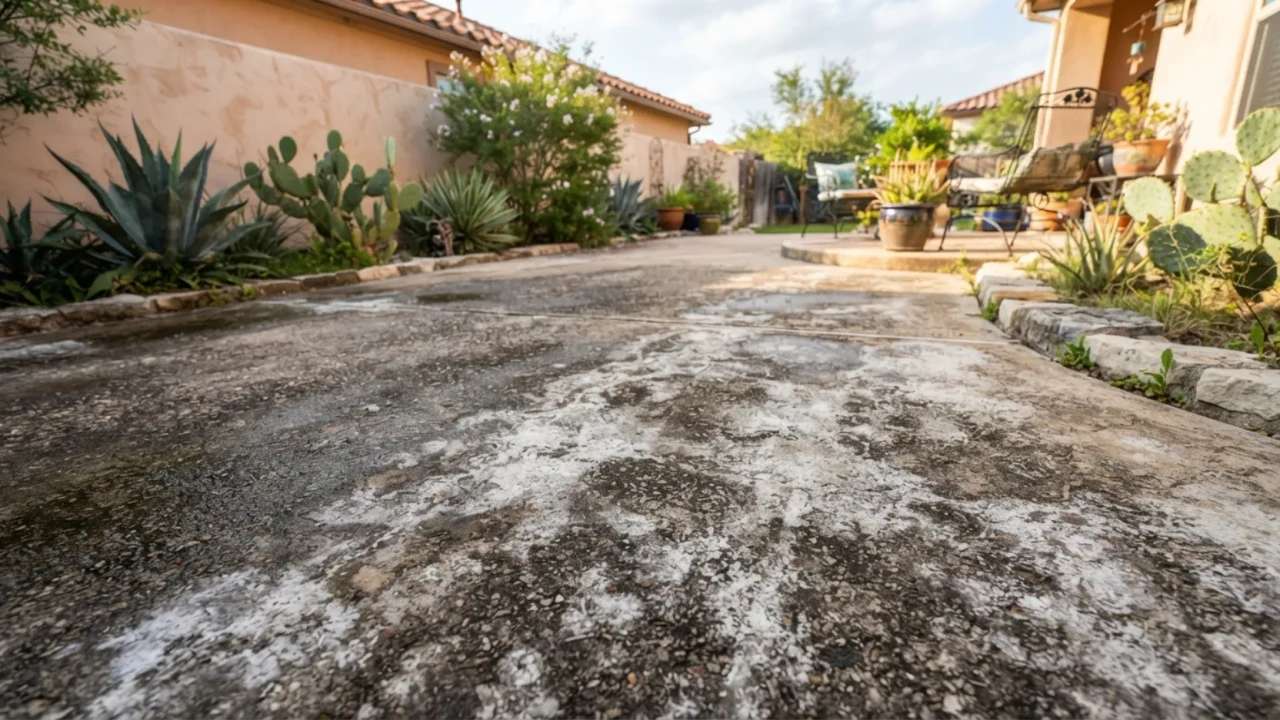
Efflorescence is not a stain failure. It is a surface deposit sitting on or just beneath the sealer. In most cases it can be removed with a diluted acid wash (phosphoric acid at 10 to 15 percent concentration) followed by thorough rinsing, without damaging the stain underneath. The problem is that efflorescence tends to recur if the underlying moisture pathway is not addressed. On pool decks, the source is usually pool splash water carrying calcium. On patios and driveways, the source is usually groundwater migrating up through the slab when the surface gets wet and then dries rapidly in the heat.
If your San Antonio property uses an irrigation system, aim sprinkler heads away from stained concrete surfaces wherever possible. Repeated cycles of hard water from your irrigation system depositing on a stained patio and then evaporating in the afternoon heat will build up mineral deposits faster than rainfall alone. Rinsing stained concrete surfaces with clean water after irrigation contact significantly reduces mineral buildup over time.
- Irrigation heads aimed away from stained concrete surfaces to reduce direct hard water contact
- Penetrating silane or siloxane sealer applied beneath the decorative topcoat sealer on new installations
- Annual inspection for white or gray mineral haze on the stained surface
- Efflorescence treated with diluted phosphoric acid only not muriatic acid, not abrasive scrubbing
- Surface resealed promptly after any acid wash treatment to restore protection
Structural Risk
Most of San Antonio and Bexar County sits on Blackland Prairie Vertisol clay, a soil type that is among the most expansive in the United States. During drought conditions which San Antonio experiences regularly, with multiple years of below-average rainfall in the past decade this clay loses moisture and shrinks significantly. During wet periods, it absorbs water and swells back. That repeated expansion and contraction creates vertical and lateral forces under a concrete slab that no amount of decorative staining or sealing can offset. The result is cracking, and cracking in a stained surface is far more visible and costly than cracking in a plain broom-finish slab.
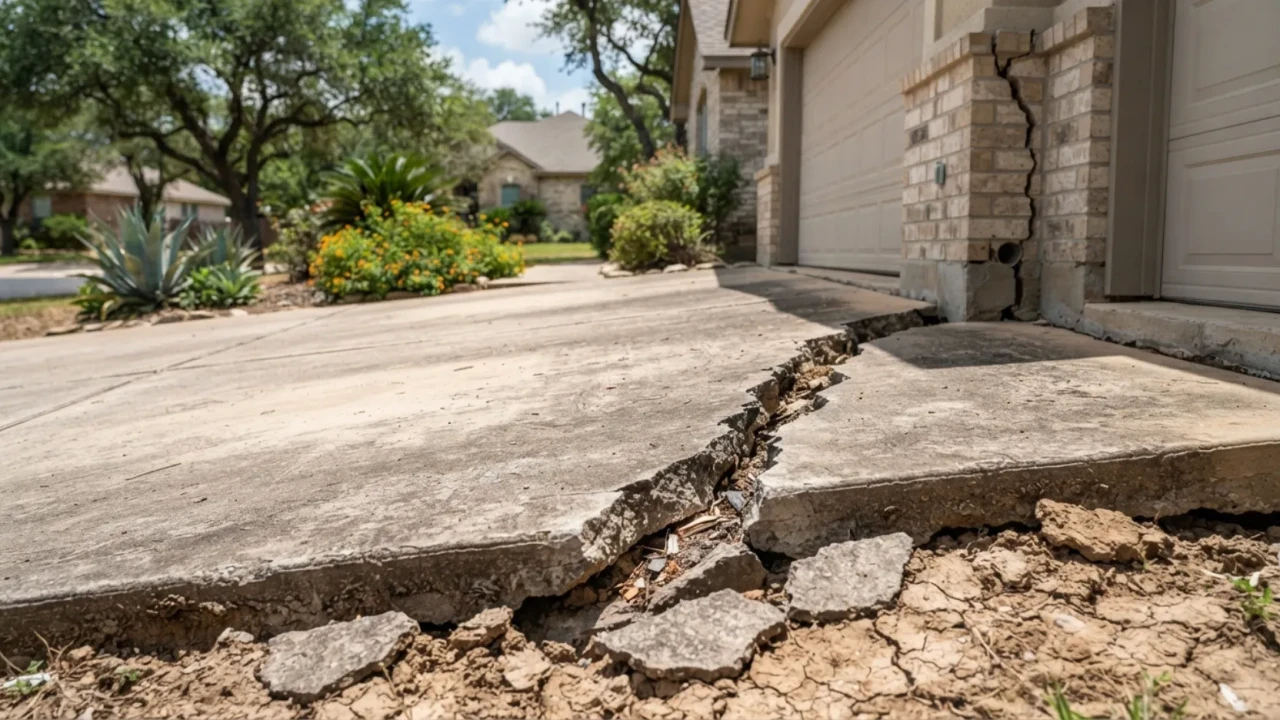
Stained concrete surfaces that crack due to soil movement do not fail because of the stain. They fail because the slab beneath was not built with adequate expansion joint spacing, sufficient slab thickness, or proper base preparation for Bexar County clay conditions. This distinction matters because a cracked stained surface is difficult and expensive to repair invisibly patched areas rarely match the mottled color of an acid stain or the integral color of a decorative finish. The time to prevent soil movement cracking is during construction, not after.
Watering the soil around your stained concrete slab during a drought is not unusual advice in San Antonio. Keeping the clay around and beneath the slab at a more consistent moisture level reduces the magnitude of shrink-swell cycles and thereby reduces the stress on the concrete. A soaker hose placed 18 to 24 inches from the slab perimeter, run for a few hours per week during extended dry periods, can meaningfully extend the service life of any concrete surface on Bexar County clay soil. This practice is well known in foundation maintenance circles here and applies equally to concrete flatwork.
- Slab thickness confirmed at 4 inches minimum for patios, 5 inches for driveways in clay soil zones
- Base preparation specified as compacted crushed limestone, minimum 4 inches, not native clay
- Rebar reinforcement at 18-inch centers used rather than wire mesh alone for stained surfaces on clay
- Expansion joints placed every 8 to 10 feet and filled with flexible polyurethane sealant not rigid caulk
- No trees or large shrubs planted within 10 to 15 feet of the stained concrete surface
- Perimeter soil moisture maintained during drought with drip or soaker irrigation near slab edges
Application Timing
Concrete staining is a time-sensitive process even in ideal conditions. In San Antonio’s summer when air temperatures hit 100 degrees or higher and surface temperatures on concrete exceed 130 degrees the chemistry of both the stain application and the sealer application changes significantly. Understanding those constraints is the difference between a stain job that looks flawless and one with blotchy color, uneven penetration, and a sealer that begins failing before the first summer is over.
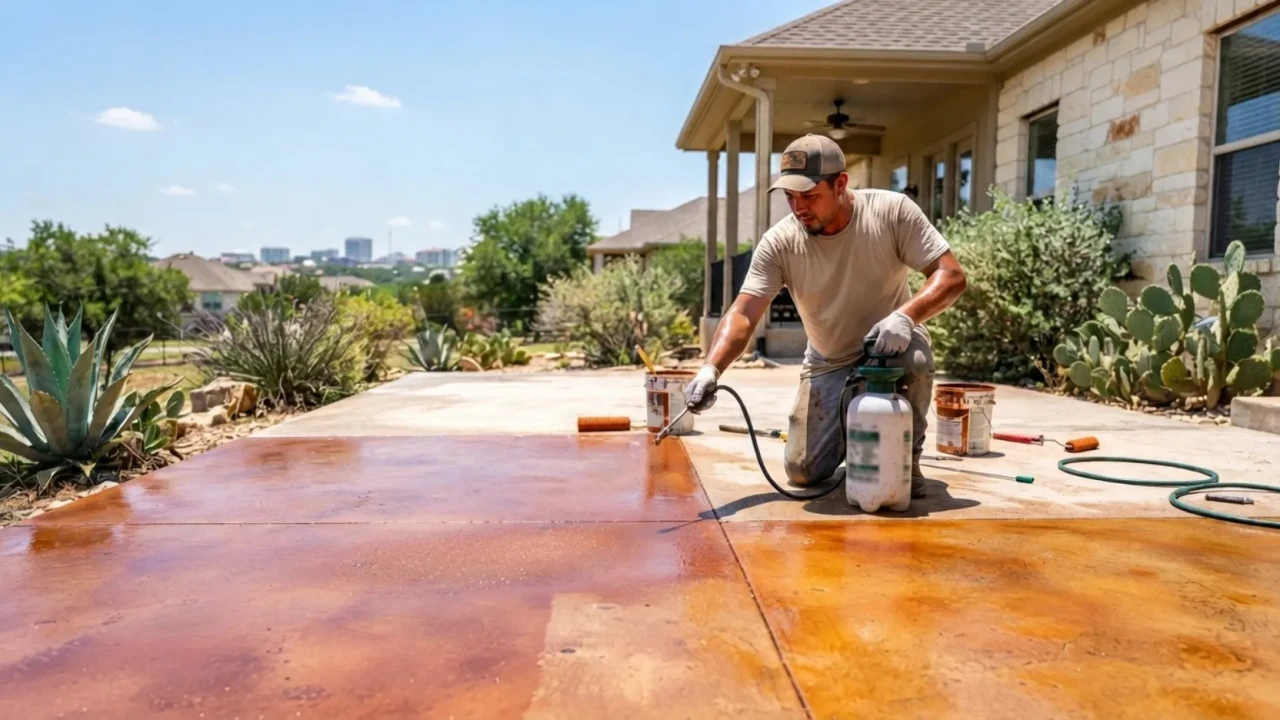
Acid stains react with the calcium hydroxide in the concrete to produce permanent color. In extreme heat, that reaction accelerates and can produce uneven color if the stain dries at different rates across the surface. Contractors experienced in San Antonio conditions start acid staining jobs before 7 a.m. and work in the cooler morning hours, using fine mist applicators and working in smaller sections to maintain control over the reaction time. Attempting to stain a sun-baked slab at 2 p.m. in August is a reliable way to get blotchy results.
| Month / Season | Staining conditions | Sealer conditions | Recommendation |
|---|---|---|---|
| Oct Apr | Excellent temps 50 to 75 degrees, low humidity | Excellent sealer cures evenly, no milking risk | Preferred scheduling window for all staining work |
| May | Good warm but manageable with morning start | Good early morning application recommended | Acceptable; schedule morning starts, avoid afternoon |
| Jun Aug | Difficult heat and fast drying require experienced crew | Risky high surface temp can cause milking and bubbles | Morning-only work, UV-stabilized sealer, extra precautions |
| September | Acceptable heat begins moderating but humidity rises | Acceptable watch humidity during hurricane season | Morning starts still preferred; check humidity before sealing |
- Staining scheduled for October through April whenever project timing is flexible
- Summer staining jobs confirmed for morning-only work windows no staining after 10 a.m. on exposed surfaces
- Sealer application confirmed for ambient temperatures below 90 degrees and relative humidity below 80 percent
- New concrete confirmed at full 28-day cure before any stain or sealer application no exceptions in summer
- Contractor confirmed as experienced with San Antonio summer staining conditions, not relocating from a cooler climate
Seasonal Risk
San Antonio sits in USDA Hardiness Zone 9a, which means winters are generally mild. The average low in January hovers around 39 degrees Fahrenheit. But Bexar County also experiences occasional hard freeze events nights when temperatures drop well below 32 degrees, sometimes combined with ice accumulation. The February 2021 winter storm was a dramatic example, but hard freezes that reach the mid-20s or lower occur every few years in normal conditions. Those events pose a specific threat to stained concrete that was not sealed recently or was sealed with an inferior product.
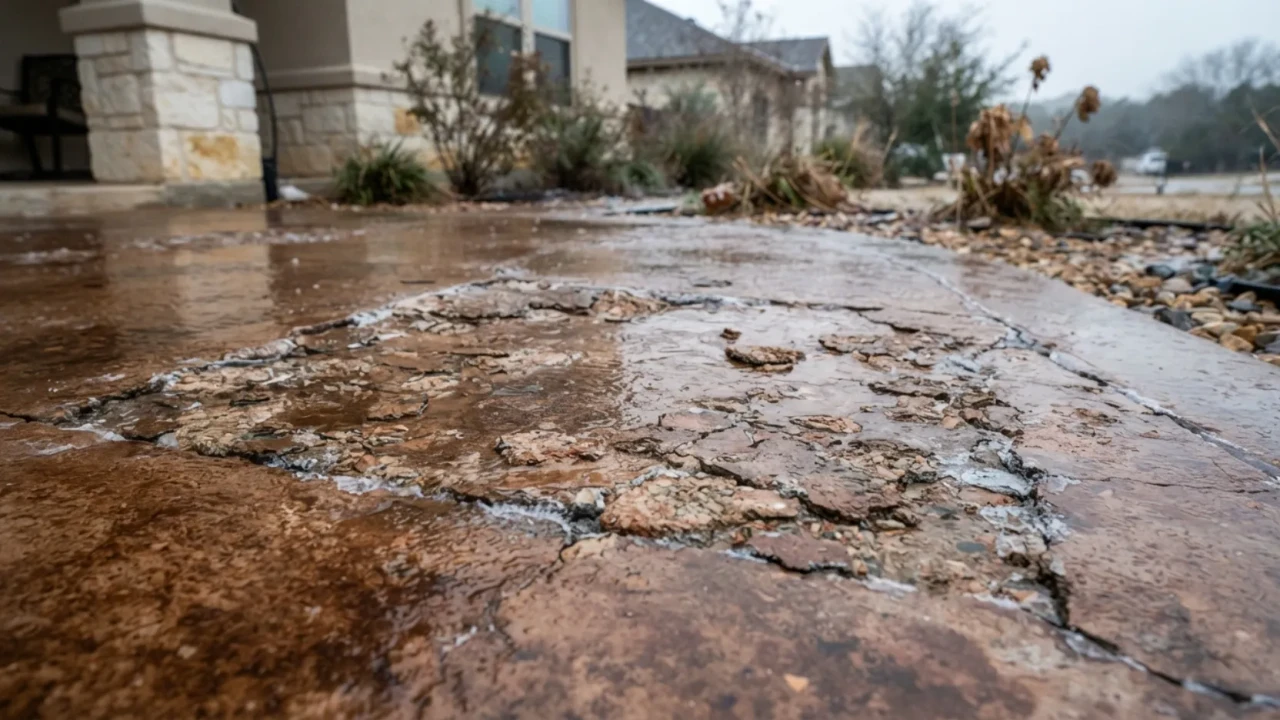
The mechanism of freeze damage on stained concrete is moisture penetration followed by expansion. Water enters the concrete through any crack, expansion joint gap, or area where the sealer has thinned or failed. When that moisture freezes, it expands by approximately nine percent by volume. That expansion creates internal pressure that can delaminate the sealer, pop small surface chips (spalling), or widen existing hairline cracks. On a stained surface, spalling is particularly damaging because the exposed concrete beneath the spalled area shows the raw, unstained color of the original mix rather than the decorative finish.
The most preventable freeze damage on stained concrete in San Antonio comes from two sources: deicing products and unsealed expansion joints. Many homeowners reach for rock salt or magnesium chloride during ice events without realizing that chloride-based deicers rapidly destroy concrete sealers and can etch the stain itself on repeated contact. Sand is the correct traction solution for stained concrete in any freeze event. Expansion joints that have dried out, cracked, or separated should be refilled with a flexible polyurethane sealant every two to three years to prevent water infiltration before the first hard freeze of the season.
- Stained concrete surface inspected and resealed in fall (September to November) before freeze season
- Expansion joint filler inspected for cracking or separation refilled with flexible polyurethane sealant as needed
- Household members informed that rock salt and chloride deicers must never be used on stained concrete surfaces
- Sand kept on hand for traction during ice events rather than any chemical deicer product
- Spalling damage from prior freeze events repaired and the affected area resealed before the following winter
Drainage
San Antonio averages about 32 inches of rainfall per year, but that rainfall does not arrive gently throughout the year. It tends to arrive in bursts intense spring thunderstorms and fall tropical moisture events that can drop two to four inches of rain in a few hours. A stained concrete surface that drains properly handles these events without any lasting effect. A surface that retains standing water for hours after a rain event is experiencing accelerated sealer degradation with every storm.
Standing water on a stained concrete patio or pool deck causes three specific problems over time. First, prolonged moisture contact softens and eventually lifts the sealer layer, particularly on solvent-based acrylics in their later years of service. Second, as the water evaporates in the heat following a storm, it deposits dissolved minerals from both the rain (which picks up minerals from the concrete itself as it sits) and the hard San Antonio municipal water that may have mixed with the pooling. Third, organic matter leaves, grass clippings, pollen that sits in the standing water can stain the surface beneath the sealer if the sealer is thin or damaged.
If your stained patio or pool deck was poured flat with no drainage slope, that is a construction error that needs a contractor assessment not a staining or sealing problem. Resurfacing overlays can be applied to a flat slab to create a proper slope, and a new stain and seal applied on top. It is a significant repair but far less expensive than full demolition and repour. Before staining any new concrete project in San Antonio, confirm the drainage slope in writing with your contractor. The slope must be established during the pour and cannot be added with sealer products afterward.
- Drainage slope on stained surface confirmed at 1/8 inch per foot minimum no flat or ponding areas
- Gutter downspouts directed away from stained concrete surfaces, not discharging directly onto the slab
- Organic debris (leaves, pollen, grass clippings) removed from stained surface within 24 hours of accumulation
- Standing water areas inspected after heavy rain persistent ponding requires contractor evaluation for slope correction
- Surface rinsed with clean water after heavy storm events to remove dissolved minerals before they deposit as hard water scale
Use this table as a seasonal reference for maintenance planning. The most common maintenance mistake in San Antonio is treating stained concrete like a northern climate surface and resealing every four to five years. At that interval, the sealer has already been failing for two seasons and every weather factor on the list below has been compounding without protection.
| Weather factor | Primary effect on stained concrete | Warning signs | Maintenance response |
|---|---|---|---|
| UV radiation and heat | Sealer breakdown, chalking, yellowing, color fading on water-based stains | White chalky surface residue, loss of gloss, color appearing dull or washed out | Reseal every 18 to 24 months; use UV-stabilized sealer; add shade structure |
| Edwards Aquifer hard water | White or gray mineral deposits (efflorescence) on the stained surface | White haze or grainy deposits that do not wash off with plain water | Diluted phosphoric acid wash, thorough rinse, reseal immediately after |
| Blackland Prairie clay soils | Slab cracking from soil shrink-swell movement, expansion joint failure | Visible cracks, especially near edges or expansion joint lines | Fill cracks and joints with flexible polyurethane; maintain soil moisture in drought |
| Summer heat (application) | Uneven stain color, sealer milking, bubbling from premature drying | Blotchy or uneven color, milky sealer haze, surface bubbles | Apply stains and sealers only in cool morning hours or during fall through spring |
| Winter freeze events | Sealer delamination, concrete spalling, crack widening from ice expansion | Flaking surface material, small chips exposing raw concrete color beneath stain | Reseal each fall; never use chloride deicers; repair spalling before next freeze |
| Heavy rain and drainage | Sealer softening from prolonged moisture contact, organic staining, mineral deposits | Standing water areas, surface discoloration from debris contact, efflorescence after storms | Ensure 1/8 inch drainage slope; remove debris promptly; rinse surface after storms |
- Perform the water bead test: pour a small amount of water on the surface if it soaks in rather than beading, resealing is overdue
- Check for chalky white residue on the surface by wiping with a dark cloth white residue indicates sealer breakdown from UV
- Look for milky or cloudy areas in the sealer where moisture has been trapped beneath it
- Inspect for bubbling or peeling at surface edges or joints signs of adhesion failure or moisture intrusion
- Schedule resealing if any of the above signs are present do not wait until next scheduled maintenance cycle
- Inspect all expansion joints for gaps, cracking, or missing filler material
- Refill any compromised joints with flexible polyurethane sealant not rigid caulk or grout
- Fill hairline cracks (under 1/4 inch) with a flexible concrete crack filler compatible with the stained finish
- Cracks wider than 1/4 inch or with vertical displacement require a contractor assessment do not fill without professional evaluation
- Irrigation heads confirmed as aimed away from stained concrete surfaces
- Gutter downspouts directed away from or past the stained surface no direct discharge onto concrete
- Surface rinsed with clean water after rain events and after irrigation contact
- Organic debris removed within 24 hours of any storm that deposits leaves, pollen, or grass on the surface
- Efflorescence (white mineral deposits) treated promptly with diluted phosphoric acid before resealing
- Sealer condition verified reseal before freeze season if last application was more than 24 months ago
- Rock salt and chloride deicers removed from property or labeled clearly as not for use on stained concrete
- Sand stored and accessible for traction during ice events
- Expansion joints inspected and filled before first hard freeze of the season
How often should I reseal stained concrete in San Antonio compared to other climates?
Why does my stained concrete look faded and dull after just two San Antonio summers?
Can I stain existing concrete in San Antonio, or does the weather history of the slab affect how well it takes the stain?
What should I do if my stained concrete cracked during a winter freeze in San Antonio?
Is stained concrete a good choice for a San Antonio pool deck given all the weather challenges?
Get a free stained concrete quote in San Antonio
Tell us about your patio, pool deck, driveway, or interior floor. We will assess the site, discuss the right stain and sealer for your specific San Antonio conditions, and give you a detailed written quote at no cost.