
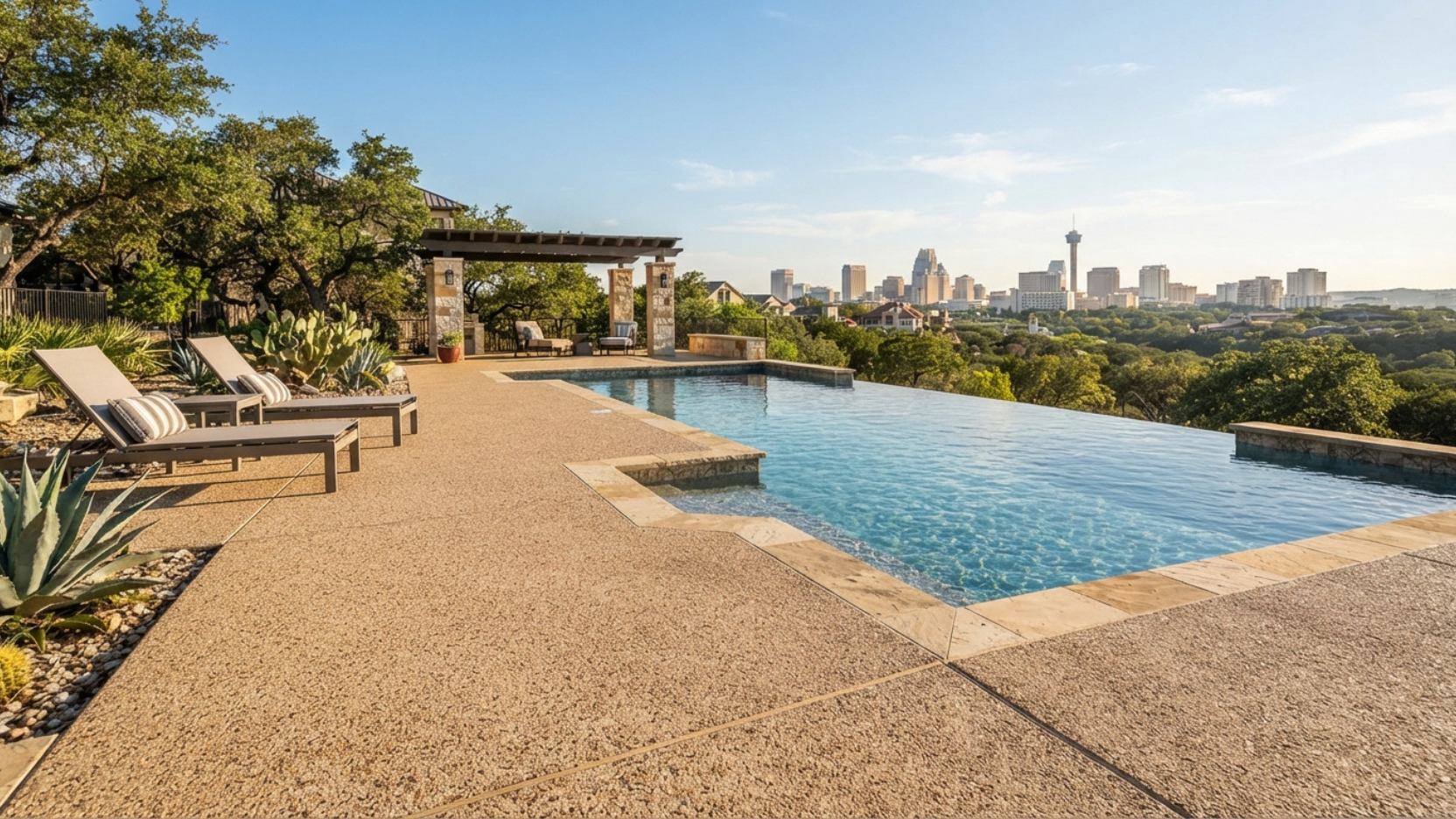
A cracked, faded, or slippery pool deck is more than an eyesore it is a safety and liability issue that only gets more expensive to fix the longer it sits. This guide covers every resurfacing option available in San Antonio, what each costs, how long each lasts in Bexar County conditions, and how to choose the right surface for your pool area before signing a contract.
Most San Antonio homeowners with a deteriorating pool deck assume the only fix is a full tear-out and repour. In the majority of cases, that assumption is wrong and expensive. As long as the existing concrete slab is structurally sound no heaving, no vertical displacement at cracks, no voids beneath the surface a resurfacing overlay can restore full function and dramatically improve appearance at a fraction of demolition cost. The challenge is choosing the right overlay system for San Antonio’s specific conditions: extreme summer heat, hard Edwards Aquifer water, Blackland Prairie clay soil movement, and pool chemical exposure that eats through inferior sealers within a single season.
This guide covers every resurfacing option available in the San Antonio market, including the materials that perform well here and the ones that look good in a showroom but fail within two or three summers on a Bexar County pool deck. Each option gets a cost range, a realistic service life, and the specific maintenance requirements that keep it looking good year after year.
Resurfacing is only the right answer when the existing slab is structurally intact. Cracks wider than 1/4 inch with vertical displacement (one side higher than the other), active heaving from clay soil movement, or areas where the concrete sounds hollow when tapped indicate base failure that an overlay cannot fix. Applying a resurfacing product over a failing slab will produce a failing overlay within two to three years. Before discussing options, have a contractor assess the slab condition. If the structure is sound, resurfacing is almost always the correct and more cost-effective choice. If the base has failed, a targeted repair or partial repour may be needed before any overlay work begins.
Most Popular
Spray texture overlays most commonly marketed under the brand name Kool Deck but available from multiple manufacturers under different trade names are the single most frequently specified pool deck resurfacing system in San Antonio. They consist of a thin acrylic-modified cement coating sprayed or troweled onto the existing deck surface in one or two thin layers, then sealed. The product was originally developed specifically for pool decks in hot climates because its texture and light color reduce surface temperatures significantly compared to plain concrete an important feature when pool deck surfaces in San Antonio can hit 130 to 150 degrees Fahrenheit on a July afternoon.
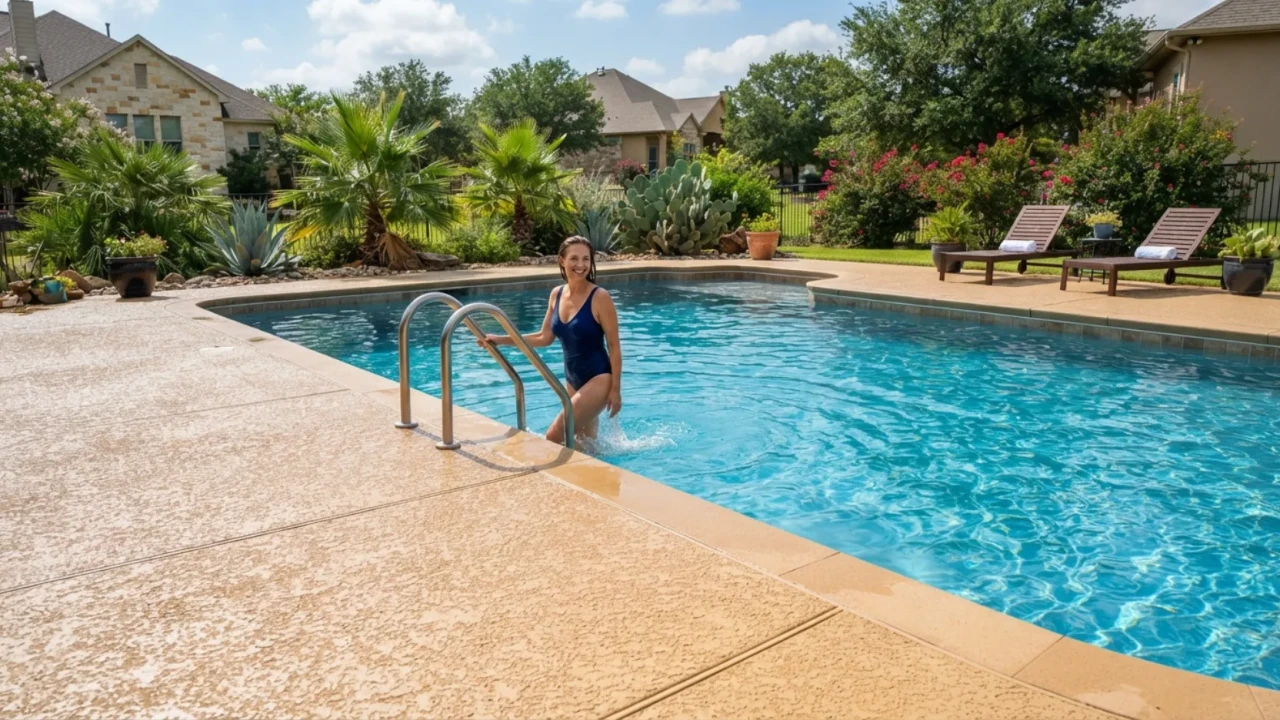
The material bonds directly to properly prepared existing concrete, covering minor surface cracks and surface defects, and is available in a range of earth tones that complement most San Antonio home exteriors. The applied thickness is typically 1/8 to 3/16 of an inch, which means it does not raise the pool coping height or create transition issues with existing pool equipment. Most spray texture jobs in San Antonio can be completed in one to two days for an average residential pool deck, with foot traffic allowed within 24 hours.
- Existing slab confirmed as structurally sound no active heaving, no hollow-sounding areas
- Surface prep confirmed to include acid etching or mechanical profiling in addition to pressure washing
- All cracks wider than 1/16 inch filled with flexible polyurethane filler before overlay application
- Product brand and UV stabilizer content confirmed not all spray texture products perform equally in Texas sun
- Sealer coat included in the quote unprotected spray texture weathers and fades rapidly in San Antonio heat
- Resealing scheduled every 2 to 3 years to maintain color and surface protection
Premium Visual
A stamped concrete overlay produces the appearance of a full stamped concrete installation the stone patterns, color variation, and grout-line detail without demolishing and replacing the existing pool deck. The overlay product is a modified cementitious micro-topping applied at 3/8 to 3/4 inch thickness, stamped with the desired pattern before it sets, then colored and sealed. For homeowners who want the look of natural flagstone, travertine, or slate on their pool deck but do not want to pay for full demolition and repour, a stamped overlay is the most cost-effective path to that aesthetic in San Antonio.
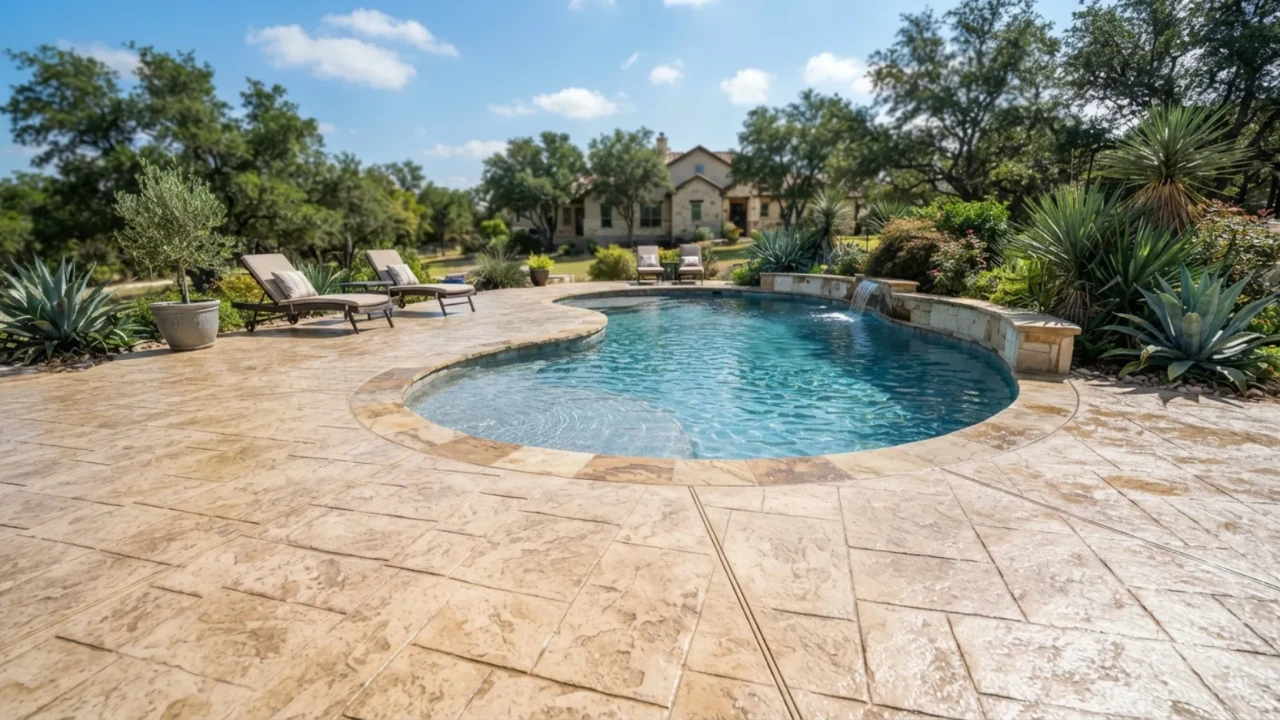
Travertine-pattern stamped overlays are the most popular choice for San Antonio pool decks in 2026 because travertine is a traditional pool surround material throughout the Southwest and the pattern reads as upscale and timeless. Slate and ashlar stone patterns are the second and third most requested. Color is added through integral pigment in the overlay mix, a color hardener, or an antiquing release agent applied during stamping or a combination of all three. The result is a surface that is visually indistinguishable from a premium poured-and-stamped installation when viewed from a normal distance.
The most important sealer decision on a stamped overlay in San Antonio is whether to use a solvent-based acrylic or a polyurethane product. Solvent-based acrylics enhance color beautifully and are the standard choice, but in San Antonio’s extreme UV environment, a UV-stabilized polyurethane sealer adds a year or more to the resealing interval and provides meaningfully better protection against pool chemical exposure. The upfront cost difference is modest typically $0.50 to $1.00 per square foot but the extended maintenance interval and better chemical resistance make polyurethane the right call for any pool deck overlay in Bexar County.
Stamped overlays do carry one important caveat specific to San Antonio conditions: they are more sensitive to Blackland Prairie clay soil movement than a plain spray texture finish. Because the stamped overlay is thicker and more rigid, any cracking in the substrate from clay shrink-swell movement will telegraph through the overlay more visibly than through a thinner, more flexible spray texture product. Proper crack preparation, flexible joint filler at all control joint locations, and maintaining perimeter soil moisture during drought periods all reduce this risk significantly.
- Pattern and color confirmed in writing with a physical sample or reference photo approved before work begins
- All control joints in the existing slab honored in the overlay no joints bridged over with the overlay material
- Flexible polyurethane joint filler used at all control joint locations in the overlay layer
- UV-stabilized polyurethane sealer specified rather than standard solvent acrylic for pool deck chemical resistance
- Non-slip additive confirmed in the sealer formulation stamped surfaces can be slick when wet without it
- Resealing scheduled every 2 to 3 years pool chemical exposure accelerates sealer breakdown
Best Durability
Exposed aggregate resurfacing is the most technically durable pool deck surface option in San Antonio when the installation is done correctly. The product is a cementitious overlay pre-blended with decorative aggregate pea gravel, quartz, river rock, or crushed stone that is troweled onto the existing deck and then surface-retarded and pressure-washed to expose the aggregate before the overlay fully cures. The result is a surface with natural stone visible across the entire area, providing inherent slip resistance that does not depend on a texture agent or sealer additive to remain effective.
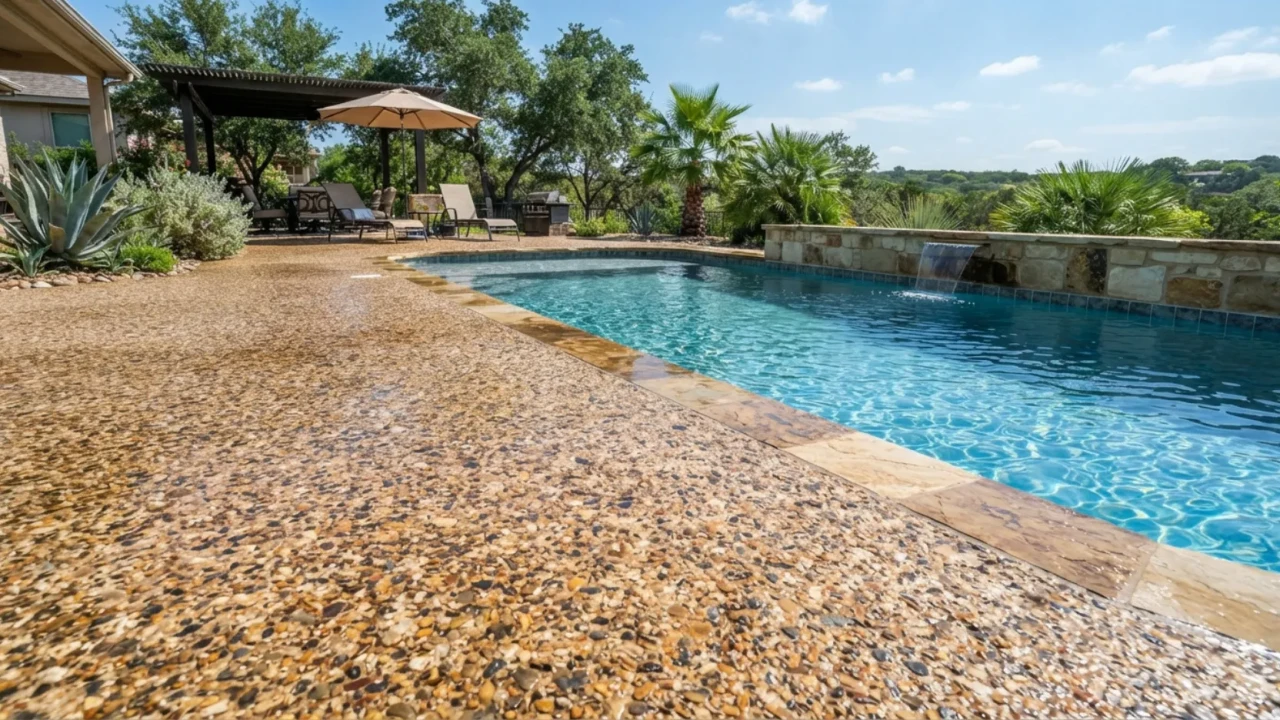
In San Antonio’s heat, exposed aggregate has a significant comfort advantage over other resurfacing options: the stone aggregate absorbs and releases heat differently than a solid acrylic or cementitious surface, and the texture of the stones underfoot reduces skin contact area compared to a flat surface making it noticeably more comfortable to walk on barefoot in direct summer sun. The surface also does not develop the chalky, faded appearance of an aging acrylic spray texture because the color comes from the aggregate itself rather than a pigment coating that is subject to UV breakdown.
- Contractor confirmed as experienced with aggregate overlay work on pool decks specifically request references
- Aggregate type and color sample approved in person before installation begins
- Overlay thickness confirmed at minimum 3/8 inch to allow adequate aggregate embedment and exposure
- Surface retarder and wash timing confirmed as part of the contractor’s standard process
- Penetrating sealer applied after cure to reduce Edwards Aquifer hard water mineral absorption into the aggregate surface
- Existing control joints honored and refilled with flexible sealant in the overlay
Design Flex
A micro-topping is an ultra-thin polymer-modified cementitious coating typically 1/16 to 1/8 inch thick applied over existing concrete to create a smooth, nearly seamless surface. When combined with a concrete stain and a high-quality sealer, it produces a contemporary look that suits modern home designs and outdoor living spaces. On a pool deck, a stained micro-topping is most appropriate for covered patios, shaded lanais adjacent to the pool, or interior wet areas such as pool houses and bathrooms, where the UV exposure is limited and the surface can be maintained more easily.
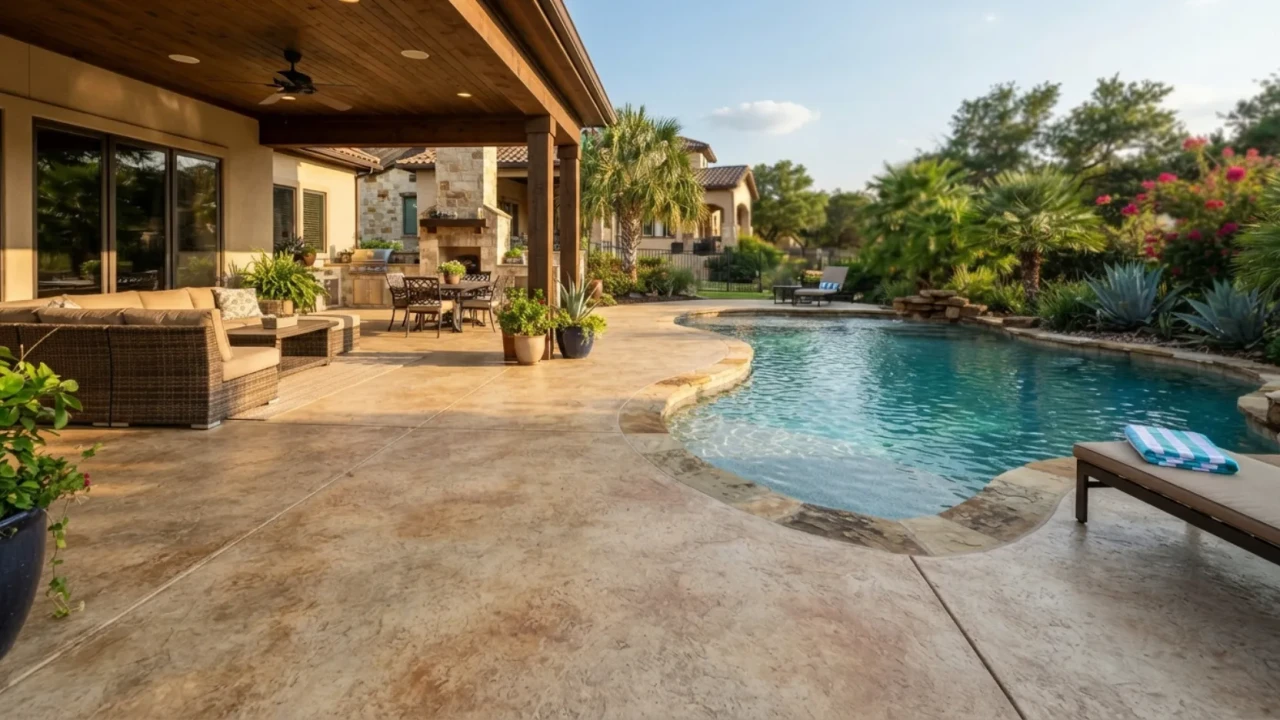
For fully exposed outdoor pool decks in San Antonio, a micro-topping without added texture is not the ideal primary surface the smooth finish can become slippery when wet and pool chemicals accelerate sealer breakdown at a rate that makes maintenance burdensome. However, for homeowners who want a seamless, high-design look in an area that has some overhead protection or consistent shade, a micro-topping with an acid stain or water-based stain produces results that no other resurfacing system can match for visual sophistication. A non-slip additive in the sealer and regular resealing every 18 to 24 months address the maintenance demands in a covered environment.
The most successful micro-topping applications on San Antonio pool decks combine two surfaces: a stained micro-topping on the covered patio section and an exposed aggregate or spray texture overlay on the open deck sections. The two systems are color-coordinated and installed together, creating a design-intentional transition rather than a mismatched repair. This approach gives the homeowner the contemporary aesthetics of a stained surface where they entertain and the durability and slip resistance of aggregate or texture where people exit the pool wet. Ask your contractor about this combination approach before committing to a single resurfacing system for the entire pool area.
- Application area confirmed as covered or semi-shaded not recommended as the primary surface on fully exposed pool decks
- Non-slip additive confirmed as included in the sealer formulation for all poolside and wet area applications
- Stain type selected: acid stain for permanent chemical reaction, water-based for broader color palette and easier color matching
- Resealing interval of 18 to 24 months confirmed and scheduled shorter interval than other systems on poolside surfaces
- Existing surface defects and pinholes repaired before micro-topping application the thin overlay telegraphs surface imperfections
- Pool chemical exposure discussed with contractor recommend polyurethane sealer over acrylic for chemical resistance
When Required
Resurfacing overlays solve cosmetic and minor surface deterioration problems. They cannot solve structural problems. If the existing pool deck has any of the conditions described below, no overlay system regardless of brand, product quality, or contractor skill will produce a lasting result. In these situations, full or partial demolition and repour is the only path to a pool deck that performs correctly and does not require repair again within two to three years.
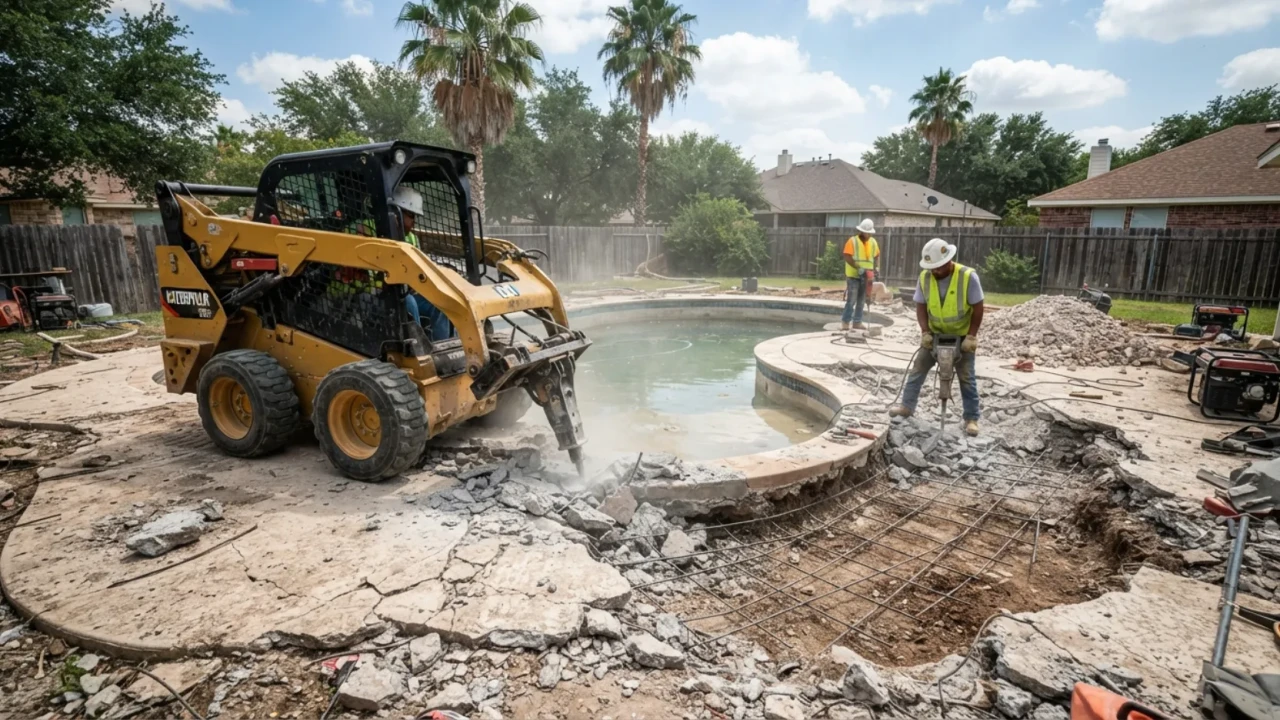
San Antonio’s Blackland Prairie clay soils are the primary driver of structural pool deck failures in Bexar County. Clay soils expand when wet and contract during drought, and that movement is most pronounced at the shallow depths where pool deck slabs sit. Decks poured directly over inadequately compacted native clay, or older decks where the clay has experienced years of moisture cycling from pool splash and irrigation, are susceptible to heaving and base voids that no surface treatment can correct.
- Tap test performed across the entire pool deck hollow areas identified and marked before any work begins
- All cracks inspected for vertical displacement any heaving confirms structural assessment is needed before overlay decision
- Drainage slope verified water should flow away from the pool and from the house at 1/8 inch per foot minimum
- Pool coping and waterline tile inspected for movement damage structural issues here require repour, not overlay
- Base condition discussed with contractor ask specifically about Bexar County clay soil conditions and base prep history
- Written scope of work confirms the assessment findings and the contractor’s recommendation before a deposit is made
Use this table to match the right resurfacing system to your pool deck condition, budget, and maintenance commitment. Every cost range reflects 2026 San Antonio market pricing for a typical 400 to 800 square foot residential pool deck. Smaller decks tend toward the higher end of the per-square-foot range due to minimum job costs; larger decks bring the per-foot price down.
| Resurfacing option | Cost range (San Antonio) | Service life | Best for | Key limitation |
|---|---|---|---|---|
| Spray texture / Kool Deck | $3 to $7 per sq ft | 7 to 12 years with resealing | Budget-conscious resurfacing, widely available local contractors | Requires resealing every 2 to 3 years; color fades if neglected |
| Stamped concrete overlay | $7 to $14 per sq ft | 10 to 20 years with maintenance | Homeowners wanting natural stone appearance without full repour | More vulnerable to clay soil movement than thinner systems |
| Exposed aggregate overlay | $6 to $12 per sq ft | 15 to 25 years | Durability priority; barefoot comfort in summer heat | Requires experienced installer; harder to repair invisibly if damaged |
| Micro-topping with stain | $5 to $10 per sq ft | 8 to 15 years (covered areas) | Covered pool areas, contemporary design aesthetic | Not recommended as primary surface on fully exposed outdoor decks |
| Full demolition and repour | $18 to $28 per sq ft | 25 to 40 years | Structurally failed slabs; full design reset with new finish | Highest cost; required when base failure is present not optional |
- Tap test completed across the entire deck area hollow areas documented before any quote is finalized
- All cracks measured for width and checked for vertical displacement cracks wider than 1/4 inch or with heaving require structural evaluation
- Drainage slope verified: water must flow away from pool and structure at 1/8 inch per foot minimum
- Pool coping and tile inspected for movement damage contractor must assess coping condition before overlay work begins
- Age of existing deck confirmed decks more than 20 years old may require more prep work or partial repour sections
- Pressure washing confirmed as part of the prep process minimum 3,000 PSI on pool deck surfaces
- Acid etching or mechanical profiling (grinding) confirmed in addition to pressure washing for overlay adhesion
- All cracks filled with flexible polyurethane filler not rigid caulk, not mortar
- Existing sealer or paint confirmed as removed or adequately profiled overlays will not bond to existing sealer
- Pool coping and tile protected with masking before any overlay or stain work begins
- Product brand and data sheet reviewed confirm the overlay product is rated for pool deck exposure (chlorine, water, UV)
- Sealer confirmed as UV-stabilized polyurethane preferred over standard acrylic for San Antonio pool decks
- Non-slip additive confirmed as included in the sealer for all wet and poolside surfaces
- Color and pattern sample approved in person before installation begins no changes are possible after application
- Control joints confirmed as honored in the overlay no joints should be bridged with rigid overlay material
- Certificate of insurance received and verified $1M minimum general liability for pool deck work near water
- References from completed pool deck overlay jobs in San Antonio requested and checked
- Written scope of work confirms: prep process, product names, thickness, color, sealer type, and warranty terms
- Payment terms confirmed: deposit of 30 to 50 percent, balance on completion after inspection
- Resealing schedule and maintenance expectations confirmed in writing before the project begins
How long does pool deck resurfacing take in San Antonio, and how soon can we use the pool?
Can pool deck resurfacing be done in San Antonio summer heat?
How does San Antonio’s hard water affect a resurfaced pool deck?
My pool deck has a lot of cracks. Does that mean I need a full tear-out?
What is the best pool deck resurfacing option for a home in San Antonio that we plan to sell?
Get a free pool deck resurfacing quote in San Antonio
Tell us about your pool deck current condition, size, and the look you want. We will assess the slab, walk you through your resurfacing options, and give you a detailed written quote at no cost.