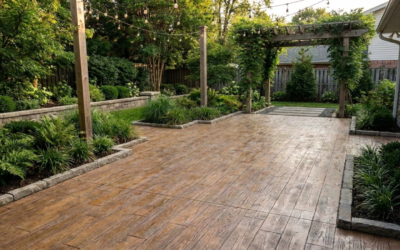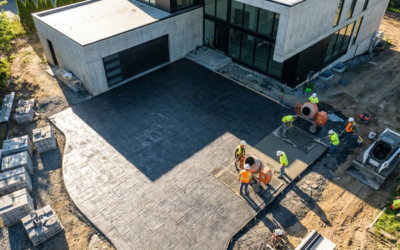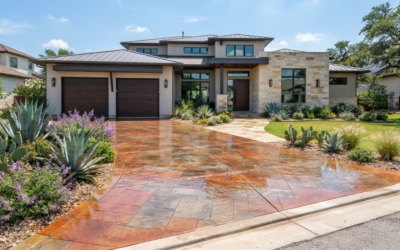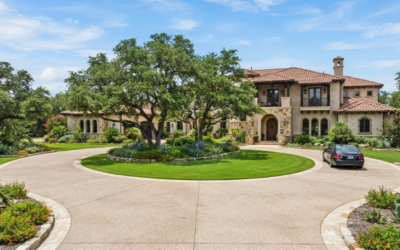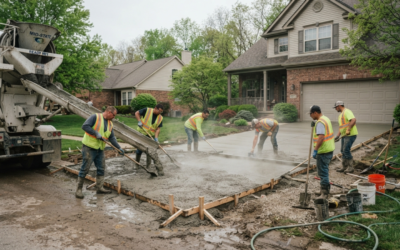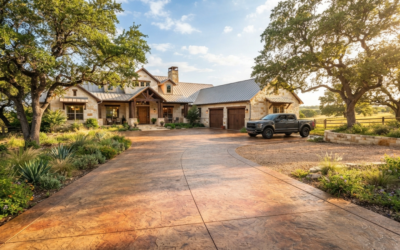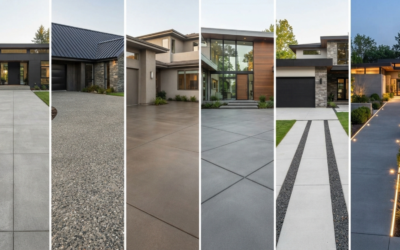
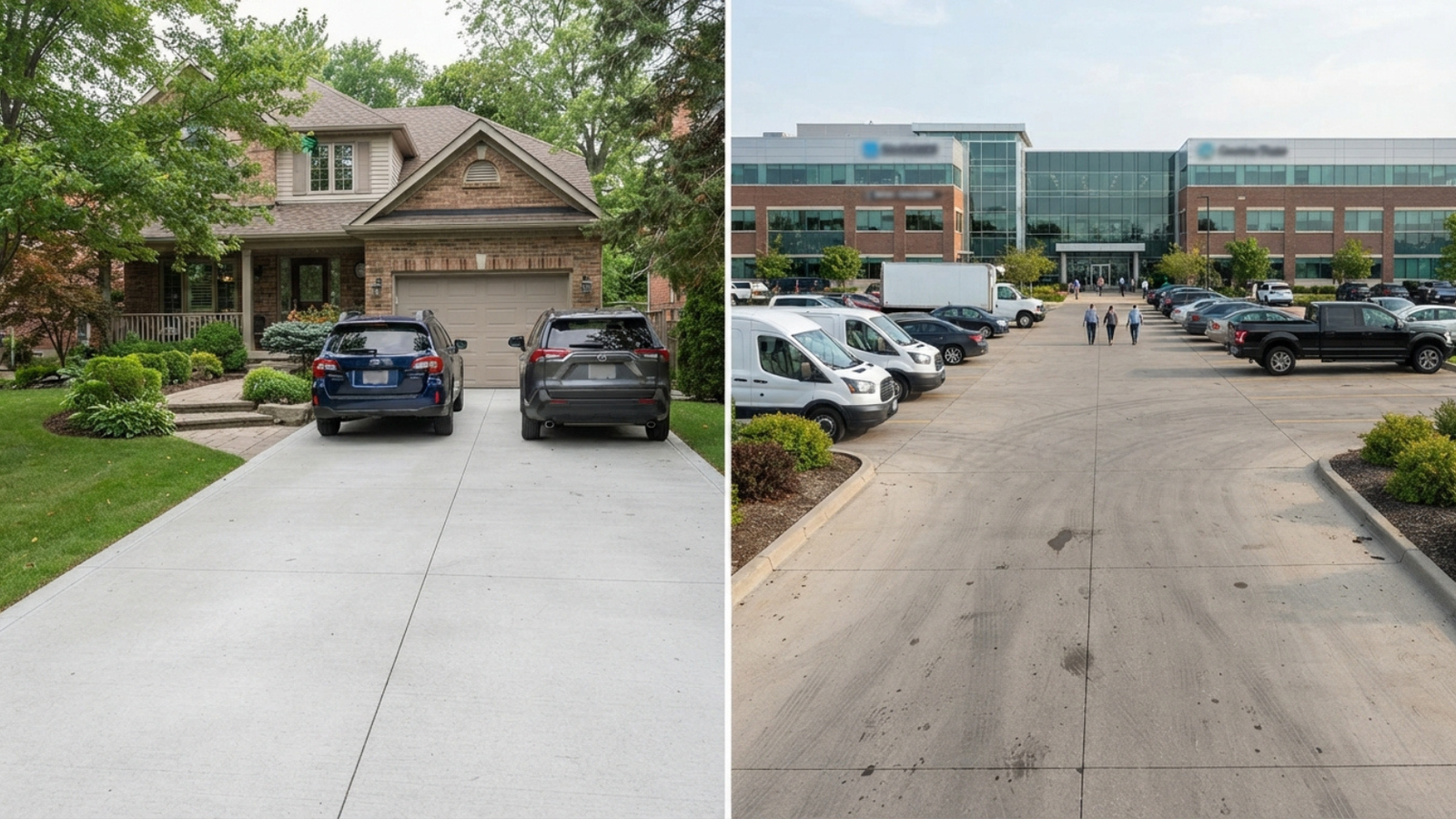
Same material, very different build specs. Whether you are pouring a home driveway in Helotes or a commercial parking apron in Loop 410, the concrete decisions that determine success are not the same. This guide explains exactly how residential and commercial driveway requirements differ and what those differences cost San Antonio property owners in 2026.
Concrete is concrete until it is not. A homeowner replacing a two-car driveway in Alamo Heights and a property manager pouring a truck-access apron in the South Side industrial corridor are both getting concrete. But the specs, load requirements, permit processes, reinforcement grades, and contractor qualifications are completely different. Confuse the two, and you will either overpay on a residential job or underbuild a commercial one that fails in three years.
This guide walks through every major dimension where residential and commercial concrete driveways diverge in San Antonio from slab thickness and base preparation to cost per square foot and local permit requirements. If you are trying to figure out which category your project falls into, or why a commercial contractor quoted you differently from a residential one, this is the guide that explains it.
Every concrete driveway spec decision flows from one question what is the maximum load this surface must carry? A residential driveway typically handles passenger vehicles up to around 6,000 lbs. A commercial driveway or access road may carry delivery trucks, semi-trailers, or heavy equipment exceeding 80,000 lbs. That load difference drives a completely different set of specifications for slab thickness, base depth, reinforcement, and concrete mix design. Answer the load question first, and every other decision becomes straightforward.
Slab thickness is not a preference it is an engineering requirement based on the load the surface must carry and the subgrade conditions beneath it. In San Antonio, Blackland Prairie Vertisol clay soil adds a layer of complexity that does not exist in most other U.S. cities. This expansive clay swells when it absorbs moisture from Flash Flood Alley rainfall events and shrinks back in the summer heat, creating ground movement that puts constant stress on any slab built on top of it.
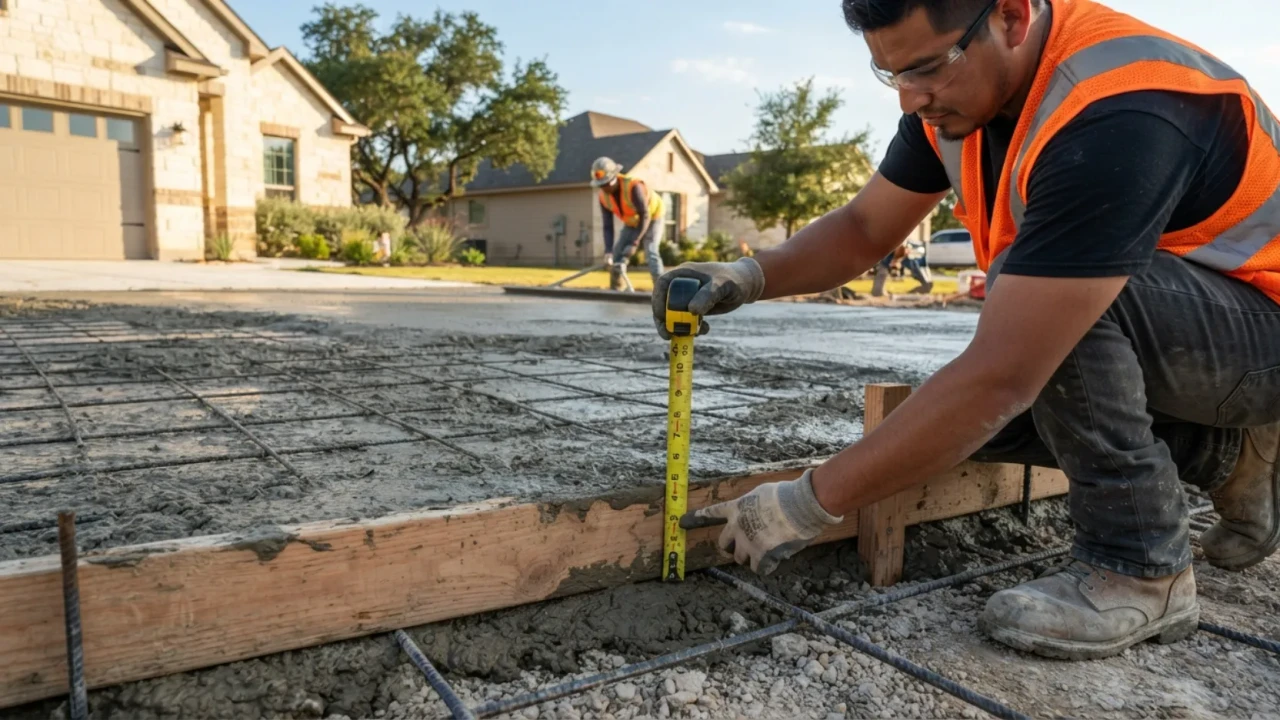
Residential driveways in San Antonio should be poured at a minimum of 4 inches, with 5 inches strongly recommended on Bexar County clay soils. Most passenger vehicles weigh between 3,000 and 6,000 lbs. A 4-inch slab with a properly compacted crushed limestone base handles that load comfortably for 25 to 30 years when correctly reinforced.
Commercial driveways, access roads, and truck aprons require a minimum of 6 inches, with 7 to 8 inches standard wherever semi-trucks or heavy equipment will operate. The structural difference is significant: doubling the slab thickness from 4 to 8 inches increases the load-bearing capacity by a factor of roughly eight, not two.
- Heaviest vehicle identified before spec is set do not let a contractor assume passenger-only if you own a truck, RV, or trailer
- Slab thickness written into the quote with specific inch measurement not just "standard thickness"
- Base depth specified separately from slab thickness both numbers must appear in the scope of work
- Commercial projects: structural engineer or licensed contractor confirmation that spec meets ACI 330 parking lot standards
- Post-Winter Storm Uri note: if your slab was poured before 2021, have a contractor assess whether the freeze damage thinned effective slab depth before resurfacing
Concrete is extraordinarily strong in compression it resists being crushed. But it is weak in tension it cracks when pulled or flexed. Reinforcement exists to handle the tensile forces. When San Antonio's clay soil shifts beneath a slab, the concrete flexes. When a loaded semi-truck crosses a commercial apron, the slab deflects slightly under the load. The reinforcement in the concrete is what keeps those forces from becoming cracks.
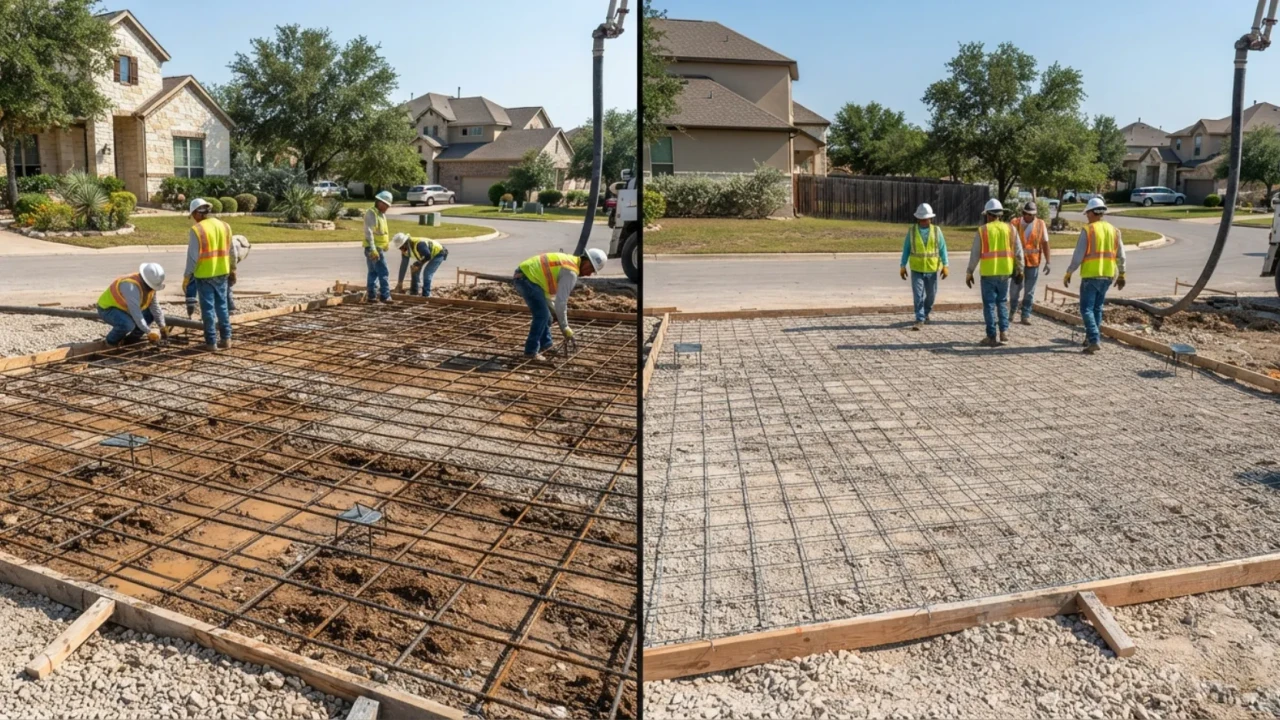
Wire mesh (welded wire fabric) is the standard residential reinforcement. It is faster to install and less expensive than rebar. For a standard 4-inch residential driveway on a well-prepared base, wire mesh is adequate. The limitation: wire mesh cannot be properly placed at mid-slab height the way rebar can, and it tends to end up at the bottom of the slab during the pour which is the worst position for tension resistance.
Rebar (#3 at 18-inch centers is what Affordable Concrete recommends for all residential driveways in San Antonio. The clay soil movement here is aggressive enough that the extra $1.00 to $1.50 per square foot for rebar over wire mesh pays for itself within the first few years by preventing the hairline cracks that become structural cracks in expansive clay conditions.
| Reinforcement type | Best application | Cost premium over plain concrete | San Antonio suitability |
|---|---|---|---|
| Wire mesh (6x6 W1.4) | Residential patios, light-duty flatwork | +$0.40 to $0.70/sqft | Acceptable for patios not recommended for driveways on clay soil |
| #3 Rebar at 18" centers | Residential driveways, standard load | +$1.00 to $1.50/sqft | Recommended standard for all residential driveways in Bexar County |
| #4 Rebar at 18" centers | Heavy residential, light commercial | +$1.50 to $2.25/sqft | Required where RVs, trucks, or delivery vehicles are regular users |
| #4 or #5 Rebar at 12" centers | Commercial driveways, truck aprons | +$2.50 to $4.00/sqft | Required for any commercial application handling vehicles over 10,000 lbs |
| Fiber reinforcement (polypropylene) | Added to mix for all commercial applications | +$0.30 to $0.60/sqft | Excellent add-on for commercial slabs reduces plastic shrinkage cracking in Texas heat |
The elevation rule that most installers skip: Reinforcement placed flat on the ground before a pour does nothing. It must be elevated to the center-third of the slab to do its job. On a 4-inch residential slab, that means the rebar or mesh should sit at 1.5 to 2 inches from the bottom. Ask your contractor how they plan to achieve this properly trained crews use plastic chairs or supports to hold reinforcement at the correct height. If the answer is "we kick it up during the pour," walk away. That method results in reinforcement that ends up at the bottom of the slab where it provides minimal benefit.
- Reinforcement type and bar size specified in writing in the contract not just "reinforced concrete"
- Spacing confirmed: 18-inch centers minimum for residential, 12-inch centers for commercial applications
- Elevation method confirmed: plastic chairs or supports must be included to hold rebar at mid-slab height
- Fiber additive discussed for commercial jobs worth the modest upcharge in San Antonio's summer pour conditions
- Post-pour inspection: ask to see reinforcement being placed before concrete arrives changes cannot be made after the truck leaves
Not all concrete is mixed the same way. The compressive strength of concrete measured in PSI (pounds per square inch) varies based on the water-to-cement ratio, aggregate size, and admixtures used. A residential driveway poured with a 3,000 PSI mix and a commercial truck apron poured with a 4,500 PSI mix use the same basic material, but perform very differently under load and over time.
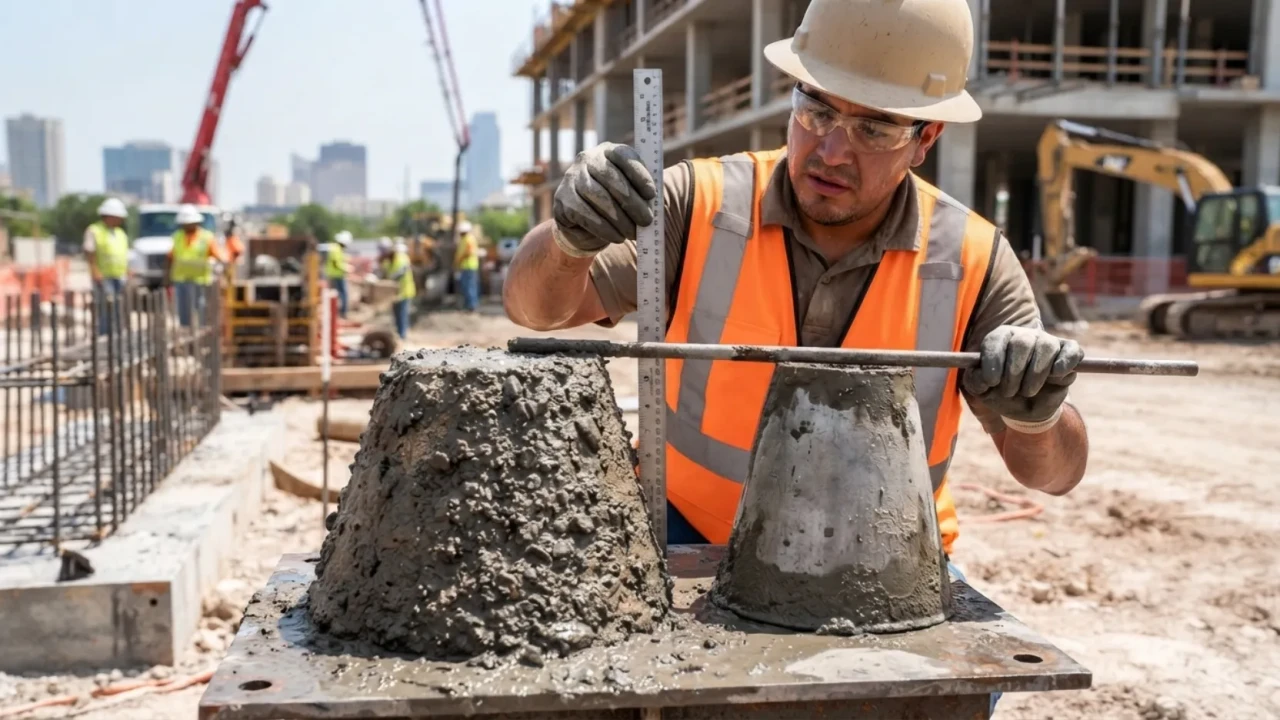
San Antonio's water supply from the Edwards Aquifer is notably hard high in calcium and magnesium carbonates. This mineral content can affect concrete mix behavior during the pour, particularly with admixtures and retarders. Local ready-mix suppliers in Bexar County account for this in their standard residential and commercial mixes, which is one reason sourcing concrete from local suppliers rather than out-of-area operations matters for San Antonio projects.
Texas UV intensity is also a durability factor. The San Antonio sun degrades unsealed concrete surfaces faster than in Northern states. A higher-PSI mix with a water-to-cement ratio below 0.45 produces a denser, less porous surface that resists UV degradation and penetration from the alkaline Edwards Aquifer groundwater that saturates clay soils during storm events.
- PSI requirement written into the contract with specific number "standard mix" is not acceptable language
- Residential minimum: 3,000 PSI for passenger vehicles, 3,500 PSI where trucks or trailers are parked
- Commercial minimum: 4,000 PSI for light commercial, 4,500 PSI for heavy truck access
- Summer pours: confirm contractor is using a set retarder or scheduling early morning start to prevent premature setting
- Local ready-mix supplier confirmed out-of-area suppliers may not account for Edwards Aquifer water chemistry in their mix design
A common source of confusion for property owners comparing residential and commercial concrete quotes is that commercial concrete sometimes carries a lower cost per square foot than residential. This seems backwards until you understand the economics. Commercial projects are larger a 10,000 square foot commercial parking apron produces volume efficiencies in ready-mix delivery, equipment mobilization, and crew time that simply do not exist on a 500 square foot residential driveway. The per-square-foot cost can drop. But the total project cost is dramatically higher.
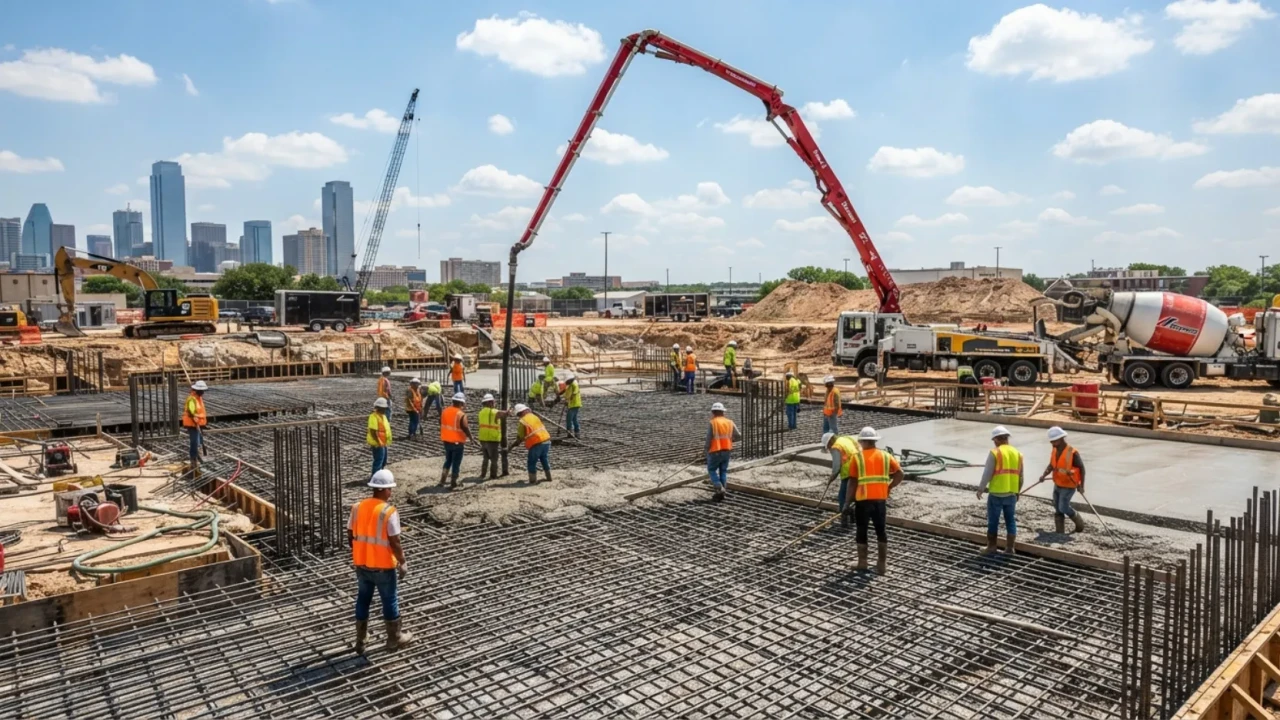
The other cost dynamic worth understanding: commercial concrete projects require licensed engineers on certain spec types, formal permitting through the City of San Antonio Development Services, and in some cases geotechnical soil reports before work begins. These soft costs do not appear on a residential quote but can add 10 to 20 percent to a commercial concrete project's total budget before the first yard is poured.
For residential homeowners, the 2026 price range for a standard two-car concrete driveway in San Antonio runs $7 to $12 per square foot installed, including base preparation, reinforcement, pour, finish, and control joints. A decorative or stamped residential driveway runs $14 to $22 per square foot.
| Project type | Typical size | Cost per sqft (2026) | Typical total cost |
|---|---|---|---|
| Standard residential driveway (2-car) | 400 to 600 sqft | $7 to $12 | $2,800 to $7,200 |
| Large residential driveway (3-car, circular) | 800 to 1,200 sqft | $7 to $11 | $5,600 to $13,200 |
| Stamped or decorative residential driveway | 400 to 800 sqft | $14 to $22 | $5,600 to $17,600 |
| Light commercial driveway or parking apron | 2,000 to 5,000 sqft | $6 to $9 | $12,000 to $45,000 |
| Commercial truck access road or loading apron | 5,000 to 20,000 sqft | $5 to $8 | $25,000 to $160,000 |
| Industrial slab (heavy equipment, semi-trucks) | 10,000+ sqft | $5 to $7 | $50,000+ |
Why the cheapest residential concrete quote in San Antonio is almost always the most expensive long-term decision: Budget contractors competing on price typically cut three corners on residential driveways they reduce base depth, use wire mesh instead of rebar, and order a lower PSI mix. On Bexar County clay soil, each of these shortcuts materially reduces driveway lifespan. A $5,500 driveway that cracks in 5 years and requires $3,000 in repairs costs more over 10 years than an $8,000 driveway built to spec that lasts 25 years without intervention. Ask every contractor bidding your residential driveway to specify base depth, reinforcement type, and concrete PSI in their written quote. The answers will tell you exactly what you are buying.
- All three quote line items confirmed: base preparation, reinforcement, and concrete mix not just a single "driveway" price
- Commercial projects: permitting and engineering fees budgeted separately from construction cost
- Residential: obtain a minimum of three written quotes; any quote more than 25% below the median deserves detailed explanation of what is excluded
- Payment terms confirmed: 30 to 50% deposit standard; full payment before work begins is a red flag
- Warranty terms in writing: reputable San Antonio concrete contractors stand behind their work for a minimum of one year on materials and labor
San Antonio is part of the Flash Flood Alley region of Central Texas. The City of San Antonio and Bexar County take drainage and impervious cover regulations seriously, particularly for commercial projects. A residential driveway and a commercial parking apron face very different regulatory requirements and the consequences of ignoring those differences can include stop-work orders, required demolition, and fines.
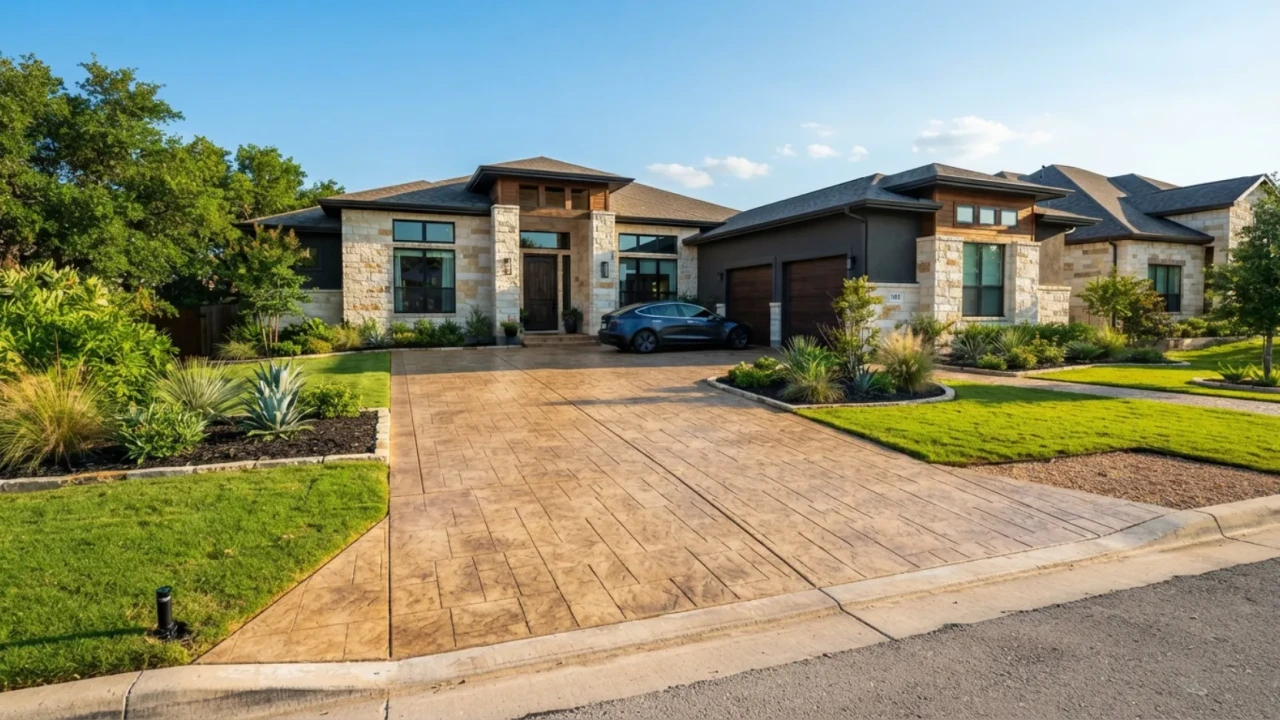
Residential permits: Most residential concrete driveways in San Antonio do not require a building permit if they are at grade, not attached to the structure, and within standard size limits. However, any driveway that connects to a City of San Antonio public street requires a Right-of-Way permit from the Transportation and Capital Improvements department. Homeowners associations in Bexar County communities often have their own approval requirements as well always check HOA covenants before scheduling a pour.
Commercial permits: Commercial concrete driveways and parking areas almost always require permits. Projects over certain impervious cover thresholds in San Antonio's watersheds trigger stormwater management requirements. The Edwards Aquifer Protection Zone adds another layer of restrictions for commercial construction in areas of the city that sit above the Recharge Zone.
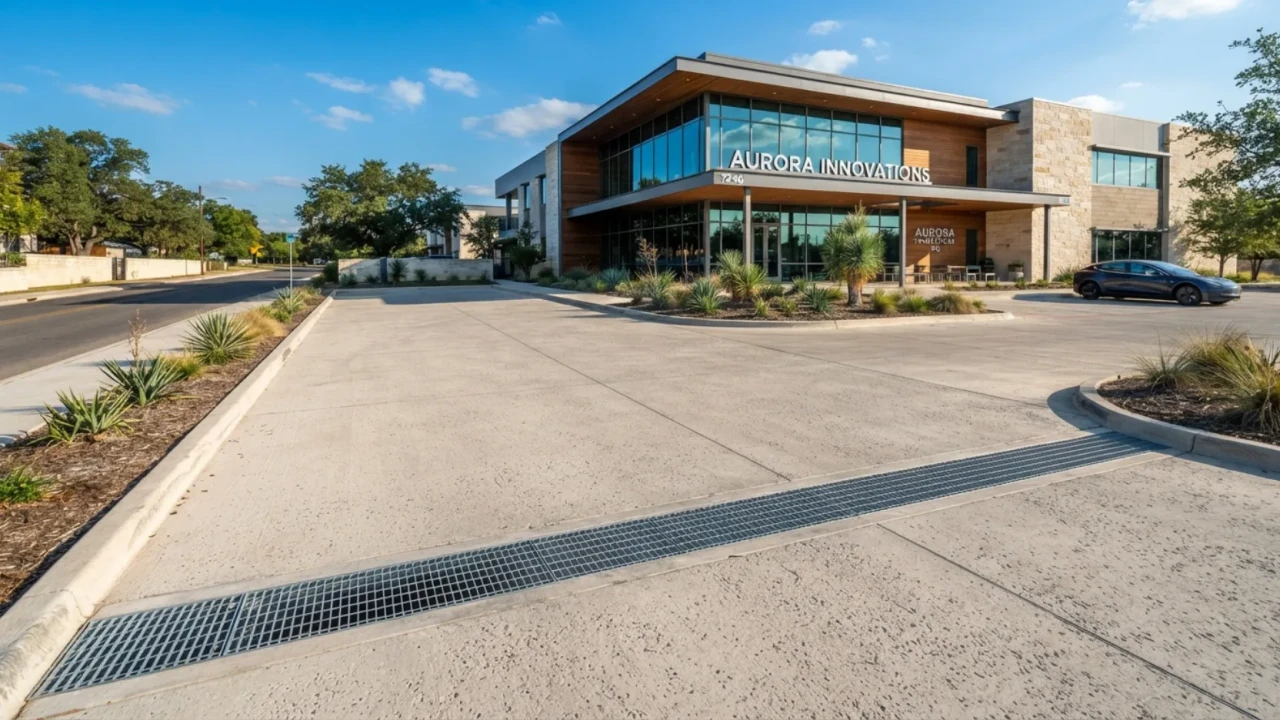
Drainage slope requirements differ significantly between residential and commercial applications. A residential driveway requires a minimum slope of 1 percent (about 1/8 inch per foot) away from the home to prevent water intrusion. Commercial driveways and parking areas must direct runoff to approved drainage structures sheet flow to the street is typically not acceptable for large commercial impervious surfaces in San Antonio.
For commercial projects near the Edwards Aquifer Recharge Zone, the Aquifer Protection Program may require detention or filtration of the first inch of stormwater runoff. This can add significant cost to a commercial driveway or parking area project in the western and northwest portions of the San Antonio metropolitan area.
| Regulatory item | Residential driveway | Commercial driveway |
|---|---|---|
| Building permit | Typically not required for at-grade residential driveway | Required submit to City of San Antonio Development Services |
| Right-of-Way permit | Required where driveway connects to public street | Required plus TCI department review for commercial access points |
| Drainage plan | Standard slope requirement only | Engineered drainage plan required for most commercial sites |
| Edwards Aquifer restrictions | Minimal for typical residential lot | Significant for commercial sites in Recharge Zone may require detention |
| HOA approval | Required in many Bexar County neighborhoods | Not applicable to most commercial properties |
| ADA compliance | Not required for private residential driveways | Required for commercial access routes and parking areas serving the public |
| Engineering stamp | Not required for standard residential | Required for commercial projects over certain size and load thresholds |
- City of San Antonio Development Services contacted for commercial permit requirements before any design work begins
- Right-of-Way permit obtained or confirmed not required for residential driveway connecting to public street
- HOA approval received in writing before scheduling residential driveway pour
- Edwards Aquifer Recharge Zone status verified for commercial sites in northwest San Antonio
- Drainage plan reviewed by engineer for commercial projects ensure runoff directed to approved structures, not sheet flow to street
- ADA accessibility compliance confirmed for commercial driveways and parking that serve the public
Use this table as your quick reference when evaluating quotes, talking to contractors, or determining which set of specifications your project requires. The key takeaway: commercial specs are not simply a scaled-up version of residential specs. They represent a fundamentally different engineering and regulatory environment.
| Specification | Residential driveway | Commercial driveway |
|---|---|---|
| Slab thickness | 4 to 5 inches (5" recommended on clay soil) | 6 to 8 inches depending on vehicle weight |
| Base depth | 4 to 6 inches compacted crushed limestone | 8 to 12 inches compacted base |
| Reinforcement | #3 rebar at 18" centers (recommended); wire mesh acceptable for light-duty | #4 or #5 rebar at 12" centers; fiber additive to mix |
| Concrete PSI | 3,000 to 3,500 PSI | 4,000 to 4,500 PSI minimum |
| Control joints | Every 8 to 10 feet | Engineer-specified spacing based on slab dimensions |
| Typical finish | Broom finish standard; stamped or stained for decorative | Heavy broom finish or exposed aggregate for traction; plain for service areas |
| Permits required | ROW permit for street connection; building permit rarely needed | Building permit, drainage plan, possibly engineered drawings |
| Cost per sqft (2026) | $7 to $12 standard; $14 to $22 decorative | $5 to $9 at volume (higher spec, lower unit cost) |
| Typical project total | $2,800 to $13,200 | $12,000 to $160,000 depending on size |
| Expected lifespan | 25 to 35 years with proper sealing and maintenance | 20 to 30 years under heavy commercial use; longer for light commercial |
- Heaviest vehicle that will regularly use the surface identified and communicated to contractor
- Project correctly classified: residential, heavy residential, light commercial, or heavy commercial
- Spec type confirmed matches vehicle load do not accept residential specs on a driveway that will see delivery trucks
- Slab thickness written into contract with specific inch measurement
- Base depth written into contract: 4 to 6 inches for residential, 8 to 12 inches for commercial
- Reinforcement type, bar size, and spacing specified: #3 or #4 rebar at 18" (residential), #4 or #5 at 12" (commercial)
- Concrete PSI confirmed: 3,000 PSI minimum residential, 4,000 PSI minimum commercial
- Control joint spacing specified: every 8 to 10 feet for residential
- Fiber reinforcement discussed for commercial pours in summer heat conditions
- City of San Antonio ROW permit status confirmed for driveways connecting to public streets
- Commercial projects: building permit application submitted and approved before work begins
- HOA approval obtained in writing for residential projects in governed communities
- Edwards Aquifer Recharge Zone status verified for northwest San Antonio commercial sites
- ADA compliance reviewed for any commercial application accessible to the public
- Certificate of insurance received and verified: $1M general liability minimum for residential, $2M+ for commercial
- Contractor has verifiable local San Antonio address and references from completed Bexar County projects
- Payment terms confirmed: 30 to 50% deposit, remainder on satisfactory completion
- Commercial projects: confirm contractor has experience with City of San Antonio permitting and commercial spec requirements
Get a free concrete driveway quote in San Antonio
Residential or commercial tell us about your project and we will visit your property, assess the site conditions, and give you a detailed written quote at no cost.