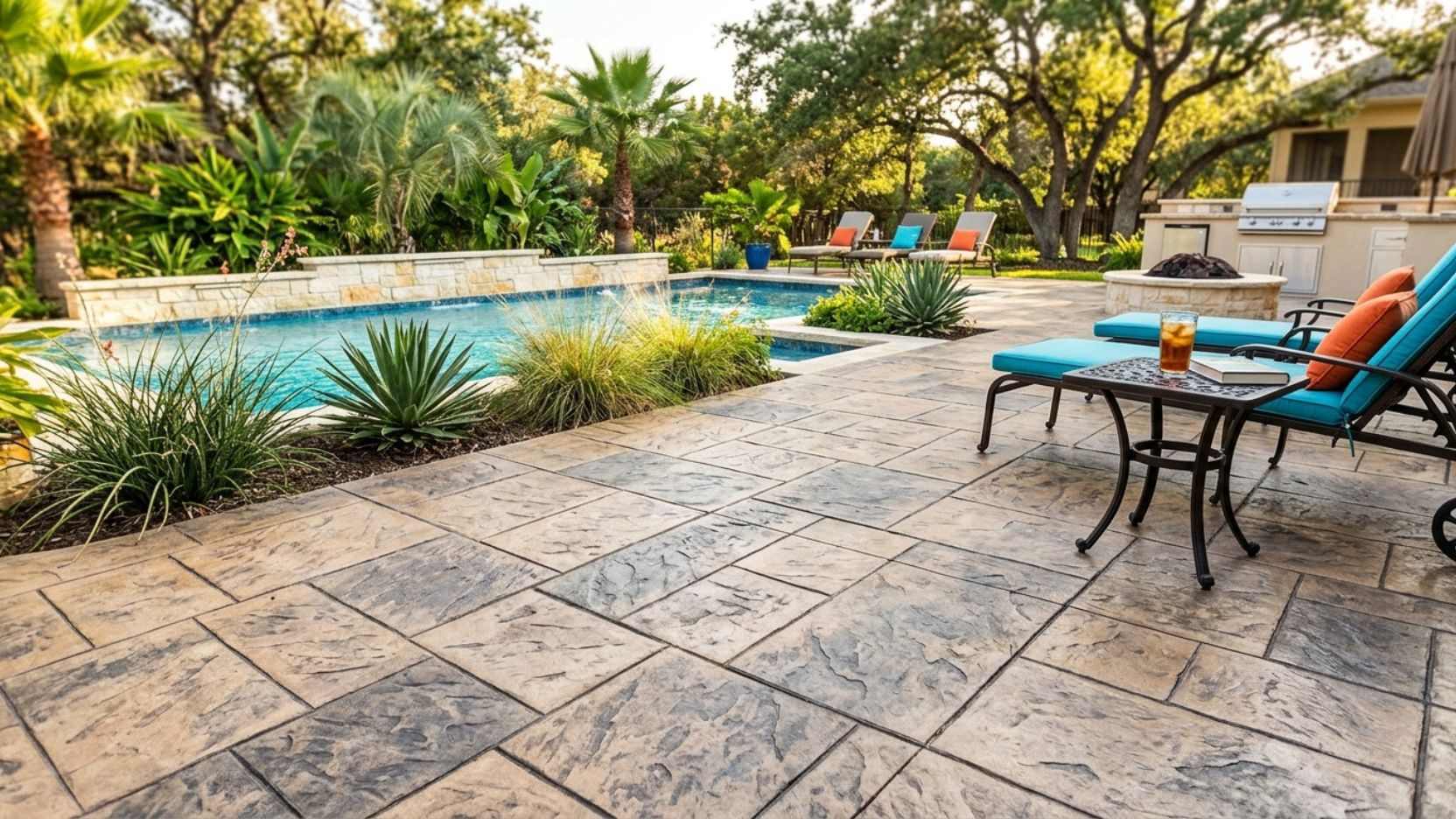
Stamped concrete transforms ordinary patios, driveways, and pool decks into stunning outdoor living areas that look like natural stone or brick at a fraction of the cost. This complete guide covers every decision patterns, colors, costs, installation, and maintenance for San Antonio homeowners.
If you have been looking at natural flagstone, slate, or brick for your backyard patio and wincing at the price, stamped concrete delivers the same look at 30 to 50 percent of the cost. In San Antonio, where outdoor living spaces are used year-round, choosing the right decorative concrete approach makes a real difference in how much you enjoy your property and what it is worth when you sell.
This guide covers everything you need to know before calling a contractor: the best stamped concrete patterns for San Antonio homes, realistic cost breakdowns, what the installation process actually involves, how to maintain a stamped surface in Texas heat, and the questions that separate a quality contractor from one who will leave you with a faded, cracked slab in three years.
Stamped concrete is only as good as what is underneath it. The stamp pattern and color are the last step they go on top of a structural slab that must be properly thick, reinforced, and base-prepped for San Antonio's expansive clay soils. Homeowners who focus only on the pattern and then hire whoever quotes lowest often end up with a beautiful surface sitting on an inadequate foundation. Get the structural spec confirmed in writing first, then choose your pattern and color.
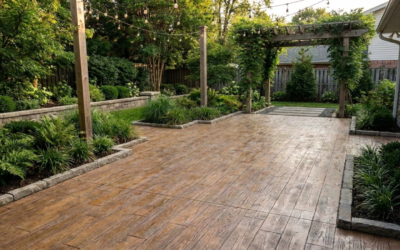
Stamped concrete is standard concrete that has color added and textured molds pressed into its surface while it is still in a workable state, typically 30 to 60 minutes after the pour. The result is a surface that closely mimics the look of natural stone, brick, slate, wood planks, or tile at a cost that is far more accessible for most homeowners.
.webp)
The process starts with a poured concrete slab that is built to the correct structural specifications for the application. Before the concrete fully sets, a color hardener is broadcast across the surface and worked in. A release agent is then applied this serves both as a color accent that gives stamped concrete its dimensional, realistic appearance, and as a non-stick agent that prevents the rubber stamp mats from bonding to the surface. The mats are then pressed firmly and systematically across the entire area, leaving a consistent pattern behind.
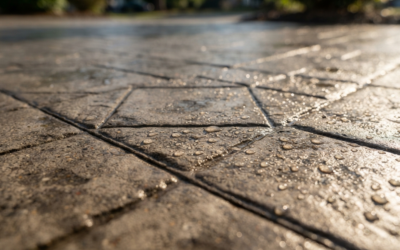
After the concrete cures, a penetrating or film-forming sealer is applied. This sealer locks in the color, protects the surface from water infiltration, and gives stamped concrete its characteristic sheen. In San Antonio's climate with intense UV exposure, heat extremes, and occasional heavy rainfall the quality of the sealer and how often it is reapplied is one of the biggest factors in long-term appearance.
Pattern choice comes down to three factors: your home's architectural style, the application (patio vs. driveway vs. pool deck), and your budget. More complex patterns with multiple colors and tight detail work cost more in labor and take longer to install.
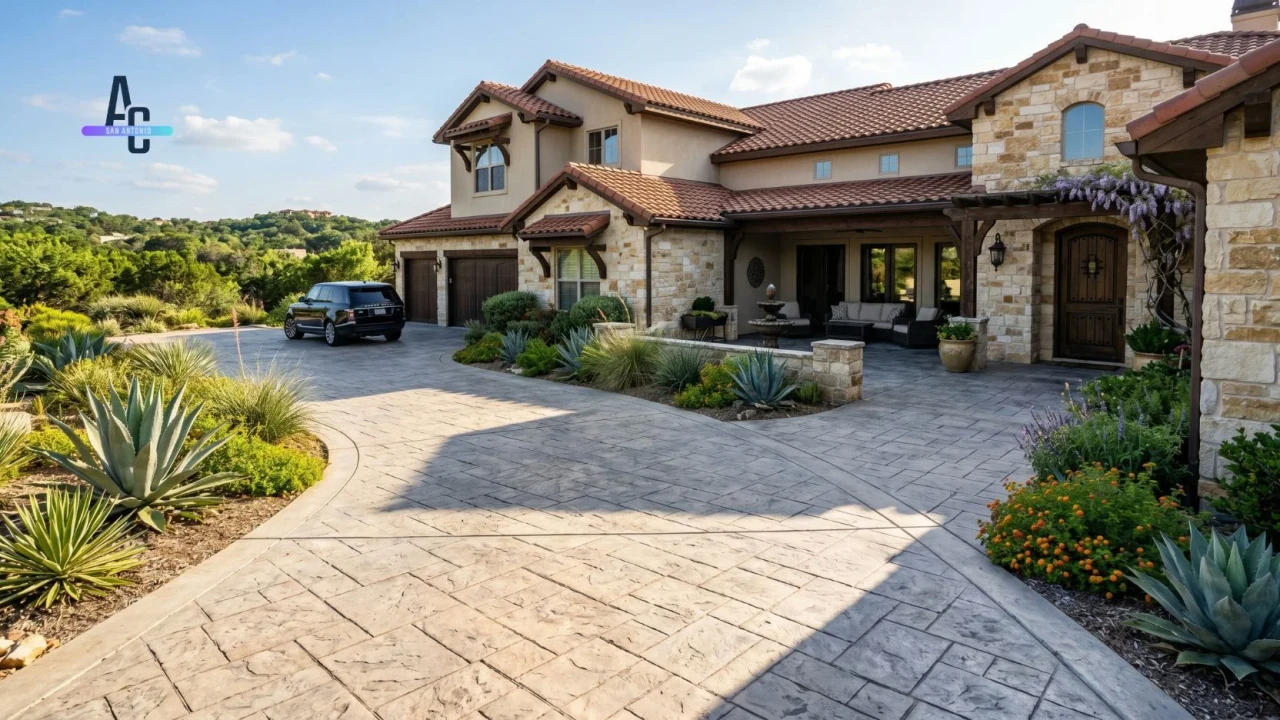
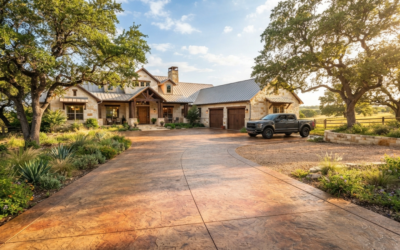
Ashlar Slate is the most popular pattern in San Antonio for a reason: it pairs naturally with limestone and stucco home exteriors that are common throughout Bexar County. The large, irregular stone look with subtle grout lines reads as upscale without being fussy. It works well for both patios and driveways.
Random Flagstone gives a more organic, naturalistic look each "stone" section is slightly different in shape and size, which mimics real dry-laid flagstone very convincingly. This pattern is particularly effective for pool decks and garden pathways where a natural, relaxed feel is the goal.
| Pattern | Best Application | Cost Adder | Notes |
|---|---|---|---|
| Ashlar Slate | Patios, driveways, walkways | Base price | Most versatile; works with most SA home styles |
| Random Flagstone | Pool decks, garden paths | +$0.50–1/sqft | Organic look; hides minor color variation well |
| Cobblestone / Fan | Driveways, courtyard entries | +$1–2/sqft | High visual impact; labor-intensive alignment |
| Running Bond Brick | Walkways, borders, driveways | Base price | Clean, classic look; pairs well with traditional homes |
| Wood Plank | Covered patios, interior applications | +$1–2/sqft | Realistic wood grain; impressive but requires skilled installer |
| Seamless Texture | Pool decks, large patios | Base price | Subtle texture; most economical decorative option |
For large patios over 500 square feet, consider combining two patterns: a field pattern in the main area with a border pattern in a contrasting color around the perimeter. This technique adds visual depth and costs less than doing an elaborate field pattern across the entire surface.
- Request a physical sample or reference photos from completed local projects not just manufacturer brochures
- See the pattern in full sun, not just in a shaded showroom colors read very differently in San Antonio light
- Confirm the pattern scale is appropriate for your space large-format patterns can look overwhelming in small areas
- Ask how the pattern handles expansion joints good contractors integrate joints into the design rather than cutting through the middle of "stones"
Stamped concrete costs more than plain broom-finish concrete because it requires additional materials (color hardener, release agent, stamp mats, sealer) and significantly more skilled labor. Prices in San Antonio vary based on pattern complexity, number of colors, site conditions, and the size of the project.
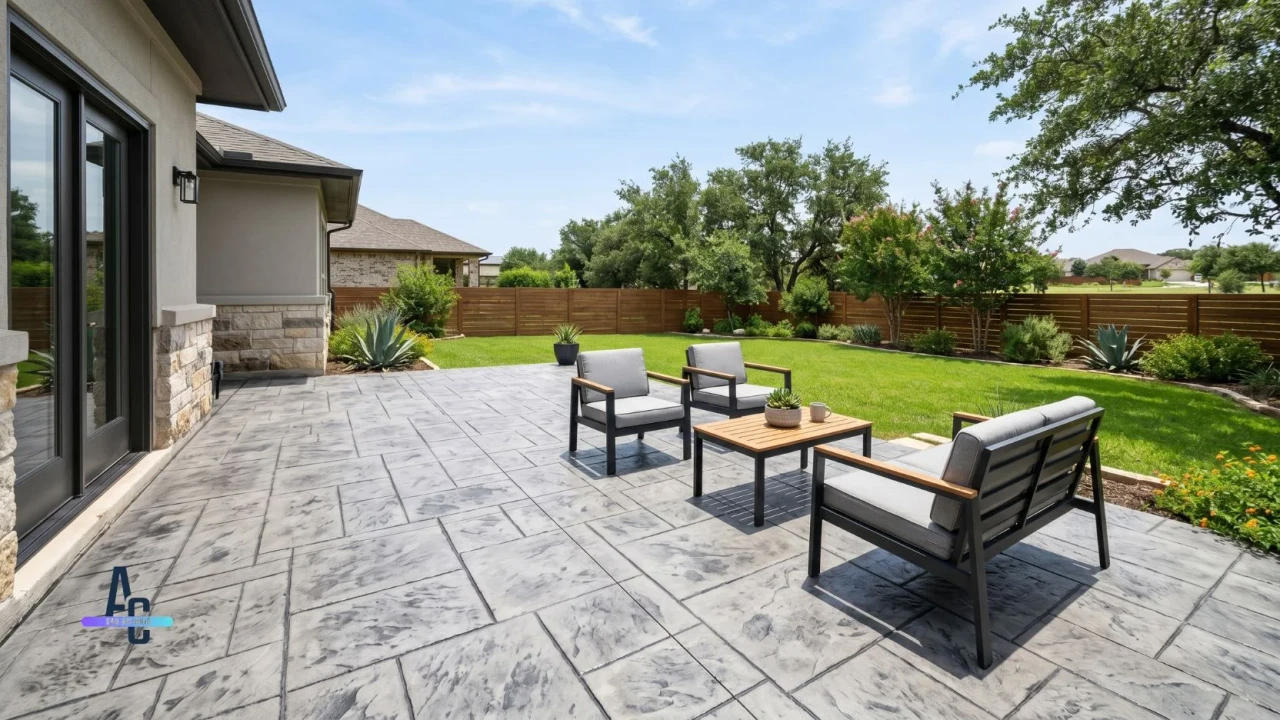
The installed cost of stamped concrete in San Antonio typically ranges from $12 to $20 per square foot for a standard single-color pattern on a straightforward site. Complex multi-color work with custom borders or intricate patterns can push costs to $22 to $28 per square foot for demanding projects.
For comparison, a plain broom-finish concrete patio runs $6 to $10 per square foot in San Antonio. The stamped premium is real, but so is the visual and property value difference. Most homeowners who go with broom finish to save money on a backyard patio end up wishing they had spent the extra $4,000 to $6,000 for a 400-square-foot space.
- Confirm the quote includes base preparation not just the pour and stamp
- Ask whether sealer is included or quoted separately; some contractors leave it out of the base number
- Check that the quote specifies the concrete mix (3,000 PSI minimum, 4,000 PSI preferred for driveways)
- Get the slab thickness confirmed in writing: 4" minimum for patios, 5" for driveways
- Confirm reinforcement type: wire mesh for patios, rebar grid for driveways and heavy-use areas
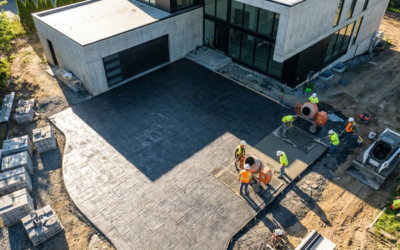
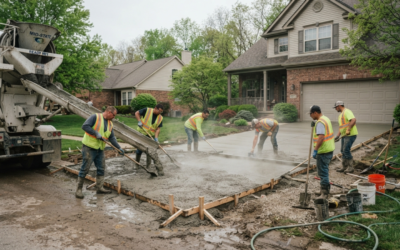
Understanding the installation process helps you evaluate a contractor's professionalism and catch shortcuts before they become permanent problems. A proper stamped concrete project in San Antonio typically takes two to three days from site prep to sealing, not counting cure time.
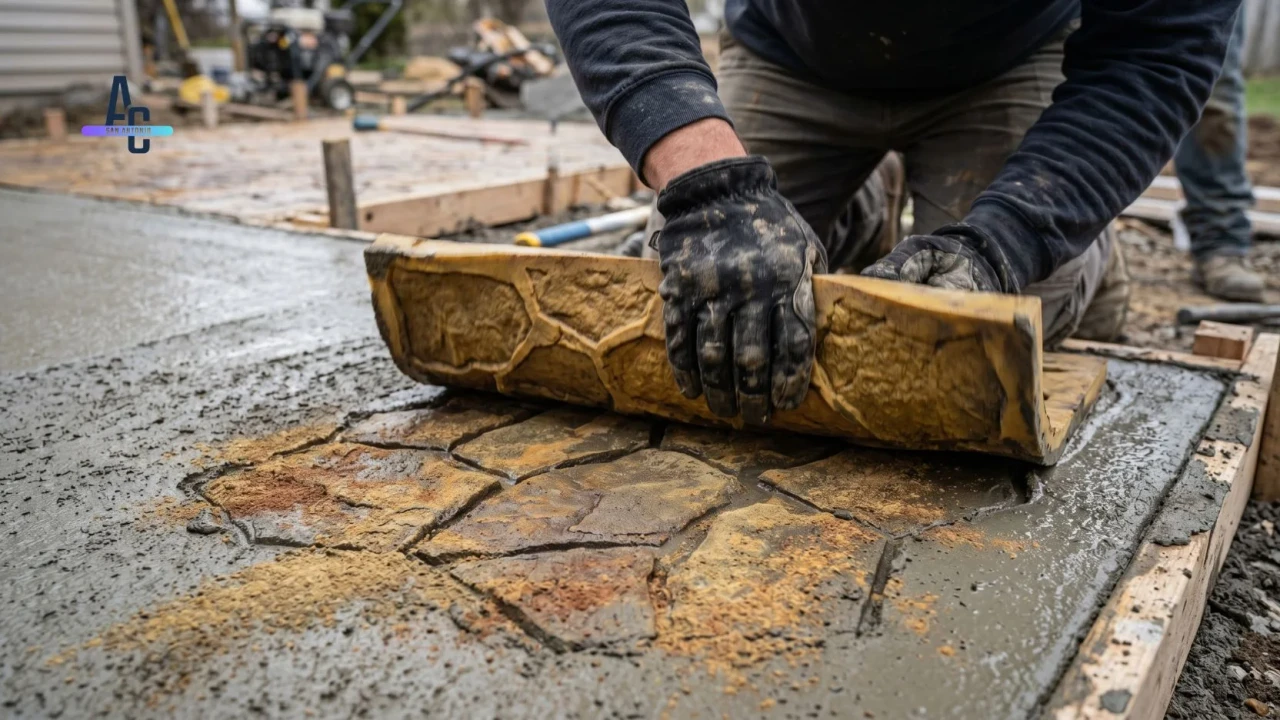
Day 1 Site Preparation: The crew excavates the area to the required depth, removes existing material, grades the sub-base for drainage, and compacts a crushed limestone base layer (4 inches minimum in San Antonio). Forms are set at the correct height and slope. Reinforcement wire mesh or rebar depending on application is installed and elevated off the base with chairs so it ends up in the middle of the slab, not sitting on the ground.
Day 1 (continued) Pour and Stamp: The concrete truck arrives, typically in the early morning to avoid afternoon heat peaks. Concrete is poured, screeded level, and finished to a smooth state. At the right workability window, color hardener is broadcast and floated in. Release agent is applied, then the stamp mats are pressed systematically across the entire surface. Timing is critical too early and impressions are too deep; too late and the surface cannot be stamped at all.
Day 2 and 3 Cure and Clean: The concrete is left to cure undisturbed. After initial hardening (typically 24 hours), the release agent residue is washed off with a light pressure wash, revealing the two-tone color contrast that gives stamped concrete its depth. The crew may do additional color work or hand-detailing at this stage.
Day 3 to 7 Sealing: Once the surface is clean and fully dry, the sealer is applied, typically in two coats. Most contractors in San Antonio use a solvent-based acrylic sealer that provides a wet-look sheen and good UV protection. Water-based sealers are also available for lower sheen or VOC-sensitive applications. No foot traffic for 24 hours after sealing; no vehicle traffic for 7 days after the pour.
Schedule your stamped concrete project for early morning starts between March and November to avoid the window where concrete is setting during peak afternoon heat. Contractors experienced in the San Antonio market know to plan pours for 6 to 8 AM. If a contractor schedules a mid-day pour in July with no heat mitigation plan, that is a warning sign.
Stamped concrete requires more maintenance than plain concrete, but less than natural stone or pavers. The main commitments are periodic resealing, prompt crack repair if needed, and avoiding deicers (rarely needed in San Antonio, but worth knowing). Done right, a stamped surface looks excellent for 25 years or more.
.webp)
The sealer is the only thing standing between your stamped concrete's color and San Antonio's UV radiation, which is intense year-round. A quality acrylic sealer lasts two to three years under typical outdoor conditions before it needs to be reapplied. You can tell the sealer is failing when the surface loses its sheen and begins to look dull or chalky rather than rich and wet-look.
Resealing is a DIY-friendly project if you are comfortable with a paint roller or airless sprayer. Clean the surface with a concrete degreaser and light pressure wash, let it dry completely (a full 24 hours in San Antonio humidity), and apply one or two thin coats. Professional resealing runs $200 to $400 for a typical 400-square-foot patio.
| Maintenance Task | Frequency | DIY or Pro | Approximate Cost |
|---|---|---|---|
| Resealing | Every 2 to 3 years | Both | $50–120 DIY / $200–400 pro (400 sqft) |
| Routine cleaning | As needed / seasonally | DIY | Mild detergent and garden hose |
| Pressure washing | Annually before resealing | Both | $75–150 professional / DIY rental $40 |
| Hairline crack filling | As needed | DIY | $15–30 for crack filler product |
| Structural crack assessment | If cracks widen or displace | Pro | Free estimate from contractor |
- Inspect surface for sealer wear in high-traffic areas; dull or chalky sections need resealing
- Check expansion joints for debris accumulation and clean out if needed
- Look for hairline cracks and address them with color-matched crack filler before they widen
- Clear any standing water areas consistent pooling indicates a drainage or grading issue that needs correction
- Check around tree roots if any trees are within 15 feet of the slab; roots can heave concrete over time
Stamped concrete is versatile enough to work across almost every outdoor horizontal surface. Each application has specific considerations that affect which pattern, finish, and sealer type make the most sense.
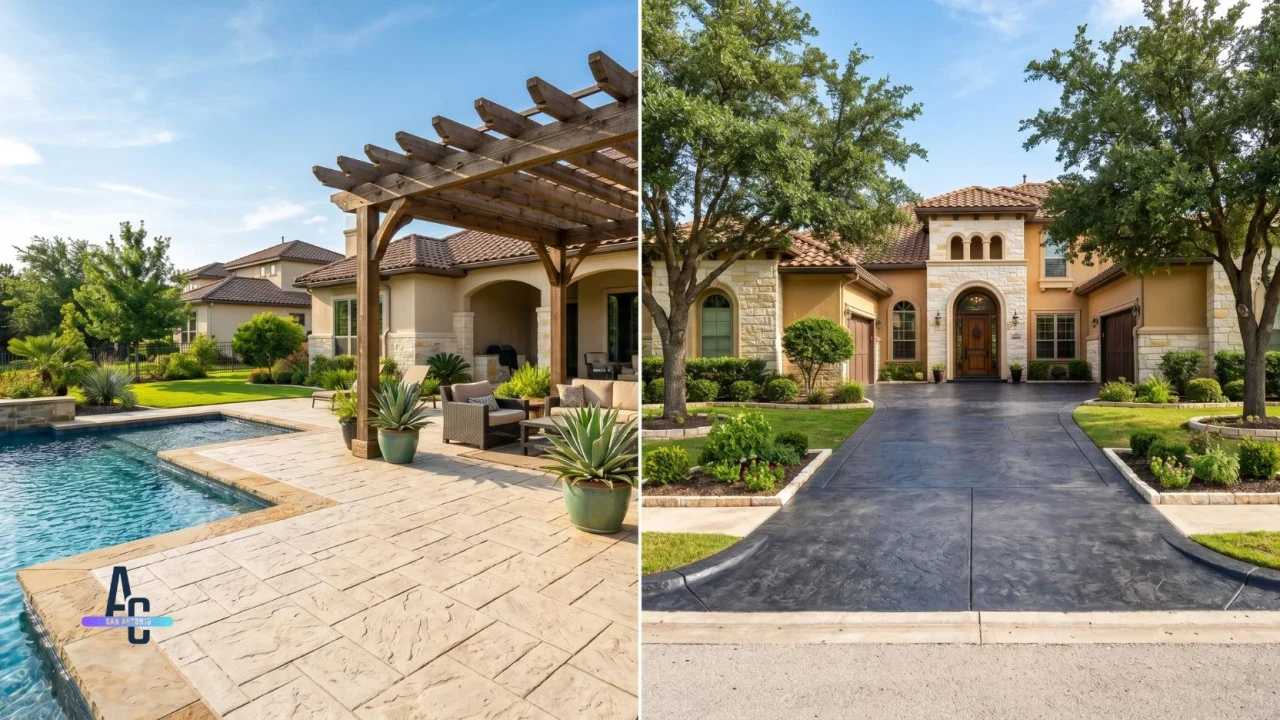
Backyard Patios: The number-one application for stamped concrete in San Antonio. Ashlar slate and random flagstone patterns are the most popular. For covered patios under a pergola or roof, the surface stays cooler and sealer lasts longer. For open patios with full sun exposure, consider a lighter base color to reflect heat and a higher-solids sealer with UV inhibitors.
Pool Decks: Stamped concrete works exceptionally well for pool decks, but the sealer and finish texture must be specified for the application. A high-gloss sealer on a pool deck is a safety hazard when wet. The correct finish is a matte or satin sealer with an anti-slip additive broadcast into the top coat. The concrete mix should also include a water-to-cement ratio adjustment for durability around pool chemicals.
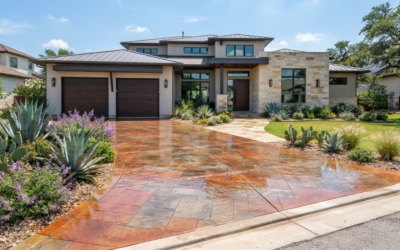
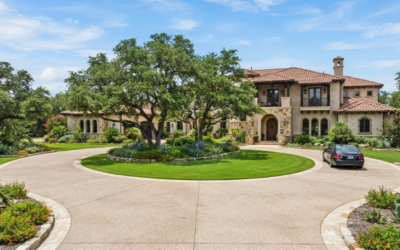
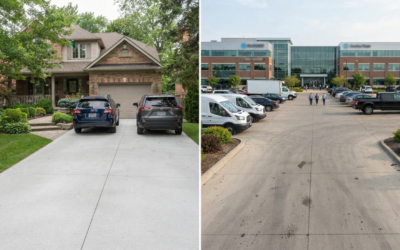
Driveways: Stamped driveways add dramatic curb appeal. The structural requirements are higher here: 5-inch slab minimum, rebar grid reinforcement, and 4,000 PSI concrete. A running bond brick or cobblestone fan pattern is popular for driveways. Avoid very light colors that will show tire marks; medium earth tones and grays hold up best visually on driveways.
Walkways and Paths: Stamped concrete walkways connecting a driveway to a front door or wrapping around a backyard are an affordable way to add substantial curb appeal. Narrower paths (3 to 4 feet wide) often look best with a border-only treatment or a simple seamless texture rather than a complex field pattern.
Outdoor Kitchen Surrounds: Stamped concrete is an excellent choice around outdoor kitchens and fire pit areas. It is heat-resistant, easy to clean, and can be designed to match the larger patio pattern or serve as a defined zone within the outdoor living space.
- Pattern and color selected and confirmed in writing with reference photos from completed projects
- Slab thickness specified: 4" minimum for patios and pool decks, 5" for driveways
- Concrete mix strength confirmed: 3,000 PSI minimum, 4,000 PSI for driveways
- Reinforcement type specified: wire mesh acceptable for patios, rebar grid required for driveways
- Drainage slope confirmed: 1/8" per foot minimum away from structures
- Color hardener brand and color name specified in writing not just described verbally
- Release agent color confirmed and shown in sample or reference photo
- Sealer type specified: solvent-based acrylic vs. water-based, gloss vs. satin
- Anti-slip additive confirmed if surface is a pool deck, step, or wet-exposure area
- Number of sealer coats specified: two coats standard for exterior applications
- Portfolio of completed stamped concrete projects in San Antonio reviewed not just stock photos
- Certificate of insurance received and verified with $1M+ general liability
- Three written itemized quotes obtained and compared line by line
- Payment terms confirmed: deposit plus milestone payments, balance on completion
- Local references contacted and asked specifically about color accuracy and longevity
- Curing process agreed: no foot traffic for 24 to 48 hours, no vehicle traffic for 7 days
- First resealing timeline confirmed: reseal when surface begins to dull, typically 2 to 3 years
- Warranty terms confirmed in writing: what is covered and for how long
- Contractor cleanup obligations confirmed: forms, waste concrete, and debris removed on completion day
Get a free stamped concrete quote in San Antonio
Tell us about your project patio, driveway, pool deck, or walkway. We will visit your property, assess the site, and give you a detailed written quote with pattern and color options at no cost.