
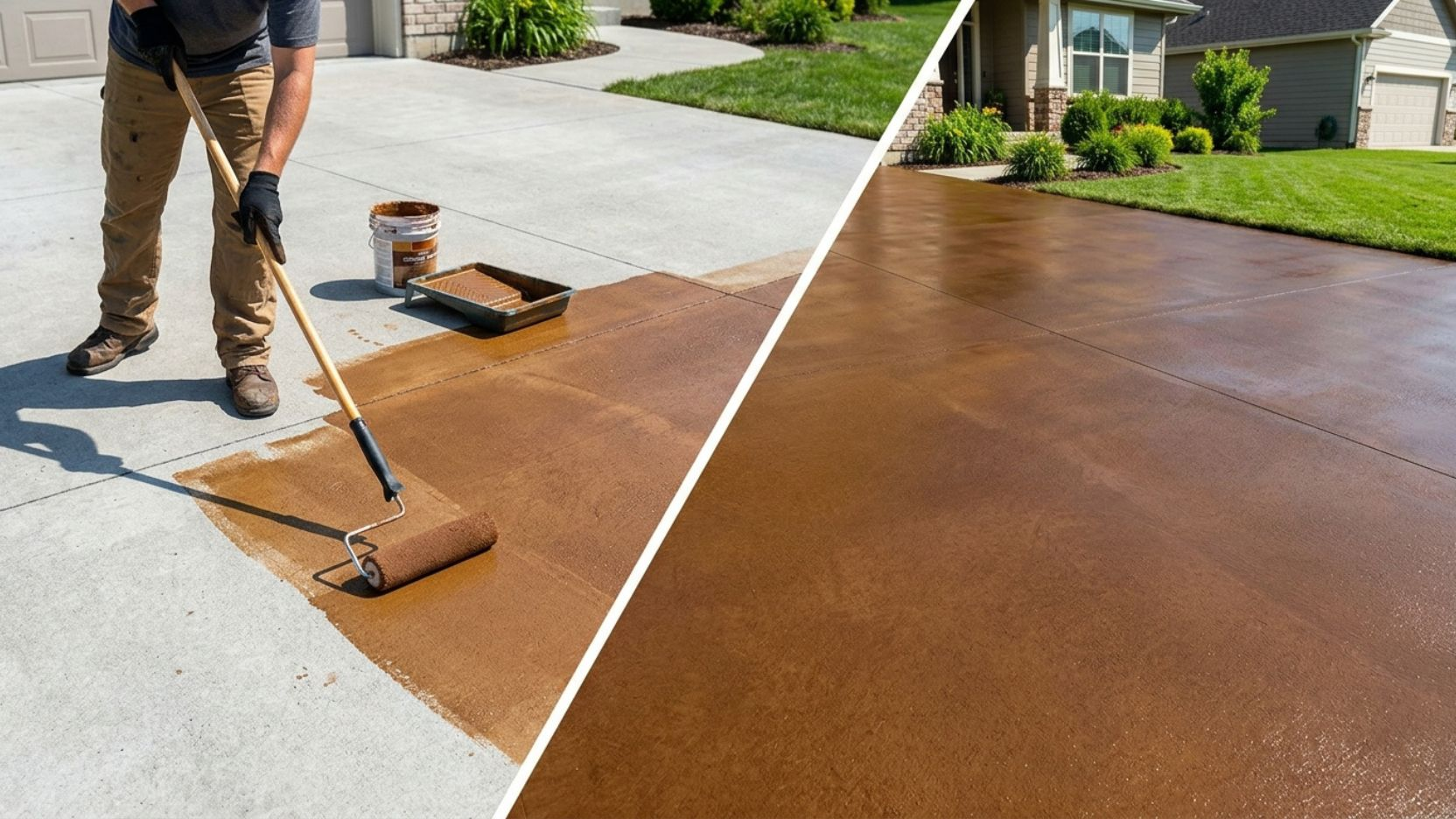
Yes, you can stain a concrete driveway but the results depend entirely on the condition of your slab, the stain type you choose, and whether your surface has been properly prepped. This guide covers everything San Antonio homeowners need to know before starting a driveway staining project in 2026.
A concrete driveway is one of the most stainable surfaces on your property. The slab is large, flat, fully exposed to view from the street, and almost always in need of a visual upgrade after years of oil drips, tire marks, and sun exposure. Staining it correctly can transform it from a dull gray slab into a rich, warm surface that looks custom-designed.
That said, driveways present staining challenges that patios or garage floors do not. They take direct vehicle weight, UV punishment from a full day of Texas sun, and years of grease and oil contamination that must be completely removed before any stain will bond. Get the prep right and driveway staining delivers outstanding results. Skip the prep and the stain will peel, blotch, or fail to penetrate within the first season.
Professional concrete stainers consistently report that over 85 percent of staining failures on driveways come down to one cause: contaminated or improperly prepared concrete. Oil, grease, tire rubber, curing compounds, and old sealers all prevent stain penetration. In San Antonio’s heat, contamination also bakes deeper into the slab over time, making older driveways harder to prep than newer ones. Before you invest in any stain product, invest in the prep. A day of degreasing, acid etching, and rinsing is what determines whether your results look professional or patchy.
Slab Assessment
Not every concrete driveway is an equal candidate for staining. Before purchasing any product, you need an honest assessment of your slab. Concrete that is sealed, heavily contaminated with oil, or structurally compromised will require additional steps or may not be a good staining candidate at all.
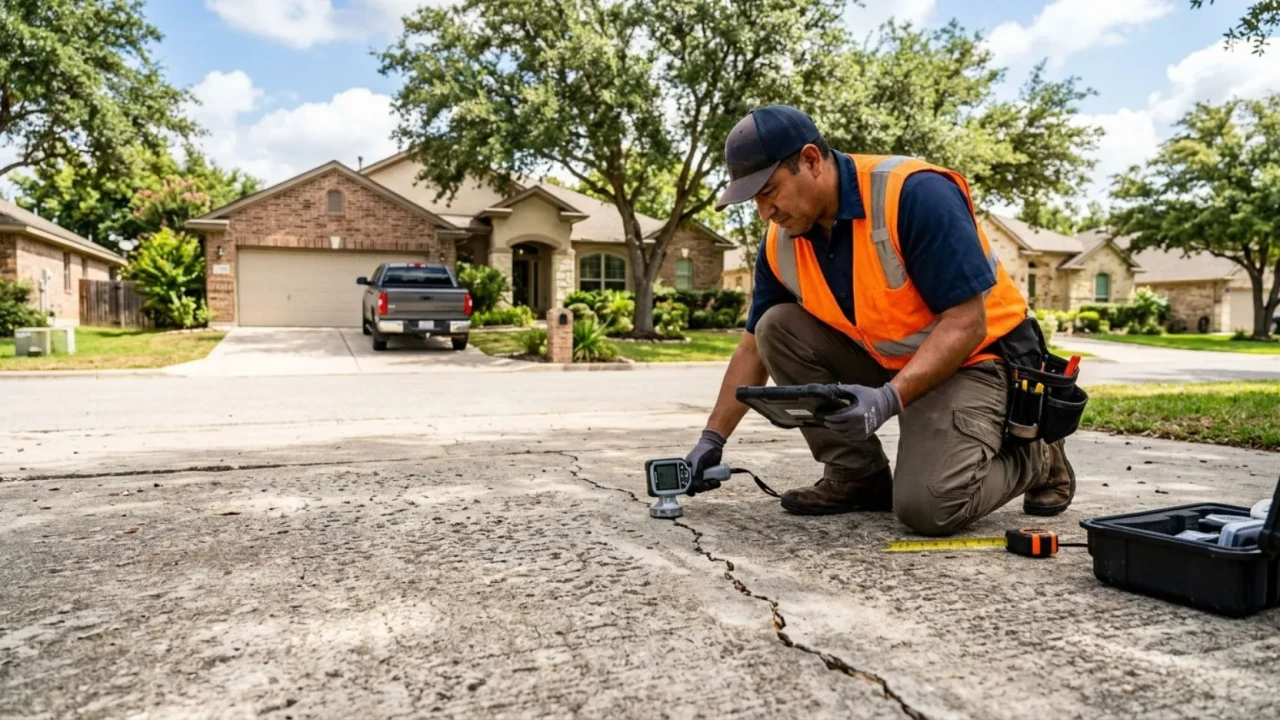
The water test: Sprinkle a small amount of water on your driveway in several spots. If the water beads up, your slab is sealed and the sealer must be completely stripped before any stain will penetrate. If the water absorbs into the concrete within a few seconds, the surface is open and ready for the prep process.
Oil stain assessment: Look at the area under where vehicles typically park. Older driveways in San Antonio almost always have oil and grease absorption in those zones. Light surface staining can be degreased out. Deep, old oil saturation that has penetrated multiple inches may resist even aggressive degreasing and will show up as blotchy, light areas in the finished stain.
- Water bead test performed in multiple locations across the driveway surface
- Oil and grease stain locations mapped before choosing stain type and color
- Existing cracks assessed: hairline cracks acceptable; structural cracks addressed before staining
- Previous sealer or coating confirmed absent, or removal plan established
- Slab age confirmed: new pours must reach full 28-day cure before staining begins
Stain Type
The choice between acid stain and water-based stain is the most important product decision in a driveway staining project. They work differently, look different, and perform differently under San Antonio’s climate conditions. Understanding the distinction before buying anything saves time, money, and frustration.
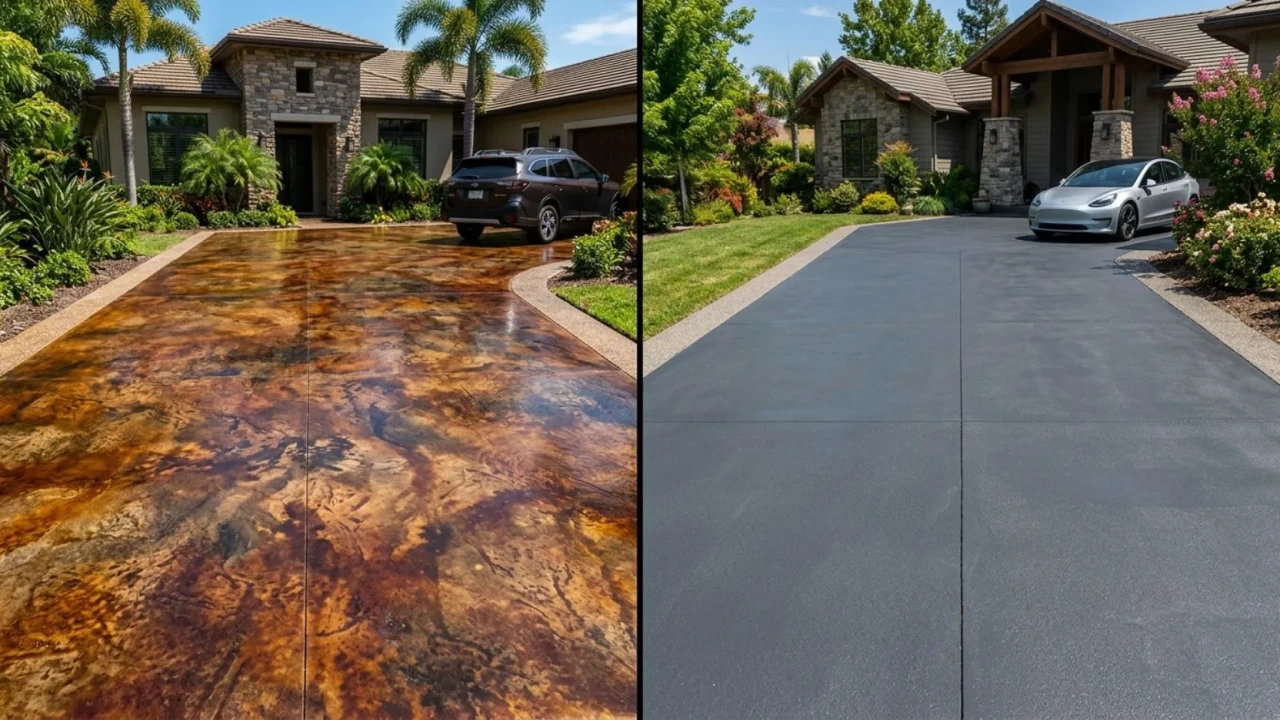
Acid stain works through a chemical reaction between the stain’s metallic salts and the calcium hydroxide in the concrete. The result is a permanent, translucent color that is literally part of the slab. No two acid-stained surfaces look identical, which creates the rich, variegated, marble-like appearance acid stain is known for. On a driveway, acid stain produces earth tones: amber, terracotta, brown, and warm bronze. It cannot be used to create blues, greens, or bright colors.
Water-based stain penetrates the concrete surface but works through pigment absorption rather than chemical reaction. The result is more uniform, more predictable, and available in a much wider color range. Water-based stains are also less sensitive to contamination and slightly more forgiving of imperfect prep, though thorough prep is still required.
| Factor | Acid Stain | Water-Based Stain |
|---|---|---|
| How it works | Chemical reaction with concrete minerals permanent | Pigment penetration and absorption semi-permanent |
| Color options | Earth tones only: amber, brown, terracotta, bronze | Full color range including grays, blues, greens, reds |
| Appearance | Mottled, variegated, unique no two slabs match | More uniform and consistent across the surface |
| Prep sensitivity | Very high oil or sealer causes permanent blotching | High but slightly more forgiving of minor imperfections |
| UV durability (San Antonio) | Excellent color is chemically bonded to slab | Good may fade faster on south-facing driveways without UV sealer |
| Typical cost | $4–7/sqft installed in San Antonio | $3–5/sqft installed in San Antonio |
| Best for driveways | Homeowners who want a high-end, natural stone appearance | Homeowners who want a specific color or more uniform result |
For San Antonio driveways specifically, acid stain tends to outperform water-based over the long term. Because the color is a chemical reaction rather than a coating, it does not fade or peel under intense Texas UV exposure the way surface-applied pigments can. However, acid stain on a driveway with any unresolved oil contamination will produce permanent light spots exactly where the oil blocked the reaction. If your driveway has significant oil history, either invest in very aggressive degreasing before acid staining, or switch to a water-based product and accept that resealing will be needed every 2 years rather than every 3.
- Stain type selected based on desired color range: acid stain for earth tones, water-based for full palette
- Prep level matched to stain type: acid stain requires zero contamination tolerance
- UV sealer confirmed as part of the plan for water-based stains on south- or west-facing driveways
- Color sample or test patch applied to a small section before committing to the full driveway
- Application method confirmed: sprayer for acid stain, roller or sprayer for water-based
Surface Prep
Surface preparation is where driveway staining projects succeed or fail. A contractor who spends more time on prep than on the actual stain application is doing the job correctly. A contractor who arrives, applies stain, and leaves in a single afternoon almost certainly skipped essential steps.

The correct prep sequence for a concrete driveway in San Antonio is a four-stage process. Each stage must be fully complete before the next begins. Skipping or shortcutting any stage compromises the final result in ways that cannot be corrected after the stain is applied.
Degreasing in detail: Use a commercial-grade concrete degreaser, not a household cleaner. Apply, scrub with a stiff-bristle brush, let dwell for the manufacturer’s specified time, and rinse thoroughly. Oil stains may require two to three applications before the concrete stops absorbing the degreaser. Test each treated area with the water bead test: the water should absorb immediately in the treated zone before moving to the next stage.
Acid etching vs. mechanical grinding: For most residential driveways, a muriatic acid etch (diluted to 10 percent) opens the surface pores adequately for stain penetration. For driveways with heavy contamination history, old sealers, or a very hard troweled surface, mechanical grinding or shot blasting achieves a more consistent result. Grinding is more expensive but gives the contractor full control over the surface profile.
Prepping a driveway for staining is achievable as a DIY project if the slab is in good condition with minimal contamination. You will need a pressure washer (minimum 3,000 PSI), commercial degreaser, muriatic acid for etching, acid-resistant gloves and eyewear, and a neutralizing solution (baking soda in water) for the acid rinse. Budget a full day for prep alone before any stain touches the slab. If your driveway has substantial oil staining or an existing sealer, the prep complexity increases significantly and professional help is worth considering.
- Degreaser applied and scrubbed; water bead test confirms absorption in all treated zones
- Existing sealer fully stripped if present: chemical stripper or mechanical grinding
- Acid etch or mechanical grind completed for full surface opening
- Acid neutralized with baking soda solution and rinsed thoroughly
- Slab fully dry before stain application: minimum 24 hours after final rinse in San Antonio heat
- Surrounding areas (landscaping, garage floor, sidewalk) masked or protected from stain and acid
Cost Guide
Once prep is complete and the slab is dry, the staining process itself is relatively fast compared to the prep work. For acid stain, the chemical reaction continues for several hours after application and must be neutralized before the surface can be sealed. For water-based stain, the process is simpler and the product can be applied in multiple coats for deeper color saturation.
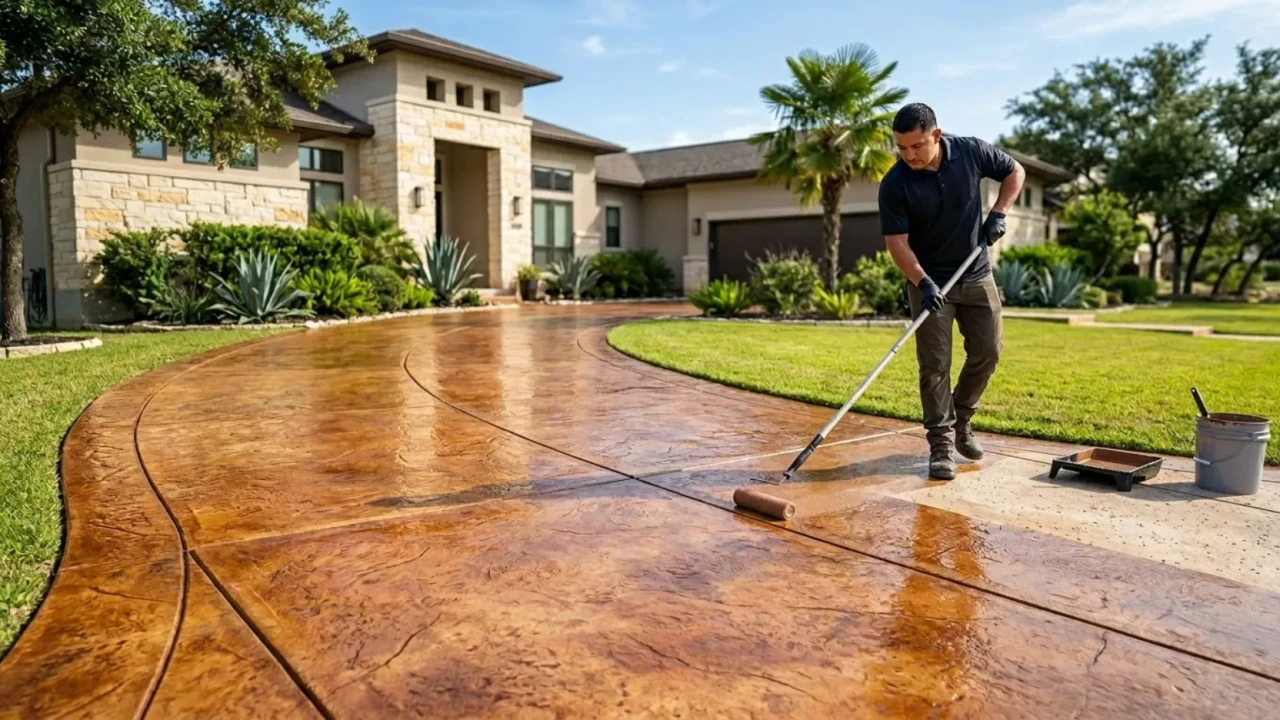
Acid stain application: Applied with a plastic garden sprayer in overlapping passes. The stain reacts with the concrete and changes color as the reaction occurs. After the reaction completes (typically 3 to 8 hours depending on temperature), residue is neutralized with a baking soda and water solution and scrubbed off. The slab is rinsed and dried before sealer is applied the following day.
Water-based stain application: Applied by sprayer or roller in thin, even coats. Multiple coats build color saturation. Each coat must dry fully before the next is applied. Total application time for two to three coats is typically four to six hours, with overnight drying before sealer application.
- Quote received breaks out prep, stain application, and sealing as separate line items
- Stain color confirmed on a small test area before full driveway application
- Application scheduled for early morning in summer months: avoid slab temperatures above 90 degrees
- Sealer type specified: penetrating sealer for natural look, film-forming sealer for richer color enhancement
- Full driveway inaccessible for vehicle use confirmed: minimum 24 hours after sealer application
Maintenance
A stained concrete driveway in San Antonio requires more maintenance than a plain broom-finish driveway, but less than most homeowners expect. The critical commitment is resealing on schedule. The sealer is what protects the stain from vehicle traffic, UV exposure, and oil penetration from parked cars. When the sealer wears through, the stain is exposed directly to those stresses and will fade or stain unevenly.

Sealing schedule: Film-forming sealers on a high-traffic driveway in San Antonio should be reapplied every 2 to 3 years. Penetrating sealers last slightly longer but provide less surface protection against oil spills. A simple test: pour a small amount of water on the surface. If it beads, the sealer is still active. If it absorbs, it is time to reseal.
Oil management on a stained driveway: The most common maintenance failure on stained driveways in San Antonio is an oil drip from a parked vehicle that sits unaddressed for days or weeks. Oil that penetrates a compromised sealer will leave a permanent dark spot on a water-based stain and may disrupt the acid stain patina. Keep a container of commercial degreaser in the garage and address any oil drips within 24 hours of noticing them.
- Resealing reminder set for every 2 to 3 years depending on traffic and sun exposure
- Water bead test performed annually to assess sealer condition between scheduled reseals
- Degreaser kept on hand for immediate response to oil drips from parked vehicles
- Pressure washing scheduled annually before the inspection and potential resealing
- UV inhibitor sealer selected for south- or west-facing driveways receiving full Texas sun exposure
Use this table to match your driveway’s current condition to the recommended staining approach and realistic cost range for San Antonio in 2026.
| Driveway situation | Recommended approach | Prep level | Cost range (San Antonio 2026) |
|---|---|---|---|
| New slab, minimal contamination | Acid stain best results on clean concrete | Standard etch only | $4–6/sqft installed |
| 10 to 20-year-old slab, light oil | Water-based stain after thorough degreasing | Degrease + etch | $3–5/sqft installed |
| Older slab, moderate oil history | Water-based stain after aggressive prep | Heavy degrease + grind | $6–8/sqft installed |
| Previously sealed driveway | Strip sealer fully, then acid or water-based stain | Chemical strip + etch | $5–8/sqft installed |
| Painted or coated concrete | Mechanical removal of coating required first | Shot blast or grind | $7–10/sqft installed |
| Driveway with major cracks or spalling | Repair or replace slab before staining | Structural repair first | Repair cost varies; stain $3–7/sqft after |
- Water bead test performed to confirm slab is open and not sealed
- Oil and contamination zones mapped; degreasing plan confirmed
- Existing cracks repaired with appropriate concrete filler before staining begins
- Slab age confirmed: minimum 28 days for new pours before any stain is applied
- Stain type selected: acid stain for earth tones and permanent chemical bond; water-based for specific colors and more uniform appearance
- Color confirmed via test patch on an inconspicuous section of the driveway
- UV inhibitor sealer selected for south- or west-facing driveways
- Sealer type selected: penetrating for natural finish; film-forming for color enhancement and stronger protection
- Contractor quote itemizes prep, stain application, and sealing separately not a single lump sum
- Prep scope confirms degreasing, sealer stripping if needed, and etching or grinding
- Application timing confirmed for early morning in summer to avoid high slab temperatures
- Surrounding landscaping, garage floor, and adjacent surfaces protected before prep begins
- Resealing interval noted: every 2 years for high-traffic or high-sun exposure driveways
- Annual water bead test scheduled to assess sealer condition between full reseals
- Degreaser kept on hand for prompt response to oil drips from parked vehicles
- Pressure washing scheduled annually before inspection and resealing assessment
How long does stain last on a concrete driveway in San Antonio?
Can you stain a concrete driveway yourself, or should you hire a contractor?
What happens if there is oil on the driveway when it is stained?
Can you stain a driveway that has already been sealed?
What colors can you get when staining a concrete driveway?
Get a free driveway staining quote in San Antonio
Tell us about your driveway age, condition, and the look you are after. We will assess the surface, confirm the best stain type, and give you a detailed written quote at no cost.