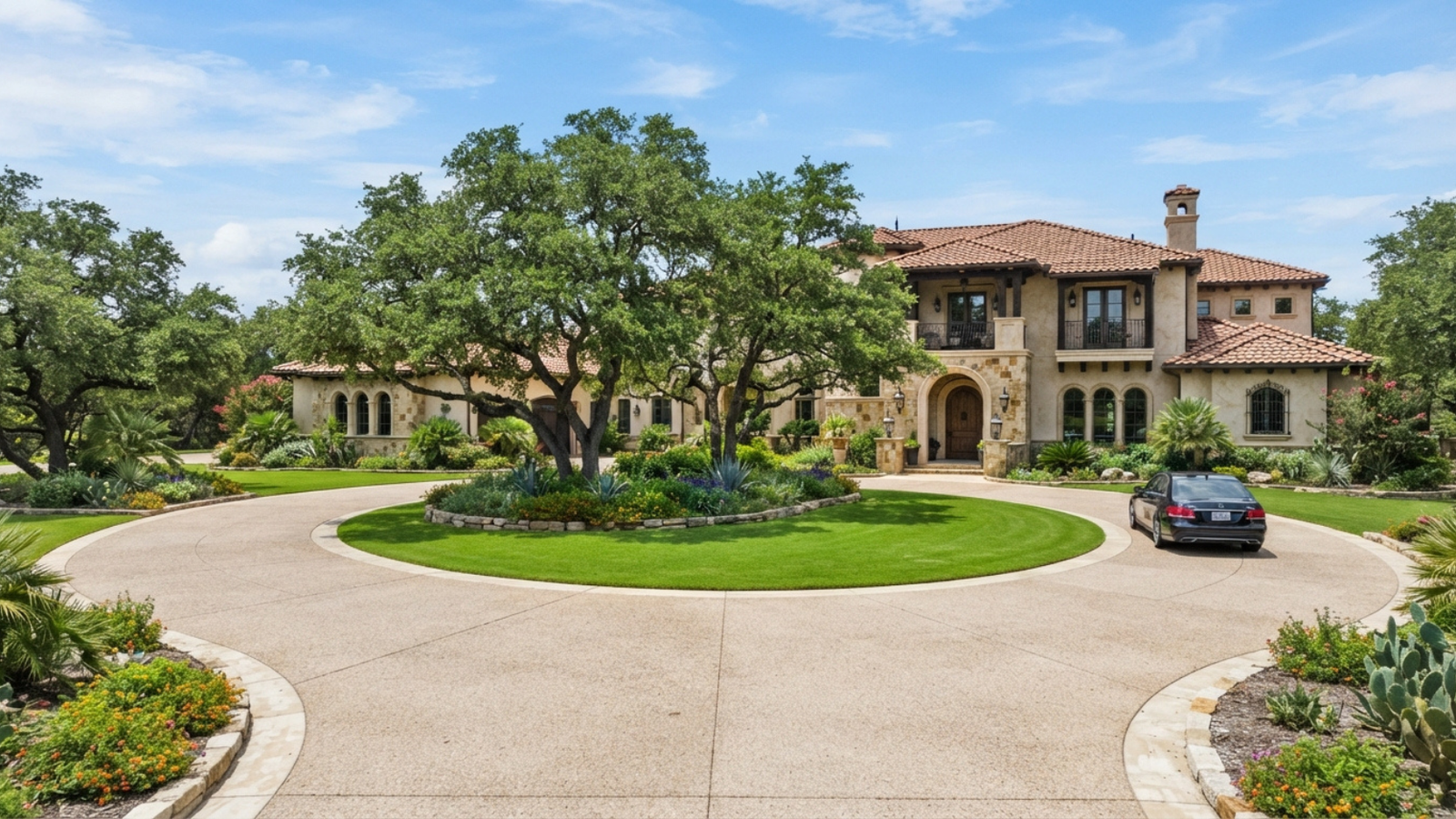
San Antonio homeowners are upgrading their driveways faster than ever in 2026. From stamped patterns that mimic natural stone to decorative borders and exposed aggregate finishes, this guide covers every trend worth knowing before your next concrete project with real 2026 pricing from Bexar County contractors.
Concrete driveways in San Antonio used to mean one thing: a flat gray slab, broom finish, and done. In 2026, that default is rapidly becoming the exception. Homeowners across Bexar County are choosing decorative finishes, integrated borders, and multi-tone color systems that transform the driveway from a functional necessity into a genuine curb-appeal asset.
The driving force is simple: concrete is the most durable paving material available in South Texas, and once you are already investing in a 30-plus-year surface, the cost difference between plain gray and a stunning stamped or stained finish is often smaller than people expect. This guide covers the eight biggest driveway trends we are seeing on the ground in San Antonio this year, with 2026 pricing, soil-specific notes, and the questions to ask before you commit to any of them.
Three years ago, roughly 70 percent of residential driveway quotes in Bexar County were for standard broom finish. In 2026, that number has dropped significantly. Homeowners are requesting decorative borders, integral color, and stamped band accents at a rate we have not seen before. The combination of rising home values in neighborhoods like Alamo Heights, Stone Oak, and Helotes, along with better awareness of what decorative concrete actually costs, is driving the shift. You no longer need a luxury budget to get a driveway that looks like one.
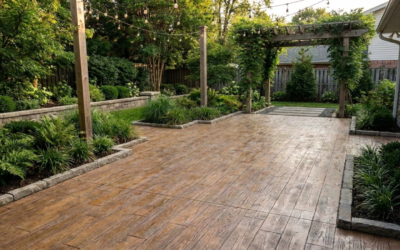
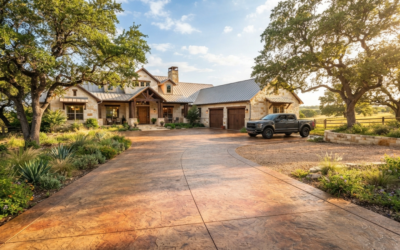
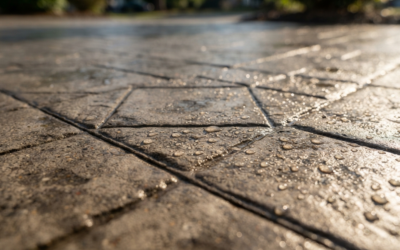
Stamped concrete that mimics natural flagstone, slate, or ashlar cut stone has become the dominant premium driveway upgrade in San Antonio for 2026. The appeal is straightforward: you get the look of expensive natural stone at roughly 40 to 60 percent of the installed cost, with far better structural performance on Bexar County's expansive Vertisol clay soil than actual stone pavers or brick.
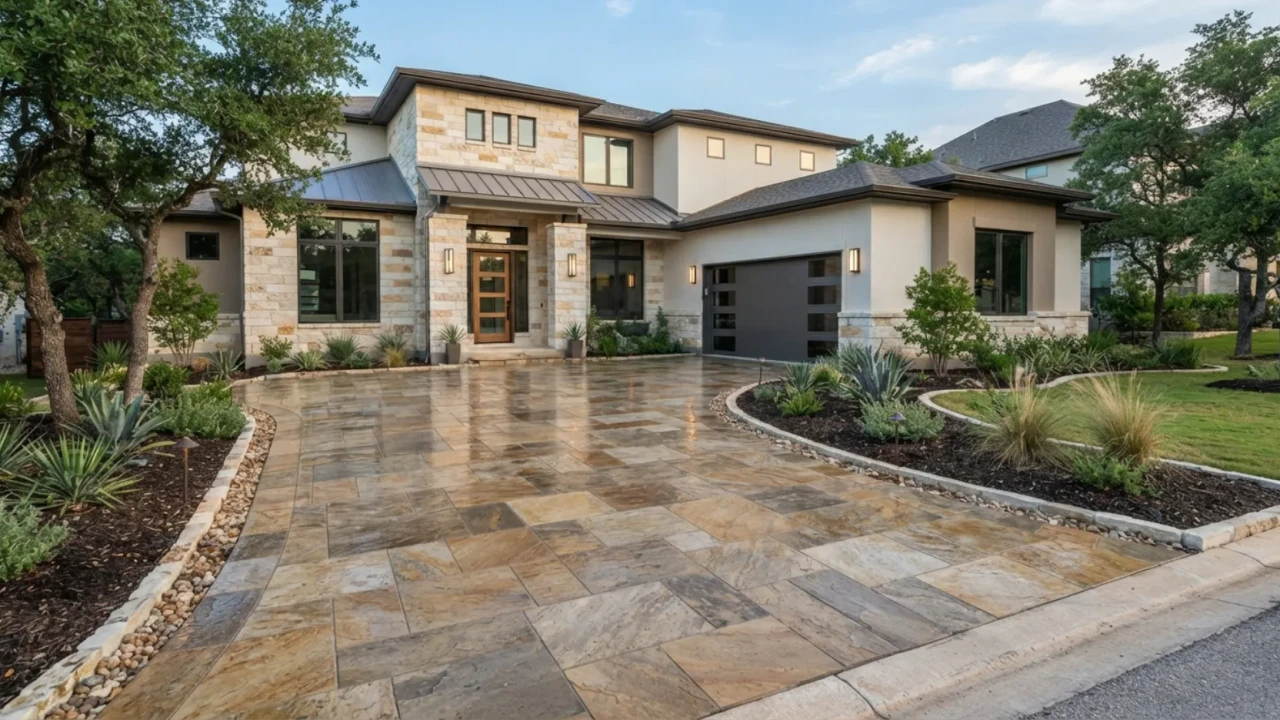
The most popular patterns we are installing in 2026 are random flagstone, Ashlar slate, and cobblestone all of which complement the Texas Hill Country and Spanish Colonial architectural styles common across Bexar County. Integral color (pigment blended into the concrete mix, not just applied to the surface) combined with a contrasting release color agent gives the finished surface depth and realism that surface-only staining cannot match.
- Pattern and color specified in writing before the pour changes are impossible once concrete sets
- Integral color used (not just surface release agent) for lasting color depth
- Sealing schedule included in the contract or booked immediately after the 28-day cure
- Slab thickness confirmed at 5" minimum given Bexar County clay expansion behavior
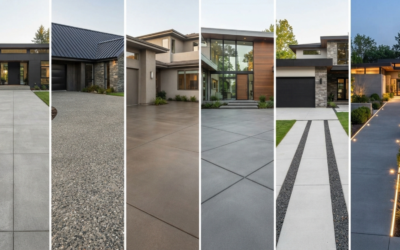
For homeowners who want to upgrade their driveway's appearance without committing to the full cost of a stamped surface, decorative concrete borders are the smartest 2026 trend. The concept is simple: the main field of the driveway is poured in standard broom finish, while a 12- to 18-inch stamped or exposed-aggregate border runs along the perimeter and down the center seam. The contrast between textures and colors creates a custom, finished look at a fraction of the all-stamped price.

In San Antonio neighborhoods with HOA restrictions on driveway materials or color, banding and borders are often permitted where full stamped surfaces are not always verify with your HOA before selecting a finish. The most popular combination we see in 2026 is a charcoal broom-finish field with a sandstone-colored stamped ashlar border, which ties into the limestone and stucco aesthetics common across the region.
The color rule that makes borders look intentional: Choose your border color first by pulling a tone from the home's exterior brick color, stucco tint, or roof color. When the driveway border echoes an existing color in the home's palette, the upgrade looks architectural rather than added-on. A contractor who does not ask about your home's exterior before selecting border colors is one who is not thinking about the finished result.
Exposed aggregate is experiencing a significant resurgence in San Antonio for 2026, driven by homeowners who want a decorative surface without the biannual sealing commitment that stamped concrete requires. The process removes the surface paste from the fresh concrete to reveal the stone and pebble aggregate within the mix producing a naturally textured surface that is inherently slip-resistant and requires no sealing to maintain its structural integrity.
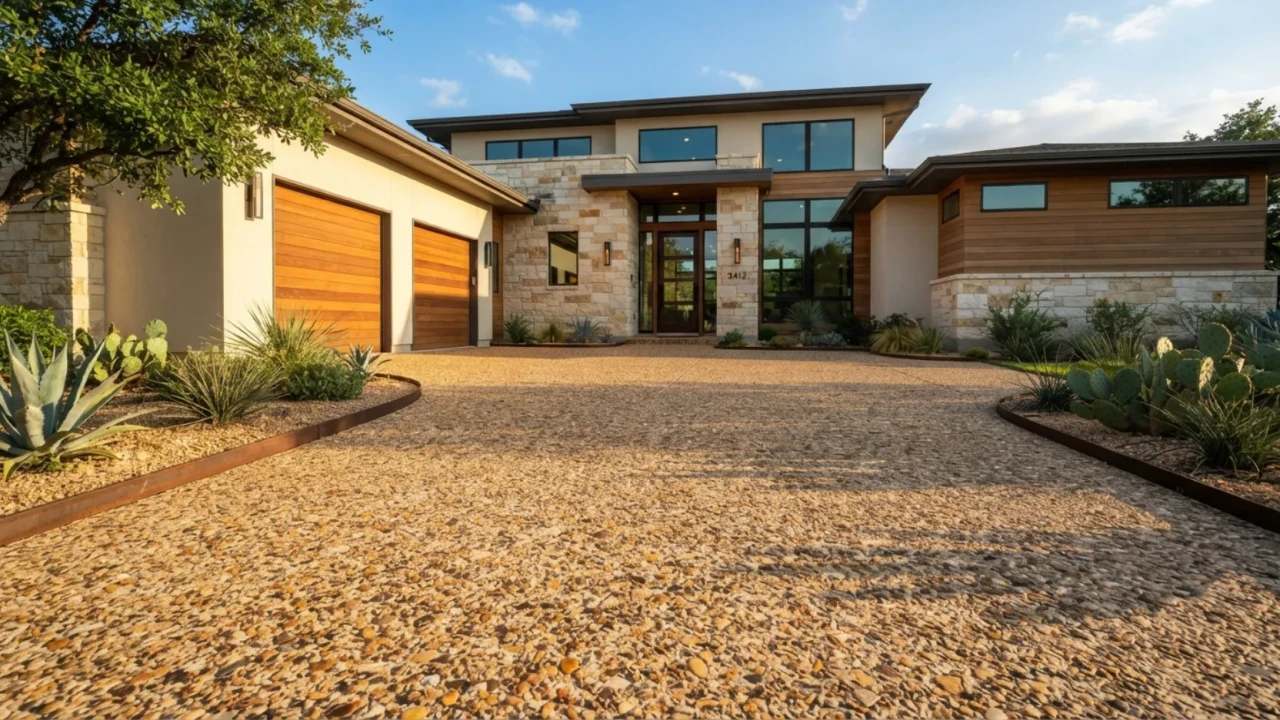
The appearance of an exposed aggregate driveway is entirely determined by the aggregate chosen. San Antonio contractors are using locally sourced Texas limestone chips, rounded river pebbles, and quartzite in 2026 to create finishes that connect visually to the Hill Country landscape. Unlike stamped concrete, exposed aggregate does not require resealing every two to three years an optional sealant every five years enhances color but is not structurally necessary.
- Aggregate type, size, and color confirmed in writing before the pour begins
- Sample board or reference project reviewed and approved
- Wash-out timing confirmed contractor must expose aggregate before concrete reaches final set
- Edge detail discussed: smooth broom-finish borders contrast cleanly with exposed aggregate field
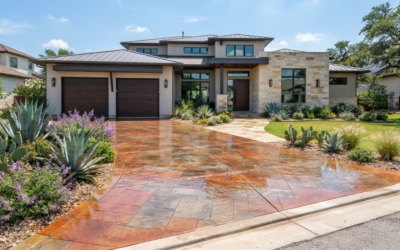
Integral color concrete where pigment is blended directly into the concrete mix rather than applied as a surface coating is one of the most significant trend upgrades in San Antonio driveways for 2026. The practical advantage is simple: because the color runs throughout the entire slab thickness, chips, surface wear, and minor abrasion from vehicle traffic do not expose a gray concrete base underneath. The color holds.
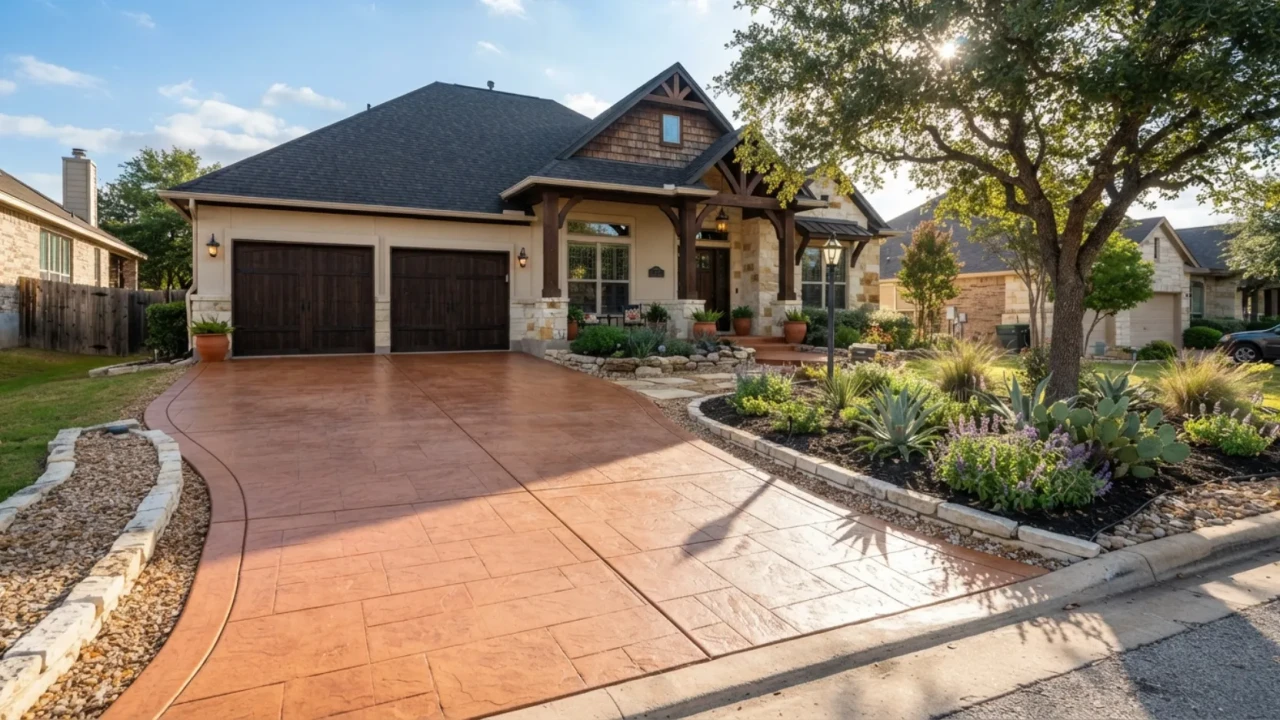
The most popular integral color choices in San Antonio for 2026 are warm earth tones sandstone, buff, terra cotta, and warm gray that complement the limestone, stucco, and clay-tile roofing common across Bexar County. Integral color is most commonly paired with a broom finish or a light exposed aggregate finish on driveways, and with stamped patterns on patios and entries.
Two-tone driveway designs where the parking apron, the drive lanes, and the approach from the street are each treated as distinct zones with contrasting colors or finishes represent one of the more architecturally sophisticated trends in San Antonio concrete work for 2026. The technique is especially effective on wider driveways or circular drives where a single-finish treatment can look monotonous across a large surface area.
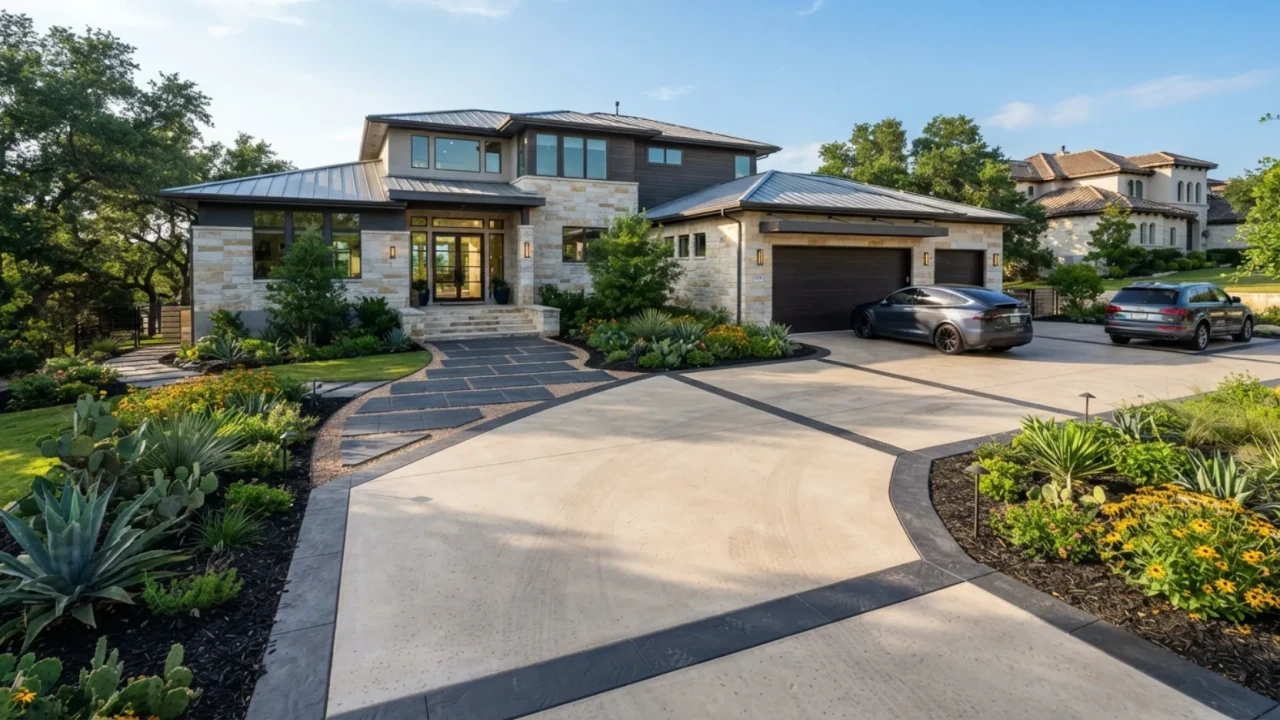
The most common two-tone application in Bexar County is a stamped or exposed aggregate apron at the garage entry with a smoother, broom-finish drive lane running to the street. The zone transition is handled with a clean saw-cut expansion joint that also serves as the visual dividing line between finishes. A second common approach is using two different integral colors a warmer tone at the entry apron and a cooler gray or charcoal along the drive lanes to define zones without any texture change.
Get the zone transition right before pouring: The transition line between zones needs to align with an expansion joint to avoid cracking at the finish boundary. Any contractor proposing a two-tone driveway should show you the joint layout plan before work begins. A zone transition without a corresponding control joint is an invitation for a crack to form exactly where you least want one at the most visible line on the driveway.
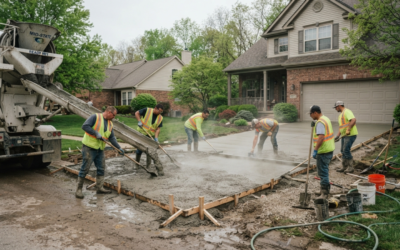
One of the most practical trends in San Antonio driveway work for 2026 is not a finish choice at all it is width. Multi-vehicle households across Bexar County are widening existing driveways, adding side aprons for RV or boat parking, and extending driveway turnarounds to eliminate the need to back into traffic. The City of San Antonio Right-of-Way permit is required for any driveway expansion that modifies the curb cut or encroaches on the public easement this step is non-negotiable and falls on the property owner if skipped.
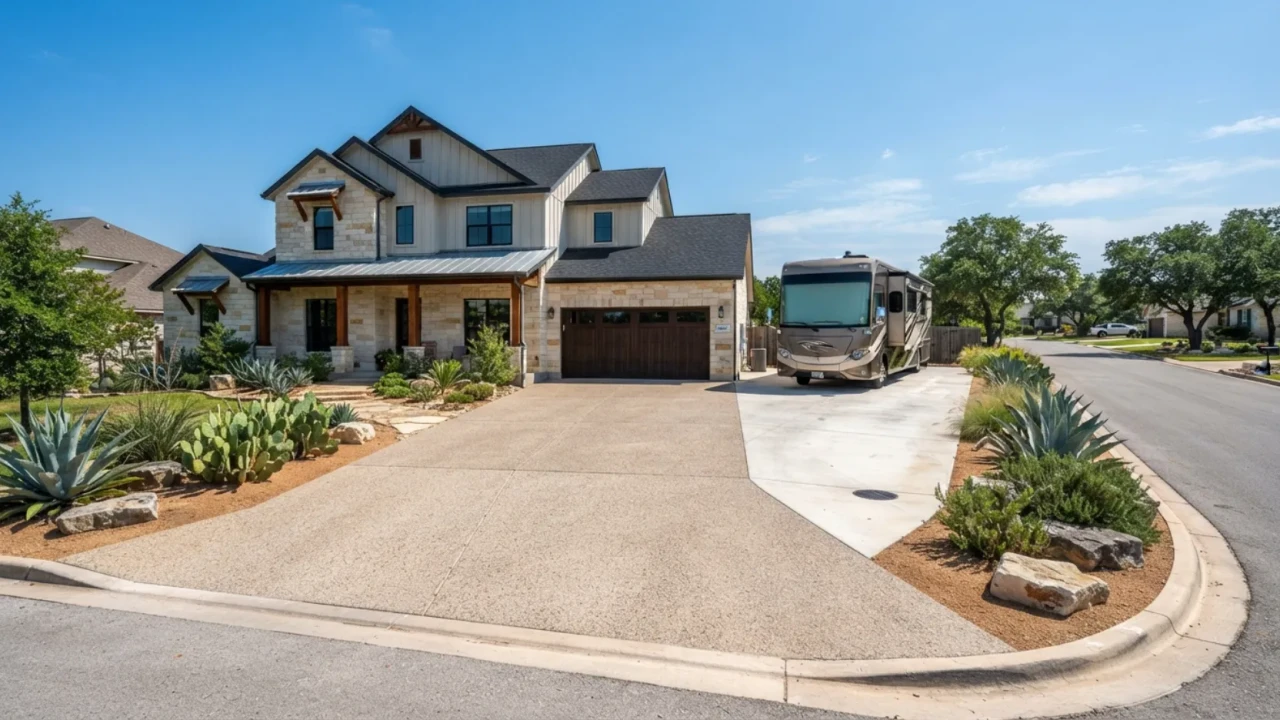
Widening an existing driveway presents a design challenge: matching the color and finish of a new concrete section to an older existing slab is difficult and rarely perfect. The cleanest solution and the one increasingly chosen in 2026 is to saw-cut and remove the existing driveway entirely and replace it as a single unified pour. The cost difference between a patch-and-extend and a full replacement is often smaller than expected when the existing slab is already aging.
- City of San Antonio ROW permit confirmed if curb cut is being modified or expanded
- Texas 811 utility locate called at least three business days before excavation
- Edwards Aquifer setback confirmed if property is near a recharge zone
- Existing slab assessment: determine whether patch-and-extend or full replacement is more cost-effective
- RV or boat parking pad: confirm 6" slab thickness and proper drainage slope away from structure
Integrated driveway lighting low-profile LED bollards, border lighting, and pathway lights alongside the driveway edge is increasingly being planned at the concrete stage rather than added afterward. The reason is purely practical: running conduit through freshly poured concrete before it sets costs almost nothing extra. Running conduit under an existing concrete driveway requires saw-cutting, trenching, and repaving a project that can easily cost $500 to $1,500 depending on driveway width and conduit run length.
In 2026, San Antonio homeowners are treating driveway lighting conduit the same way builders treat roughed-in plumbing: you may not install the fixtures today, but leaving yourself the infrastructure to do so later is always worth the minimal upfront cost. A single 1-inch PVC conduit sleeve run under the drive lane during the pour gives you a pathway for future landscape or security lighting wiring at zero additional disruption to the finished surface.
Ask your contractor to include conduit as a line item on every driveway quote: The material cost is minimal and the labor is essentially zero since the crew is already working the slab forms. Any contractor who says conduit roughing is not worth doing during the pour is not thinking about your long-term interests. Pull a fish tape through the conduit immediately after installation to confirm it is clear and accessible at both ends before the concrete sets.
Circular driveways where the drive enters from one point on the street, loops around a center island, and exits at a second curb cut represent the highest-investment driveway trend in San Antonio for 2026. They are appearing most commonly in established neighborhoods with larger lot frontages: Alamo Heights, Terrell Hills, Helotes, and the older sections of Stone Oak where homes were built with the driveway depth to make a circular design work.
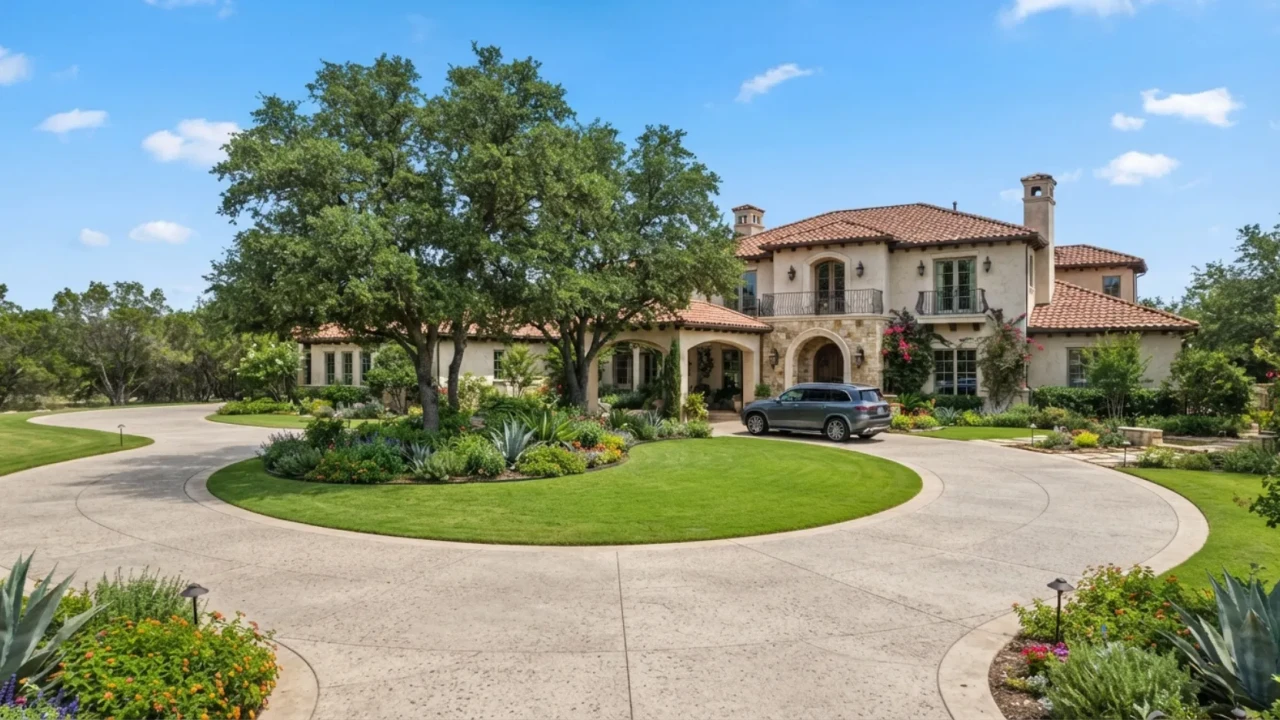
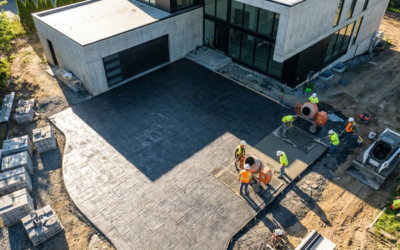
The structural requirements for a circular driveway in Bexar County are the same as a standard drive 5-inch minimum slab, rebar reinforcement, compacted crushed limestone base but the curved forming work requires a more experienced crew and takes longer to set up. Expect a 20 to 35 percent labor premium over a straight driveway of equivalent square footage. The center island is almost always landscaped, which creates irrigation and drainage planning that should be coordinated before the concrete forms are set.
- Lot frontage confirmed sufficient for circular layout minimum 60 feet recommended
- Two separate ROW permits secured from City of San Antonio for both curb cuts
- Center island irrigation and drainage designed and installed before concrete forming begins
- Texas 811 utility locate completed for the full project footprint, including island area
- Landscaping contractor coordinated in advance island planting after the pour is standard but requires careful compaction management near the new slab edges
Use this table to compare the eight trends covered above by cost, maintenance commitment, and best-fit scenario. All pricing reflects 2026 Bexar County contractor rates for a mid-size residential driveway of 600 to 800 square feet.
| Trend | 2026 cost range | Maintenance level | Best for |
|---|---|---|---|
| Stamped stone pattern | $14–20/sqft | Seal every 2 to 3 years | Maximum curb appeal, established neighborhoods |
| Decorative borders and banding | $9–13/sqft | Low broom field, seal border every 3 years | Upgrade budget, HOA-restricted properties |
| Exposed aggregate | $9–14/sqft | Very low optional seal every 5 years | Low-maintenance, natural aesthetic preference |
| Integral color concrete | $9–15/sqft | Low color is through-slab, not surface-only | Color without pattern complexity; long-term value |
| Two-tone and multi-zone | $11–18/sqft | Moderate varies by finish combination chosen | Wide driveways, architectural homes, custom design |
| Driveway widening or apron expansion | $7–12/sqft (new area) | Same as underlying finish selected | Multi-vehicle households, RV or boat storage needs |
| Conduit and lighting integration | $50–150 add-on | None infrastructure only until fixtures installed | Any new driveway project always worth adding |
| Circular or curved driveway | $15–25/sqft total | Same as finish chosen; labor premium for curves | Large lot frontages, premium residential properties |
- Trend selected based on budget, HOA rules, and home architectural style not just appearance alone
- Finish type confirmed appropriate for Bexar County clay soil conditions and vehicle load requirements
- Color system (integral vs. surface-only) discussed and specified in writing before the pour
- Sample board or reference project reviewed for stamped, aggregate, or integral color choices
- Slab thickness confirmed: 5" minimum for residential vehicles on Bexar County clay; 6" for RV or heavy vehicle use
- Rebar reinforcement (#3 or #4 grid at 18" centers) specified wire mesh is not adequate for driveways on expansive clay
- Compacted crushed limestone base confirmed: 4" minimum depth, properly graded before pour
- Expansion joint spacing confirmed: every 8 to 10 feet to manage clay soil movement without cracking
- City of San Antonio ROW permit secured if curb cut is modified, widened, or duplicated (circular drive)
- Texas 811 utility locate called at least three business days before any excavation begins
- HOA approval documented in writing for decorative or colored concrete if restrictions apply
- Edwards Aquifer recharge zone setback confirmed if property is in a regulated area
- Conduit sleeve for driveway lighting discussed and added as a line item on the quote
- Sealing schedule understood and budgeted for the finish type chosen
- Drainage slope confirmed: minimum 1/8" per foot away from the home and any structures
- Irrigation or landscape coordination confirmed if a center island or planted border is part of the design
Ready to upgrade your San Antonio driveway?
Tell us about your project and the trend you are considering. We will visit your property, assess the site conditions, and give you a detailed written quote at no cost.