
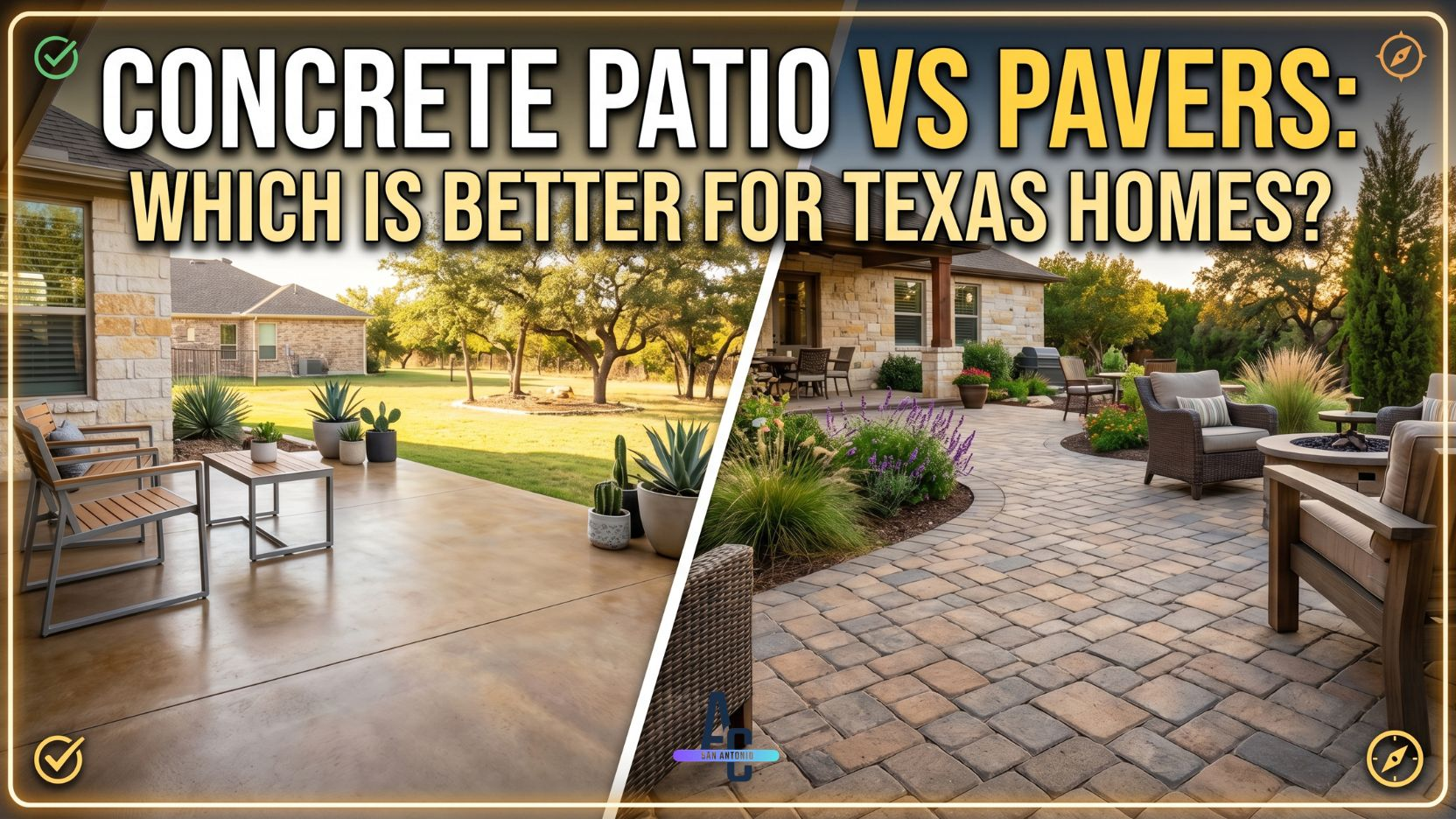
As outdoor living experts who’ve installed hundreds of patios across San Antonio and Houston, we’ve seen firsthand how Texas weather impacts both concrete and paver installations. For most Texas homeowners, stamped concrete offers better heat resistance and lower maintenance costs, while pavers provide superior drainage and easier repairs but your best choice depends on your specific climate zone, soil conditions, and budget.
Let’s break down exactly what works in our Texas climate.
How Does Texas Heat Affect Concrete Patios VS Pavers?
Both materials absorb significant heat, but pavers typically run 10-15°F cooler than standard concrete due to air gaps between individual units that allow heat dissipation.
However, lighter-colored concrete (especially with reflective sealers) can match or beat pavers for heat retention. In San Antonio’s 100°+ summer days, we’ve measured surface temperatures of 145°F on dark gray concrete versus 130°F on light-colored pavers.
Key consideration: If your patio receives full afternoon sun, choose light-colored materials regardless of type, or plan for shade structures.
Which Lasts Longer In Texas Soil Conditions?
Concrete patios typically last 25-30 years in Texas, while pavers can exceed 50 years with proper installation but soil movement is your real enemy in both cases.
Texas clay soil expands and contracts dramatically with moisture changes. Here’s what that means:
- Concrete: Cracks are almost inevitable within 5-10 years. Expansion joints and proper base preparation delay cracking but don’t eliminate it.
- Pavers: Individual units shift rather than crack. You’ll need occasional re-leveling (every 7-12 years), but the patio remains functional and attractive.
In areas around San Antonio and Houston where expansive clay is prevalent, pavers offer a significant advantage because repairs involve lifting and re-leveling individual stones rather than replacing entire concrete sections.
What’s The Real Cost Difference For Texas Homeowners?
Concrete patios cost $6-12 per square foot installed in Texas markets, while pavers run $12-25 per square foot roughly double the initial investment.
But consider lifetime costs:
| Factor | Concrete | Pavers |
| Initial installation (300 sq ft) | $2,400-3,600 | $3,600-7,500 |
| Sealing (every 2-3 years) | $150-300 | $200-400 |
| Major repairs (15 years) | $800-2,000 (resurfacing) | $300-600 (re-leveling) |
| Replacement timeline | 25-30 years | 50+ years |
For homeowners planning to stay 10+ years, pavers often deliver better long-term value despite higher upfront costs. For shorter timelines or budget-conscious projects, quality concrete from experienced installers like Affordable Concrete San Antonio provides excellent returns.
Which Option Adds More Property Value?
High-quality pavers typically add 8-12% more resale value than concrete patios according to Texas real estate data, particularly in mid-to-upper price ranges.
But execution matters more than material choice. A poorly installed paver patio detracts from value, while professionally finished stamped or stained concrete can match paver appeal.
For pool areas and entertainment spaces, buyers consistently prefer pavers for their slip resistance and cooler surface temperatures, a significant advantage in Texas.
How Do They Handle Texas Storms And Drainage?
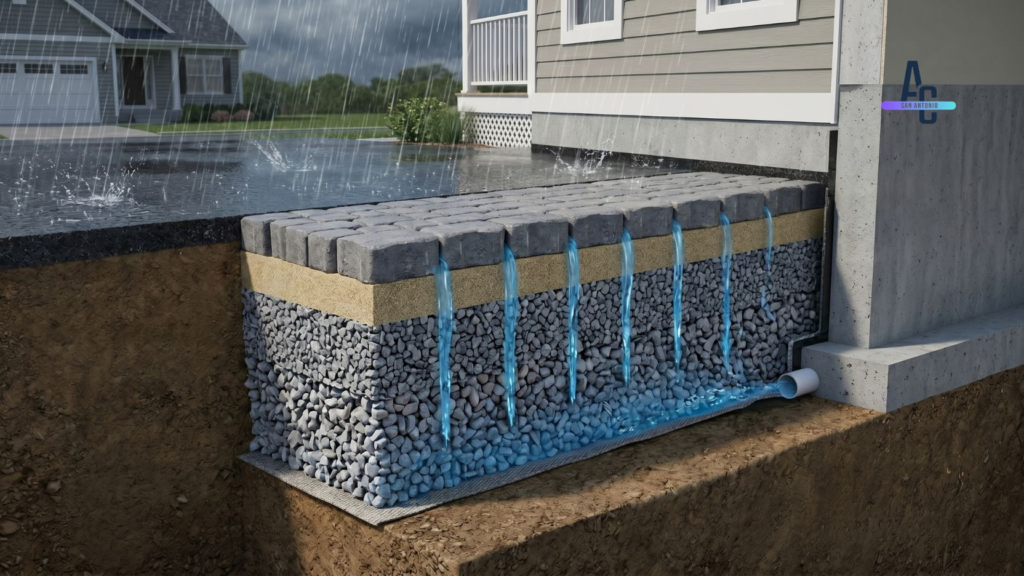
Pavers are the clear winner for drainage. Water flows between units naturally, reducing pooling and drainage issues that plague many concrete patios.
In Houston’s high-rainfall areas, proper drainage is critical. Concrete requires precise slope engineering (minimum 2% grade) and may still develop standing water as it settles. Pavers adjust to minor settling without creating water traps.
Flash flood consideration: Both materials survive flooding, but pavers allow water to dissipate faster and don’t trap moisture underneath that can cause foundation issues.
What Maintenance Does Each Require In Texas?
Concrete maintenance:
- Re-seal every 2-3 years to prevent moisture penetration
- Pressure wash annually
- Repair cracks promptly to prevent expansion
- Re-stain if using colored concrete (every 5-8 years)
Paver maintenance:
- Re-sand joints every 3-5 years
- Seal every 3-4 years (optional but recommended)
- Replace individual damaged pavers as needed
- Pressure wash annually
Time investment: Pavers require approximately 30% more ongoing maintenance, but repairs are simpler and less expensive.
Which Works Better Around Texas Pools?
Pavers are strongly recommended for pool decks for three critical reasons:
- Slip resistance: Textured pavers provide better traction when wet
- Heat management: Cooler surface temperatures mean barefoot comfort
- Repairs: Pool chemistry and splash-out cause deterioration; replacing individual pavers beats resurfacing entire concrete sections
If you choose concrete for a pool deck, specify a textured finish and light colors. Standard smooth concrete becomes dangerously slippery and uncomfortably hot.
Making The Right Choice For Your Texas Property
Choose concrete if you:
- Have a limited budget ($2,000-4,000 for average patio)
- Plan to sell within 5-10 years
- Want faster installation (3-5 days vs 5-7 days)
- Prefer modern, minimalist aesthetics
Choose pavers if you:
- Plan to stay 10+ years
- Live in areas with significant soil movement
- Have a pool or high-traffic outdoor space
- Want maximum design flexibility and easier future repairs
For expert guidance specific to your San Antonio or Houston property, consult with experienced local contractors who understand regional soil conditions and climate challenges.
FAQs
Do Pavers Really Stay Cooler Than Concrete In Texas Summers?
Yes, pavers typically run 10-15°F cooler than standard concrete due to air circulation between units. However, color matters more than material light gray pavers and light concrete have similar surface temperatures.
Will My Concrete Patio Definitely Crack In Texas?
Not immediately, but cracking is highly likely within 5-10 years due to expansive clay soil. Proper installation with expansion joints, adequate base preparation, and appropriate thickness delays cracking but doesn’t eliminate the risk.
Can I Install Pavers Over My Existing Concrete Patio?
Yes, if the existing concrete is level and stable. This “overlay” method saves on demolition costs and works well for updating old patios, though you’ll lose about 3 inches of vertical clearance.