
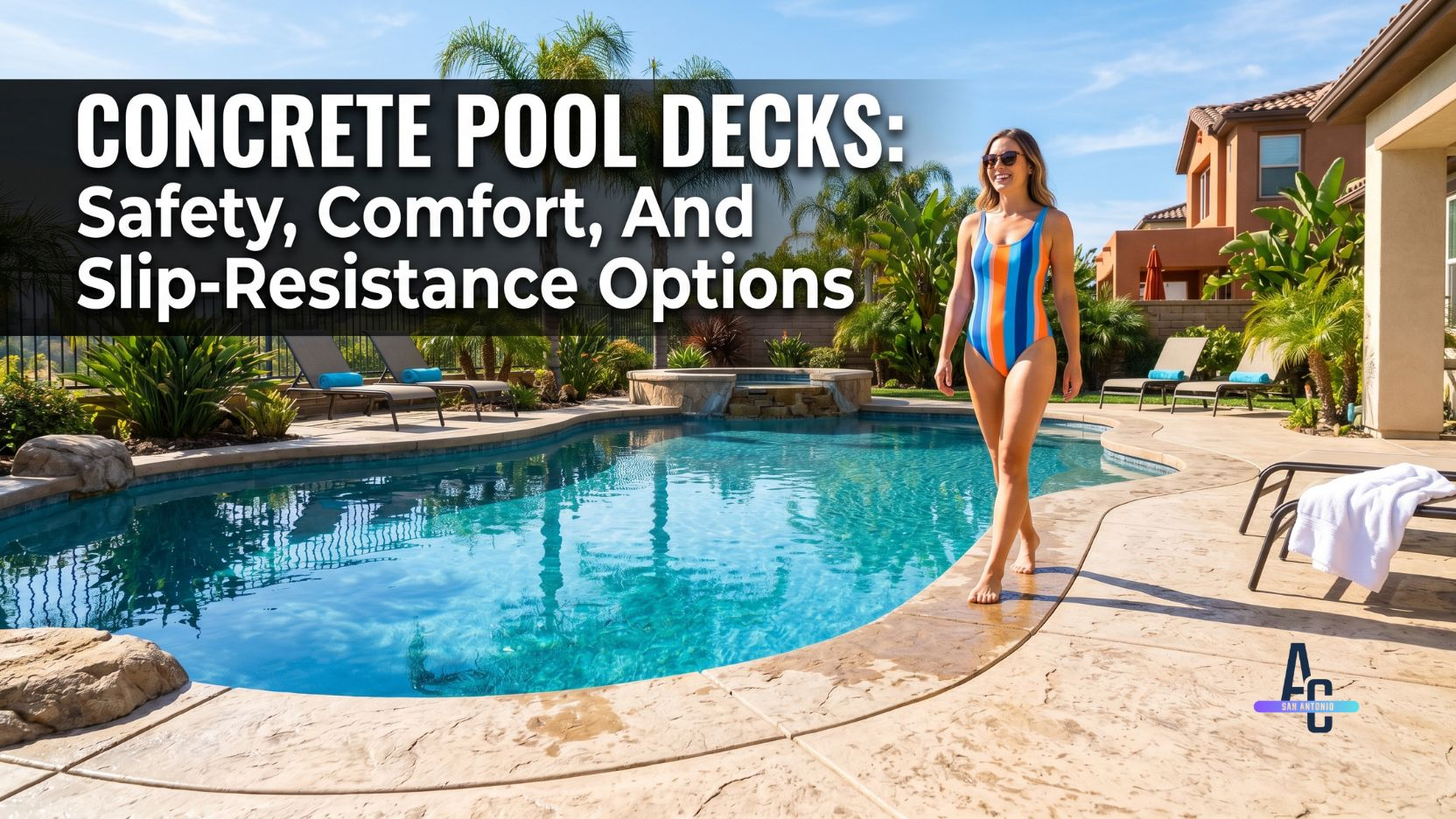
Our team at Affordable Concrete San Antonio has installed and resurfaced over 500 pool decks across San Antonio and Houston since 2015, giving us firsthand insight into what works and what fails in Texas heat and around constant water exposure. The safest concrete pool decks combine slip-resistant surface finishes, proper drainage slope, and heat-reflective materials to prevent falls and burns while maintaining long-term durability.
Choosing the right pool deck isn’t just about aesthetics. It’s about creating a surface that stays safe when wet, comfortable to walk on barefoot in 100°F summers, and resistant to the cracking and degradation that comes from UV exposure and chlorine splash-out.
What Makes A Pool Deck Safe?
A safe pool deck requires slip resistance when wet, minimal heat absorption, and proper drainage. These three factors reduce injury risk more than any other design element.
The CDC reports that pool deck slips account for nearly 22% of all swimming pool injuries. In Texas, where surface temperatures can exceed 140°F on dark concrete, burns are an additional concern.
Critical Safety Features:
- Slip-resistant texture: ASTM ratings of 0.60 or higher (wet DCOF)
- Light color palette: Reduces surface temperature by 20-30°F
- 1-2% slope away from pool: Prevents standing water and algae growth
- Rounded edges: Minimizes impact injuries from falls
What Are The Best Slip-Resistant Concrete Finishes For Pool Decks?
Brushed concrete, exposed aggregate, and stamped concrete with texture add-ins are the most effective slip-resistant finishes for pool areas. Each offers different levels of traction, comfort, and cost.
Top Slip-Resistant Options:
| Finish Type | Slip Resistance | Comfort Level | Typical Cost |
| Brushed Concrete | High | Good | $4-6/sq ft |
| Exposed Aggregate | Very High | Moderate | $8-12/sq ft |
| Stamped w/ Texture | High | Very Good | $10-18/sq ft |
| Cool Deck Coating | High | Excellent | $6-10/sq ft |
| Spray Texture Overlay | Very High | Good | $5-9/sq ft |
Brushed concrete uses stiff brooms to create ridges in fresh concrete, affordable and effective, though it can feel rough on bare feet after extended contact.
Exposed aggregate reveals small stones in the concrete mix, creating natural texture. It’s extremely slip-resistant but can be uncomfortable for young children sitting or kneeling.
Stamped concrete with texture additives offers the best of both worlds: decorative patterns that mimic stone or tile with added grip agents mixed into the surface seal. This is what we recommend most often to homeowners in San Antonio and Houston who want both safety and visual appeal.
Cool deck coatings use specialized polymer-modified cement that stays 20-30% cooler than standard concrete and provides excellent traction. Perfect for Texas summers.
How Do You Keep Concrete Pool Decks Cool In Hot Climates?
Light-colored concrete with reflective sealers or cool deck topcoats can reduce surface temperatures by 25-35°F compared to standard gray concrete. This makes a dramatic difference in comfort and usability.
In our Houston and San Antonio projects, we’ve measured surface temperatures of 165°F on standard gray concrete versus 125°F on cream-colored stamped concrete with acrylic sealer both tested at 2 PM in July.
Heat Reduction Strategies:
- Choose lighter colors: Beige, tan, cream, or light gray
- Apply reflective sealers: Acrylic-based with UV inhibitors
- Add cool deck coating: Reduces heat absorption significantly
- Incorporate shade structures: Pergolas or shade sails over high-traffic areas
- Use larger aggregate exposure: Natural stone stays cooler than pure cement
Key takeaway: Color choice is your single biggest factor in surface temperature. Even moving from dark gray to medium gray reduces heat by 15-20°F.
What Drainage Features Prevent Slippery Pool Decks?
Proper drainage requires a minimum 1% slope away from the pool edge and strategic drain placement to eliminate standing water. Without this, even textured concrete becomes dangerously slippery.
We’ve repaired dozens of pool decks in the San Antonio area where contractors poured flat surfaces or, worse, sloped toward the pool. Standing water creates algae growth, which becomes invisible when wet but incredibly slippery.
Essential Drainage Elements:
- Slope of 1-2%: Approximately 1/8″ drop per foot of deck
- Trench drains at problem areas: Where water naturally collects
- Permeable joints: Between deck sections allow water to drain
- Proper deck-to-coping transition: Prevents water from running back toward pool
Pool owners should also rinse decks weekly to prevent algae buildup, especially in shaded areas where surfaces stay damp longer.
How Long Do Concrete Pool Decks Last?
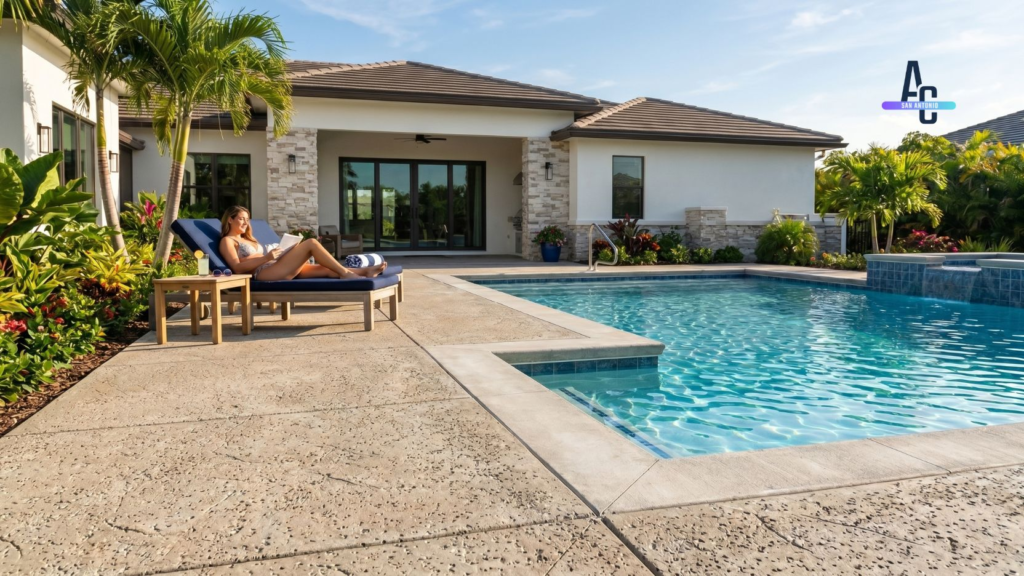
A properly installed concrete pool deck lasts 25-30 years with basic maintenance, or 40+ years with regular sealing and minor repairs. This longevity makes concrete one of the most cost-effective pool deck materials.
Factors that shorten lifespan:
- Poor sub-base preparation
- Insufficient concrete thickness (minimum 4 inches recommended)
- No control joints (leads to random cracking)
- Chlorine exposure without protective sealer
- Freeze-thaw cycles (less relevant in Texas)
We recommend resealing every 2-3 years in Texas climates to protect against UV degradation and chemical exposure. This $1-2 per square foot investment prevents the need for $8-15 per square foot resurfacing.
Should You Choose Stamped, Brushed, Or Aggregate Pool Decking?
Stamped concrete offers the best combination of safety, comfort, and aesthetics for most residential pool owners, while brushed concrete works best for budget-conscious projects. Exposed aggregate sits in the middle highly functional but less comfortable for prolonged barefoot contact.
Decision Framework:
Choose brushed concrete if:
- Budget is under $6 per square foot
- Simple, clean appearance is preferred
- Deck will be used primarily by adults
Choose exposed aggregate if:
- Maximum slip resistance is the top priority
- You want a natural, textured appearance
- Budget allows $8-12 per square foot
Choose stamped concrete if:
- You want design flexibility with color and pattern
- Comfort for barefoot walking is important
- Budget accommodates $10-18 per square foot
- You’re upgrading for property value
At our 1247 W Thompson Pl, San Antonio and 6203 Lawford Ln, Houston locations, we help homeowners evaluate these options based on their specific pool design, budget, and usage patterns.
What Maintenance Keeps Pool Decks Slip-Resistant?
Regular cleaning, sealer reapplication every 2-3 years, and immediate repair of cracks maintain slip resistance and safety over decades. Neglected pool decks lose texture and develop hazardous algae growth.
Annual Maintenance Checklist:
- Weekly rinsing: Removes dirt and prevents algae
- Monthly cleaning: Mild detergent and soft brush (no pressure washing at high PSI)
- Quarterly inspection: Check for cracks, spalling, or seal degradation
- Bi-annual deep clean: Remove stubborn stains and buildup
- Every 2-3 years: Reseal with quality acrylic or penetrating sealer
- As needed: Fill cracks before they expand
Pressure washing is acceptable at low PSI (1500-2000) with a wide fan tip, but high-pressure washing can damage textured surfaces and remove necessary slip-resistant qualities.
FAQs
How Much Does A Slip-Resistant Concrete Pool Deck Cost?
Slip-resistant concrete pool decks typically cost $8-15 per square foot installed, depending on the finish type and local labor rates. Basic brushed concrete starts around $4-6 per square foot, while stamped or cool deck options range from $10-18 per square foot. For a standard 500 square foot pool deck in San Antonio or Houston, expect to invest $4,000-$7,500 for quality installation.
Can You Make Existing Concrete Pool Decks Less Slippery?
Yes applying a spray texture overlay, cool deck coating, or slip-resistant sealer with aggregate additives can transform a slippery existing deck. These retrofit solutions cost $5-10 per square foot, significantly less than full replacement, and typically last 7-12 years with proper maintenance.
What Color Concrete Stays Coolest Around Pools?
Cream, beige, light tan, and light gray concrete stays 25-35°F cooler than standard gray concrete in direct sunlight. White or very light colors offer maximum heat reflection but may show stains more readily. We recommend light tan or buff colors for the best balance of heat reduction and stain concealment in Texas climates.