
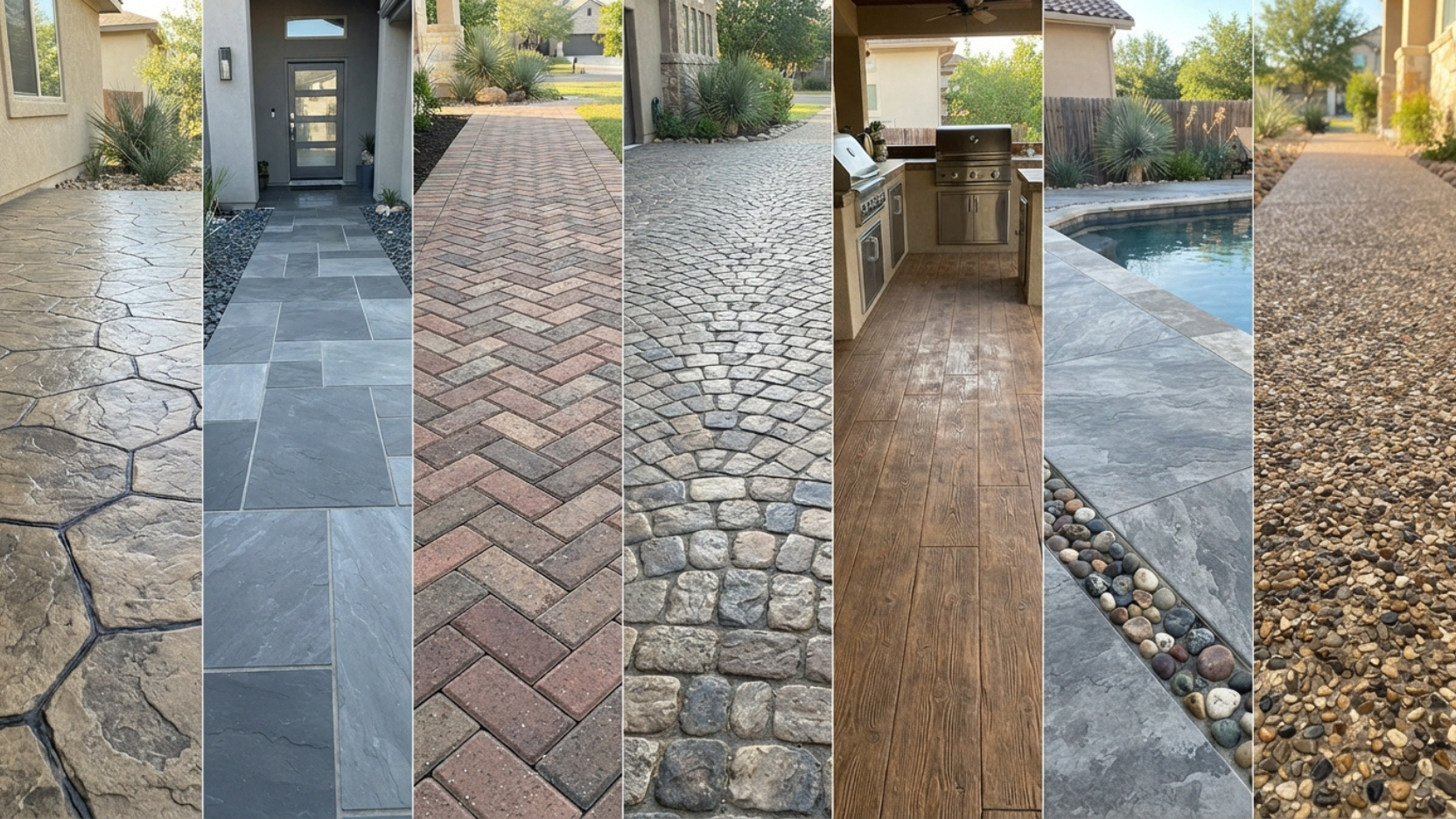
Stamped flagstone, Ashlar slate, Herringbone brick, cobblestone, and wood plank concrete are transforming San Antonio patios and driveways in 2026. This guide covers every pattern, what each costs locally, and which ones hold up best in the Texas heat.
San Antonio homeowners have always wanted outdoor spaces that look as good as they perform. In 2026, decorative concrete is the answer for most of them. It gives you the appearance of natural stone, brick, slate, or even wood at a fraction of the material cost, poured directly into any shape your yard requires and sealed to last 25 years or more with basic maintenance.
The challenge is that the pattern catalog is large, the terminology is inconsistent between contractors, and not every pattern performs equally well in the Texas climate. This guide covers the seven most popular decorative concrete patterns installed in San Antonio homes today, what each one costs, where each works best, and what you need to know before you sign a contract.
Unlike paint or tile, stamped concrete color and pattern cannot be changed after the concrete sets. The stamp is pressed into fresh concrete within the first 2 to 3 hours of the pour. The color is either mixed into the slab (integral color) or broadcast across the surface before stamping (color hardener). Both decisions are permanent. This guide is designed to help you make those choices correctly the first time.
Most Popular
Flagstone stamped concrete replicates the look of irregular natural stone slabs laid in a random pattern. It is the single most requested decorative concrete pattern in San Antonio, and for good reason: the irregular shapes read as natural rather than manufactured, the grout lines provide built-in slip resistance, and the pattern works equally well on patios, pool decks, walkways, and driveways.
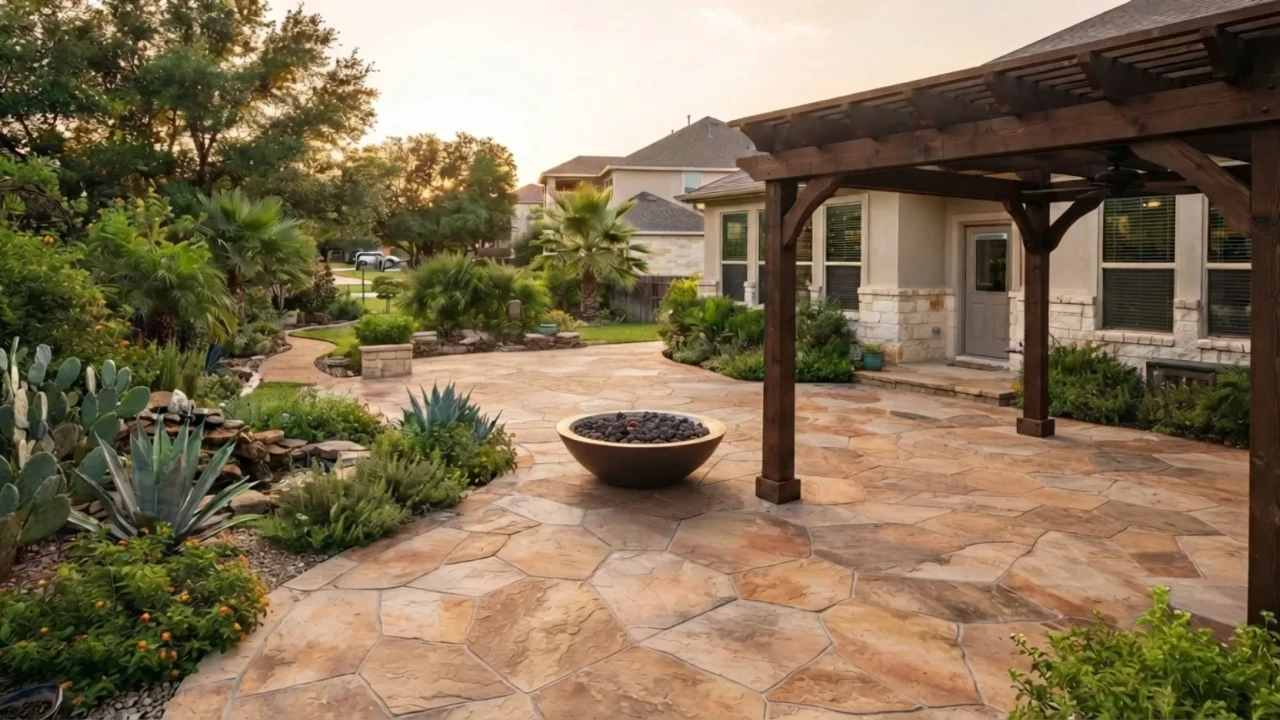
Why it works in San Antonio: Flagstone patterns hide minor surface variations better than geometric patterns do. In Bexar County’s expansive clay soil, minor hairline cracks that develop over years are far less visible in a random flagstone layout than in a uniform brick or tile grid. The pattern also accommodates curved edges naturally, which is useful for free-form pool decks and organic patio shapes.
Color pairing: Earth tones dominate flagstone work in San Antonio. Sandstone buff, desert tan, and Baja buff are the three most used base colors. A brown or charcoal antiquing release adds depth to the grout lines and prevents the finished surface from looking flat or uniform.
- Pattern scale confirmed larger stone impressions (12 to 18 inches) look more natural on wider surfaces
- Base color and release color both confirmed in writing before pour day
- Integral color specified if you want color throughout the slab depth, not just on the surface
- Grout line width discussed wider grout lines look more casual, tighter lines look more refined
- Sealer type confirmed: a high-gloss sealer makes colors pop; a matte sealer looks more like natural stone
Contemporary
Ashlar slate is the geometric counterpart to random flagstone. Where flagstone mimics naturally occurring irregular slabs, Ashlar slate replicates cut stone blocks laid in a repeating rectangular or offset grid pattern. The result is a cleaner, more formal look that pairs well with contemporary architecture, newer home construction in San Antonio’s growing suburban neighborhoods, and formal landscape designs.
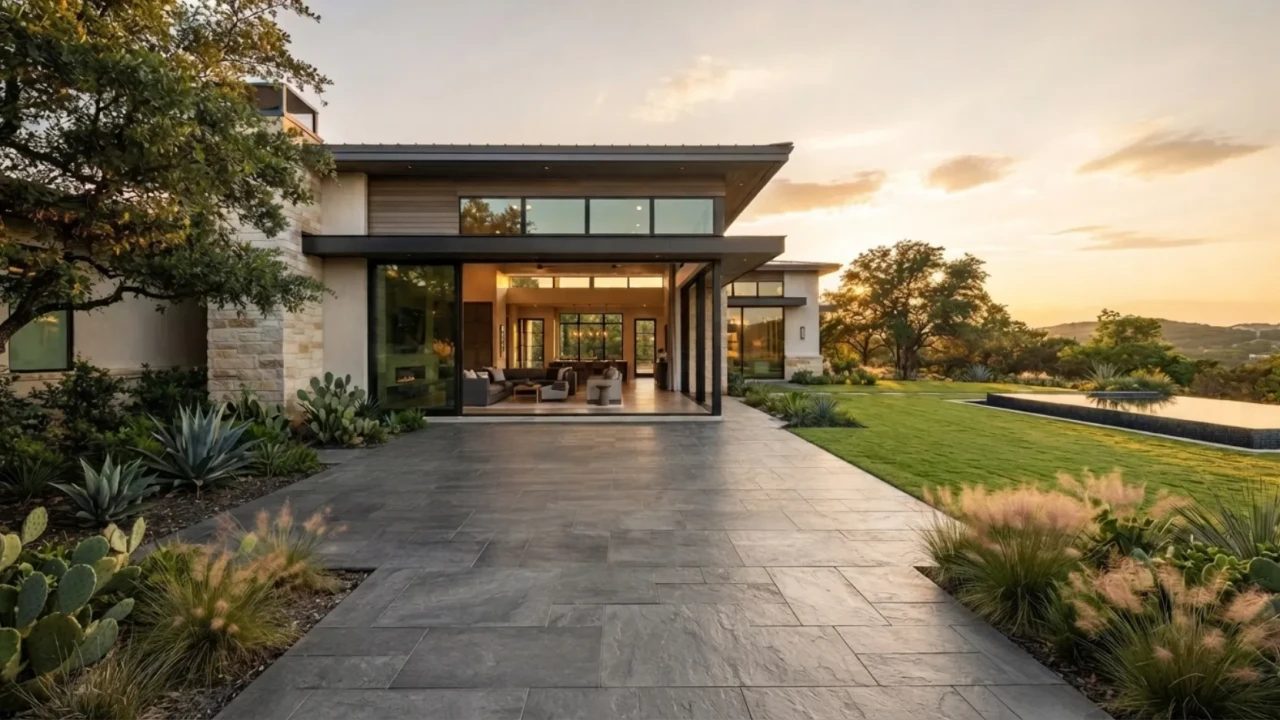
Pattern characteristics: Ashlar slate stamps typically produce rectangular blocks ranging from 6 by 12 inches to 12 by 18 inches, arranged in an offset (running bond) or stacked (grid) layout. The slate texture on each block face adds visual interest and prevents the pattern from reading as too rigid or industrial.
Best applications in San Antonio: Ashlar slate performs particularly well on large, flat patio surfaces where the geometric regularity creates a sense of order and scale. It is also a strong choice for driveway borders and courtyard entries where a formal aesthetic is wanted. It works less well on curved or irregular shapes, where the geometric grid can look forced at the edges.
Ashlar slate grids magnify imperfections more than random flagstone does. Because the pattern is geometric and regular, any slight variation in joint alignment or color inconsistency across the surface is more visible than it would be in an irregular flagstone layout. This means Ashlar slate installations require a more experienced crew and more consistent color application to finish well. Ask your contractor how many Ashlar slate projects they have completed in San Antonio and ask to see photos of those specific jobs before committing.
- Block size and orientation confirmed (running bond vs. stacked grid) before pour day
- Straight or clean-curved edges planned for the slab perimeter irregular edges fight against the geometric pattern
- Crew experience with geometric stamping confirmed ask for local project photos specifically
- Grout joint color matched to the surrounding landscape or home exterior palette
- Sealer sheen level confirmed: semi-gloss is the most common choice for Ashlar slate in San Antonio
Classic Choice
Herringbone brick is the concrete industry’s most enduring pattern because the original material it replicates, clay paver brick laid in a herringbone pattern, has been used in residential driveways and walkways across Texas for well over a century. The stamped concrete version delivers the same visual character at roughly half the installation cost of actual clay pavers, without the long-term weed and settling issues that real brick joints develop.
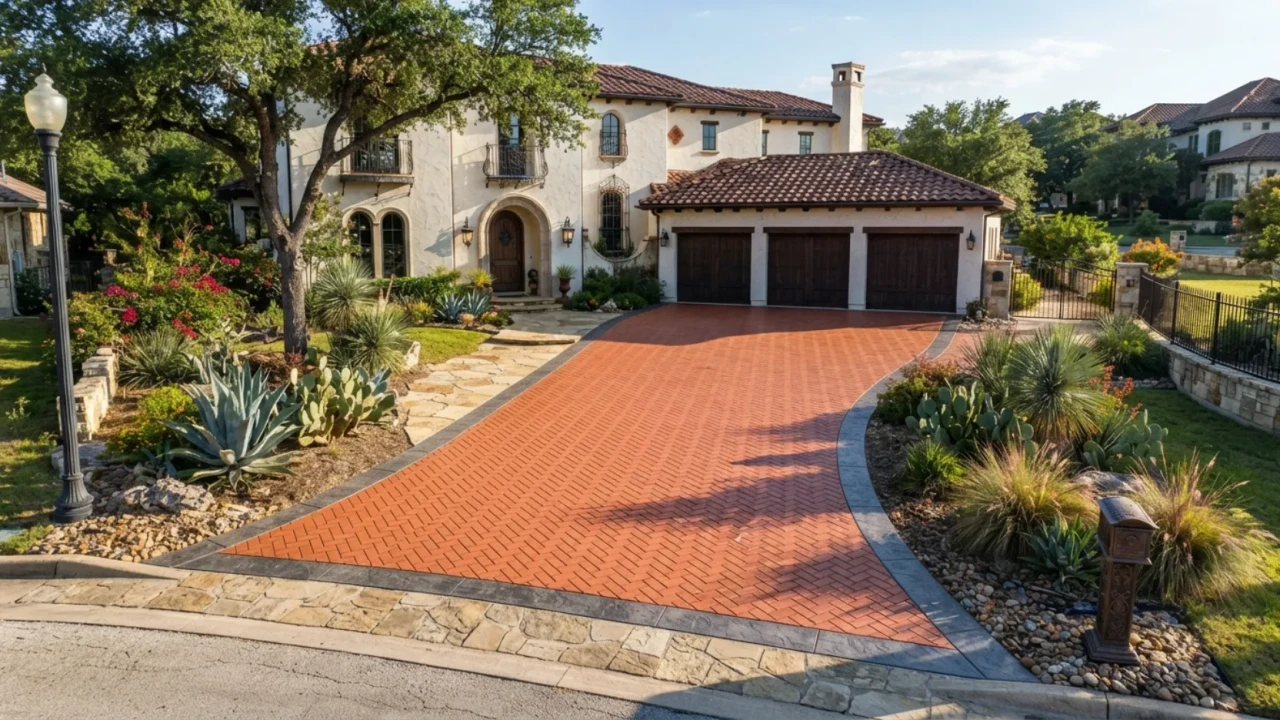
Why the herringbone layout matters: Herringbone is not just decorative. The interlocking diagonal orientation of the brick impressions adds visual directionality to a surface, drawing the eye toward an entry or focal point. On a driveway it makes the approach feel intentional. On a walkway it guides movement. The diagonal also distributes visual interest across the surface in a way that straight-running bond or stack bond brick patterns cannot match.
Color options for San Antonio homes: Traditional brick red with a charcoal release is the most popular combination for herringbone in San Antonio, and it pairs naturally with both older brick homes and newer stucco construction. Tan or buff brick with a mocha release is the contemporary alternative, giving the look of tumbled limestone pavers rather than fired clay brick.
- Diagonal direction planned: 45 degrees diagonal to the driveway axis is the standard and most natural-looking orientation
- Border treatment decided: soldier course border makes herringbone look finished and intentional
- Brick scale selected: standard modular brick (4 by 8 inch) or oversize brick (5 by 10 inch) for wider driveways
- Color sample reviewed under San Antonio afternoon sun, not just interior lighting colors read differently outdoors
- Control joint placement planned to align with pattern grid wherever possible
Distinctive
Cobblestone patterns replicate the rounded granite setts used in European streets and upscale residential driveways for centuries. In San Antonio, cobblestone stamped concrete is used most often for circular driveway entries, courtyard pads, and accent sections within larger patio or driveway projects. The European fan variant takes cobblestone a step further, arranging the rounded stone impressions in a radial fan layout that creates a striking centerpiece for round or oval areas.
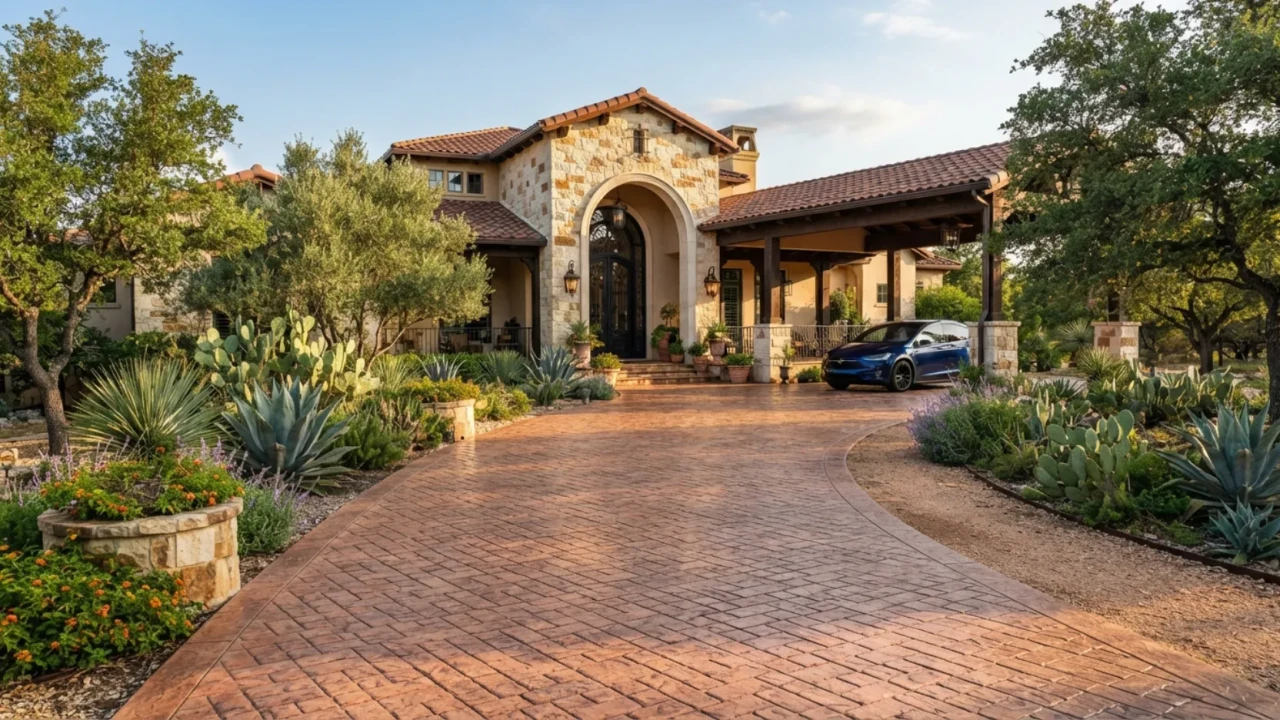
Cobblestone as an accent pattern: Very few San Antonio homeowners cover an entire driveway or patio in cobblestone, because the rounded shapes and dense texture can feel visually heavy across a large area. The more common approach is to use cobblestone or European fan stamping for a circular focal point at the center of a driveway roundabout, at a front entry pad, or as a band inset within a larger flagstone or Ashlar slate surface.
The mixed-pattern approach: Some of the most impressive decorative concrete work in San Antonio uses cobblestone as a design element within a larger composition. A flagstone patio field with a cobblestone border band, or an Ashlar slate driveway with a European fan medallion at the center of a circular entry, creates a custom appearance that no tile or paver product can replicate at the same cost.
Cobblestone and European fan patterns require more precise layout work than other stamps. The radial fan arrangement must be centered correctly on the slab before stamping begins, and the pattern cannot be adjusted once the stamps are in the concrete. Misaligned fan patterns are very difficult to disguise. For this reason, cobblestone and fan work costs more in labor than simpler patterns and requires a contractor with specific experience installing radial stamp layouts. Ask to see portfolio photos of completed fan or cobblestone installations before approving this pattern choice.
- Layout centerpoint confirmed and marked before pour day fan patterns cannot be centered after stamping begins
- Contractor experience with radial stamping confirmed request portfolio photos of specific cobblestone and fan work
- Color scheme reviewed: cobblestone typically looks best in gray, charcoal, or warm tan ranges with a darker release
- Border treatment decided: cobblestone works well surrounded by a simpler field pattern or a plain broom-finish band
- Area size reviewed: consider whether a cobblestone accent within a larger project achieves the look more effectively than full coverage
Trending 2026
Wood plank stamped concrete has moved from a niche decorative option to one of the most requested patterns in San Antonio over the past three years. The appeal is easy to understand: homeowners love the warm, natural look of wood for outdoor living spaces, but treated lumber and composite decking both require ongoing maintenance, deteriorate in the Texas sun, and cannot be poured into the curved or irregular shapes that concrete handles easily.
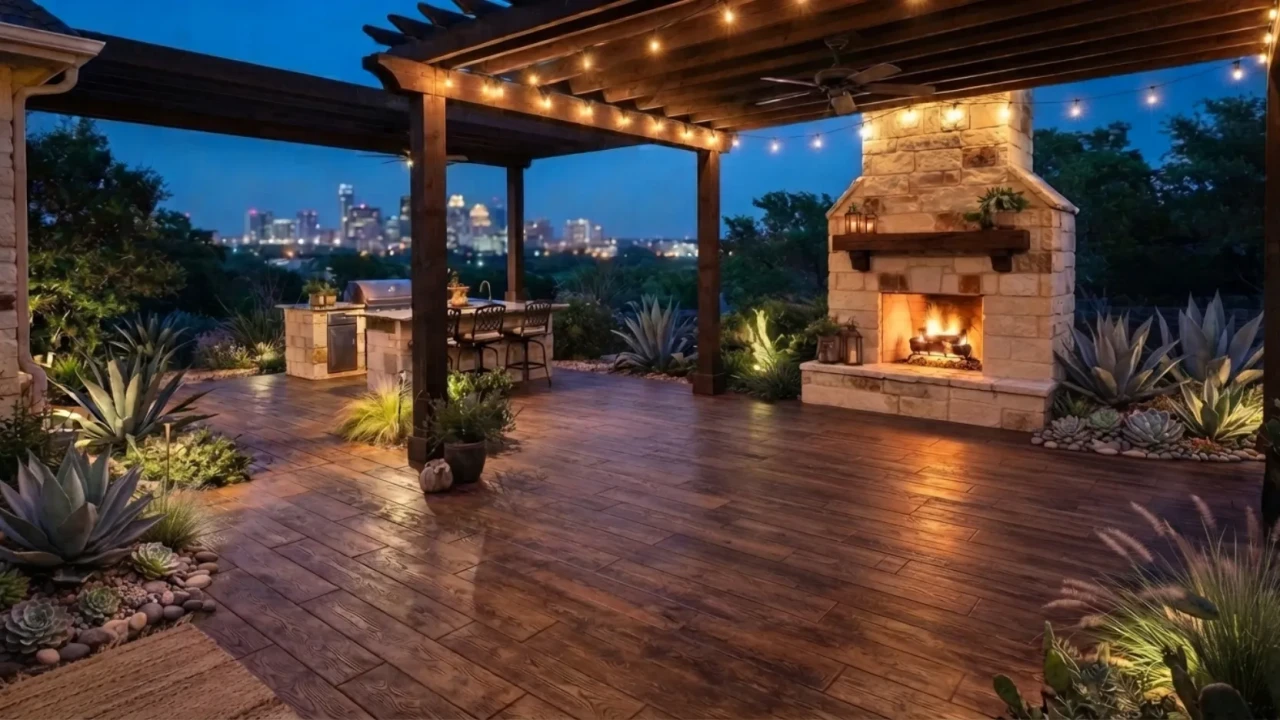
What wood plank concrete does that real wood cannot: A concrete slab poured to look like wood planks can flow around pool curves, wrap around landscape features, and extend to any shape without seams, gaps, or structural framing. It will not rot, warp, crack from moisture, or develop the splinter hazards that wood decking produces after years of Texas sun exposure. With a proper sealant applied every 2 to 3 years, a wood plank concrete surface maintains its color and texture indefinitely.
Color is everything in wood plank concrete: The illusion of wood grain depends almost entirely on color execution. A single flat brown does not read as wood. The most convincing wood plank concrete uses two or three tones applied across the plank faces to suggest the natural color variation of real wood. Brown base with a tan highlight and a walnut accent stain is the most realistic combination available from skilled San Antonio contractors.
- Plank width and direction confirmed before pour day plank direction cannot be changed after stamping
- Multi-tone color plan confirmed: a single flat brown rarely produces a convincing wood appearance
- Slip resistance confirmed for pool deck applications wood plank texture provides moderate slip resistance when dry, less when wet without a non-slip additive in the sealer
- Sealer specified: a satin or semi-gloss sealer enhances the wood tone colors; matte sealer produces a more weathered natural look
- Contractor experience with multi-tone staining confirmed this is a skill that varies significantly between crews
Pool Deck Favorite
Slate texture and river rock patterns occupy a specific niche in decorative concrete: they are the go-to options when slip resistance is a priority and the design goal is a natural, landscape-integrated appearance rather than a formal architectural one. Both patterns are heavily used on San Antonio pool decks and garden path applications where the surface needs to perform safely when wet.
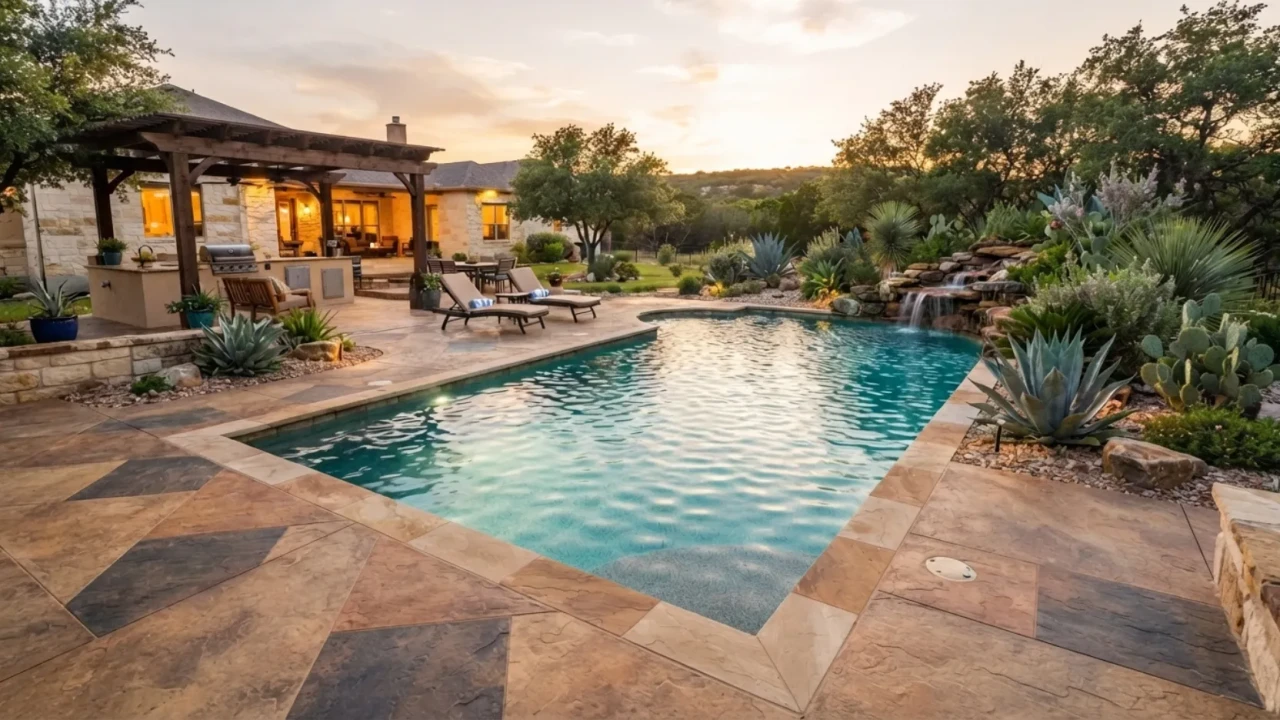
Slate tile pattern: Replicates the look of natural slate tiles laid in a regular grid. The pronounced texture of the slate face creates friction across the entire surface, not just at grout lines, making it one of the slip-resistant stamped options available. Colors in the gray, charcoal, blue-gray, and rust ranges replicate natural slate tones and pair well with both pool water and landscape greenery.
River rock and pebble patterns: Rather than flat tiles, river rock stamps replicate the look of rounded stream pebbles set in mortar. The dense, irregular texture of packed pebble surfaces is inherently rough and provides excellent grip when wet. River rock is the most slip-resistant stamped pattern available and is well suited to areas where safety takes priority over sleek aesthetics, including pool entry steps, water feature surrounds, and spa pads.
Concrete color choice matters significantly for barefoot comfort on San Antonio pool decks. Dark-colored concrete surfaces in full Texas sun reach temperatures that are uncomfortable to walk on barefoot. Lighter base colors (white, light gray, sand, or buff) absorb substantially less solar radiation. If your pool deck will be in full sun for most of the afternoon, specify a light base color regardless of the pattern you choose. This applies to slate, flagstone, and any other pattern used in a pool deck application.
- Light base color specified for pool deck applications dark concrete in San Antonio sun is uncomfortable barefoot
- Non-slip additive in the sealer confirmed for pool deck and wet-area applications
- Tile grid size reviewed for slate: smaller tiles (6 by 6 inch) look more refined; larger tiles (12 by 12 inch) are faster to install
- River rock pebble scale discussed: small pebble (0.5 to 1 inch) for gentle texture; large river rock (1.5 to 2 inch) for pronounced naturalistic look
- Color range reviewed: blue-gray and charcoal slate for contemporary pools; tan and rust slate for traditional or Mediterranean settings
Long-Term Value
Exposed aggregate is not a stamped pattern in the traditional sense. Rather than pressing a shape into the concrete surface, exposed aggregate removes the surface paste to reveal the natural stone, pea gravel, or decorative rock mixed into the concrete itself. The result is a genuine texture rather than an impression of one, and this authenticity is part of why exposed aggregate remains one of the most consistently popular decorative concrete choices in San Antonio after more than 40 years of widespread use.
The appearance of an exposed aggregate surface depends entirely on the aggregate specified in the mix. Standard Texas river gravel produces a neutral tan and gray speckled finish. Colored quartz or specialty aggregate creates more dramatic results, including black granite chips, white marble chips, and multicolor river stone blends that function as a major design element in the finished surface.
- Aggregate type confirmed in writing before the pour it is mixed into the concrete and cannot be changed after delivery
- Aggregate size specified: pea gravel (0.25 to 0.5 inch) for a smooth surface; medium river rock (0.5 to 1 inch) for more pronounced texture
- Exposure depth confirmed with the contractor: light exposure reveals aggregate partially; heavy exposure reveals it fully
- Sealing discussed even though it is optional a penetrating sealer helps prevent staining without changing the natural appearance
- Aggregate sample or reference project reviewed before finalizing the mix design
Use this table to compare the seven patterns covered in this guide across the factors that matter most for San Antonio homeowners: where each pattern works best, its relative cost, and its durability and maintenance profile.
| Pattern | Best application | Cost range (per sq ft) | Maintenance | San Antonio rating |
|---|---|---|---|---|
| Stamped flagstone | Patios, pool decks, walkways | $10 to $22 | Seal every 2 to 3 years | Excellent most popular |
| Ashlar slate | Large patios, courtyard entries | $11 to $20 | Seal every 2 to 3 years | Very good contemporary homes |
| Herringbone brick | Driveways, walkways, entries | $10 to $18 | Seal every 2 to 3 years | Excellent strong curb appeal |
| Cobblestone / fan | Circular entries, accent areas | $14 to $24 | Seal every 2 to 3 years | Good best as accent pattern |
| Wood plank | Covered patios, outdoor rooms | $11 to $20 | Seal every 2 to 3 years | Excellent trending strongly in 2026 |
| Slate / river rock | Pool decks, garden paths | $10 to $17 | Seal every 2 to 3 years | Very good highest slip resistance |
| Exposed aggregate | Driveways, patios, pool decks | $8 to $14 | Optional sealing only | Excellent best value per dollar |
- Pattern selected based on the application not just appearance in a catalog photo
- Pattern scale reviewed relative to the size of the surface small patterns on large areas feel busy; large patterns on small areas feel blocky
- Base color and release color both confirmed in writing before any work begins
- Color sample viewed outdoors in San Antonio sunlight, not just inside or on a screen
- Multi-tone staining discussed for wood plank and flagstone work where color depth is important
- Sealer sheen level selected: gloss enhances color saturation; matte looks more natural
- Slab thickness confirmed: 4 inches minimum for patios and pool decks; 5 inches for driveways
- Base preparation included: compacted crushed limestone base, minimum 4 inches depth in San Antonio clay soils
- Reinforcement specified: wire mesh for patios, rebar grid for driveways and vehicle-bearing surfaces
- Control joint placement planned to integrate with the pattern grid wherever possible
- Drainage slope confirmed for pool decks: at least 1/8 inch per foot away from the pool and structure
- Certificate of insurance received and verified 1 million dollar minimum general liability
- Portfolio of completed San Antonio decorative concrete work reviewed, not just catalog or stock images
- Crew experience with the specific pattern confirmed cobblestone, fan, and multi-tone wood plank require specialized skills
- Pour timing discussed relative to San Antonio weather early morning starts in summer, curing plan confirmed
- Payment terms confirmed: deposit upfront, balance on completion and approval
- Curing plan confirmed: wet curing or liquid curing compound applied for at least 3 days after the pour
- No foot traffic for 48 hours; no vehicle traffic for 7 days confirmed
- First sealing scheduled at 28 to 30 days after the pour, once the slab is fully cured
- Resealing reminder noted: every 2 to 3 years for all stamped and stained surfaces in San Antonio
What is the most popular decorative concrete pattern in San Antonio?
How much does stamped concrete cost in San Antonio?
How long does stamped concrete last in San Antonio?
Can decorative concrete be added to existing concrete?
Which decorative concrete pattern is best for a San Antonio pool deck?
Is decorative concrete worth the extra cost over plain concrete in San Antonio?
Get a free decorative concrete quote in San Antonio
Tell us about your patio, driveway, or pool deck project. We will visit your property, review pattern and color options with you on-site, and provide a detailed written quote at no cost.