
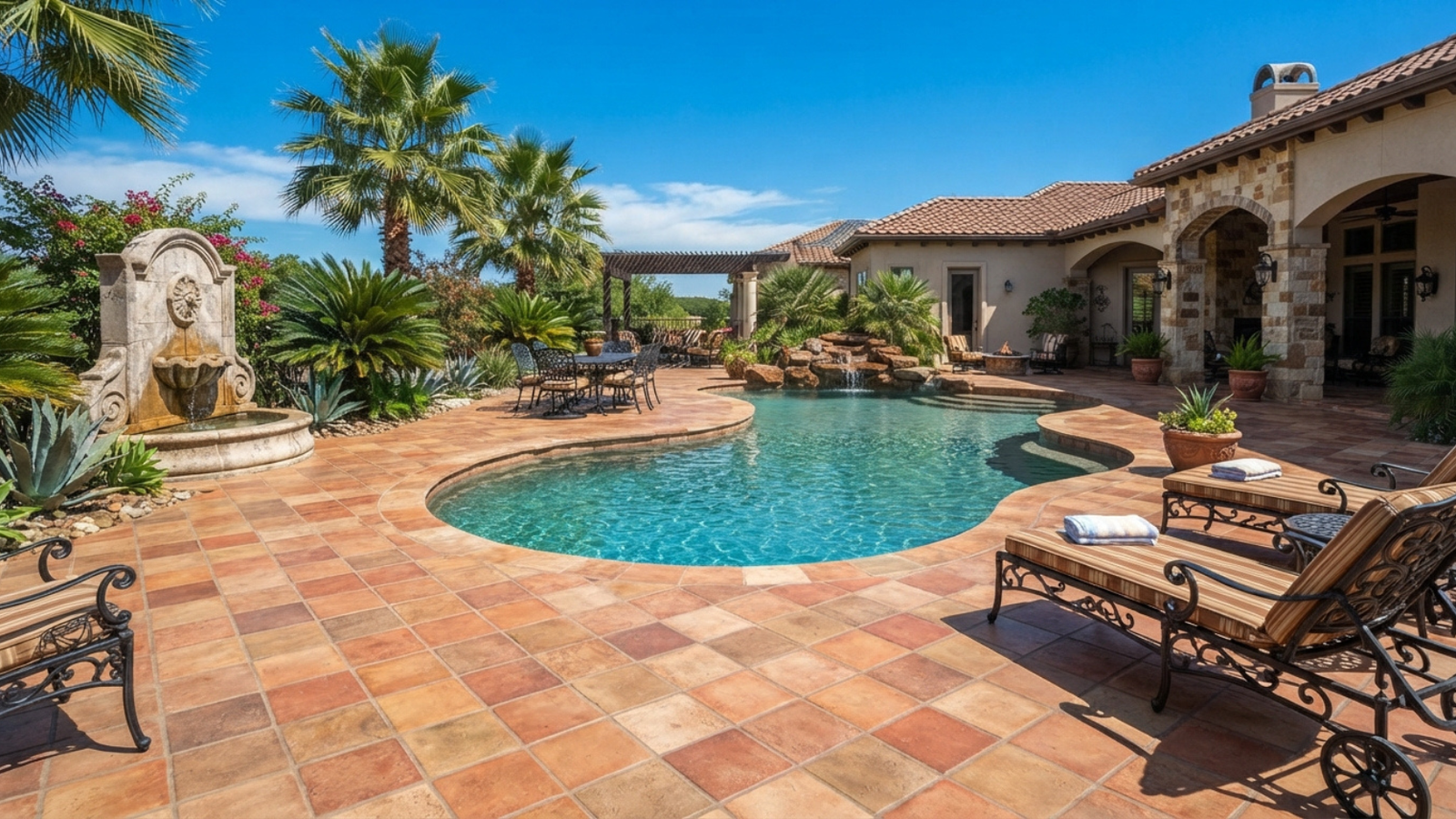
San Antonio pool decks take a beating from intense UV radiation, Blackland Prairie clay movement, and Flash Flood Alley rainfall. Resurfacing is almost always cheaper than full replacement but only when it is done with the right material, the right prep, and a contractor who understands local conditions. This guide covers every cost variable and every material option, honestly.
Why San Antonio homeowners resurface instead of replace
A full pool deck tear-out and repour in San Antonio costs $15 to $25 per square foot or more by the time demo, haul-off, forming, and finishing are included. Resurfacing applying a new bonded layer over the existing concrete slab costs $4 to $12 per square foot and delivers a surface that can look and perform as well as new for a decade or longer when the right product is used.
The key question is whether your existing slab qualifies. Resurfacing is appropriate when the underlying concrete is structurally sound with only surface-level deterioration. Widespread structural cracking with heaving, slab sections that have sunken or shifted, or base failures beneath the slab are situations where resurfacing is patching a problem rather than solving it. A good contractor will assess the existing slab honestly before recommending a path forward.
This guide walks through every resurfacing material option available in San Antonio, realistic 2026 cost ranges for each, what the installation process looks like, and the questions to ask before hiring a contractor.
Pool deck resurfacing materials available in San Antonio
Most Popular
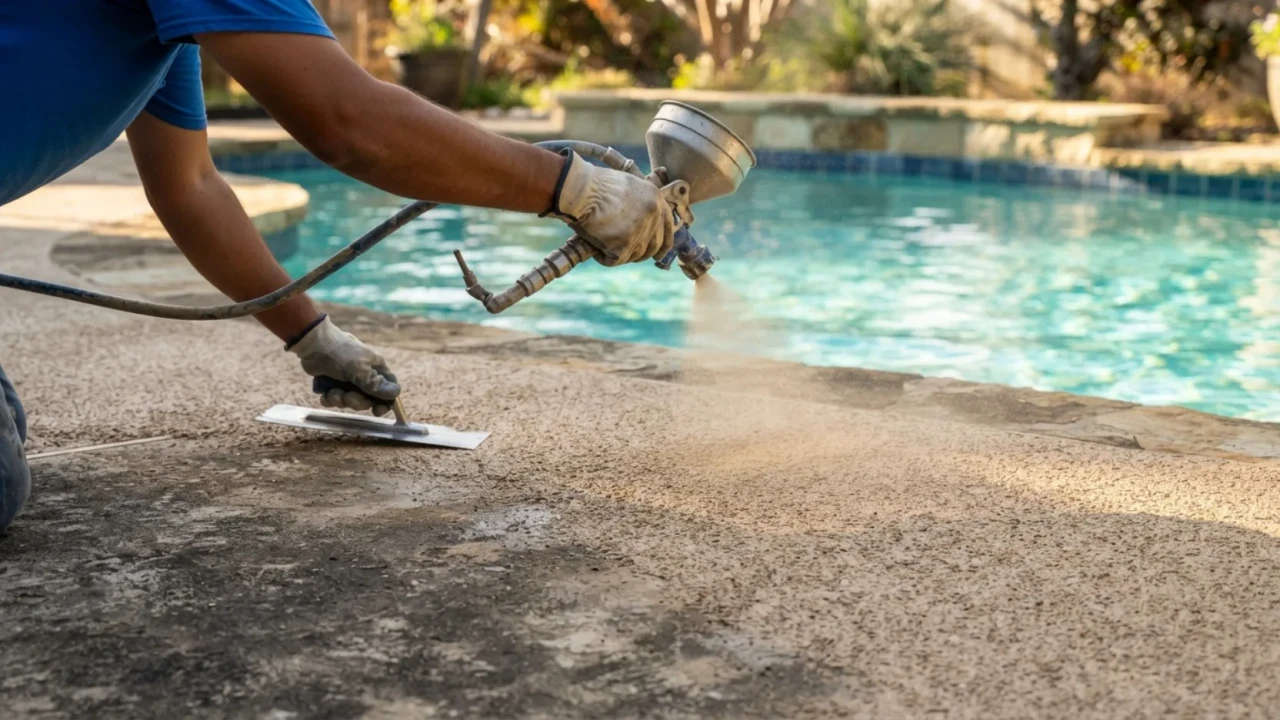
Kool Deck is a proprietary acrylic-modified cementitious coating that has dominated the San Antonio pool deck market for decades and for good reason. Its light, textured surface reflects solar heat rather than absorbing it, keeping the deck surface 30 to 40 degrees cooler underfoot than bare concrete on a 100-degree San Antonio day. That single performance characteristic makes it the right call for any pool deck where barefoot traffic is expected throughout the summer.
The texture is applied by trowel over a bonding agent on the prepared existing slab, creating a slip-resistant surface with visible aggregate that provides solid footing even when wet. Standard Kool Deck is available in a range of earth tones the most popular in San Antonio tend to be light tan, buff, and soft white to maximize heat reflection. Custom colors are available at an upcharge.
- Your pool deck sees heavy barefoot use in summer and heat underfoot is a comfort concern
- Your existing slab is structurally sound with surface-level wear, staining, or minor cracking only
- You want a proven, widely available product with straightforward maintenance requirements
- Budget is a priority Kool Deck is the most cost-effective resurfacing option available
Decorative Option
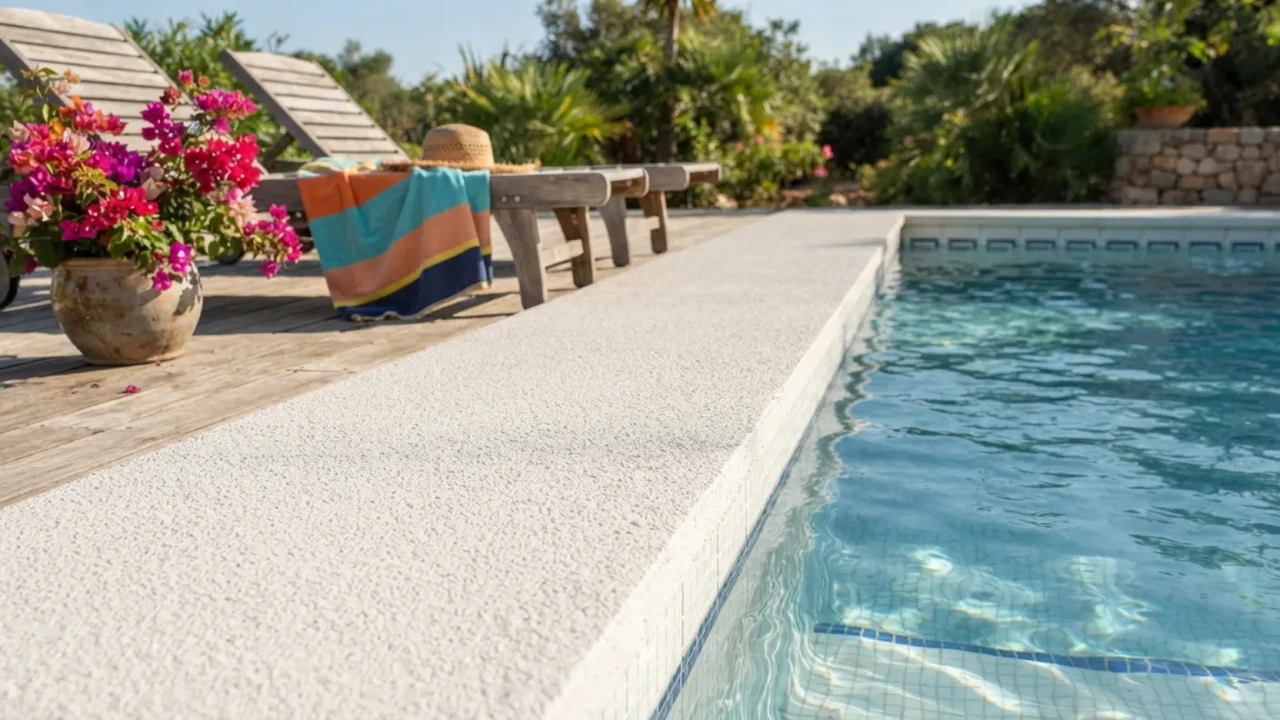
Concrete overlays are polymer-modified cementitious products applied over the existing slab at thicknesses ranging from 3/16 inch to 3/4 inch. They can be stamped, stenciled, textured, or stained after application, giving you a wide range of decorative outcomes from a single resurfacing investment. A stamped overlay that mimics natural stone or tile is one of the highest-value aesthetic upgrades available for an aging pool deck.
The polymer modification gives the overlay flexibility that plain concrete lacks an important characteristic in San Antonio where Blackland Prairie clay soil movement creates stress on slabs throughout the wet-dry cycle. A quality polymer-modified overlay flexes slightly with the substrate rather than cracking at the same stress points as the original concrete.
The main limitation of concrete overlays is that they require a very sound substrate. Any structural cracking in the existing slab will telegraph through the overlay within one or two wet-dry cycles. The repair protocol for visible substrate cracks is to fill them with an appropriate crack filler and allow full cure before overlay application but a contractor who tells you cracked concrete is “fine to overlay” without addressing the cracks is setting you up for a premature failure.
The most popular decorative overlay request in San Antonio right now is a large-format tile pattern stamped into a grey or warm tan overlay with a light contrasting release agent. It produces a modern, clean look that photographs well and holds up to direct Texas sun far better than actual tile no grout lines to crack, no tile lips to trip on, and no thermal expansion issues from individual pieces expanding at different rates. Integral color in the overlay mix (not just surface stain) is the right spec for longevity in this climate.
High Durability
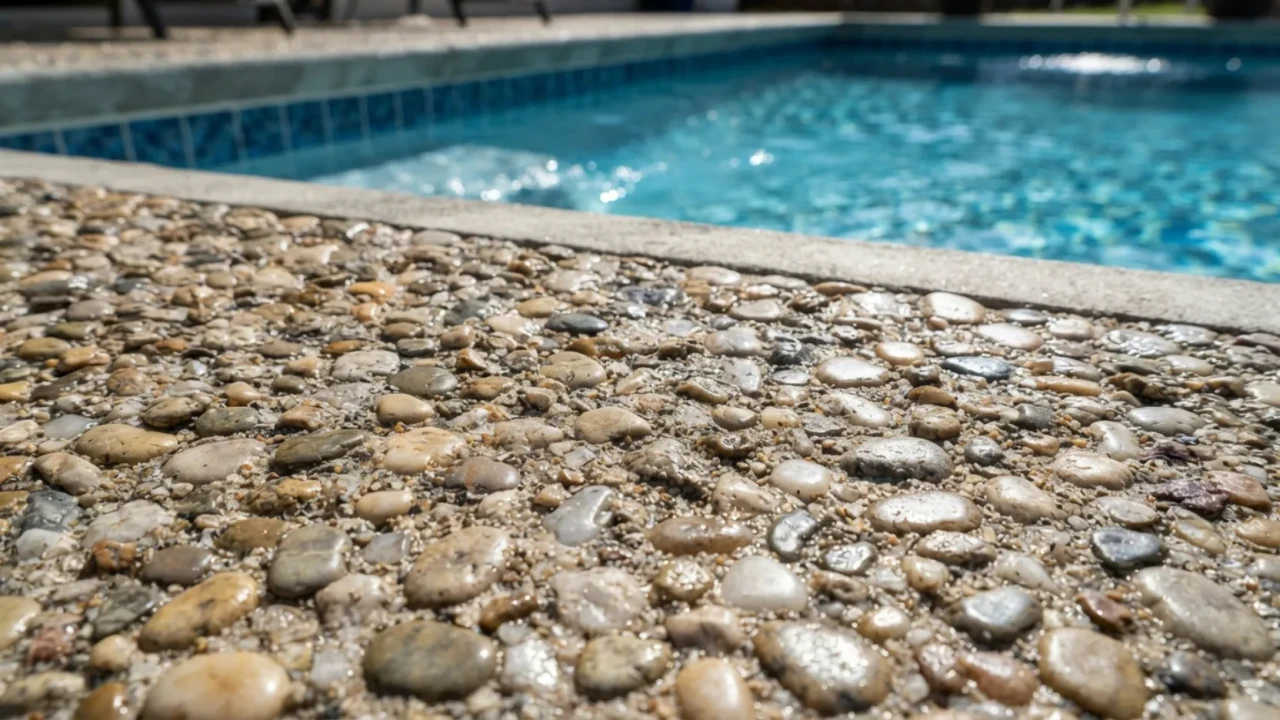
Exposed aggregate resurfacing involves applying a seeded aggregate overlay over the existing slab and then washing back the surface paste to reveal the stone or pebble aggregate within the mix. The result is a natural, pebbled texture that is inherently slip-resistant, highly durable, and visually attractive without requiring the maintenance commitment of a stamped or stained finish.
This is the resurfacing option we recommend most often for pool decks that see heavy use from children and families, where bare feet on a wet surface is the daily operating condition. The texture provides grip in all conditions without needing anti-slip additives, and the aggregate appearance holds up well to fading under San Antonio UV exposure because there is no surface pigment to bleach the color is in the stone itself.
Exposed aggregate appearance is determined entirely by the aggregate chosen size, color, and stone type. Once the overlay is applied and the paste is washed back, the aggregate is permanent. Request samples from your contractor showing the actual aggregate they plan to use (not stock photos) and approve it in writing before work starts. The most popular choices for San Antonio pool decks are small river pebble in buff or mixed earth tones, which complement the regional palette and reflect heat better than dark stone.
- You have children or frequent pool guests and slip resistance is your top priority
- You want a finish that does not require frequent resealing penetrating sealer every 3-5 years is all it needs
- You prefer a natural, timeless aesthetic over a stamped or decorative pattern
- Long-term durability matters more to you than the lowest possible upfront cost
Specialty Option
Elastomeric deck coatings are rubber-modified acrylic systems that flex with the substrate, bridge minor cracks, and create a fully waterproof membrane over the existing concrete. They are the right choice for elevated pool decks, second-story applications, or any situation where water infiltration beneath the slab is a concern. For standard at-grade pool decks in San Antonio, they are less common than Kool Deck or overlay systems but for the right application, they are the technically correct solution.
The limitation of elastomeric systems is their shorter recoat cycle relative to cementitious overlays. The flexible membrane degrades under UV exposure and foot traffic over time, and most systems require a recoat every 7 to 10 years to maintain waterproofing performance. In San Antonio’s UV environment, the upper end of that range is optimistic without regular inspection and maintenance.
What pool deck resurfacing actually costs in San Antonio
Cost Guide
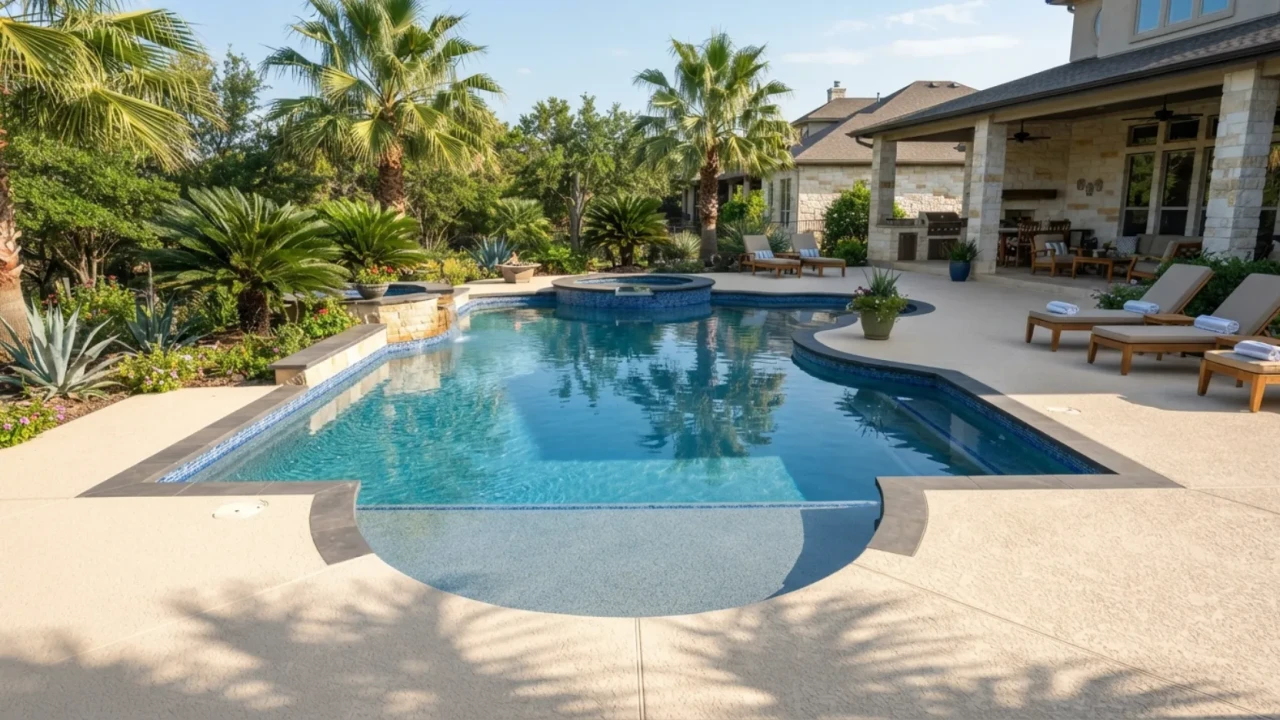
A standard San Antonio pool deck runs between 600 and 1,000 square feet around a residential pool. At those dimensions, the cost difference between resurfacing and full replacement is substantial typically $6,000 to $15,000 or more in savings, depending on the material chosen and the scope of demo and repour work avoided.
The cost ranges below reflect 2026 San Antonio contractor pricing. They include surface preparation (cleaning, crack repair, bonding agent), material, and labor. They do not include structural crack repair beyond minor filling if your slab has significant structural cracking, that cost is additional and needs to be assessed separately.
Cost Variables
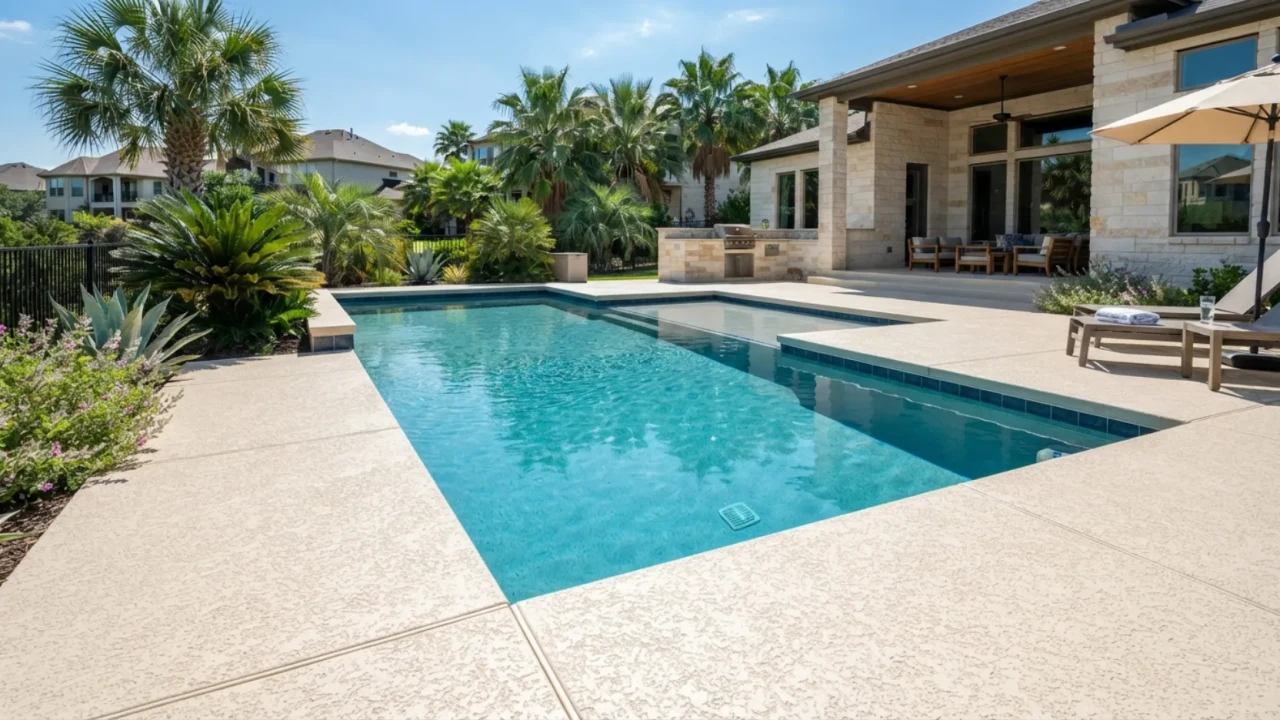
The per-square-foot ranges above assume a reasonably accessible, structurally sound pool deck with standard preparation needs. Several variables specific to San Antonio projects can push costs toward the high end of the range or beyond it.
| Cost variable | Impact on price | Notes |
|---|---|---|
| Existing sealer removal | +$0.50-1.50 per sq ft | Any existing sealer must be stripped completely before a bonded resurfacing can be applied. The thicker or more layers present, the more labor-intensive the prep. |
| Structural crack repair | +$200-600 per section | Wide cracks or heaved sections need epoxy injection or routing and filling before overlay. Cost depends on severity and number of cracks requiring treatment. |
| Pool coping replacement | +$25-60 per linear ft | Often bundled with resurfacing projects when coping is deteriorated. Not required for resurfacing itself but frequently addressed at the same time. |
| Deck size and shape complexity | High complexity: +15-25% | Freeform pools with curves, multiple elevations, steps, and tight access around equipment add labor time significantly. |
| Custom colors or patterns | +$0.50-2.00 per sq ft | Standard earth tones are priced in the base ranges. Custom integral colors, multiple-color schemes, or complex stamped patterns carry an upcharge. |
| Summer scheduling (June-August) | Higher demand book 4-6 weeks out | San Antonio pool deck contractors are at peak demand in summer. Scheduling flexibility in fall or spring can improve both availability and pricing. |
What pool deck resurfacing looks like in San Antonio
Process Guide
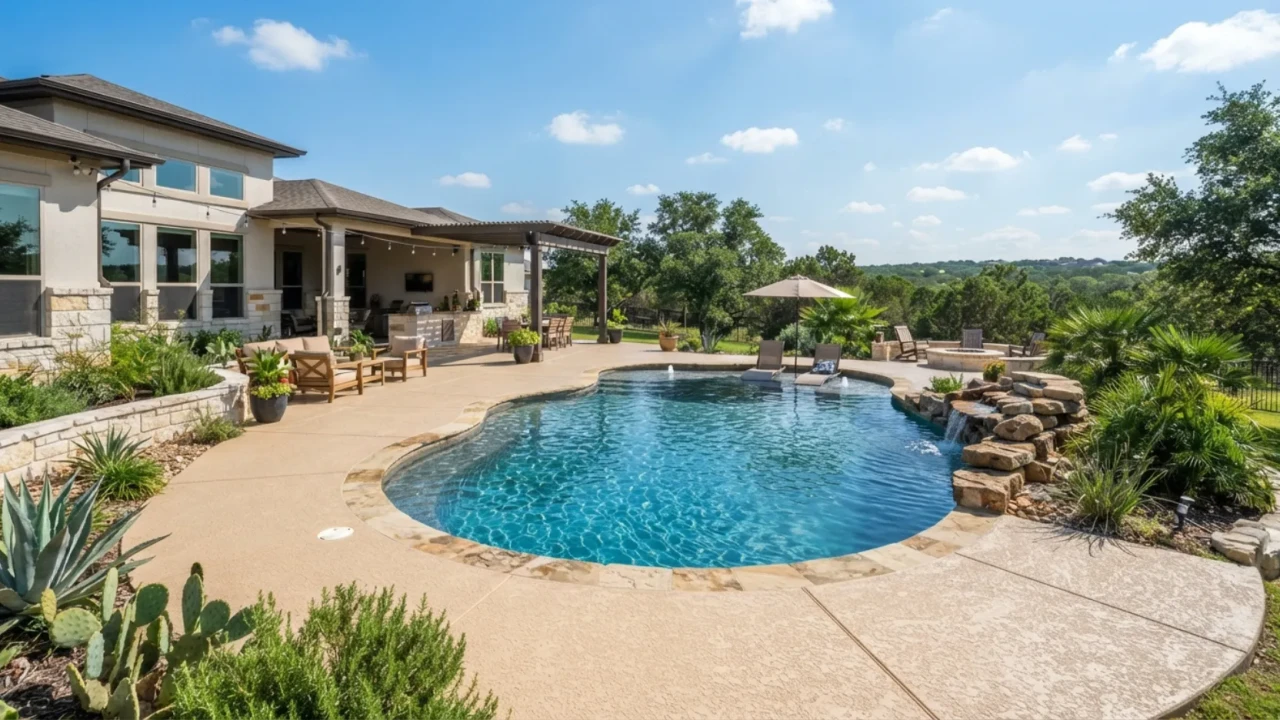
The quality of a pool deck resurfacing project is determined almost entirely by the preparation stage not the overlay material itself. A premium product applied over a poorly prepared surface will delaminate and fail within two to three years. A basic product applied over a properly cleaned, profiled, and repaired surface will outlast a poorly prepared premium application every time.
In San Antonio’s summer heat, the pace of each stage is faster because materials set more quickly but that speed also compresses the window for decorative work. An experienced local contractor will schedule pour and overlay application for early morning during peak summer and will adjust water ratios in the mix for the conditions. If a contractor proposes rushing the schedule or skipping the bonding agent step to save time, that is a warning sign worth taking seriously.
October through April is the best window for pool deck resurfacing in San Antonio. Moderate temperatures give overlay materials more working time, reduce the risk of rapid surface drying before proper cure, and typically mean better contractor availability. If you are scheduling a resurfacing in summer, book at least four to six weeks in advance experienced pool deck contractors are in high demand from May through September.
- Full pressure wash of existing surface before any assessment wet concrete reveals cracks invisible when dry
- Existing sealer tested and stripped completely if present bonding over old sealer causes delamination
- Surface profile opened by acid etching or mechanical grinding to ensure adhesion
- All cracks wider than hairline filled and cured before overlay application
- Bonding agent applied wet-on-wet immediately before overlay not allowed to dry before application
Local Conditions
Pool deck resurfacing in San Antonio is not the same project as it is in other U.S. markets. Several local conditions affect material selection, preparation requirements, and expected performance that contractors from outside the region may not account for correctly.
| Local condition | Effect on pool deck | How it affects resurfacing decisions |
|---|---|---|
| Blackland Prairie clay soil | Slab movement through seasonal wet-dry cycles creates stress cracking and joint widening | Polymer-modified overlays are preferred over rigid cementitious products flexibility reduces cracking risk |
| Texas UV intensity | Accelerates surface degradation, color fading, and sealer breakdown | UV-stable pigments and penetrating sealers are required; resealing cycle is shorter than national averages |
| Edwards Aquifer hard water | Calcium and mineral deposits build up on pool deck surfaces from splash, sprinklers, and runoff | Sealed surfaces resist mineral penetration; unsealed resurfacing will show scaling and discoloration within one season |
| Flash Flood Alley rainfall | Heavy rainfall events create rapid ponding; drainage slope critical to prevent water sitting on deck | Resurfacing should maintain or improve drainage slope a resurfacing that fills low spots and improves drainage is worth more than one that just refreshes appearance |
| Summer heat (100+ degrees) | Pool deck surfaces absorb and radiate heat significantly | Light-colored, heat-reflective surfaces (Kool Deck, light aggregate) are the right call for usable barefoot comfort |
| Winter Storm Uri freeze-thaw | Rapid freeze events create expansion stress in any water present in cracks or surface pores | A sealed surface prevents water infiltration; sealed resurfacing performs significantly better than unsealed in freeze events |
What resurfacing actually delivers for San Antonio homeowners
Resurfacing is not just a cosmetic fix. When specified and installed correctly, it delivers measurable improvements in safety, comfort, longevity, and property value at a fraction of replacement cost.
Benefits Guide
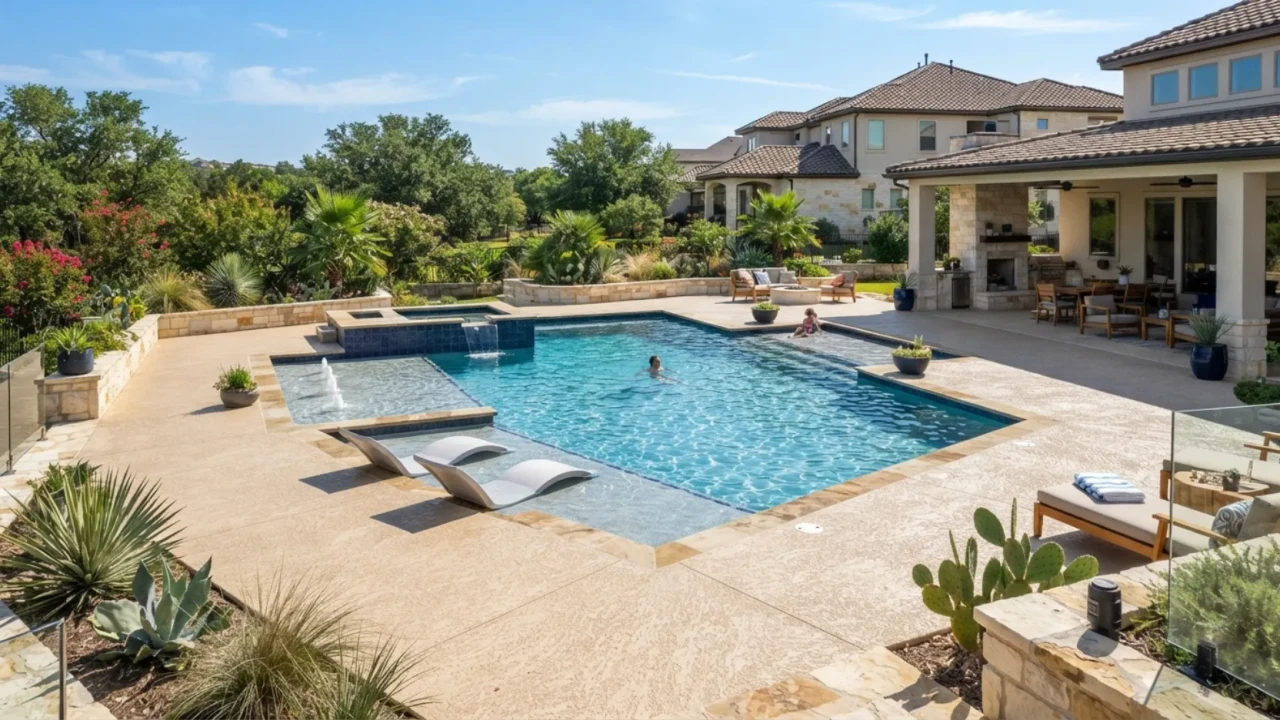
The decision to resurface is straightforward when the existing slab is structurally sound. Here is what a properly executed resurfacing delivers across five categories that matter to San Antonio homeowners.
- Existing slab confirmed structurally sound no heaving, no sections that have shifted or sunken more than 1/4″
- Cracking pattern assessed: hairline and surface cracks are resurfacing candidates; structural heaving or base failure requires repair or replacement first
- Drainage slope confirmed adequate at least 1/4″ per foot away from pool and foundation
- Existing sealer or coating identified stripping required before any bonded resurfacing can be applied
- Light-colored surface selected for heat reflectivity dark finishes will be painful to walk on in summer
- Slip-resistant texture confirmed for wet pool area use smooth or polished finishes are not appropriate
- Polymer-modified product selected if significant clay soil movement expected pure cementitious products crack more readily on moving substrates
- UV-stable pigments or aggregate colors specified for San Antonio’s intense solar exposure
- Penetrating sealer (silane or siloxane-based) planned for application after cure not film-forming acrylic
- Certificate of general liability insurance received and verified $1M minimum
- Written quote specifies material name/brand, coverage thickness, surface prep method, sealer type, and warranty
- Sealer stripping and bonding agent application confirmed as included steps not optional
- Protocol for unexpected structural findings confirmed in writing before work begins
- Payment terms: deposit upfront, balance on completion and inspection not full payment before work
- References from completed San Antonio pool deck projects requested and verified
- First sealer application confirmed at end of project after full cure
- Resealing schedule confirmed: every 2-3 years for Kool Deck and stamped overlays; every 3-5 years for exposed aggregate
- Annual pressure wash planned to remove mineral deposits from Edwards Aquifer hard water and organic staining
- Expansion joints inspected annually and refilled with flexible sealant if cracked or missing
FAQs
How do I know if my pool deck can be resurfaced or needs to be replaced?
How long will a pool deck resurfacing last in San Antonio’s climate?
Can I resurface my pool deck myself, or do I need a contractor?
How long do I have to stay off the pool deck after resurfacing?
Will resurfacing fix the cracks in my pool deck?
Is Kool Deck the same as a concrete overlay?
Explore helpful guides from Affordable Concrete San Antonio on driveway repair, decorative concrete patterns, and common pool deck issues.Discover professional pool deck resurfacing, coatings, and repair services designed for San Antonio homes.
Get a free pool deck resurfacing quote in San Antonio
Tell us about your pool deck size, current condition, and what you are hoping to achieve. We will visit your property, assess the slab honestly, and give you a detailed written quote at no cost.