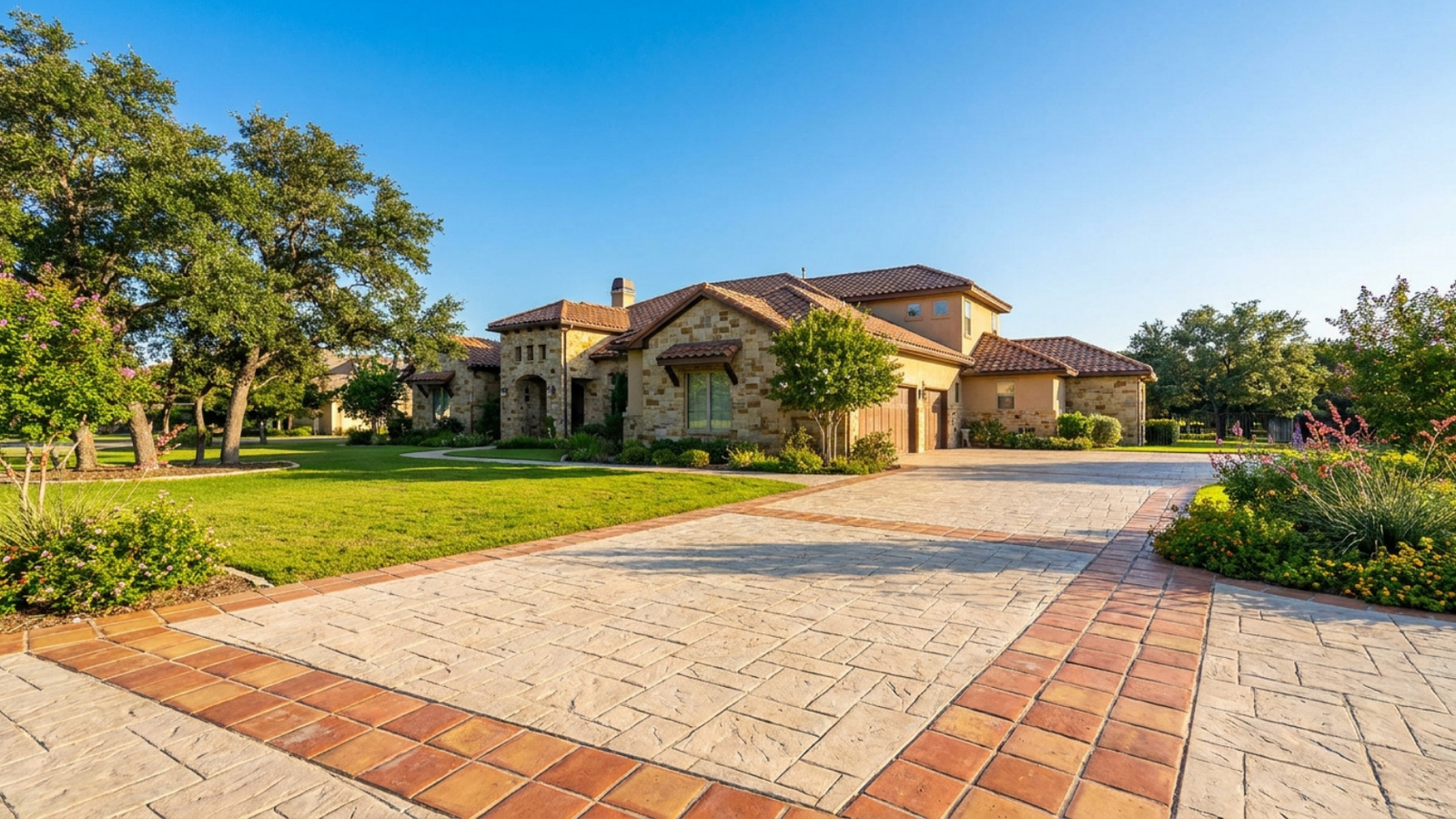
From decorative stamped finishes to wider two-car designs, San Antonio homeowners are upgrading driveways at a record pace in 2026. This guide covers every trend worth knowing, the costs behind them, and what questions to ask your contractor before any concrete is poured.
Driveways used to be purely functional. In San Antonio in 2026, that thinking is changing fast. Homeowners across Bexar County are investing in wider layouts, decorative finishes, and smarter designs that hold up to the local heat, clay soil movement, and heavy rain events the region sees every year. Whether you are replacing a cracked slab that has been failing for years or installing a brand-new driveway on a recently purchased property, understanding what is trending and more importantly, why helps you make a decision you will not regret in year three.
This guide covers the six major driveway installation trends shaping San Antonio projects right now, the real costs behind each, and the structural decisions that make or break every one of them regardless of finish choice.
The most common mistake San Antonio homeowners make is choosing a finish or a layout before locking in the structural spec. In Bexar County's expansive clay soil, the thickness, base preparation, rebar grid, and expansion joint placement determine whether a driveway lasts 5 years or 30. Once those decisions are made correctly, choosing between stamped concrete and exposed aggregate is just an aesthetic preference with a price tag attached. Get the slab right first. Then pick the finish that fits your budget.
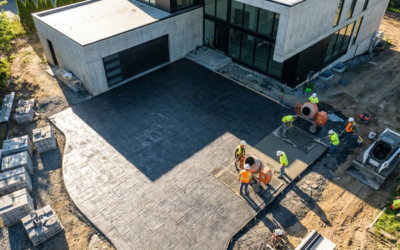
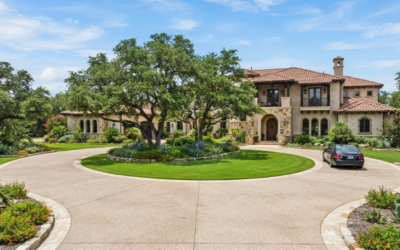
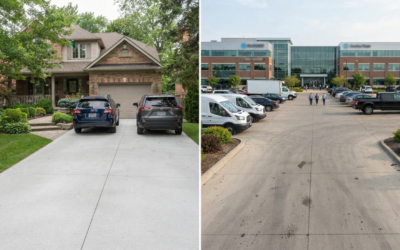
The standard single-car driveway 10 to 12 feet wide is being replaced at a rapid pace across San Antonio neighborhoods. The most popular upgrade in 2025 and continuing into 2026 is widening to a true two-car layout (18 to 20 feet) or adding a flared apron at the street end that fans out to 24 feet or more. The driver is simple: multi-vehicle households are the norm, and parallel parking on the street in front of a San Antonio home has become less practical as neighborhoods grow denser.
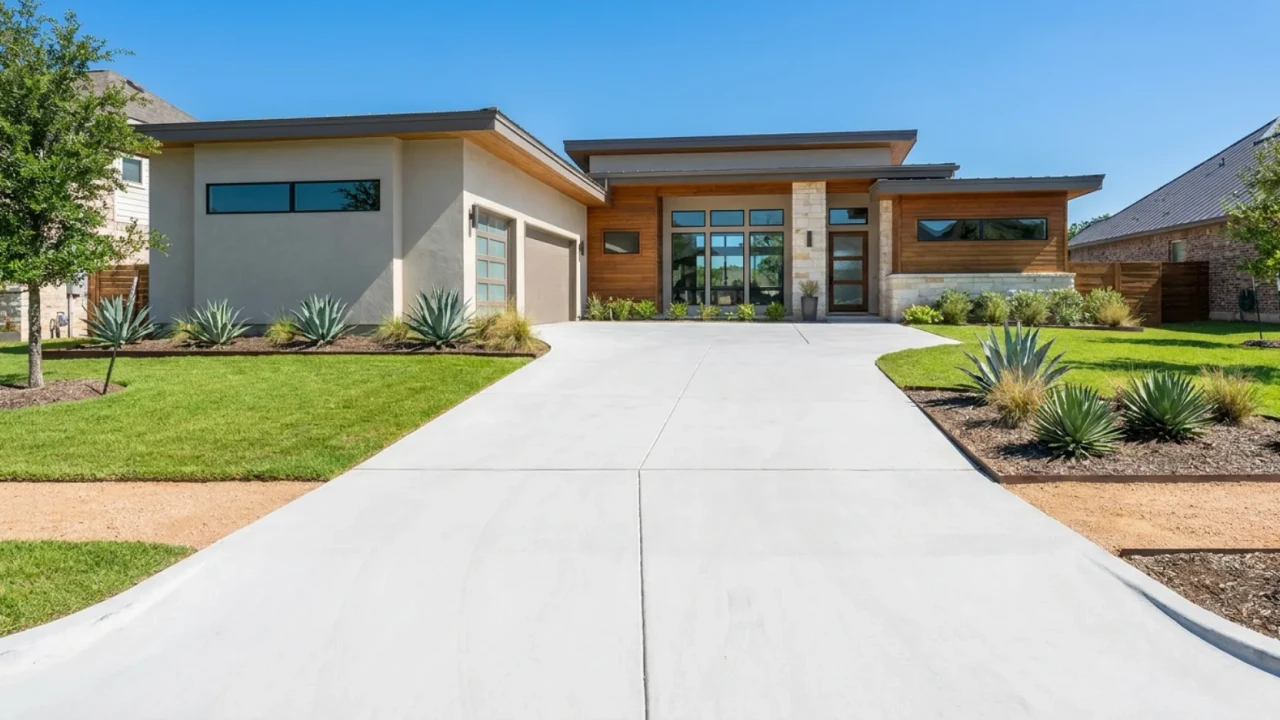
A wider driveway also changes how a home looks from the street. A well-proportioned concrete surface framing a two-car garage reads as a significant curb appeal upgrade even with a plain broom finish. Pair a wider layout with a decorative border strip or a stamped center panel and the result can be dramatic.
One structural consideration that becomes more important with wider slabs: expansion joint placement. A 20-foot-wide slab in San Antonio's clay soil without adequate control joints will crack along its own stress lines within a few years. The standard rule is a control joint every 8 to 10 feet in both directions. On a widened driveway, that typically means two longitudinal joints running the length of the slab. Any contractor who quotes a wide driveway without mentioning joint placement in the spec is skipping a critical step.
- Final width confirmed in writing: 18-20 ft for true two-car, 22+ ft for flared apron
- Longitudinal control joints specified at 8-10 ft intervals across the width
- Base preparation depth confirmed: 4 in minimum compacted crushed limestone in Bexar County
- Rebar grid included: #3 or #4 bar at 18 in centers for any driveway slab in San Antonio
- Apron transition to street confirmed to meet any City of San Antonio right-of-way requirements
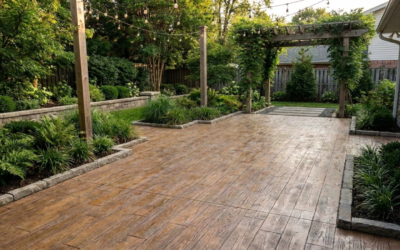
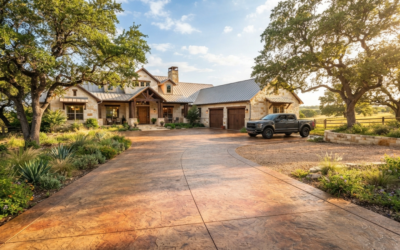
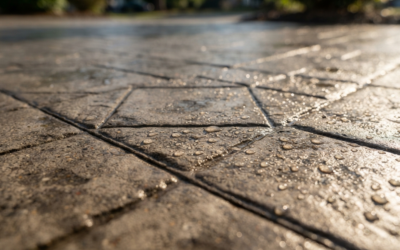
Stamped concrete on driveways was once considered impractical the concern was that vehicle traffic would wear the pattern down quickly. That concern is largely outdated. Modern stamping techniques paired with proper slab thickness (5 inches minimum for driveways) and a high-quality penetrating sealer produce a surface that holds up to daily vehicle use while looking dramatically better than plain broom finish. Across San Antonio, the request for stamped driveway surfaces has increased sharply since 2024.
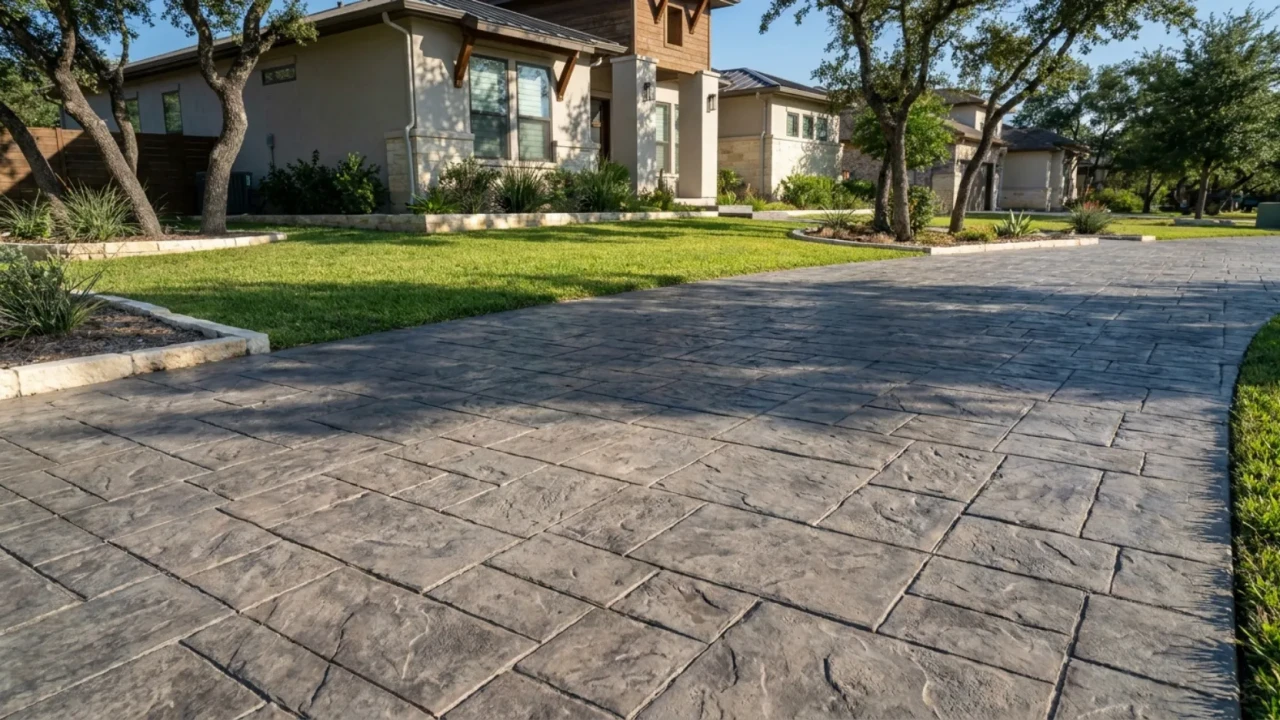
The most popular stamped patterns for San Antonio driveways in 2026 are ashlar slate, cobblestone, and large-format flagstone. Earth tones tan, buff, sandstone, and warm grey dominate color choices because they complement the limestone and brick architecture common throughout the city's older neighborhoods and match the sandy beige palette popular in newer builds.
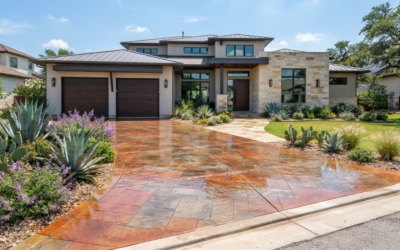
The 2026 trend within stamped driveways is the use of integral color pigment added directly to the concrete mix rather than surface-applied color hardener alone. Integral color means the tint runs throughout the full slab depth. If the surface chips or experiences minor wear, the color remains consistent. Combined with a contrasting release agent applied to the stamps, the result is a two-tone natural stone appearance that holds up far better in Texas sun than surface-only coloring methods.
Do not confuse a stamped driveway with a stamped patio in terms of spec: A patio can get away with a 4-inch slab because it carries foot traffic only. A driveway with daily vehicle use needs a minimum 5-inch slab with rebar not wire mesh to handle the load. Any contractor quoting a stamped driveway at patio-spec thickness is setting you up for a cracked decorative surface within a few years. Get the slab thickness in writing before you approve any color or pattern choices.
- Slab thickness confirmed at 5 in minimum for any stamped driveway carrying vehicle traffic
- Rebar grid specified not wire mesh at #3 or #4 bar, 18 in centers
- Integral color confirmed in writing: pigment goes into the mix, not applied as surface hardener only
- Pattern and release agent color approved from a physical sample before pour day
- Sealing included in the project scope or scheduled at 28-day cure mark
- Resealing schedule confirmed: every 2-3 years to maintain color and protect the surface
Exposed aggregate has been gaining ground in San Antonio as an alternative to stamped concrete for homeowners who want a textured, visually interesting surface without the resealing demands that come with decorative finishes. The technique involves washing the surface paste away while the concrete is still green, revealing the stone and pebble aggregate embedded in the mix. The result is a naturally textured surface with genuine slip resistance and an appearance that holds up well in direct Texas sun without fading the way dyed or stained surfaces can.

In San Antonio, the most popular aggregate choices for driveways are river rock pebble (rounded, smooth stones that provide moderate slip resistance and a clean look), crushed granite (angular stones with higher slip resistance and a speckled appearance), and a blended river-granite mix that combines the two. Aggregate color selection happens before the pour specify it in writing, because it cannot be changed afterward.
The maintenance advantage of exposed aggregate over stamped concrete is real: because the texture is inherent to the material rather than a surface impression, there is no pattern to wear down. Resealing is still recommended every 3 to 5 years rather than the 2 to 3 years needed for stamped work but the surface will still look presentable even if a sealing cycle is missed. For homeowners who want a decorative finish without a demanding maintenance schedule, exposed aggregate is the practical choice.
- Aggregate type, size, and color specified in writing before pour day
- Reference photo from a completed local project approved by homeowner
- Slab thickness at 5 in for driveway application with rebar reinforcement
- Surface retarder application method confirmed determines aggregate exposure depth
- First sealer scheduled at 28-30 days after pour
- Resealing cadence confirmed: every 3-5 years for exposed aggregate driveways
Not every homeowner wants to invest $14 to $22 per square foot in a full stamped or decorative driveway. For those who want curb appeal without the full premium, decorative borders and inlays are the fastest-growing driveway trend in San Antonio in 2026. The approach is straightforward: a standard broom-finish slab forms the main body of the driveway, and a contrasting colored or textured border strip runs along the edges. The price premium over a plain broom finish is modest typically $1.50 to $3.00 per linear foot but the visual result is significant.
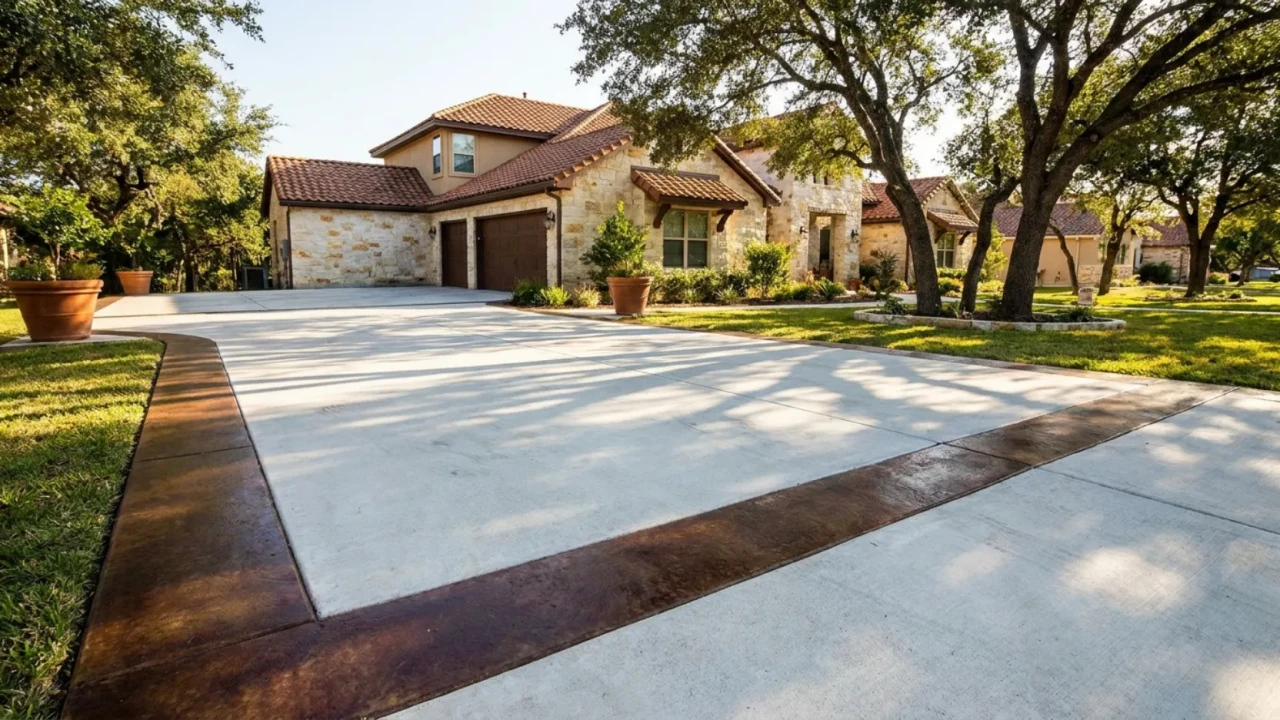
The most common approach is a 12-inch-wide border strip in a contrasting color typically a darker charcoal or terracotta tone surrounding a standard grey broom field. A more elaborate version uses a stamped border (cobblestone or brick pattern) framing a plain center panel. Both approaches break up the visual monotony of a large grey slab while keeping the majority of the surface at a standard spec and price point.
A variation gaining popularity in San Antonio's Alamo Heights and Monte Vista neighborhoods is the saw-cut geometric inlay: a plain broom slab with a diamond or rectangular pattern cut into the surface after curing and filled with a contrasting color epoxy or concrete grout. The geometric lines give a contemporary, high-end appearance with no stamping required, and the saw-cut technique adds structural control joints at the same time, solving two problems at once.
Match the border color to your home's accent tone, not the main body of the driveway: The most visually successful bordered driveways in San Antonio use a border color that picks up the brick mortar color, trim color, or landscape stone color of the home. A neutral grey field with a warm buff or terracotta border creates a deliberately designed appearance that reads as intentional from the street rather than just a plain slab with an edge stripe. Bring a photo of your home's exterior when you discuss color options with your contractor.
- Border width confirmed in writing: 10-16 in is standard, wider for larger driveways
- Color combination approved from a physical sample not just a digital photo
- Structural control joints incorporated into or adjacent to the decorative border layout
- If stamped border is specified: pour timing confirmed stamping must occur within the first 2-3 hours after the pour
- Sealing schedule confirmed: border areas with color hardener require sealing every 2-3 years
San Antonio receives an average of 31 inches of rain per year, but that rain does not fall evenly the region sees intense, short-duration storm events that can dump several inches in a few hours. A driveway that is not properly sloped and drained can redirect water toward a garage foundation or into a neighbor's yard, creating both property damage and dispute issues. In 2026, more San Antonio homeowners are specifying drainage-forward driveway designs from the start rather than fixing drainage problems after installation.
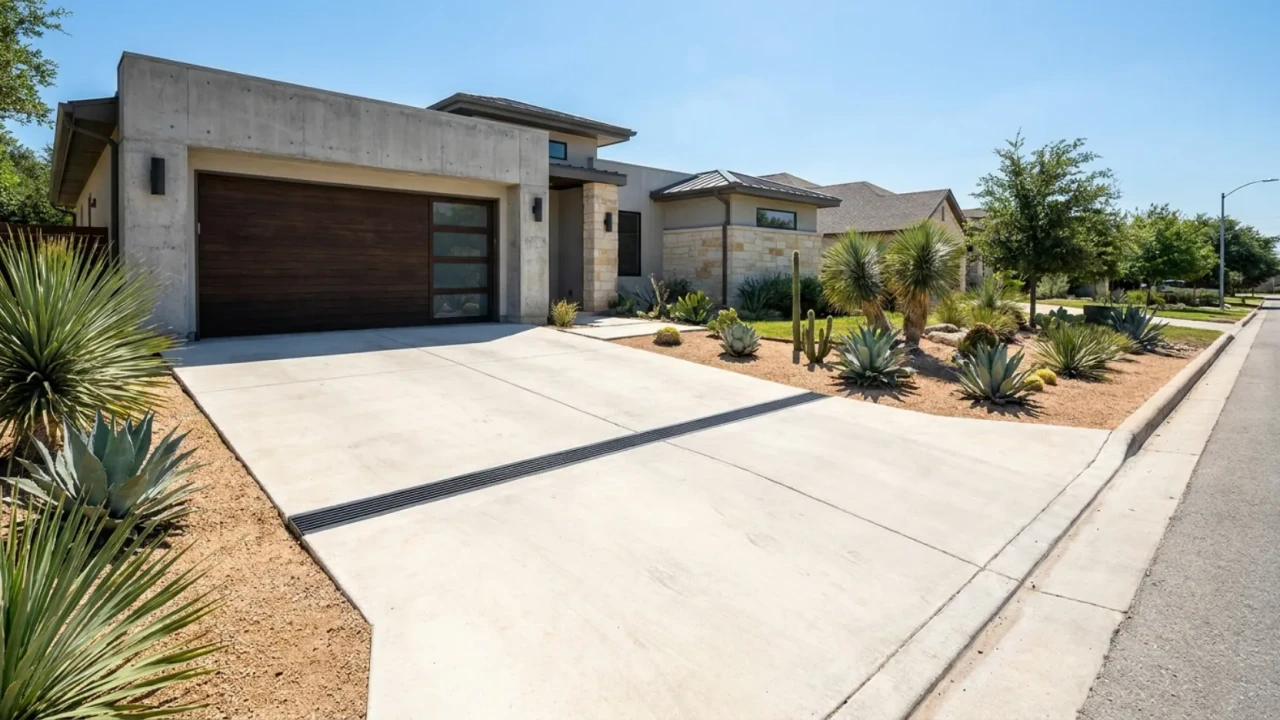
The standard drainage requirement for a concrete driveway is a cross slope of 1 to 2 percent about 1/8 to 1/4 inch per foot directing water away from the garage and toward the street or a designated drainage area. On wider driveways (18 feet or more), a center crown that slopes to both edges handles this more effectively than a single-direction slope. For driveways below grade or with garages that sit lower than the street, a trench drain installed at the base of the driveway apron is the correct solution.
Pervious concrete a specialty mix with a high void content that allows water to pass through the slab and into the base course below is also seeing increased adoption in San Antonio, primarily on side driveways, overflow parking areas, and driveway extensions where load is lower and environmental credit is valued. It is not recommended as a primary vehicle driveway surface in Bexar County's clay soil conditions without a carefully engineered sub-base, but as a complementary surface for lower-traffic zones, it manages runoff effectively.
- Cross slope of 1-2% confirmed in the design water must drain away from the garage and foundation
- Wide driveways (18+ ft): center crown slope or dual-direction drainage specified
- Trench drain specified for any driveway where the garage floor sits below the street level
- Drainage direction confirmed to not increase runoff onto adjacent properties
- Permit review confirmed if adding substantial impervious surface to the lot
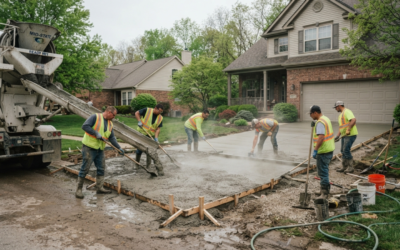
One of the most consequential decisions in any driveway project is whether to overlay the existing slab or remove it entirely and start fresh. The overlay approach pouring a new thin layer of concrete over the old surface costs less upfront because it skips demolition and haul-away. It is also the approach most likely to fail within three to five years, because a new slab bonded over a failing old one inherits every structural problem underneath it. In San Antonio's clay soil, a driveway that is cracking has almost always failed at the base level, not just the surface.
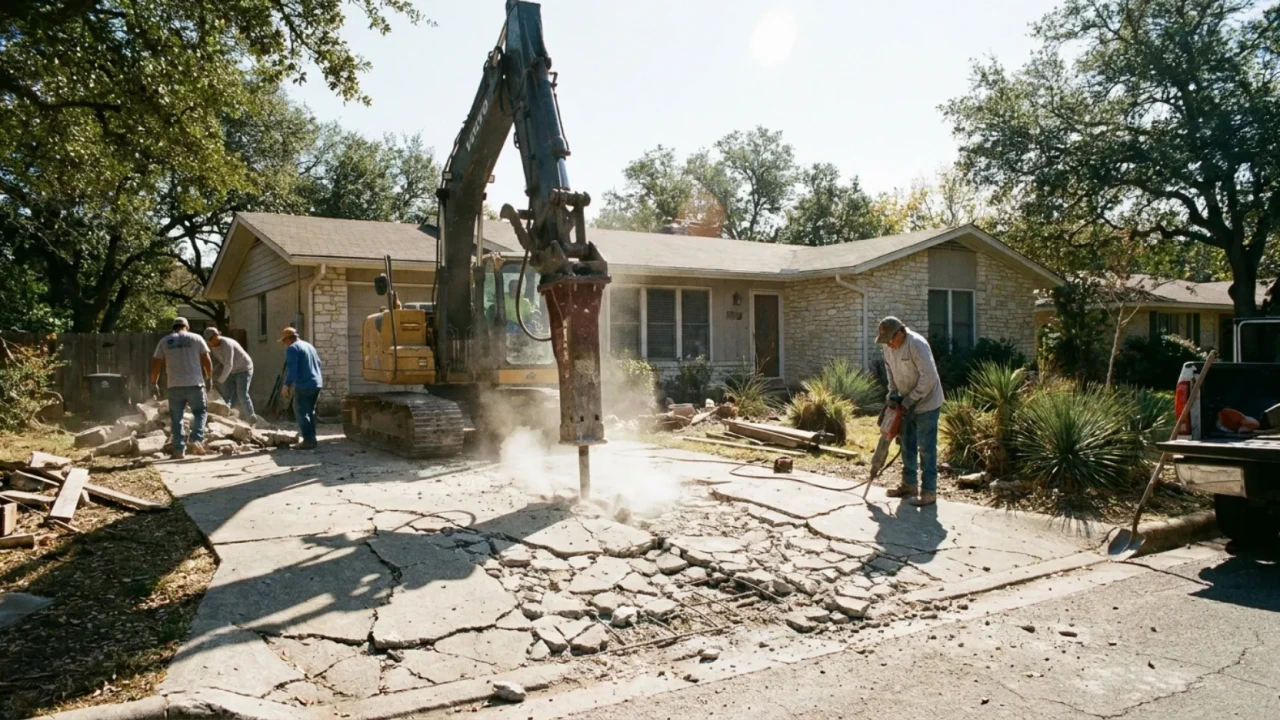
Full removal is the correct approach in most San Antonio driveway replacement situations. The additional cost typically $2.50 to $4.00 per square foot for demolition and haul-away buys you the ability to inspect and correct the base, regrade for proper drainage, and pour a properly reinforced slab to full thickness. The 30-year lifespan of a well-installed concrete driveway justifies the upfront investment far more than a cheaper overlay that requires replacement in five years.
Signs that a San Antonio driveway needs full replacement rather than patching or overlay: cracking with vertical displacement (one side of the crack higher than the other), large slab sections that rock or flex underfoot, widespread alligator cracking across the surface, or any area where the slab has sunk relative to the surrounding grade. These conditions indicate base failure usually from soil movement or erosion and cannot be fixed by anything applied on top of the existing slab.
Any contractor who offers a full overlay on a visibly cracked San Antonio driveway without a detailed explanation of why an overlay is appropriate for your specific conditions is not giving you sound advice. In Bexar County's clay soil, a cracked driveway is almost always a base problem. An overlay traps the problem under new concrete and gives it another two to three years to worsen before the new surface shows the same cracks. Get at least one quote that includes full removal so you can make an informed cost comparison against the full lifespan of each option.
- Existing driveway inspected for vertical displacement any step cracking requires full removal
- Any flexing or rocking of slab sections underfoot base failure, full removal required
- Quote for full removal and replacement obtained alongside any overlay quote for comparison
- Base condition confirmed after removal before new slab is poured replace any failing base material
- Haul-away of demolished concrete included in the removal quote confirm it is not left on site
The prices below reflect full installation costs for a standard residential driveway in San Antonio, including base preparation, reinforcement, pour, finishing, and basic cleanup. Demolition and haul-away of an existing slab is priced separately as an add-on in most contractor quotes.
| Driveway option | Cost per sqft (installed) | Maintenance demand | Best suited for |
|---|---|---|---|
| Plain broom finish | $6-10 | Low seal every 3-5 years | Utility, budget-conscious projects, rental properties |
| Broom with decorative border | $7-14 | Low-moderate border area needs sealing | Homeowners who want curb appeal without full decorative cost |
| Exposed aggregate | $10-16 | Moderate seal every 3-5 years | Homeowners wanting durability and natural texture with lower maintenance |
| Stamped concrete | $14-22 | Higher seal every 2-3 years | Premium curb appeal, matching home aesthetics, high-value neighborhoods |
| Stamped with integral color | $16-25 | Higher seal every 2-3 years | Maximum visual impact, homes where exterior finishes are a priority |
- Slab thickness confirmed at 5 in minimum for residential driveways carrying vehicle traffic
- Rebar grid specified: #3 or #4 bar at 18 in centers not wire mesh for driveways
- Base preparation: 4 in minimum compacted crushed limestone base required in Bexar County
- Control joints at 8-10 ft intervals in both directions specified in writing, not left to crew judgment
- Width and apron dimensions confirmed in writing with square footage calculation for quote accuracy
- Finish type selected and appropriate for driveway vehicle use (not patio-spec for vehicle surfaces)
- Color, pattern, and aggregate confirmed in writing with a physical sample or reference photo approved
- Border or inlay design confirmed with color and width specified
- Sealing included in project scope or scheduled at 28-day cure completion
- Cross slope of 1-2% confirmed drainage away from garage foundation and not toward neighbors
- Trench drain specified if garage floor is below street grade
- City of San Antonio right-of-way permit obtained if driveway connects to or modifies the public street apron
- Demolition scope confirmed: old slab removal and haul-away included if replacing an existing driveway
- Certificate of insurance received and confirmed: $1M or more general liability minimum
- Quote itemizes base prep, reinforcement, pour, finishing, and cleanup separately
- Payment terms confirmed: deposit upfront, balance on completion after inspection
- Local San Antonio references from recent driveway projects available on request
Get a free driveway quote in San Antonio
Tell us about your project new installation, replacement, or widening. We will visit your property, assess the site, and give you a detailed written quote at no cost.